


Florida’s central Atlantic coast packs an unusual mix of space launches, surf towns, NASCAR spectacle and surprisingly laid back beach communities. The challenge for many travelers is not whether to come, but where to base themselves along a stretch that runs from Daytona Beach down to Stuart. Each cluster of towns has a distinct feel, very different driving times to Kennedy Space Center and Port Canaveral, and wide variation in hotel style, walkability and price. This guide compares the main areas head to head so you can match your base to your real travel needs, from rocket launches and race weeks to quiet family sandcastle time.
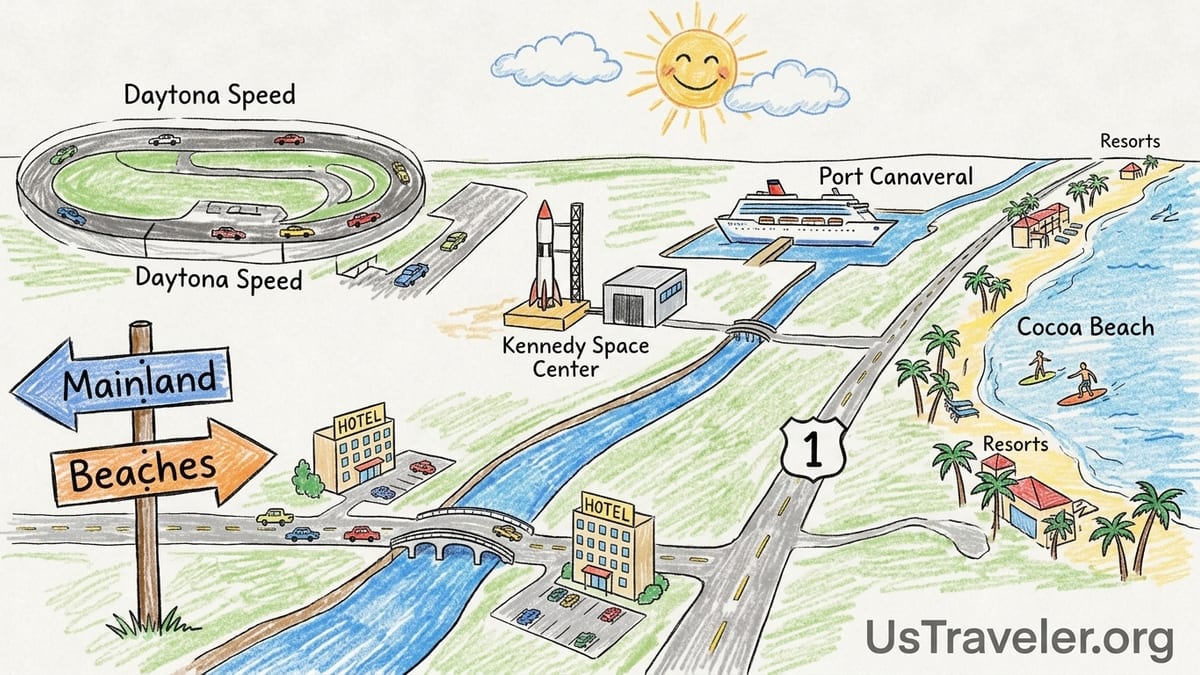
How the Coast Is Laid Out and What That Means for Your Base
Central East Florida is roughly a two hour drive from Daytona Beach in the north to Stuart in the south, without traffic. In between, you pass a series of very different beach communities and a few critical inland hubs. From north to south the main choices covered here are Daytona Beach, Daytona Beach Shores, New Smyrna Beach, Titusville, Cape Canaveral and Cocoa Beach, Melbourne and Indialantic, Sebastian, Vero Beach, Fort Pierce, Hutchinson Island and Stuart. The best place for you depends less on a single “best beach” and more on how much time you want behind the wheel versus on the sand or at attractions.
The coast is cut by several inlets and causeways. Many hotels sit directly on the Atlantic barrier islands while a number of budget and business properties are on the mainland side along U.S. 1 or Interstate 95. Driving from a mainland hotel to the beach often takes 10 to 20 minutes including bridge traffic and parking, which is fine for road trippers on a budget but frustrating if you imagined walking out of your lobby onto the sand. When you compare rates, always note if “oceanfront” really means on the beach or simply in the general coastal area.
The other key factor is how often you will visit marquee attractions such as Kennedy Space Center Visitor Complex on Merritt Island, Port Canaveral cruise terminals, Daytona International Speedway or the surfing piers in Daytona and Cocoa. A base in Vero Beach can be lovely, but you should know in advance that it is about a 90 minute drive to Kennedy Space Center, compared with about 25 minutes from Titusville or 35 to 40 minutes from Cocoa Beach and Cape Canaveral.
Daytona Beach Area: High Energy, High Season Price Swings
Daytona Beach, Daytona Beach Shores and nearby New Smyrna Beach sit at the northern end of this stretch and share similar wide, hard packed beaches and a sizable inventory of larger resorts and condo style hotels. On recent checks for a midwinter weekend, oceanfront resorts in Daytona Beach that are not under major renovation often priced in the range of roughly 180 to 260 dollars per night for standard rooms, with Daytona Beach Shores sometimes a bit quieter and slightly higher for newer or more upscale towers. New Smyrna Beach, which has more of a relaxed low rise feel and fewer big chains, often posts rates in the 220 to 300 dollar range for true beachfront rooms during the same period, reflecting its popularity with families and long stay visitors.
Daytona’s pricing can swing more than most other towns when NASCAR events and motorcycle rallies hit the calendar. During Daytona 500 week in February and Bike Week in March, it is common to see the very same room that might go for around 200 dollars in a normal winter week climb to 400 dollars or more. Spring break dates in March can also push oceanfront rates sharply higher, particularly for hotels near the Boardwalk and Main Street. Travelers who simply want a quiet winter or early spring beach break and do not care about racing or events can often save hundreds of dollars by shifting dates to weeks without major events.
Resort styles here range from older motels with direct beach access and free parking to high rise hotels with large pools, lazy rivers and kids’ activities. Many of the big oceanfront properties charge for parking, often around 15 to 25 dollars per night, and a number add nightly resort fees that cover Wi-Fi, pool towels and similar amenities. Breakfast policies vary from modest grab and go included in the rate at midscale chains on the mainland side to paid buffets at more upscale oceanfront resorts. For a three night stay, a couple might spend around 900 to 1,100 dollars total at a midrange oceanfront property during a non event week once taxes, parking and fees are counted, versus well over 1,500 dollars for the same stay during Daytona 500 weekend.
If your main goal is NASCAR or Bike Week, staying directly in Daytona Beach or on the mainland at hotels near the Speedway makes sense because traffic before and after races can be intense and parking fills early. For purely beach centered travelers, Daytona Beach Shores and New Smyrna Beach feel more relaxed, with longer stretches of condo rentals, smaller inns and sidewalks that cater to walking and jogging rather than only to event crowds. Families who value quieter evenings and easier beach access often gravitate to these two rather than the central Daytona strip.
Cocoa Beach & Cape Canaveral: Best Bases for Port Canaveral and Surf
Cocoa Beach and adjacent Cape Canaveral form the heart of Florida’s Space Coast in travel planning terms. Both sit about 15 to 20 minutes by car from the Port Canaveral cruise terminals and roughly 35 to 40 minutes from Kennedy Space Center Visitor Complex. For cruise passengers and anyone prioritizing rocket launches, this cluster is often the sweet spot that balances beach time, surf, and short drives. Cocoa Beach itself has an easygoing, slightly retro surf town feel centered around the Cocoa Beach Pier and the area near Minutemen Causeway, while Cape Canaveral feels more residential and cruise focused with a number of midrise condos and hotels along the shore.
Recent rate checks for a shoulder season weekend show Cape Canaveral beachfront and near port hotels often pricing in the 220 to 320 dollar per night range for standard rooms, with some cruise focused properties offering park and cruise packages that include parking for the duration of a sailing. Cocoa Beach hotels vary widely, from older motels a block off the sand under 175 dollars per night to renovated oceanfront resorts and condo style suites that climb into the 280 to 350 dollar range on popular weekends. Parking is usually included at basic motels and inland chains and sometimes charged at larger beachfront resorts, though resort fees here are less aggressive than in some other Florida destinations.
For a three night pre or post cruise stay, a couple planning to park their car at a hotel and use a shuttle to the port might budget around 900 to 1,200 dollars in Cape Canaveral for a modern midscale oceanfront property including parking, taxes, and a modest breakfast. A seven night stay at a midrange Cocoa Beach condo hotel or two bedroom vacation rental can range widely, but figures around 1,800 to 2,400 dollars for a family of four are common on non holiday weeks, especially if you book several months in advance. These stays typically include a kitchen or kitchenette, direct or very close beach access and free parking, which can make Cocoa and Cape good value versus moving every few days.
As a surf base, Cocoa Beach is usually the better choice because you can walk from many hotels or rentals to the pier, surf schools and rental shops. Launch days at nearby Cape Canaveral Space Force Station or Kennedy Space Center can push rates higher, particularly when SpaceX or other providers schedule high profile missions. Those price spikes are usually smaller than Daytona’s event surges, but travelers watching a limited vacation budget should still check launch calendars and expect that oceanfront hotels in Cocoa and Cape can sell out quickly when a crewed mission or heavy lift rocket is on the schedule.
Titusville and Kennedy Space Center: Practical, Not a Beach Town Substitute
Titusville sits on the mainland west of the Indian River, directly across from Kennedy Space Center and Merritt Island National Wildlife Refuge. It is by far the most convenient base for repeated visits to the Visitor Complex and for watching launches from riverfront parks or causeways. Drive times from central Titusville hotels to Kennedy Space Center’s main entrance are often around 20 to 25 minutes in normal traffic, compared with 35 minutes or more from Cocoa Beach and significantly longer from Melbourne or Vero Beach. Several chain hotels cluster near Interstate 95 interchanges and along U.S. 1, with rates that frequently undercut beachfront towns by a wide margin.
Recent searches for midrange hotels in Titusville on popular winter dates show nightly rates in the 130 to 190 dollar range for well rated properties that include breakfast, free parking and outdoor pools. Many offer flexible cancellation terms, such as no penalty until one or two days before arrival, appealing to launch watchers whose plans depend on shifting schedules. For a three night stay oriented around Kennedy Space Center, a couple might spend around 600 to 800 dollars total in Titusville including taxes, which can be half or less than the cost of a similar quality room on the ocean during the same period.
The tradeoff is that Titusville is not a beachfront destination. There is no Atlantic Ocean beach directly in town. To reach the nearest public beaches on the Canaveral National Seashore or Playalinda Beach, you are looking at a roughly 25 to 35 minute drive, sometimes more on busy days when access roads back up or when closures around launch operations are in place. The riverfront has scenic views and wildlife and there are a few pleasant waterfront restaurants, but you cannot simply walk from your hotel to swim in the surf. For travelers whose mental picture of a Florida holiday involves strolling barefoot back to their room from the sand, Titusville will feel like an inland stop rather than a substitute for Cocoa Beach or other barrier island towns.
Because of that, a common strategy is to split a trip. You might spend two or three nights in Titusville to focus on Kennedy Space Center, wildlife drives through Merritt Island National Wildlife Refuge, and potential launch windows. Then you can move to Cocoa Beach, Melbourne or Vero Beach for four or more nights of true beach time. The additional packing and hotel change is usually justified if you plan multiple early mornings at the Visitor Complex or want to hedge against launch delays without paying oceanfront premiums for the entire week.
Melbourne, Indialantic, Sebastian and Vero Beach: Calmer Beaches and Coastal Town Vibes
South of Cocoa Beach, the character of the coast shifts noticeably around Melbourne and Indialantic. Here, causeways lead from a modest downtown on the mainland to relaxed beach towns on the barrier island, with residential neighborhoods, small hotels and vacation rentals lining the shore. Indialantic and the surrounding stretch, sometimes simply called Melbourne Beach, feel more local and less tourist heavy than Daytona or Cocoa, with a mix of surf breaks, small parks and low rise inns. Nightly rates at oceanfront hotels in Indialantic and Melbourne Beach often run around 200 to 270 dollars on non holiday winter weekends, with some simple motels slightly below that and nicer boutique properties reaching into the low 300s.
Sebastian lies slightly inland along the Indian River, known more for fishing and access to Sebastian Inlet State Park than for classic resort strips. A number of small inns and chain hotels near the river price in the 150 to 220 dollar range, often with free parking and breakfast. Vacation rentals are common for anglers and families who want more space. To reach the Atlantic beaches, you typically drive 15 to 25 minutes to cross a causeway, so Sebastian works best for travelers who plan specific beach or boating outings rather than multiple daily walks on the sand.
Vero Beach, about an hour south of Melbourne, offers perhaps the most refined feel in this section of coast, with a compact oceanside village of restaurants, galleries and midrise resorts. Oceanfront hotels here, including well regarded full service properties and smaller boutique inns, often price in the 260 to 380 dollar range in winter and early spring for standard rooms, with suites and direct ocean view rooms costing more. Many include beach chairs, towels and parking in a nightly resort fee, while breakfast is sometimes included at smaller inns but usually extra at larger hotels. A three night couples’ stay in a comfortable oceanfront room might run 1,100 to 1,400 dollars including taxes and fees, and a seven night stay for a family of four in a two bedroom condo or villa can easily reach 2,500 to 3,500 dollars in high season.
These towns appeal to travelers who value quieter evenings, walkable restaurant districts, and a less commercial atmosphere. You will not find the same density of mini golf, go kart tracks and neon lit beach bars that dot parts of Daytona or Cocoa. Families with younger children who are content with beach time, hotel pools and a few ice cream stops often find Vero and Melbourne ideal, while teenagers seeking nightlife might prefer Cocoa Beach. Drive times to Kennedy Space Center from these southern towns are longer, typically 60 to 90 minutes each way, which makes them better bases for one day trips rather than repeated visits.
Fort Pierce, Hutchinson Island and Stuart: Treasure Coast for Slower Pace and Nature
Continuing south, Fort Pierce, Hutchinson Island and Stuart form the northern end of Florida’s Treasure Coast. This area is outside the most common bases for Kennedy Space Center or Daytona visitors, yet it is valuable to consider if your focus is on quieter beaches, fishing, kayaking and a more Old Florida feel. Hutchinson Island stretches as a narrow barrier with low key condo buildings, beach parks and a scattering of hotels. Recent checks for oceanfront properties on Hutchinson Island near Fort Pierce and Jensen Beach show nightly rates generally around 230 to 320 dollars in winter for standard rooms, with a few budget friendly motels off the beach under 200 dollars.
Fort Pierce itself has an improving historic downtown and working waterfront, with a few small hotels and B&B style accommodations pricing roughly in the 170 to 230 dollar range most weekends, often including breakfast and free parking. Stuart, at the southern end of this group, feels especially charming with its walkable downtown, riverfront boardwalks and easy drives to both river and ocean beaches. Hotels in and around Stuart tend to be more boutique and smaller scale, with rates for quality properties commonly in the 220 to 300 dollar range in high season.
For nature focused travelers, these towns provide convenient access to state parks, wildlife refuges and estuaries. Fishing charters, manatee viewing cruises and kayak tours through mangrove lined waterways are prominent selling points. However, they are the farthest on this list from Port Canaveral and Kennedy Space Center. Driving from Stuart to the Kennedy Space Center Visitor Complex can take about two hours each way, which is typically too long for multiple day trips on a short vacation. That is why many travelers either choose Treasure Coast bases for separate trips focused on relaxation and nature, or combine them with a night or two farther north if a space related visit is part of their must do list.
From a value perspective, the Treasure Coast can offer good deals for weeklong stays, especially in condo style rentals that cater to snowbirds and long stay guests. A seven night rental for a one or two bedroom oceanview condo around Fort Pierce or Jensen Beach in shoulder seasons can sometimes be comparable in price to four or five nights in a full service oceanfront resort in Daytona or Cocoa. The tradeoff is distance from big ticket attractions and a mellower dining and nightlife scene.
Walkability, Driving Time and When It Pays to Change Bases
Walkability is one of the most overlooked variables when choosing a base on this coast. In Daytona Beach, parts of the Boardwalk and Main Street area allow you to walk easily between oceanfront hotels, casual restaurants and attractions, but traffic and event crowds can make the overall atmosphere feel hectic. Daytona Beach Shores, New Smyrna Beach and Vero Beach usually provide a more relaxed version of walkability, where you can stroll from your hotel or vacation rental to a cluster of cafes and beach access points without constantly crossing large multi lane roads.
Cocoa Beach scores well on this measure because many midrise hotels and rentals sit within a few blocks of the beach and the main drag, making it easy to grab breakfast, surf lessons or dinner on foot. Cape Canaveral’s residential layout means you may need to drive a few minutes for most restaurants even if your hotel is on or near the sand. Melbourne’s beachside neighborhoods, Indialantic and Stuart also offer pleasant walking environments, especially around their small commercial strips. Titusville and Sebastian, by contrast, are primarily driving destinations where you will rely on your car for nearly every outing.
If you plan to combine multiple types of activities, such as a full day at Kennedy Space Center, a Port Canaveral cruise and several relaxed beach days, it can make sense to split your stay despite the inconvenience of repacking. For example, a family of four booking a seven night trip could spend three nights in Titusville at a reasonably priced chain hotel for around 600 to 700 dollars total, visiting Kennedy Space Center twice and exploring Merritt Island’s wildlife drives. They could then move to a condo style hotel in Cocoa Beach or Indialantic for four nights around 1,200 to 1,600 dollars, focusing on surf lessons, beach time and shorter drives. The combined cost may still undercut a full week in a higher priced beach resort while cutting daily drive times dramatically.
On the other hand, if your focus is almost entirely on the beach with only a single day trip to Kennedy Space Center or Daytona International Speedway, staying put in one base like Cocoa Beach, Melbourne or Vero and making one longer drive is usually more comfortable. Constantly changing hotels every one or two nights often erodes the sense of vacation and can increase the risk of cancellation penalties or parking charges stacking up across multiple properties.
Price Distortions: Major Events, Spring Break and Rocket Launches
Planning around the calendar can make as much difference to your budget as choosing one town over another. Daytona Beach provides the clearest example. During Daytona 500 week in February, Bike Week in March, and peak spring break, hotel rates in central Daytona can double or even more compared with quiet weeks in January or late April. Availability for larger family suites and condo style rentals shrinks rapidly, and minimum stay requirements are common. If you are traveling during these periods for the events, it is wise to book many months ahead and to check cancellation terms carefully, as some properties require nonrefundable deposits.
Spring break also affects Cocoa Beach, though usually in a milder way, with higher rates and more limited availability for oceanfront hotels and popular vacation rentals, especially those that sleep six or more guests. Rocket launches add a newer variable. When high profile missions such as crewed flights or major deep space probes are announced for specific dates, demand spikes for hotels in Titusville, Cocoa Beach and Cape Canaveral. Prices can climb noticeably for the nights immediately surrounding those launches, and some hotels close out the most flexible cancellation options or require two night minimum stays.
Farther south in Vero Beach, Fort Pierce and Stuart, peak pricing is driven more by traditional winter tourism patterns and holiday periods rather than specific events. From late December through March, many properties cater to returning guests who stay a week or longer, so nightly rates can be higher and discounts more limited, but the swings between one weekend and the next are usually smaller than the surges seen in Daytona’s race weeks. If you have flexibility, planning a three night or seven night stay outside of Christmas through early January and outside event weeks often produces the best balance of cost and availability along this coast.
Which Base Fits You: Couples, Families, Surfers, Cruisers and Nature Lovers
Couples who want a mix of beach time, dining and a calmer evening scene often gravitate to Vero Beach, Melbourne and Indialantic, or Stuart. Here, small oceanfront inns, boutique hotels and condo resorts provide comfortable rooms with direct beach access, quieter pools and easy strolls to seafood restaurants and wine bars. For a weeklong stay, many couples are content to settle into a single base and add one or two longer day trips, for example up to Kennedy Space Center from Vero or down to the Treasure Coast from Cocoa, rather than moving between multiple hotels.
Families balancing budgets with kid friendly amenities may find Daytona Beach Shores, New Smyrna Beach or Cocoa Beach appealing because of the larger inventory of condo style resorts and chain hotels with pools, slides and breakfast included. In these towns, it is easier to find one or two bedroom suites with kitchenettes, free parking and flexible cancellation policies in the 1,500 to 2,200 dollar range for a seven night stay, especially outside event weeks and peak holidays. Younger children benefit from walkable beach access while teenagers appreciate the casual surf shops, pizza places and ice cream stands.
Surfers are naturally drawn to Cocoa Beach and New Smyrna Beach, both known for consistent waves and surf schools. For a three night surf focused trip, staying in Cocoa Beach itself rather than inland cuts down on early morning driving and allows for quick sessions around the pier or several miles south along the shore. Similarly, road trippers following A1A down the coast may choose to spend two nights near Daytona, two in Cocoa or Melbourne, and two farther south on Hutchinson Island or in Vero, trading some repacking for an in depth feel of how the coast changes every hour of driving.
Cruise passengers sailing from Port Canaveral often face a specific choice between Cocoa Beach and Cape Canaveral. If your priority is maximum ease with luggage and port transfers, Cape Canaveral hotels that advertise cruise shuttles and park and cruise deals are sensible, even if that means driving a few minutes to reach restaurants or surf spots. If you are adding several beach days before or after the cruise and value walking to the sand and dining, Cocoa Beach is normally the better base. Nature focused travelers looking for wildlife refuges, fishing and quieter waterways may lean toward Titusville combined with time on the Treasure Coast, especially around Fort Pierce and Stuart, where manatee viewing, birdwatching and kayaking are front and center.
The Takeaway
No single town on Florida’s central Atlantic coast wins for every traveler. Daytona Beach and its neighbors offer big event energy, abundant resorts and some of the widest beaches, but also the largest price swings. Cocoa Beach and Cape Canaveral balance surf culture, cruise convenience and access to Kennedy Space Center, making them a strong default choice for many first timers. Titusville is the clear practical hub for space enthusiasts and launch watchers, yet it cannot replace a true beachfront town if walking out to the sand is central to your holiday vision.
Farther south, Melbourne, Indialantic, Sebastian, Vero Beach, Fort Pierce, Hutchinson Island and Stuart gradually trade bustle for charm, with stronger appeal to couples, long stay visitors and nature lovers. When you plan, start with your real priorities. If you expect multiple full days at Kennedy Space Center or back to back race days at Daytona International Speedway, seriously consider splitting your stay between an inland or near attraction base and a beach base. If your perfect week is built around morning swims, afternoon naps under an umbrella and unhurried dinners, aim for a single, well chosen beach town and accept a longer one off drive to any major attraction you simply cannot miss.
Finally, pay as much attention to calendars as to maps. Event weeks, spring break and headline rocket launches can reshape both prices and availability. Book flexible rates when you can, especially if launches or races might shift. With a bit of planning around those variables, Central East Florida rewards travelers with a string of distinct seaside communities, each ready to serve as the right base for the right kind of trip.
FAQ
Q1: If I want to visit Kennedy Space Center twice, where should I stay?
Titusville gives the shortest drives and the widest range of midpriced hotels for repeated visits. Cocoa Beach and Cape Canaveral are good if you also want easy beach access.
Q2: Is Titusville a good substitute for staying in Cocoa Beach?
No. Titusville is excellent for visiting Kennedy Space Center and watching launches, but it does not have an Atlantic beachfront. You must drive to reach the ocean.
Q3: Where is the best place to stay before a Port Canaveral cruise?
Cape Canaveral hotels are closest to the terminals and often offer cruise parking and shuttles. Cocoa Beach works better if you want more walkable restaurants and beach time.
Q4: Which town has the best mix of surfing and family friendly amenities?
Cocoa Beach is usually the best blend, with surf schools, gentle waves for learners, a variety of hotels and rentals, and plenty of casual dining within walking distance.
Q5: How do Daytona’s events affect hotel prices?
During the Daytona 500, Bike Week and peak spring break, central Daytona rates can double or more versus quieter weeks, and minimum stays or stricter cancellation terms are common.
Q6: Are Vero Beach and the Treasure Coast too far for a day at Kennedy Space Center?
They are feasible for a single long day trip, but drives of 90 minutes to two hours each way make them poor bases for multiple days at the Visitor Complex.
Q7: Where can I find the best value for a seven night family stay?
Look to condo style hotels and vacation rentals in Daytona Beach Shores, New Smyrna Beach or Cocoa Beach, where weekly rates often compare well with full service resorts.
Q8: Is it worth splitting my trip between two hotels?
Yes, if you plan several full days at attractions like Kennedy Space Center or Daytona International Speedway. Moving once can cut daily driving and sometimes lower your overall cost.
Q9: Which towns are best for couples seeking quieter evenings?
Vero Beach, Melbourne and Indialantic, and Stuart offer calmer atmospheres with smaller oceanfront inns, walkable restaurant districts and fewer late night crowds.
Q10: How far in advance should I book for a launch or major event?
For crewed rocket launches, the Daytona 500 or Bike Week, it is wise to book several months ahead and choose flexible rates, since schedules and exact dates can shift.