


I arrived at Daytona International Speedway on a quiet weekday morning in October, the kind of blue-sky Florida day that makes the grandstands look even more enormous. As a lifelong motorsport fan who has watched countless Daytona 500s on television but never attended in person, I was curious and a little skeptical. Without engines screaming and 40 cars thundering past, would a simple guided tour of the “World Center of Racing” really be worth building into a Central East Florida itinerary?
Arriving At The World Center Of Racing On A Non Race Day
Driving in from Interstate 4, the first surprise was how much Daytona International Speedway dominates this part of Daytona Beach. The grandstands rise along International Speedway Boulevard like a metallic cliff face, and even on a non race day the scale is intimidating. I parked in a largely empty lot near the main tour entrance, where a modest sign pointed toward “Tours & Motorsports Hall of Fame of America.” There were no roaring engines, no traffic police waving frantic directions, just a few families and older couples walking calmly toward the entrance.
Inside the tour lobby, the atmosphere felt more like a well run museum than a stadium between events. A display case showed past Daytona 500 trophies and a few race-used helmets, while looping video highlights played overhead. As someone who follows NASCAR casually but also watches Formula 1 and endurance racing, I immediately appreciated that the visuals were not limited to one series. That mix turned out to be a theme throughout the day and helps make the experience more approachable for non NASCAR devotees.
Checking in was straightforward. Staff at the counter confirmed that track activity was light, so the standard route would include a lap around the 2.5 mile tri oval, a stop at the banking, pit road, Gatorade Victory Lane and access to the Motorsports Hall of Fame of America afterward. They also cautioned that any unexpected testing or weather changes could alter that plan at short notice. Tickets were cashless, as posted on nearby signs, and everything from waivers to digital photo details was handled efficiently.
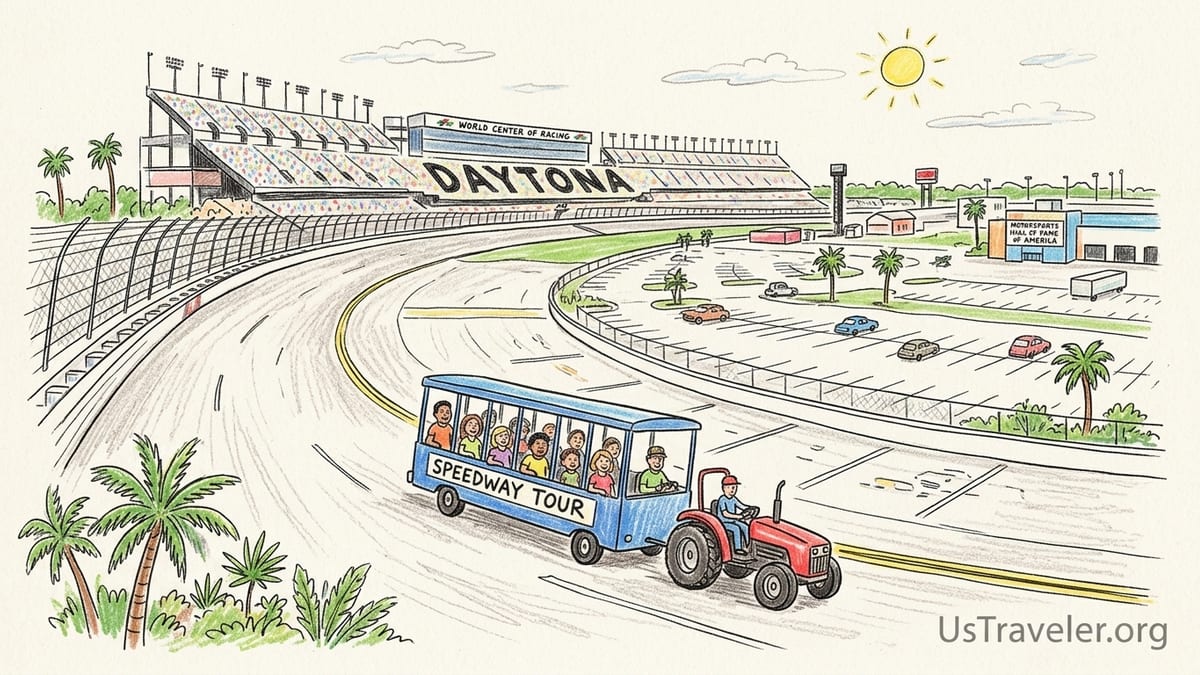
With about 20 minutes before my scheduled departure, I stepped outside to watch one of the trams return. Seeing the open sided vehicles roll past the massive DAYTONA lettering on the grandstand, carrying a mix of kids, retirees and a couple still wearing beachwear from the morning, reassured me that this was very much a relaxed, all ages experience rather than something only for hardcore race fans.
Tickets, Tour Types And What They Actually Include
The speedway currently offers two main guided options for individual visitors on non event days. The first is the standard Speedway Tour, advertised as lasting about 60 minutes and running continuously from 9:30 a.m. until mid afternoon. Pricing checked in October 2026 was listed on official materials at just under 30 dollars for most adults, with discounts for children and seniors, along with a separate museum only option for the Motorsports Hall of Fame of America when tours are not operating. Exact figures can shift with seasonal promotions and tax, so it is best to confirm directly at the time of booking, but the baseline is comparable to a major stadium tour.
Crucially, that roughly 60 minute Speedway Tour includes admission to the Motorsports Hall of Fame of America, the on site museum that celebrates everything from stock cars and dragsters to powerboats and aviation. Promotional brochures and the tours page make that inclusion quite clear, and it significantly improves the value proposition. After the tram returns, your wristband or receipt gives you same day access to wander the museum at your own pace, which can easily absorb another hour or two for anyone with even a casual interest in machinery.
Above the standard product is the longer, approximately 2.5 hour VIP Tour. Updated regional tourism brochures for 2026 and partner hotel guides describe this as a small group, more behind the scenes experience that adds areas such as the NASCAR Archives & Research Center, the Press Box and premium infield or lounge spaces, sometimes including views from the Axalta Injector and the Rolex 24 Lounge. This tour runs on more limited schedules, several times per week, and must usually be reserved in advance. Pricing referenced in late 2024 and 2025 media articles placed it roughly at two to three times the cost of the one hour tour, reflecting the longer duration and higher access level, though again visitors should verify current rates before committing.
On my visit I chose the standard Speedway Tour for two reasons. First, I wanted to know if the entry level product, the one most families will realistically book, stands on its own merits. Second, the day’s VIP slots were already sold out, which speaks to rising demand among serious motorsport fans. That sold out sign at the ticket window is an important reminder to treat the VIP tour as a limited add on, not something you can always decide on at the last minute.
Rolling Out: Vehicles, Guides, Group Size And Route
The core of the experience starts when you board the tour tram. At Daytona, these are open air tram cars similar to what you might see at a large theme park, pulled by a small truck or tractor. Bench seating faces forward, with a simple roof for shade and open sides for photos. On my midweek tour, our group numbered around 25 people, spread across two tram cars, which left plenty of room to move to the outer seats for better views during photo stops.
Our guide introduced himself through the tram’s PA system as we rolled toward the tunnel that dives under Turn 1 to reach the infield. He had worked at the track for several years and clearly loved telling stories. As we emerged inside the oval, he pointed out the 31 degree banking and explained how drivers experience several times the force of gravity in the turns at speed. Articles featuring Daytona tram drivers often highlight how much they see themselves as storytellers as much as drivers, and that rang true here. The commentary mixed basic explanations for total newcomers with anecdotes about famous Daytona 500 finishes, record speeds and weather dramas.
The typical non race day route follows a logical circuit: infield entry, stop on the apron near one of the high banked corners, slow roll along the tri oval and frontstretch, brief pause on or near pit road, and a stop at Gatorade Victory Lane where guests can step off the tram for photos. Our guide also pointed out the road course layout painted within the infield, used each March for the Rolex 24 sports car race and various motorcycle events, reinforcing that Daytona is more than a one week stock car facility.
Throughout the tour, safety and access rules shape what you can and cannot do. You are not allowed to walk on the steepest part of the banking for liability reasons, but our driver did angle the tram up the lower part, then stopped so we could see how sharply the seats tipped. Looking up at the towering catch fencing and the huge “World Center of Racing” signage without another soul on the track surface was strangely powerful and arguably easier to appreciate without noise or crowds.
What You Really See: Banking, Pit Road, Grandstands And Victory Lane
For me, the highlight was the banking stop. Photographs and television do not communicate how extreme 31 degrees really is. Standing on the apron and looking up, the asphalt feels more like a wall than a racetrack, and you immediately understand why rainwater sheets down so quickly and why cars can hold such high speeds through the turns. Parents in our group pointed out the tire rubber streaks to their kids, who were busy craning their necks to see to the top of the fence.
From there, the tour continued around to the frontstretch, with the tram slowing to almost a walking pace near the start finish line. The guide explained the significance of the tri oval shape, designed to bring the cars closer to the grandstands, and pointed out the giant DAYTONA lettering painted in the grass. Even without a race in progress, it was easy to picture cars woven across the track during a green white checkered finish, and I realized I was mapping memories from past TV broadcasts onto the empty asphalt in front of me.
On pit road, we learned how teams use each concrete box, why the pit wall markings matter and how NASCAR regulates pit speed. There were no active teams that morning, but the lane still carried the smell of fuel and rubber. The guide gestured toward the adjacent garage buildings and explained that access into the working garages is reserved for specific event credentials and not part of normal tours, although race week VIP hospitality programs may include it. That distinction is worth knowing; regular visitors should not expect to wander through mechanics actively working on cars.
The final on track stop was Gatorade Victory Lane, recreated after the track’s major renovation to better accommodate television, sponsors and fans. Our group was allowed to step off the tram, pose for photos on the podium and stand beneath the winner’s arch. A staff photographer captured group shots offered as part of an optional digital photo package, while guests also freely used their own phones. The guide used this time to invite questions, which ranged from “How long does it take to dry the track after rain?” to “Has anyone ever driven the tour tram too fast?” That unscripted back and forth helped the experience feel more personal than a pre recorded commentary loop.
Inside The Motorsports Hall Of Fame Of America
After the tram returned to the tour center, we walked directly into the Motorsports Hall of Fame of America, which is physically attached to the same building. This museum is easy to underestimate from the outside, but it turned out to be one of the richest parts of the visit. Founded in the 1980s and relocated to Daytona in the mid 2010s, the Hall of Fame honors drivers, builders and innovators from a wide range of disciplines, including stock cars, open wheel, motorcycles, drag racing, land speed records, powerboating and aviation.
In practical terms, that means you can walk from Richard Petty’s stock car to a sleek dragster, then to an offshore powerboat and a vintage sprint car within a few steps. Cars and bikes are displayed on low plinths with plaques describing their significance, and there are dedicated exhibits to greats like Mario Andretti and Tony Stewart alongside powerboat champions and aviation pioneers. For kids and casual visitors, the visual variety keeps things fresh. For more serious fans, the artifact labels and historic photographs invite slower reading.
I spent almost 90 minutes wandering the gallery and could have stayed longer. Interactive elements are modest but thoughtful, such as short video clips and explanations of how different series work. The museum does a strong job of contextualizing Daytona within a broader American motorsport story, which matters if someone in the group is not particularly interested in NASCAR but enjoys mechanical design or American history.
Importantly, the fact that access to this museum is included with the Speedway Tour ticket removes the pressure to see everything quickly. Several families from my tram group treated it as an air conditioned break in the middle of their Daytona Beach day, with grandparents reading displays while kids pointed at unusual vehicles. That flexibility is a significant advantage compared with race day, when crowds and noise can easily overwhelm less committed fans.
VIP Tour, Archives & Press Box: Is The Upgrade Worth It?
While I did not take the VIP Tour on this particular visit, I have spoken with fellow travelers and reviewed recent descriptions from local tourism boards and partner hotels to understand what it adds. The most distinctive element is access to the NASCAR Archives & Research Center, a separate building near the speedway that houses decades of race records, photographs, trophies and documents. Media visits have described walking past rows of file cabinets filled with entry lists and timing sheets, historic race programs and trophies that rarely see public display. For deep fans of NASCAR history, this is essentially a pilgrimage site, and it is not open to walk up visitors outside of these guided VIP groups.
The VIP experience also typically includes time in the Press Box or media center high above the track, where you can stand at the front row of desks and look out through the glass that commentators and journalists use during events. Some itineraries add premium club spaces such as the Rolex 24 Lounge or views from one of the colorful injector entrances, offering a very different perspective on the grandstands. These vantage points are nearly impossible to replicate as a standard spectator unless you hold high level hospitality tickets during race weeks.
At around two and a half hours, with a group size that sources describe as significantly smaller than the standard tram, the VIP Tour is a very different commitment. Price references from late 2024 place it somewhere in the 70 to 100 dollar range per person before tax, though Daytona does not publish detailed public rate cards far in advance and may adjust based on demand or season. That level positions it closer to premium theme park add ons or high end team stadium tours, which feels appropriate given the exclusivity of the archives access.
In my view, whether the upgrade is worth it depends almost entirely on your baseline enthusiasm. If you can name multiple Daytona 500 winners, follow NASCAR news regularly or care deeply about racing history, the chance to walk the archives stacks and sit in the media center press rows probably justifies both the additional time and cost. If, on the other hand, you simply want to see the track, feel the scale and browse some cool cars, the standard Speedway Tour combined with the Motorsports Hall of Fame of America delivers a very complete experience for a much more approachable price.
Limitations, Weather, Track Activity And Practicalities
One theme Daytona staff raise repeatedly, both online and in person, is that every tour is subject to change. The track is a working facility that hosts testing, club events, driving experiences and preparations for major races throughout the year. If Richard Petty Driving Experience sessions or private track rentals are underway, your tram may not be able to stop in the typical locations or drive the full oval. On days of heavy maintenance or event build out, certain infield roads or pit road segments can be closed. Even the Motorsports Hall of Fame of America may adjust hours if large private functions are booked.
Weather is an equally important wildcard, especially in Florida’s summer and storm seasons. Tours operate in open air vehicles, so heavy rain, lightning or extreme heat can delay or cancel departures at short notice. On my October visit, a brief shower earlier in the day left parts of the apron damp and prevented the tram from climbing higher on the banking. Staff communicated this clearly at check in and adjusted the narrative, focusing more on pit road and the victory lane stop instead. Travelers who are on tight schedules should build in some buffer time around their chosen slot to accommodate minor delays.
Operationally, tours typically depart every 30 minutes from 9:30 a.m. until mid afternoon, with the last advertised departures around 2:45 p.m. or 3:00 p.m., depending on the latest schedule. I booked an earlier slot and found the waiting time minimal. Walk up visitors who arrived closer to midday occasionally had to wait through one departure cycle to fit the next tram, especially larger families, but the lobby and museum shop gave them somewhere to browse in the meantime.
From an accessibility standpoint, the facility is designed to accommodate a wide range of guests. The tram itself is relatively low to the ground and staff assist with boarding. There are options to remain on the vehicle at stops if stepping down is difficult, and ramps and elevators connect key viewing platforms and the museum floor. As always, anyone with specific mobility needs should contact the venue in advance, but I watched a multigenerational family that included a grandparent with a folding walker complete the tour without difficulty.
Atmosphere Without A Race Versus Attending The Real Thing
As someone who has watched Daytona only through a television screen, I wondered if a quiet weekday visit would feel like a diluted version of the real experience. In practice, the atmosphere is different enough that it becomes its own product. On a non race day, you can hear every word of the guide’s commentary, take unhurried photographs and study details such as the texture of the racing line, the scale of the SAFER barriers and the arrangement of pit boxes. Families with small children do not have to worry about ear protection or overwhelming crowds, and parking is straightforward.
By contrast, attending the Daytona 500 or the Rolex 24 means embracing congestion, higher ticket prices and the full sensory overload of top tier motorsport. Grandstand seats for the 500 can easily run into the hundreds of dollars per person before adding infield or garage passes, and hotel rates in the surrounding area spike across Speedweeks. The payoff is extraordinary atmosphere, from the pre race flyover to the pack thundering past at 190 miles per hour, but it is not a casual half day outing.
On balance, I would not treat the tour as a replacement for attending a race if you are already planning a bucket list motorsport trip. They serve different needs. The tour is an educational, accessible introduction that gives you spatial context. It lets you say “I have stood at Daytona and seen the banking for myself.” A race visit is about emotion and spectacle, more akin to a festival. Many visitors will find that doing the tour first actually enhances a later race visit, because you can better understand what is happening on pit road or down in the infield when the stands are full and the noise makes it impossible to hear detailed explanations.
Price is another differentiator. For a family of four, the cost of Speedway Tour tickets plus gas and parking from Orlando or St. Augustine can often come in below the price of a single good race day grandstand ticket. That makes the non race tour a far more realistic add on for a general Florida vacation, whereas a Daytona 500 weekend is closer to a dedicated trip in its own right.
Who Enjoys It Most: Kids, Non Fans And Casual Visitors
Walking out of the Motorsports Hall of Fame of America, I tried to imagine how each type of visitor in my group might describe the experience. The two young boys in the front row of the tram, who kept asking about top speeds and crashes, were clearly thrilled. Parents appreciated that the content was exciting without being frightening, and the guide handled sensitive topics such as safety advances and past accidents with tact. For children, the simple act of riding a vehicle onto a real racetrack and posing for photos in victory lane is often enough to create a lasting memory.
For non NASCAR adults, the tour’s broader motorsport framing matters. While the on track commentary focuses naturally on stock car events, the museum’s inclusion of sports cars, motorcycles, powerboats and even aviation gives everyone a way in. I overheard one visitor say she had never watched a full race but loved the design of vintage Indy roadsters and the engineering behind land speed record vehicles. That kind of sideways engagement is exactly what keeps non fans from feeling excluded.
Travelers who openly dislike motorsport are a different question. If someone in your party detests loud cars on principle, even a quiet tour built around racing history may not win them over. However, I noticed that several partners and friends who described themselves as “tagging along” were far more engaged once the tram reached the banking and the sheer size of the place became real. The physical structure is impressive on its own terms, independent of whether you care about lap times.
My sense, after watching a mixed group move through the day, is that children from about six years old upward, casual sports fans, history buffs and anyone interested in engineering will all find worthwhile moments. The standard tour may feel a little thin only for those with zero interest in vehicles of any kind or visitors who crave hands on interactivity over guided storytelling.
The Takeaway
So, was my non race day visit to Daytona International Speedway worth it? As a motorsport enthusiast who has not yet attended the Daytona 500 in person, I came away convinced that the Speedway Tour and Motorsports Hall of Fame of America combination justifies dedicating at least a half day of a Central East Florida itinerary. The standard roughly 60 minute tour delivered clear commentary, memorable photo stops on the banking and in victory lane, and a relaxed atmosphere that would suit first time visitors of all ages. The included museum access significantly extends the experience without adding extra cost.
The VIP Tour, with its access to the NASCAR Archives & Research Center and Press Box views, appears to be an excellent high end option, particularly for dedicated fans of stock car racing history. Current descriptions and feedback suggest that its 2.5 hour format and smaller group size provide a more immersive behind the scenes feel. The higher price and limited scheduling mean it makes the most sense if you are already deeply invested in the sport or want to mark a special occasion.
Potential visitors should keep in mind that weather, private events and track activity can alter the exact route on any given day, so flexibility is important. Booking an earlier tour time, leaving space in your schedule for small delays and checking the latest operating notes from Daytona International Speedway will help you avoid disappointment. Even with those caveats, the tour I experienced felt well organized and delivered on what it promised.
If your Florida vacation already includes theme parks and beaches, adding Daytona International Speedway on a non race day offers a striking change of pace. You will not feel the chest thump of a live pack roaring past, but you will stand at the base of some of the steepest banking in American motorsport, look up at grandstands that hold tens of thousands and trace the line where so many famous races have been decided. For most travelers, the standard Speedway Tour is the best value starting point, with the VIP Tour reserved as a worthwhile splurge for serious NASCAR devotees. Either way, the speedway earns its place as a distinctive half day excursion along Florida’s central Atlantic coast.
FAQ
Q1. How long does the Daytona Speedway Tour take on a non race day?
The standard Speedway Tour is advertised at about 60 minutes from boarding to return, not including extra time you may spend afterward in the Motorsports Hall of Fame of America.
Q2. Is admission to the Motorsports Hall of Fame of America included with the tour ticket?
Yes. Current tour materials state that admission to the Motorsports Hall of Fame of America is included with Speedway Tour tickets, giving you same day access to the museum after your tram returns.
Q3. How much does the standard Speedway Tour cost?
Recent official pricing places the adult cost just under 30 dollars before tax, with reduced rates for children and seniors, though exact prices can vary with promotions and should be confirmed when you book.
Q4. What extra areas does the VIP Tour include compared with the standard tour?
The VIP Tour typically adds behind the scenes stops such as the NASCAR Archives & Research Center, the Press Box or media center and selected premium viewing or lounge areas, along with a more in depth circuit of the infield.
Q5. How often do tours run during the day?
On non race days, Speedway Tours usually begin around 9:30 a.m. and depart every 30 minutes until mid afternoon, with the final tours leaving between about 2:45 p.m. and 3:00 p.m. depending on the current schedule.
Q6. Can the tour route change because of track activity or weather?
Yes. Track rentals, driving experiences, maintenance or incoming storms can all force last minute adjustments, which may limit how close the tram can get to the banking, pit road or infield, or delay departures entirely.
Q7. Is the tour suitable for young children?
Most families find the tour appropriate for school age children, who tend to enjoy the tram ride, banking stop and photos in victory lane. Very young toddlers may have shorter attention spans but are welcome.
Q8. Will non NASCAR fans still enjoy the experience?
Many non fans appreciate the sheer scale of the facility and the variety inside the Motorsports Hall of Fame of America, which features sports cars, motorcycles, powerboats and aviation exhibits alongside stock cars.
Q9. How does the cost of the tour compare with attending a race?
For a family, touring the speedway on a non race day usually costs significantly less than buying grandstand tickets for the Daytona 500, making the tour a more budget friendly way to experience the venue.
Q10. Should I choose the standard tour or upgrade to the VIP Tour?
If you are a casual fan or visiting with mixed interests, the standard Speedway Tour offers the best balance of time and value. If you follow NASCAR closely and care deeply about its history, the longer VIP Tour and its access to the archives and Press Box are more likely to justify the higher price.