


Central New York looks compact on a map until you start traveling it in real time: two-lane roads that slow behind farm equipment, dark rural stretches where “just grabbing dinner” becomes a planning exercise, and summer peak weekends when a small village like Cooperstown can sell out well beyond its borders. After a few overnight stays stitched together across Otsego County, the Mohawk Valley, and the Southern Tier, I realized the smartest lodging choice here isn’t about finding the cutest inn or the biggest chain hotel. It’s about choosing the right geography for the sights you’re actually doing, and being honest about what you want after dark: walkable dinners, easy parking, a casino-style late night, or quiet lakeside mornings.
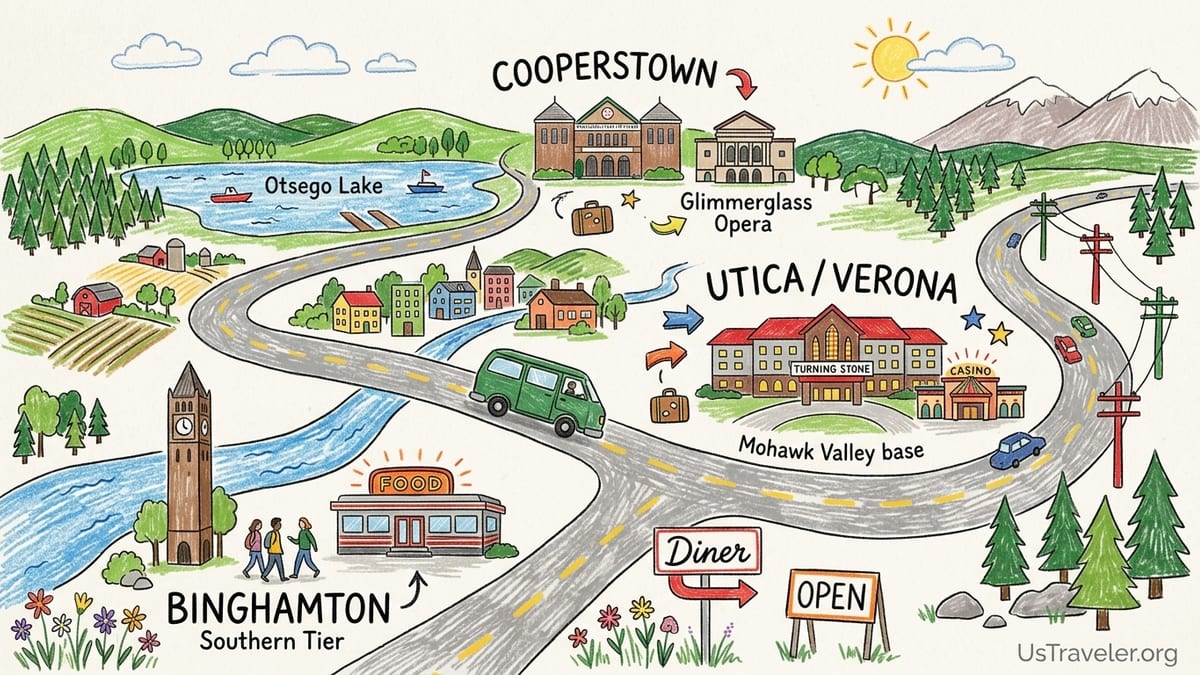
How I Made the Decision: I Stopped Picking Hotels and Started Picking Maps
I planned my Central New York loop the way a lot of travelers do: I pinned attractions first, then looked for “a nice place to stay.” What changed everything was realizing that three hubs solve three different problems. Cooperstown and Otsego Lake are a destination in themselves, with a concentrated cluster of must-dos like the National Baseball Hall of Fame and Museum and a summer performing-arts draw in the Glimmerglass area. Utica and Verona are a practical, highway-friendly base in the Mohawk Valley, with the region’s most dependable late-night energy anchored by Turning Stone. Binghamton is the Southern Tier’s best logistics play, especially if your plans pull you toward the Pennsylvania line, college-town food hours, or day trips deeper into the bottom edge of the region.
I also forced myself to evaluate the unglamorous details you feel only after you’ve checked in: how hard it is to find a second dinner option once the first place is full, whether you can park once and walk, and whether you’re likely to spend your evenings driving 20 to 40 minutes just to find a place that is still serving food. Those factors mattered more than room decor.
Finally, I tested the biggest question Central New York forces on you: should you stay in one “central” base and commute, or move hotels to match your itinerary? The answer depends on your attraction mix. If you are truly split between Cooperstown, the Mohawk Valley, and the Southern Tier, moving hotels can save enough time to justify repacking. If your trip is mostly one of those zones with a single out-and-back day trip, a single base is calmer and often cheaper.