


Flying into the San Francisco Bay Area is not as simple as picking “San Francisco” on a booking site and calling it a day. The region is served by three major airports, each sitting in a different corner of the bay with very different pros and cons once you factor in flight options, ground transportation and where you actually need to be. Choosing between San Francisco International (SFO), Oakland International (OAK) and San Jose Mineta International (SJC) can easily add or subtract hours from your trip, as well as hundreds of dollars when you include trains, rideshares and rental cars.
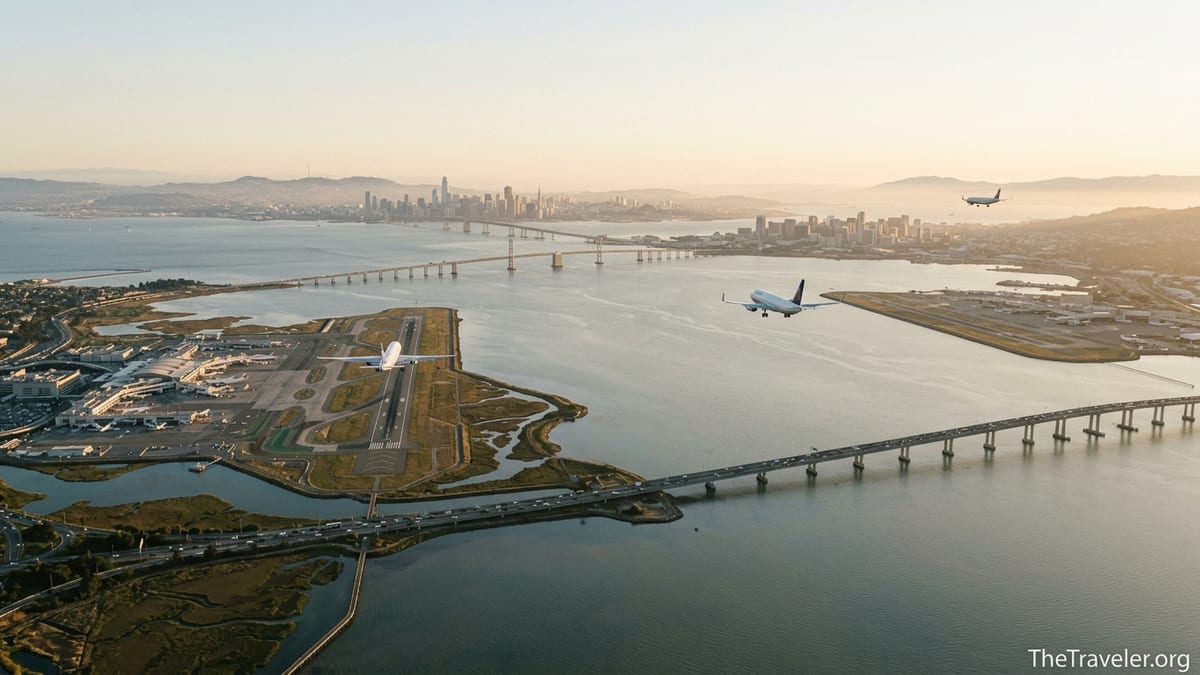
The Big Picture: How the Three Bay Area Airports Differ
San Francisco International Airport, or SFO, is the primary international gateway for the region and one of the busiest airports in the United States. It handles the lion’s share of long haul flights to Europe, Asia and Oceania, along with an extensive domestic network on United, Delta, American, Alaska and others. That reach makes it the obvious default for most travelers who simply type “San Francisco” into a search box and accept the top result.
Oakland International Airport, recently rebranded as Oakland San Francisco Bay Airport, sits across the bay in the East Bay. It is smaller, more low key and heavily dominated by Southwest Airlines and other value oriented carriers offering point to point routes across the western United States and to parts of the Midwest and Mexico. For many domestic routes, particularly on Southwest, fares into OAK can be noticeably cheaper than comparable flights into SFO on the same dates, although exact differences swing with demand.
San Jose Mineta International Airport anchors the South Bay and Silicon Valley. Though smaller than SFO, it now handles comparable or greater passenger volumes than Oakland in many recent years, with Southwest and Alaska as key players alongside the major legacies. It offers a compact, modern terminal experience and a growing mix of domestic and some international flights, including services to hubs like Dallas, Denver, Seattle and occasional nonstops to Europe or Asia depending on the season.
From a traveler’s standpoint, the crucial distinction is not which airport is “best” in abstract, but which airport is best for your specific itinerary. A visitor staying near Union Square with a 09:00 departure to London will have a very different answer than a family from Sacramento headed to Disneyland or a software engineer flying in for meetings in Sunnyvale. The true cost and convenience of each airport only emerges when you consider where you are starting, where you are going and how comfortable you are with local transit.
Flight Options, Airlines and When Each Airport Shines
If you are flying internationally, especially from Europe or Asia, SFO is usually the obvious choice. It offers far more nonstop intercontinental flights than OAK or SJC, along with premium cabins and alliance connectivity. Travelers from London, Frankfurt, Tokyo, Singapore or Sydney will often find multiple daily nonstops to SFO, while OAK and SJC may have at most a handful of overseas routes that change from year to year. If your priority is a direct flight over connections, particularly in business or premium economy, SFO usually wins.
For domestic travel, the picture is more nuanced. Oakland’s strength lies in its role as a base for Southwest and other low cost carriers. On popular routes like Los Angeles, San Diego, Las Vegas or Phoenix, OAK often sees frequent, competitively priced nonstop flights. For example, it is common to find one way fares under typical SFO levels on select dates between OAK and Southern California, especially during shoulder seasons when business demand is lower. Budget conscious travelers who pack carry on only and are comfortable with Southwest’s boarding style can benefit significantly.
San Jose punches above its weight for Silicon Valley bound travelers. It offers nonstops to many major tech markets such as Seattle, Austin and Denver, and its schedule often includes early morning departures and late night returns tailored to business travelers. A product manager headed straight to a campus in Mountain View may happily pay a small fare premium for SJC, knowing they can be in a rideshare and at their hotel in under 20 minutes off peak, instead of spending an hour crawling up the peninsula from SFO.
Price wise, there is no permanent winner. Some years SFO’s larger competition and capacity keep fares competitive, while at other times Southwest driven pricing from OAK or SJC can undercut SFO on popular domestic routes. It is common to see one airport be 30 to 80 dollars cheaper each way on specific dates. Savvy travelers search all three, then weigh those savings against transfer costs and time. A couple might decide that saving 120 dollars by flying into OAK instead of SFO makes sense if they are ultimately staying in Berkeley, but not if they still need to cross the bay into downtown San Francisco late at night with surge pricing on rideshares.
Ground Transportation: BART, Caltrain, Light Rail and Rideshares
Ground transportation is where the three airports diverge most sharply. SFO has a dedicated Bay Area Rapid Transit, or BART, station directly connected to the International Terminal via the AirTrain people mover. That link makes it straightforward to step off a flight from New York, follow signs to AirTrain, and be on a BART train heading to downtown San Francisco in a fairly predictable timeframe. Travel time from SFO to the downtown Embarcadero or Powell Street stations typically runs around 30 minutes once you are actually on the train, with fares that are generally much lower than a taxi or rideshare for solo travelers.
Oakland has a similar, though slightly more complex, setup. The Oakland Airport Connector shuttle train runs between the airport and the Coliseum BART station, where passengers transfer to regular BART services toward downtown Oakland, Berkeley, downtown San Francisco or other East Bay destinations. In practice, getting from OAK to downtown San Francisco often involves one short people mover ride plus a BART ride, with total travel time commonly around 40 to 50 minutes in normal conditions. For travelers staying in Oakland or Berkeley, however, the trip can be considerably shorter and simpler than crossing the bay from SFO.
San Jose lacks a direct heavy rail equivalent to BART. Instead, travelers rely on a mix of local transit and road based options. The airport operates free shuttle buses connecting the terminals with the VTA light rail and bus network and the rental car center. From there, visitors can ride light rail into downtown San Jose, connect to Caltrain for trips up the peninsula, or transfer to buses. While it is certainly possible to reach San Francisco by a chain of shuttle, light rail and train connections, it is more convoluted than the single seat BART rides from SFO, and schedules can be sparse at night. As a result, many SJC passengers heading beyond the South Bay simply opt for a rideshare or rental car.
For all three airports, rideshares such as Uber and Lyft are widely available, though pickup points and access fees vary. At SFO, travelers often meet drivers in designated garage areas signposted in each terminal, and airport surcharges are baked into fares. At OAK and SJC, rideshare pickup zones are generally close to the terminals, but the driving distances to key destinations differ. A typical afternoon rideshare from SFO to Union Square might run around 40 to 70 dollars depending on traffic and surge, while an OAK to downtown Oakland trip could be considerably cheaper and shorter. Those costs can easily erase modest savings on airfare if not considered up front.
Rental Cars, Hotel Access and Overnight Logistics
All three Bay Area airports offer consolidated rental car centers, but how easy they are to reach and how much you will rely on them differ by airport. At SFO, the Rental Car Center is linked to every terminal and the airport BART station by the AirTrain system. A traveler arriving on a late evening flight from Chicago can follow signs for AirTrain, ride to the Rental Car Center in a few minutes and pick up a car from a major chain without leaving the airport footprint. The same AirTrain network connects to long term parking and the on site Grand Hyatt hotel, making SFO relatively self contained for those who want to sleep near the terminal before an early departure.
Oakland’s rental car operations are similarly centralized, with shuttles or short walks depending on the provider and current layout. Because OAK sits in the East Bay, rental car drivers headed toward destinations like Walnut Creek, Napa Valley via Interstate 80, or Silicon Valley via Interstate 880 need to consider traffic patterns carefully. A group planning a wine country weekend might choose OAK because it avoids crossing the often congested San Francisco Bay Bridge entirely, trading SFO’s slightly larger flight selection for a more direct route north on Interstate 880 and 80 or across the Richmond bridge.
San Jose’s rental car center, served by frequent airport shuttles, is particularly convenient for South Bay and peninsula itineraries. A visiting engineer with meetings in Cupertino and Palo Alto can pick up a car at SJC and be at their first meeting in 15 to 25 minutes outside rush hour. Overnight, the airport is ringed by mid range business hotels from familiar brands, many of which offer complimentary shuttles. For someone landing on a late flight from Denver with an early meeting in Sunnyvale, SJC’s straightforward layout and nearby hotels often translate into a more restful night than dealing with SFO’s size and traffic.
Hotel access varies significantly by airport. SFO has a cluster of large hotels in nearby Burlingame and along Highway 101, many with shuttles, and it also connects directly to BART for those staying downtown. OAK’s immediate hotel scene is more limited but serviceable, focused on practical roadside properties serving early morning flights. Travelers whose trips center on Berkeley or Oakland often prefer to stay closer to those cities anyway, using BART or short rideshares. Around SJC, the density of business hotels in San Jose, Santa Clara and along the highway corridors means that you can often find a room within a 10 minute drive, even for late arrivals.
Typical Transfer Times and Traffic Realities
On a map, SFO, OAK and SJC do not look dramatically far apart, but Bay Area traffic can make them feel like different worlds. The key is to think in terms of realistic transfer times at the hours you actually travel. For example, a Tuesday midday BART ride from SFO to downtown San Francisco might take 30 to 40 minutes platform to platform, plus time to walk from the station to your hotel. The same trip at 23:30, when trains run less frequently, could involve longer waits and possibly a taxi or rideshare for the last leg if you are tired or carrying heavy luggage.
Driving times are even more variable. An early morning drive from SFO to Palo Alto via Highway 101 can be as quick as 30 minutes before the peak commute, but stretch to an hour or more if you leave at 08:00 on a weekday. Conversely, the same trip from SJC to Palo Alto might be 20 to 35 minutes in moderate traffic. The Bay Bridge is a particular pinch point. A drive from OAK to downtown San Francisco can be 20 minutes late at night or easily over an hour during evening rush hour or after a baseball game. That is why residents often advise East Bay visitors to use OAK when possible, simply to avoid repeated crossings of the bridge.
For travelers connecting to longer distance ground transportation, such as Amtrak or bus services, airport choice can also shift the balance. Someone heading to Sacramento might find that flying into OAK, taking BART to Richmond and transferring to Amtrak, or renting a car and driving Interstate 80, is more direct than starting at SFO. Meanwhile, a ski trip group bound for Lake Tahoe might favor SFO for its wider choice of inbound flights combined with rental car availability, while still budgeting extra drive time on winter weekends when Interstate 80 toward the mountains can back up for hours.
The lesson is that a tempting 40 dollar fare savings quickly disappears if you add a 90 minute, surge priced rideshare on either end. Before locking in tickets, plug the real flight times into a maps app set to the day of the week and approximate hour and check expected drive times from each airport to your first night’s bed. Then compare those against scheduled transit options like BART or Caltrain. This simple step often flips your decision between SFO, OAK and SJC.
Which Airport Is Best for Different Bay Area Itineraries
For classic first time tourism focused on San Francisco itself, SFO usually makes the most sense. Visitors staying near Union Square, Fisherman’s Wharf or the Embarcadero benefit from direct BART access, a wide choice of flights and relatively predictable transfer times, especially during the day. A family flying in from Chicago for a four night stay near the Ferry Building might pay slightly more than they would to land at OAK, but they can roll their luggage straight from the BART station to their hotel and avoid late night transfers at unfamiliar East Bay stations.
Travelers whose plans center on the East Bay often come to the opposite conclusion. If you are attending a conference at UC Berkeley, visiting friends in Oakland’s Rockridge neighborhood or staying in Walnut Creek, OAK becomes the natural first choice. BART and shorter drives mean you avoid crossing the bay unnecessarily, and Southwest’s route network can be particularly convenient from many US cities. In this scenario, SFO can feel like an expensive detour, especially if your arrivals or departures fall in peak bridge traffic hours.
For Silicon Valley, San Jose is quietly the most efficient option. Someone flying in from Seattle for two days of meetings with companies in Sunnyvale and Mountain View can land at SJC, pick up a compact rental car and often be at their first meeting in less time than they would spend just getting out of SFO’s rental car facility and onto Highway 101. Many South Bay residents will still check fares from SFO and OAK, but a surprising number are willing to pay a bit extra to avoid the long slog north, citing SJC’s manageable size and quick curb to gate times.
Specialized trips tilt the balance further. Wine country visitors staying in Napa or Sonoma sometimes favor OAK to keep their route simple: pick up a car, head north on Interstate 880 and 80 or across the Richmond bridge, and start tasting. Budget beach breaks to Southern California or Las Vegas often lean toward OAK or SJC if Southwest or other carriers run aggressive sales. Long haul business class or premium economy fliers, on the other hand, will almost always end up at SFO, where major alliances concentrate their premium products and lounges.
The Takeaway
Choosing between SFO, OAK and SJC is less about finding the single “best” Bay Area airport and more about matching each airport’s strengths to your particular trip. SFO dominates on international reach, premium cabin options and direct rail access into central San Francisco. OAK offers a quieter, often cheaper gateway that excels for East Bay and some Northern California itineraries, especially for travelers comfortable with BART or driving around the bay without crossing multiple bridges. SJC delivers exceptional convenience for Silicon Valley and the South Bay, trading a smaller flight menu for fast, low stress transfers to nearby offices and hotels.
In practical terms, the smartest strategy is to search flights into all three airports whenever possible, then layer on the real world details. Consider how many people are in your group, how much luggage you carry, whether you are comfortable riding BART or local light rail at your arrival time, and what peak traffic looks like on the highways between each airport and your destination. A solo backpacker landing at noon will make a different choice than a family of four landing at 23:30 with two kids and three suitcases.
When in doubt, start from your first night’s bed and work backward. Plug the hotel address into a map with each airport as a starting point, check expected travel times for your arrival hour, and estimate the cost of transit or rideshares. Then weigh those numbers against the fare differences you see between SFO, OAK and SJC. That exercise often reveals that a slightly more expensive ticket can actually be the cheaper and far less stressful choice once the full door to door journey is accounted for.
The Bay Area is fortunate to have three generally well run, traveler friendly airports. None is a bad experience by global standards, and all have loyal local fans. With a bit of advance thought about logistics, you can turn that abundance of choice from a source of confusion into a genuine advantage, tailoring your airport decision to the trip you actually plan to take.
FAQ
Q1. Which Bay Area airport is best if I am staying in downtown San Francisco?
SFO is usually the best choice for downtown San Francisco because it has a direct BART connection into the city, frequent service and the widest range of flights, especially from the East Coast and overseas. OAK can also work if fares are much cheaper, but it requires a transfer from the Oakland Airport Connector to regular BART trains.
Q2. Is Oakland Airport really cheaper than SFO?
Often but not always. On many domestic routes, especially those served heavily by Southwest and other low cost airlines, OAK can be noticeably cheaper than SFO on certain dates. However, price differences change constantly, and any savings should be weighed against extra time or cost reaching your final destination.
Q3. When does it make sense to fly into San Jose instead of SFO?
SJC makes the most sense if your trip centers on Silicon Valley or the South Bay, such as San Jose, Santa Clara, Sunnyvale, Mountain View or Cupertino. In those cases the shorter drive or rideshare from SJC often outweighs the airport’s smaller selection of flights.
Q4. Which airport is best for visiting Berkeley or the East Bay?
For Berkeley, Oakland, and much of the East Bay, OAK is usually the most convenient option. The combination of the airport connector and BART or short drives keeps you on the same side of the bay and avoids the often congested Bay Bridge. SFO can still work, especially if you find a nonstop there that you cannot get into OAK.
Q5. How late does public transit run from the airports?
BART serves both SFO and the Oakland Airport Connector into the late evening, but frequencies drop later at night and service does not run overnight. In the South Bay, VTA light rail and buses from SJC run on set schedules that become sparser late at night. For very late arrivals, it is prudent to plan on a taxi or rideshare backup from any of the three airports.
Q6. Are there big differences in rental car convenience between SFO, OAK and SJC?
All three airports have centralized rental car facilities, and each is connected to its terminals by people movers or shuttle buses. SFO uses the AirTrain system, OAK relies on short shuttles or walks depending on the company, and SJC runs frequent airport shuttles to its rental car center. The bigger differences relate to where you are driving afterward rather than the pickup process itself.
Q7. Which airport has the most delays and weather issues?
SFO is more prone to weather related delays, especially during foggy periods, because of its coastal location and heavy traffic. OAK and SJC, which sit inland and handle fewer flights, tend to experience fewer weather induced disruptions, though they are not immune to wider system delays affecting airlines nationwide.
Q8. What is the best airport for a Napa or Sonoma wine country trip?
Many wine country visitors prefer OAK because it allows a relatively direct drive north without crossing the San Francisco Bay Bridge. However, some travelers still choose SFO if it offers more convenient flight times or nonstop options. In either case, expect a drive of roughly one and a half to two hours to popular Napa Valley towns, depending on traffic.
Q9. Is it worth switching airports on arrival and departure to save money?
It can be, but only if you are comfortable with logistics. Some travelers fly into SFO and out of OAK or SJC, or vice versa, to take advantage of cheaper or better timed flights. This works best for flexible itineraries, such as road trips that start and end in different parts of the region. For shorter stays focused on a single city, using the same airport both ways is usually simpler.
Q10. If I do not plan to rent a car, which Bay Area airport is easiest overall?
If you intend to rely entirely on public transit and occasional taxis, SFO generally offers the easiest combination of direct rail access, frequent service and clear wayfinding into central San Francisco. OAK is also quite manageable for East Bay destinations thanks to its connector and BART. SJC is very workable for South Bay stays but requires more planning if you need to reach San Francisco or the East Bay without a car.