


The San Francisco Bay Area packs more variety into a week of travel than many regions do in a month. Within a 90-minute drive you can move from urban skylines to redwood forests, surf beaches and vineyard-covered hills, with serious food and wine at almost every stop. This guide compares the Bay Area’s key hubs for visitors – San Francisco, Sausalito, Muir Woods, Oakland, Berkeley, San Jose, Half Moon Bay, Napa and Sonoma – so you can match the right base to your style of trip, whether you are planning a quick city break, a romantic escape, a family holiday or an extended tour.
How to Choose Your Bay Area Base
Distances in the Bay Area look short on a map, but traffic and bridge crossings can turn a 25-mile drive into an hour or more, especially on weekdays. That makes it important to choose one or two main bases instead of trying to commute from a single hotel to every corner of the region. A couple planning winery tastings and long lunches will have a very different ideal base than a family trying to fit in Alcatraz, a ballgame and a day among the redwoods.
As a broad rule, San Francisco is best if it is your first time in the region or you want big-city energy and famous sights without renting a car. Napa and Sonoma work well for food and wine focused trips when you are comfortable hiring a driver or designating someone to stay sober. Half Moon Bay is the easiest coastal escape for quiet walks and ocean views. Oakland and Berkeley are the strongest picks for visitors who want culture, diverse food and more local feel at generally lower hotel prices than central San Francisco. Sausalito and Muir Woods pair well for relaxed, scenic days, while San Jose anchors tech-focused itineraries and South Bay day trips.
Think in terms of combinations that limit daily travel. Two to three nights in San Francisco paired with one or two nights in wine country or by the coast is a classic first-time plan. Repeat visitors often skip the city hotels and split a week between Oakland or Berkeley and either Napa, Sonoma or Half Moon Bay, using regional trains and ride shares to dip into San Francisco when they want its museums and neighborhoods.
San Francisco: Iconic City Sights and Urban Energy
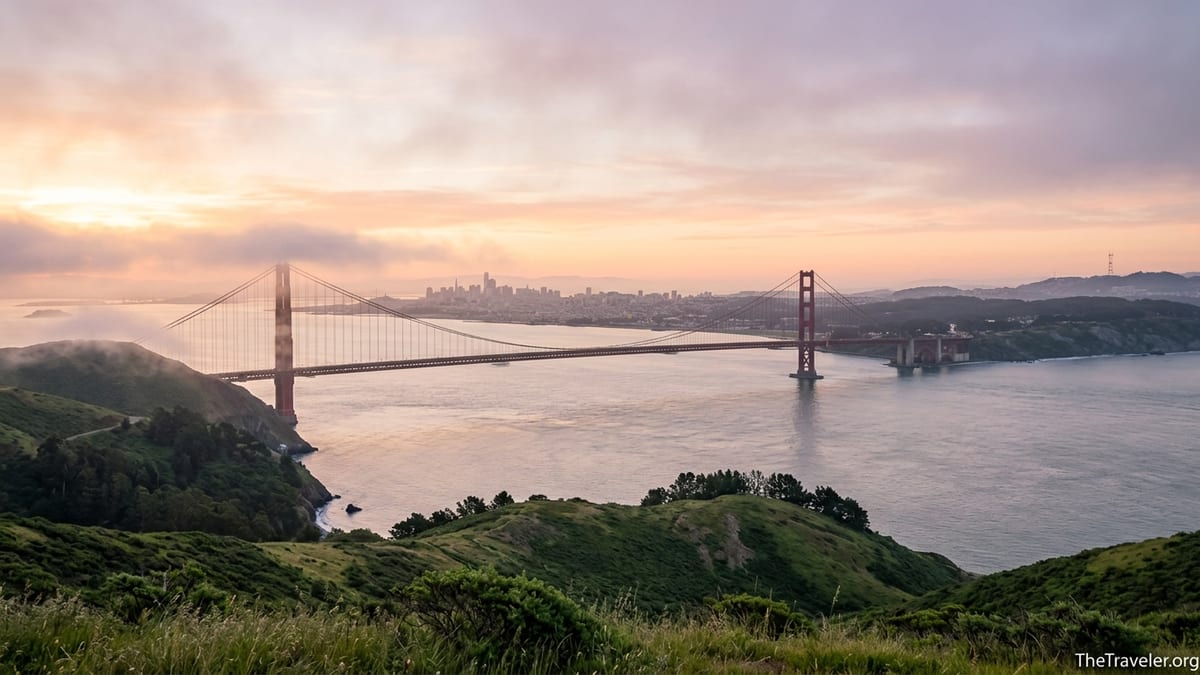
San Francisco remains the region’s main draw, particularly for first-time visitors. Iconic experiences crowd close together: walking across the Golden Gate Bridge, visiting Alcatraz Island, riding a cable car from Union Square over Nob Hill, or wandering the Victorian streets of Hayes Valley and Alamo Square. In Golden Gate Park you can spend most of a day between the California Academy of Sciences, the de Young Museum and the Japanese Tea Garden, then finish with sunset at Ocean Beach or Lands End.
For food, San Francisco is a safe bet for travelers who want range and quality in a compact area. You might start with morning coffee and pastries from an independent roaster in the Mission District, have a casual dim sum lunch around Clement Street in the Richmond, and book a dinner reservation at a contemporary tasting-menu restaurant in SoMa or North Beach. Prices vary, but it is reasonable to expect around 4 to 6 dollars for a good espresso drink, 15 to 25 dollars for a casual lunch entrée, and 40 to 60 dollars per person for a mid-range dinner before drinks and tax.
Families appreciate San Francisco’s walkability and public transport. The Embarcadero waterfront, Fisherman’s Wharf and nearby Pier 15 science museum create a straightforward day with built-in kid appeal. Many visitors pair a morning Alcatraz visit with afternoon seafood on the waterfront and a late-day cable car ride back toward their hotel. For couples, boutique hotels in neighborhoods like Nob Hill, Pacific Heights and the Hayes Valley area put you near restaurants and nightlife without the crowds of Union Square and Fisherman’s Wharf.
San Francisco does have trade-offs. Parking in central neighborhoods is expensive, and summer mornings can be chilly and foggy near the ocean and the Golden Gate, so you will want layers. Hotel rates are often highest on weekdays when business travel peaks, though weekend events can push prices up too. If you mainly want to hike, relax on beaches or spend long days in vineyards, you may prefer to limit city time to two or three nights and spend the rest of your trip elsewhere in the region.
Sausalito and Muir Woods: Waterfront Charm and Ancient Redwoods
Just across the Golden Gate Bridge, Sausalito trades San Francisco’s bustle for a Mediterranean-style waterfront with houseboats, hillside homes and views back to the skyline. It is a popular stop on cycling routes that cross the bridge and run down into town, where visitors park their bikes, grab fish tacos or seafood at a marina-side restaurant and return to the city on the ferry. Couples often choose Sausalito for a quieter stay in small inns with bay views, using ferries or ride shares to dip into San Francisco for dinners and shows.
A short drive inland from Sausalito, Muir Woods National Monument protects one of the last accessible stands of old-growth coastal redwoods near the city. The main boardwalk loop through the forest is an easy, mostly flat walk suitable for families and visitors of varied fitness levels, with optional side trails climbing the canyon walls for those who want more of a hike. The mood shifts quickly once you step beneath the canopy: the air cools, the light softens, and the sound of traffic and the city disappears.
Muir Woods operates with a mandatory parking and shuttle reservation system, which means you need to pick a time slot in advance rather than simply driving up and hoping for a spot. This improves the experience once you are there, because the trails and facilities never feel as overwhelmed as an unregulated parking lot would suggest. For a straightforward visit, plan on about three hours including time to arrive, orient and walk the main loops. Families can bring simple snacks, though food and drink options at the site itself are limited and basic.
As a combined destination, Sausalito and Muir Woods work well as a one- or two-day add-on to a San Francisco stay. Travelers who prize calm and easy scenery may want to base themselves in Sausalito for two or three nights instead, using it as a jumping-off point not only for the redwoods but also for drives up the Marin Headlands, where short roadside walks yield sweeping views back to the bridge and the city.
Oakland and Berkeley: Culture, Neighborhoods and Local Food
East of the bay, Oakland and Berkeley offer a more local-feeling alternative to staying in San Francisco itself. Both cities are directly linked to San Francisco by the Bay Area Rapid Transit system, which makes it realistic to stay in the East Bay and spend individual days in San Francisco without a car. For budget-conscious travelers or longer stays, that combination of easier parking, slightly lower average hotel rates and direct train links is compelling.
Oakland’s downtown and nearby neighborhoods have become a serious food destination in their own right. Around Uptown and Temescal you will find everything from casual taco counters to inventive New American bistros and natural wine bars. A couple might spend an evening moving from a cocktail bar near Lake Merritt to a shared-plates restaurant in Uptown, then end with live music at a historic theater. Daylight hours can center on the Oakland Museum of California, the lakeside paths around Lake Merritt or a drive up to the Oakland Hills for bay views.
Berkeley, anchored by the University of California campus, leans a bit more bohemian. The streets around the campus mix bookstores, cafes and inexpensive eateries catering to students with well-regarded restaurants that helped launch the farm-to-table movement. North Berkeley and the neighboring Gourmet Ghetto area still draw food-focused travelers with bakeries, cheese shops and long-standing restaurants that showcase California produce in relatively relaxed settings. Families appreciate the small Lawrence Hall of Science above campus and nearby parks in the hills, which have kid-friendly trails and picnic spots.
For visitors comparing the East Bay to staying in San Francisco, the main question is what kind of city atmosphere you want. Oakland and Berkeley feel less polished and more residential than Union Square or the Embarcadero, but that is also their appeal: you meet more locals than tour groups, and everyday errands like stopping for coffee or groceries feel like part of the trip rather than a step between attractions. If you plan to spend equal time exploring both sides of the bay, a hotel near a Bay Area Rapid Transit station in Oakland’s downtown or Berkeley’s core can be a strategic middle ground.
San Jose and the South Bay: Tech Hubs and Laid-back Suburbs
San Jose, roughly an hour south of San Francisco by car in normal traffic, is the heart of Silicon Valley and the Bay Area’s largest city by population. Many visitors arrive for work, but the city can also anchor a more relaxed, family-friendly stay. Downtown San Jose has a walkable core with museums, parks and casual restaurants, while the surrounding neighborhoods offer chain hotels and apartment-style stays with easier parking, which appeal to road trippers and extended families.
Unlike San Francisco, San Jose’s appeal is not tied to dramatic geography so much as access. From here it is relatively straightforward to day-trip to the beaches of Santa Cruz, the redwoods of the Santa Cruz Mountains or the tasting rooms of the Santa Clara Valley wine region. Families might pair a morning at the interactive Tech Museum of Innovation or the Children’s Discovery Museum with an afternoon in a neighborhood park, then plan a full-day outing to the coast later in their stay. Couples who are less focused on nightlife and more interested in calm evenings and day trips often find San Jose an easy base.
Prices in San Jose for dining are broadly similar to the rest of the Bay Area, with plenty of casual taquerias, pho shops and South Indian restaurants at accessible price points. Tech visitors sometimes plan one splurge dinner in San Francisco or Palo Alto, using the commuter rail to get there and back in the same evening rather than changing hotels. For non-drivers, San Jose’s light rail and regional train services connect to San Francisco and Oakland, but travel times are long enough that you will not want to make that commute every day of a short trip.
Compared with Napa or Half Moon Bay, San Jose is rarely a romantic-first choice. It suits travelers who want suburban comfort, extensive shopping and straightforward freeway access to other parts of the region more than those seeking dramatic scenery outside the hotel door. If you are coming primarily for San Francisco’s highlights or for wine country, another base will likely make more sense unless work is bringing you to the South Bay anyway.
Half Moon Bay: Coastal Calm and Outdoor Time
On the ocean side of the peninsula, roughly 45 minutes to an hour from San Francisco or San Jose in light traffic, Half Moon Bay offers bluff-top trails, long beaches and a laid-back small-town main street. It is one of the easiest ways to add true coastal scenery to a Bay Area itinerary without driving as far as Big Sur. The Half Moon Bay Coastside Trail runs along the bluffs above a string of beaches, providing gentle walking and cycling with constant Pacific views and access to picnic spots and sandy coves below.
The town center mixes independent cafes, bakeries and casual restaurants with surf shops and small galleries. Mornings often begin with fog, which usually burns off by midday in summer and early fall. Couples frequently time a visit around a special-occasion dinner at an oceanfront resort restaurant, then spend the next day walking the trails and beaches. Families appreciate that most of the area’s attractions are free or low-cost, aside from parking at some state beaches, so a full day of exploring does not require the same budget as a day of private winery tastings.
Just north of Half Moon Bay, the coastal area around Mavericks Beach is known in the surf world for winter waves that can reach truly dramatic heights. Most visitors will experience it from shore, watching surfers on smaller days or simply enjoying the broad views over Pillar Point Harbor and the coastline. The Pacific can be cold and conditions unpredictable, so swimming here is best left to experienced locals with proper gear. For casual visitors, simple beach walks, tide-pooling and sunset views are safer and more relaxing ways to enjoy the shoreline.
Half Moon Bay pairs well with either San Francisco or San Jose as a two- or three-night add-on for travelers who want to slow the pace of their trip. It is less suited to travelers relying entirely on public transportation, because bus services are limited and travel times can be long. For drivers, though, it is an easy coastal retreat that delivers the classic California mix of rugged shores, gentle trails and oceanfront sunsets without requiring a complicated itinerary.
Napa and Sonoma: Wine Country for Different Styles and Budgets
North of San Francisco, Napa Valley and neighboring Sonoma County are the Bay Area’s default choice for visitors who care most about wine, food and scenic countryside. At a glance they look similar, with vineyard-covered hills and tasting rooms scattered along valley roads. In practice, they cater to slightly different styles and budgets. Napa is best known for high-end, reservation-driven experiences that can feel almost like culinary theater, while Sonoma, especially its less developed valleys, tends to be a bit more relaxed and spacious.
In Napa Valley, basic seated tastings at well-known estates commonly run in the region of 40 to 80 dollars per person, with more elaborate tours and food pairings climbing well higher. It is increasingly common for wineries to require reservations, particularly on weekends, and for tasting fees to be only partially or not at all waived with bottle purchases. Many travelers choose to concentrate on two or three wineries per day, lingering over tastings and often adding a long lunch at a bistro or restaurant in towns like Yountville or St. Helena.
Sonoma County offers a broader range of tasting experiences, from small family-run wineries in the Russian River and Dry Creek valleys to larger estates near Sonoma town and Healdsburg. Tasting fees vary widely, but first-time visitors often find that more casual walk-in options still exist here, particularly on weekdays and outside the busiest harvest weeks in late summer and early fall. The atmosphere often feels looser and less choreographed than Napa, with some wineries still pouring at outdoor bars or picnic tables rather than formal tasting salons.
For couples on a romantic trip, both regions deliver: think vineyard-view inns with fire pits, hot air balloon rides over the valley floor, and evening dinners built around local produce and wines. Families may need to plan more carefully, choosing wineries with outdoor spaces where children can play quietly or considering other activities like biking paths, farmers’ markets and regional parks. No matter who you travel with, it is worth budgeting for transportation. Hiring a driver or joining a small-group tour might add 100 to 150 dollars per hour for a private vehicle or significantly less per person for a join-in tour, but it also removes the stress and safety risk of driving after multiple tastings.
Matching Destinations to Different Trip Styles
For first-time visitors focused on sightseeing, three or four nights in San Francisco combined with a day trip to Sausalito and Muir Woods offers an efficient introduction. You can ride a morning ferry or tour bus to the redwoods, walk the main loops, stop for lunch or coffee in Sausalito and be back in the city in time for a sunset viewpoint and dinner. Another day might be dedicated to Alcatraz and the waterfront, with evenings left open for exploring neighborhoods like the Mission or North Beach on foot.
Couples planning a romantic escape may want to minimize time spent in traffic by booking two main bases: perhaps three nights in San Francisco or Sausalito followed by three nights in Napa, Sonoma or Half Moon Bay. In wine country, choose one valley or town rather than trying to zigzag across the region in a single day. A typical couple’s day might start with a leisurely breakfast at an inn, a midmorning winery appointment, a long lunch in town, an afternoon tasting and a quiet evening by a fire pit or on a terrace. On the coast, mornings lend themselves to walks along the Half Moon Bay Coastside Trail, with afternoons reserved for reading, light hikes or casual seaside dinners.
Families with school-age children often get the most from a city-and-nature combination. Two or three nights in San Francisco allow time for kid-friendly highlights like the Exploratorium, the California Academy of Sciences and a boat trip on the bay. From there, shifting to a rental house or hotel in Half Moon Bay, Sonoma or the outskirts of Napa can give everyone more space to spread out, cook some meals together and spend more time outdoors. Muir Woods can be folded into either portion of the trip, provided reservations are secured in advance for either the shuttle or parking.
Travelers on tighter budgets should not assume the Bay Area is out of reach. Staying in Oakland, Berkeley or parts of San Jose, eating at casual taquerias and noodle shops, and relying on regional trains and buses rather than daily car rentals can keep costs far lower than a week of waterfront hotels and private tastings. In wine country, you can focus on a smaller number of well-chosen tastings, look for midweek or off-season deals and seek out wineries with more modest fees or policies that credit tastings toward bottle purchases. On the coast and in the redwoods, hiking, picnicking and beach time remain relatively low-cost pleasures.
FAQ
Q1. If I only have three days in the Bay Area, where should I stay?
For a first visit with limited time, base yourself entirely in San Francisco. You can fit in key city sights and add a half- or full-day tour to Sausalito and Muir Woods without changing hotels.
Q2. Is it better to visit Napa or Sonoma for a first-time wine trip?
Napa is ideal if you want polished, higher-end experiences and iconic names, while Sonoma is generally a bit more relaxed and can feel better value. Choose one rather than trying to cover both in a single full day.
Q3. Do I need a car to explore the Bay Area?
In San Francisco itself you can manage with public transport and ride shares. For Half Moon Bay, Napa, Sonoma and many East Bay hills and regional parks, having a car or joining tours makes things much easier.
Q4. How far in advance should I book Muir Woods?
Parking and shuttle reservations can sell out on weekends and holidays, especially in summer and during school breaks. Booking as soon as you know your preferred day and time is the safest approach.
Q5. Can children enjoy Napa and Sonoma, or are they only for adults?
Children are allowed at many wineries, and families often enjoy the open space, picnic areas and nearby parks. The focus is still wine, so it is wise to mix in non-winery activities and keep tasting days short.
Q6. Which Bay Area base is best for a beach-focused trip?
Half Moon Bay is the most convenient option for long beach walks and ocean views, with easier access than more distant coastal regions. It pairs well with a shorter San Francisco or wine country stay.
Q7. Are Oakland and Berkeley safe choices for visitors?
Like any cities, they have areas that feel more comfortable than others. If you choose central neighborhoods near transit, stay aware of your surroundings and follow normal city precautions, most visitors feel at ease.
Q8. When is the best season to visit the Bay Area?
Late spring and early fall often bring the most pleasant mix of temperatures and clearer skies, though the region is a year-round destination. Coastal areas can be cool and foggy even in midsummer.
Q9. How expensive are Napa wine tastings now?
Basic seated tastings at well-known Napa wineries commonly run in the ballpark of 40 to 80 dollars per person, with more elaborate tours and food pairings costing more.
Q10. Can I visit wine country without driving after tastings?
Yes. Many visitors book small-group tours, hire a private driver or use local car services that specialize in winery itineraries so they can taste safely without getting behind the wheel.