

San Francisco is one of the easiest places in the United States to visit without a car, but only if you understand how its patchwork of trains, ferries and buses fit together. With BART to reach the airport and East Bay, Muni to crisscross the city, Caltrain down the Peninsula and ferries gliding across the bay, you can reach many of the region’s biggest sights without ever opening a rideshare app. This guide explains how to use the main systems, where to stay near good transit, which day trips work well without driving, and when renting a car actually becomes the better option.
How Clipper Makes the Bay Area Work Without a Car
The single most useful tool for car-free travel in the Bay Area is the regional Clipper system. Instead of buying separate tickets for BART, Muni, Caltrain, ferries and many bus operators, you load money or passes on one card or in your phone wallet and tap in at gates or onboard readers. As of 2026, visitors can either buy a plastic Clipper card from vending machines at San Francisco International Airport, Oakland International Airport, major BART stations and some ferry terminals, or download a free digital Clipper card into Apple Pay or Google Wallet and start using it immediately with a contactless tap.
Clipper simplifies payments and usually costs slightly less than paying cash on each system. For example, BART gives a small discount for riders who add value through Clipper instead of buying paper tickets, which have now been phased out. Muni bus and light-rail fares are lower with Clipper than when paying cash on board, and you no longer need paper transfers. On Caltrain, you tap in on the platform reader before boarding and tap out when you arrive, and the correct fare is deducted based on how many zones you crossed.
Another reason to rely on Clipper is the growing number of transfer discounts. A common pattern for visitors is riding BART into downtown San Francisco, then transferring to a Muni bus or Metro train to reach a hotel or neighborhood like the Castro or North Beach. With Clipper, those connections within a set time window often trigger discounts that reduce your overall cost compared with buying completely separate tickets. The exact amounts and rules change periodically, but planning to use one card across systems is almost always cheaper and much simpler.
For most short visits, you will not need to worry about monthly passes, but they can be valuable for longer stays. The Muni “A” Fast Pass, loaded on Clipper, covers unlimited Muni rides plus BART within San Francisco between Embarcadero and Balboa Park stations for a full calendar month. Travelers staying several weeks and commuting daily between downtown and neighborhoods like Glen Park or Balboa Park by BART, and then using local buses, often find that this pass quickly pays for itself.
Using BART: Airports, Downtown and East Bay
BART, the Bay Area Rapid Transit system, is the backbone for airport access and regional trips between San Francisco and much of the East Bay. From San Francisco International Airport, you walk directly from the International Terminal into the BART station, tap your Clipper card, and ride into downtown San Francisco in about 30 minutes. Trains typically run every 10 to 20 minutes during the day, with slightly reduced frequency at night and on weekends. Compared with a taxi or rideshare, the rail ride is competitively priced and avoids highway traffic, especially during peak commute hours.
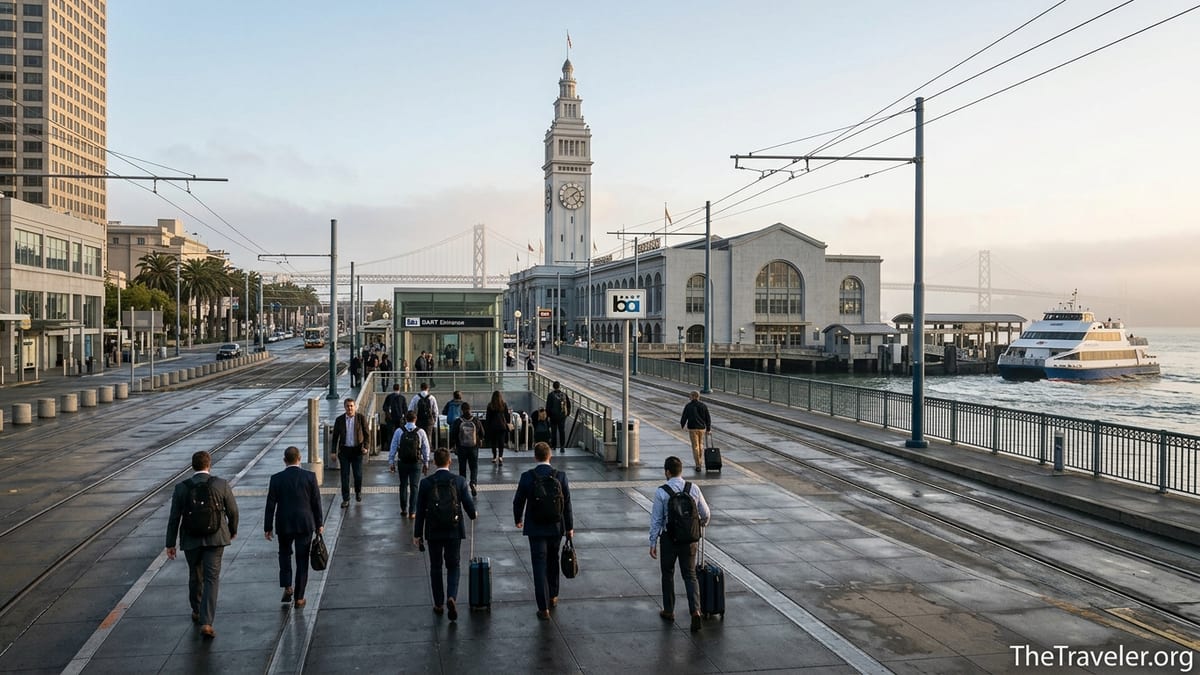
Within San Francisco, BART has four central stations that visitors use most: Embarcadero, Montgomery, Powell and Civic Center. These align with major hotel zones and attractions. For instance, Powell Street Station places you steps from Union Square hotels and the Powell cable car turntable. Embarcadero Station drops you a short walk from the Ferry Building and its food halls. If you are staying in the Mission District, 16th Street Mission and 24th Street Mission stations give fast access to downtown and the airport without needing a car.
BART is also your best tool for reaching Berkeley, Oakland and many East Bay neighborhoods without driving. A visitor staying near Powell Street can board a Richmond or Antioch line train, cross under the bay through the Transbay Tube and arrive at Downtown Berkeley in around 30 minutes total, making day trips to the University of California campus, Telegraph Avenue or the Gourmet Ghetto straightforward without renting a car. Similarly, Oakland’s 12th Street and 19th Street stations serve Uptown and Downtown Oakland, where you can walk to restaurants, bars and venues.
One limitation for car-free planning is BART’s reduced late-night service, particularly after midnight. Visitors planning concerts in Oakland or late dinners in Berkeley should check return train times in advance. If the last train is too early for your plans, you may need to budget for a late-night rideshare or taxi back to San Francisco, which can still be cheaper overall than renting a car for your entire stay.
Muni: Navigating San Francisco Neighborhoods Without Driving
Within San Francisco city limits, the San Francisco Municipal Transportation Agency, commonly called Muni, provides buses, light rail, historic streetcars and the iconic cable cars. For most visitors, Muni is how you reach Golden Gate Park, the Haight, the Castro, the Mission, North Beach, Ocean Beach and many residential neighborhoods far from the BART spine. A modern Clipper card or mobile Clipper tap is the quickest and cheapest way to board. You tap once when you get on; unlike BART and Caltrain, you do not tap out when you exit.
Several Muni Metro lines are especially useful for travelers. The N Judah runs from Caltrain’s downtown terminal and Market Street tunnels out to Inner and Outer Sunset, a handy line for visiting the de Young Museum, California Academy of Sciences and the eastern side of Golden Gate Park. The T Third connects Mission Bay and Chase Center with downtown and further south along Third Street. For a classic ride, the F Market & Wharves streetcar line uses vintage streetcars between the Castro, Market Street, the Ferry Building and Fisherman’s Wharf, often forming an easy, scenic route between hotel areas and waterfront attractions.
Buses fill in the gaps where rail does not reach. The 38 and 38R Geary lines are the main spine for reaching Japantown and the Richmond District, useful for diners heading to noodle houses or bakeries along Geary Boulevard and Clement Street. The 30 Stockton line connects Union Square and Chinatown, while the 1 California bus serves the Financial District, Nob Hill and the Richmond. Although bus speeds can be affected by traffic, dedicated transit lanes on many corridors have improved reliability for car-free visitors.
Cable cars are priced higher than regular Muni trips and function more as a tourist experience than a commuter service, but they remain part of the network. A visitor staying near Union Square might ride the Powell-Hyde line to reach Ghirardelli Square and near Fisherman’s Wharf without needing any car. For practical daily travel, however, most visitors rely on buses and Metro lines, reserving cable car rides for one or two scenic trips during their stay.
Caltrain and the Peninsula: Silicon Valley Without a Rental Car
Caltrain is the commuter rail line linking San Francisco with the Peninsula and Silicon Valley, including stops in cities such as San Mateo, Redwood City, Palo Alto and San Jose. The San Francisco terminal at 4th and King Streets is a short Muni Metro ride or a 15 to 20 minute walk from downtown and the ballpark area. On weekdays, trains run frequently during peak hours, with a mix of local and limited-stop services. Weekends have an all-stops local pattern with fewer departures but still enough for comfortable day trips.
For visitors, Caltrain opens up several worthwhile car-free excursions. A common itinerary is a day trip to Palo Alto and Stanford University. You board at San Francisco in the morning, ride roughly an hour to Palo Alto Station, then walk through the underpass into downtown Palo Alto or transfer to the free Marguerite campus shuttle to reach major campus landmarks like the Main Quad and Cantor Arts Center. Another popular option is San Jose’s Diridon Station, from which you can walk to the SAP Center, the San Pedro Square Market food hall or connect to local buses and light rail.
Caltrain uses a zone-based fare system, so the price depends on how many zones you cross, not on specific stations. Visitors using Clipper tap in at the station reader before boarding and tap out when getting off. Fares are automatically calculated, and you avoid the guesswork of paper tickets. For travelers staying longer or commuting daily between specific city pairs, monthly zone passes loaded onto Clipper can offer better value than paying single ride fares, though they only make sense if you ride frequently.
One practical consideration for car-free visitors is the schedule. While Caltrain works very well for daytime and early evening trips, late-night frequencies are limited, particularly on weekends. If you are attending a night game at Levi’s Stadium via transfer or a late concert in San Jose, check the last northbound departure in advance and have a contingency plan, such as staying overnight near the venue or budgeting for a rideshare back to your base in San Francisco.
Ferries and Buses: Scenic Crossings and Regional Links
San Francisco’s ferries offer both transportation and sightseeing rolled into one. Regular commuter and weekend services run between the San Francisco Ferry Building or Pier 41 and destinations like Sausalito, Tiburon, Larkspur and Vallejo, as well as the East Bay. For example, a visitor can ride a ferry from the Ferry Building to Sausalito in around 30 minutes, step off into a compact waterfront town filled with galleries and cafes, then return in the afternoon with striking skyline views and Golden Gate Bridge photo opportunities along the way.
Ferries are fully integrated into the Clipper system, although their fares are usually higher than local bus or Metro rides. Many visitors treat at least one ferry trip as a highlight of their stay, such as pairing a morning walk through the Ferry Building food market with a mid-day sailing to Tiburon for lunch. On busy weekend days and holiday fireworks nights, schedules may be adjusted with extra or later sailings, but services can also sell out, so checking times and arriving a bit early for popular departures is wise.
Regional bus operators complement trains and ferries by serving bridges and hills that rail lines cannot reach. Golden Gate Transit buses connect downtown San Francisco with Marin County, including stops in Sausalito, Mill Valley and San Rafael, using the Golden Gate Bridge. From San Francisco, AC Transit bus routes cross the Bay Bridge to serve much of the East Bay, sometimes paralleling BART but reaching neighborhoods far from stations. South of San Francisco, SamTrans buses run along the Peninsula, linking SFO, residential areas and Caltrain stops.
For a traveler without a car, these buses open up options like hiking in the Marin Headlands, visiting small towns in Marin or exploring residential East Bay neighborhoods. For example, you might take BART to El Cerrito del Norte and then transfer to AC Transit buses heading to Point Richmond or regional parks. As with other Bay Area transit, Clipper is the easiest way to pay, and many routes offer at least hourly service during the day, though evening and weekend schedules can be thinner.
Where to Stay Near Transit for a Car-Free Trip
Choosing the right base can make the difference between an easy car-free visit and one that feels like a constant transfer puzzle. For most first-time visitors, staying near Market Street in downtown San Francisco offers the best overall transit access. Hotels around Union Square and SoMa place you within walking distance of Powell, Montgomery or Civic Center BART stations, multiple Muni Metro lines, the F Market streetcar and frequent bus routes. This cluster lets you arrive from either SFO or Oakland Airport on BART, check in on foot and then rely on Muni and walking for most city activities.
Travelers who plan to spend significant time in the Mission, Castro or Noe Valley may prefer accommodations near the 16th Street or 24th Street Mission BART stations, or along Muni Metro lines. Boutique hotels and vacation rentals in these neighborhoods give you immediate access to bars, restaurants and cafes, while still keeping downtown within a quick BART or Metro ride. You can arrive from the airport by BART, walk a few blocks to your lodging, and easily head into other neighborhoods by bus or train.
For visitors whose plans are split between San Francisco and Silicon Valley, staying near Caltrain can make sense. The area around 4th and King in San Francisco has hotels within a 10 to 15 minute walk of the station, along with Muni Metro stops that connect to Market Street. On the Peninsula, downtowns near Caltrain stations such as Burlingame, Redwood City or Palo Alto offer walkable streets with restaurants and shops, allowing you to move between these towns and San Francisco by rail while still keeping a compact, pedestrian-friendly base.
In the East Bay, Berkeley and Oakland both have neighborhoods well served by BART that work well for car-free stays. Near Downtown Berkeley Station, you can find small hotels and guesthouses within walking distance of the university, food districts and bookstores, and still ride BART into San Francisco for day or evening activities. Around Oakland’s 19th Street and 12th Street stations, Uptown and Downtown Oakland provide a growing restaurant and arts scene, again reachable without driving from either airport.
Easy Day Trips Without a Car
Several of the Bay Area’s most appealing day trips are fully realistic without driving, particularly if you are comfortable with a few transfers. One of the easiest is Berkeley: from central San Francisco you ride BART to Downtown Berkeley and spend the day exploring the university campus, the shops and cafes on Telegraph Avenue and Shattuck Avenue, and the gourmet food spots near North Shattuck, returning by BART in the evening. The whole itinerary requires no car at all, and walking distances are moderate.
Another classic car-free excursion links downtown San Francisco with Sausalito. You start at the Ferry Building, ride a ferry across the bay with views of the Bay Bridge and city skyline, and land in Sausalito’s compact downtown. From there, you can walk the waterfront, visit local galleries, have lunch at a restaurant overlooking the marina, then return by ferry. More active visitors sometimes bring or rent bicycles for a ride up into the Marin Headlands or across the Golden Gate Bridge, then use ferries or Golden Gate Transit buses to complete a loop.
Caltrain-based day trips offer a different flavor. A morning train to Palo Alto gives you a full day to tour Stanford’s museums, bookshops and cafes, before catching an evening return. Alternatively, you could ride to San Jose’s Diridon Station, visit San Pedro Square Market for lunch, walk to the Tech Interactive museum or explore downtown. Because Caltrain stations tend to be close to city centers, you can often rely on walking plus the occasional local bus or rideshare for anything beyond a 20-minute walk.
Some more ambitious but still feasible car-free outings include Angel Island State Park by ferry from San Francisco or Tiburon, or a combination of BART and buses to reach selected trailheads in the East Bay Regional Park system. These itineraries require closer attention to schedules, especially for the last ferry or bus of the day, but they demonstrate that even hiking and island visits are possible without renting a car.
When Renting a Car Becomes Worthwhile
Despite the Bay Area’s extensive transit network, there are situations where renting a car becomes practical or even necessary. Destinations such as Napa and Sonoma wine country, many parts of Point Reyes National Seashore, remote trailheads in the Santa Cruz Mountains and coastal towns along Highway 1 are difficult to reach solely by public transit. While you can piece together a combination of commuter rail and local buses, the travel time and limited schedules often make a day trip unrealistic. In these cases, a one-day or weekend car rental can dramatically increase flexibility.
If your itinerary includes multiple out-of-the-way sites in a short period, this is another sign that a rental car may be wise. For example, a traveler planning to visit both Point Reyes Lighthouse and several wineries in Sonoma on the same weekend will likely find transit connections too sparse or indirect. Renting a car for only those specific days, while relying on BART, Muni and Caltrain for the rest of the trip, can balance cost, convenience and sustainability.
Families with small children or travelers with mobility challenges may also appreciate the predictability of a rental car for certain days, even within the city. While San Francisco buses and trains are generally accessible and free for children below a certain age, strollers, luggage and frequent transfers can be tiring. A hybrid approach works well: stay near a major transit hub, use trains and buses for most sightseeing, and rent a car only for targeted excursions that would otherwise require multiple slow transfers or long walks.
Cost is a final factor. Parking in central San Francisco is expensive, and many hotels charge high nightly rates for garages. If you rent a car, you will need to consider not just the daily rental itself but also hotel parking, bridge tolls and fuel. For many visitors whose plans focus on the city, Berkeley, Oakland and a single Peninsula trip, those added costs outweigh any convenience gains. Transit plus occasional rideshares typically remains the better choice for a primarily urban vacation.
FAQ
Q1: Do I really need a car to visit San Francisco and the Bay Area?
In most cases you do not. If your plans center on San Francisco, Berkeley, Oakland, a few ferry destinations and perhaps one Caltrain trip, you can comfortably rely on BART, Muni, Caltrain, ferries and buses, then supplement with rideshares or taxis when necessary.
Q2: What is the easiest way to pay for BART, Muni, Caltrain and ferries?
Using a Clipper card, either plastic or digital in your phone wallet, is the simplest method. You load money or passes once and then tap the same card on gates or on-board readers across most major Bay Area transit operators.
Q3: Which area should I stay in for the best transit access without a car?
Staying near Market Street in downtown San Francisco, especially around Union Square or SoMa, offers the best overall access, with multiple BART stations, Muni Metro lines, buses and the F Market streetcar all within walking distance.
Q4: Can I reach both San Francisco airports on transit?
Yes. BART runs directly into San Francisco International Airport, with trains connecting the airport to downtown San Francisco and the East Bay. Oakland International Airport is also linked to BART via an automated connector from the Coliseum station.
Q5: Is it safe to ride BART and Muni at night?
Conditions can vary by line and station, but many locals and visitors do ride at night, especially along busy corridors. It is wise to stay aware of your surroundings, sit in cars with more passengers and consider rideshares for very late or isolated trips.
Q6: Are cable cars included in regular Muni fares?
Cable cars are operated by Muni but have a higher special fare and are treated more as a tourist attraction than standard transit. Some Muni passes include them, but a normal single Muni bus or Metro fare does not automatically cover cable car rides.
Q7: How practical is it to visit Silicon Valley without renting a car?
Caltrain makes it quite practical to reach downtown areas like Palo Alto, Mountain View and San Jose. Once there, you can usually walk around central districts and use local buses or shuttles, although more spread-out corporate campuses may still be easier with a car.
Q8: What are the best car-free day trips from San Francisco?
Popular car-free options include Berkeley via BART, Sausalito or Tiburon via ferry, Palo Alto and Stanford via Caltrain, and Oakland’s Uptown and Jack London Square via BART and short walks.
Q9: When should I consider renting a car during my stay?
Consider renting a car for days that involve remote destinations such as Napa and Sonoma wine country, Point Reyes, Highway 1 beaches or mountain trailheads, or when you need to visit several scattered sites on a tight schedule.
Q10: Are transit schedules reliable enough for tight connections?
Major services like BART, Muni Metro and Caltrain are generally reliable, but delays do occur. For connections to ferries, airport flights or long-distance trains, allow a generous buffer and avoid planning transfers that depend on exact, minute-by-minute timing.