


The San Francisco Bay Area rewards travelers who plan smart routes. Distances look short on the map, but bridge bottlenecks, microclimates and spread-out highlights can turn an ambitious wish list into hours in traffic. This guide lays out realistic 3, 5, 7 and 10 day itineraries that combine San Francisco with Marin County, the East Bay, Silicon Valley and nearby wine country, with suggested overnight bases, typical drive times and optional extensions so you can match the region to the time you have.
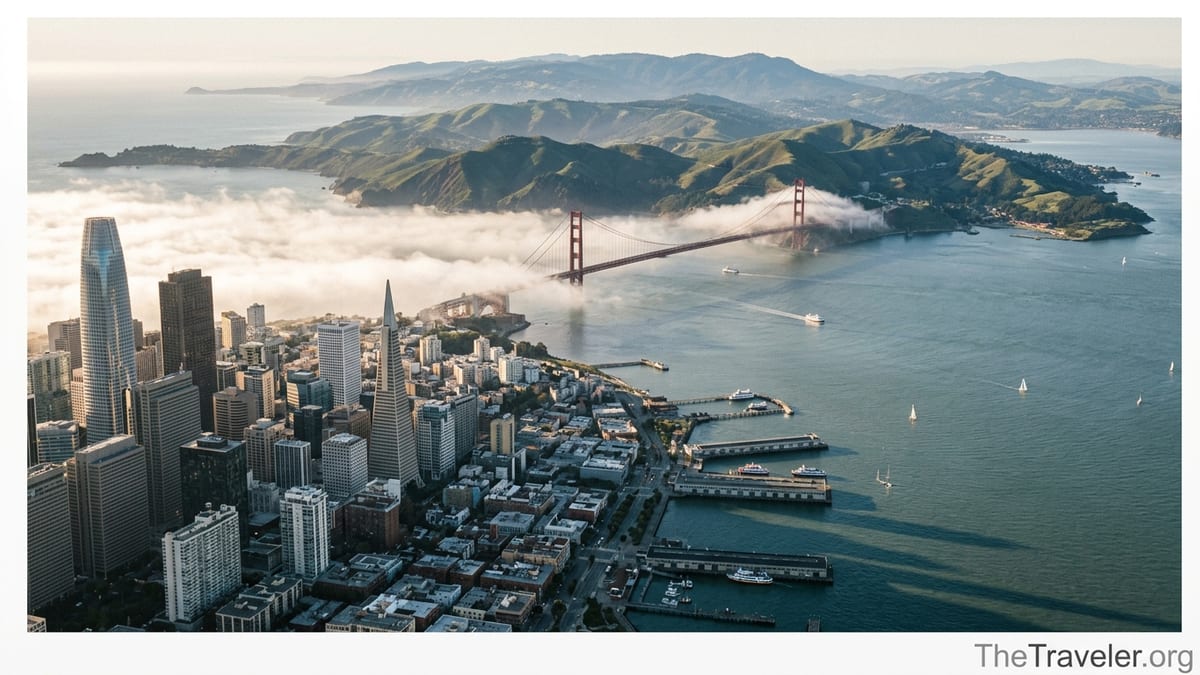
How to Structure a Bay Area Itinerary
Think of the Bay Area as five main zones: San Francisco itself; Marin County just across the Golden Gate Bridge; the East Bay anchored by Oakland and Berkeley; Silicon Valley stretching from San Mateo to San Jose; and wine country to the north in Napa and Sonoma counties. Most visitors underestimate how different these areas feel and how long it takes to move between them once you factor in bridge traffic and urban congestion. Treat each zone as its own mini-destination and limit yourself to one or two major zone changes every couple of days.
For most trips under a week, using San Francisco as your primary base makes sense, then adding one or two overnights in either wine country or Marin. As of 2024, the average daily rate for a San Francisco hotel hovered in the mid-200 dollar range before taxes, with rates somewhat lower in the East Bay and higher at popular wine country resorts, where midrange properties often start around the low 300s on weekends. Booking cancellable rates gives you flexibility to adjust if you decide you prefer more time in the city or more time among vineyards or redwoods.
Driving times depend heavily on departure time. The run from downtown San Francisco to central Napa typically takes about 1 to 1.5 hours in light to normal traffic, but can creep towards 2 or more hours if you hit rush hour or weekend getaway crowds. Crossing the Golden Gate to southern Marin towns such as Sausalito or Mill Valley can be as quick as 20 to 30 minutes outside peak periods, while reaching popular coastal spots like Point Reyes Station or Stinson Beach can stretch to 60 to 90 minutes once you are on slower, winding roads.
Public transit is viable for some pieces of the puzzle. BART links San Francisco with Oakland, Berkeley and much of the inner East Bay, and ferries connect the city with Sausalito, Tiburon, Larkspur and parts of the East Bay. These options are especially useful if you want to avoid driving and parking in San Francisco itself and then pick up a rental car for a wine country or coast segment.
3 Days: Classic San Francisco With a Taste of Marin or East Bay
With only three days, focus on San Francisco and add a single half-day or evening side trip. Make San Francisco your base for the full stay to avoid hotel changes. Choose a neighborhood with good transit and walkability such as Union Square, the Embarcadero, Fisherman’s Wharf, or a smaller-scale district like Hayes Valley or Cow Hollow. You can expect to pay in the 200 to 300 dollar per night range at midrange downtown hotels most of the year, with winter midweeks sometimes lower and peak summer and large convention dates higher.
Dedicate your first full day to the city’s core highlights. Spend the morning along the waterfront at the Ferry Building, then ride a cable car or take a surface bus up through Chinatown and North Beach to viewpoints like Coit Tower or Russian Hill. In the afternoon, head to Fisherman’s Wharf and Pier 39 if you want the classic tourist experience, or skip directly to the Presidio and Crissy Field for Golden Gate views that feel more local. In the evening, you might catch a game at Oracle Park during baseball season or find a neighborhood restaurant in the Mission District or Hayes Valley.
On day two, anchor yourself in the western neighborhoods and Golden Gate Park, which is large enough to fill most of a day between the de Young Museum, California Academy of Sciences, the Japanese Tea Garden and the park’s western edge at Ocean Beach. Combine that with time in the Mission and Castro, both easily reached by Muni, for street art, historic LGBTQ+ landmarks and some of the city’s strongest dining scenes. Many visitors manage these areas using only transit, ride-hail and walking, which keeps parking headaches to a minimum.
Use day three for a short side trip across the bay. Heading north into Marin for a few hours at Muir Woods or the Marin Headlands is rewarding if you can secure timed-entry parking for Muir Woods or are comfortable with shuttle buses and steep, sometimes foggy roads. The drive from central San Francisco to the Muir Woods parking area often takes about 45 to 60 minutes outside the worst traffic. Alternatively, ride a ferry or BART to Oakland or Berkeley for a lower-key East Bay afternoon. Jack London Square in Oakland or the Gourmet Ghetto and campus area in Berkeley can both work as compact districts where you can explore without a car.
5 Days: Add Wine Country or Deeper Marin
Five days lets you combine urban San Francisco with at least one overnight beyond the city limits. A popular structure is three nights in San Francisco followed by two nights in either Napa or Sonoma Valley, or in a Marin base such as Mill Valley for easier access to coastal trails. This approach reduces backtracking and gives you full days in each area instead of spending precious hours driving back to the city each night.
If wine country is your priority, pick up a rental car on the morning you leave San Francisco rather than for the whole city stay, which can easily save several hundred dollars in parking and rental fees across three days. The drive to Napa Valley via the Bay Bridge and Highway 29 or via the Golden Gate and Highway 37 typically takes about 75 to 90 minutes in decent traffic. Plan to leave San Francisco after the morning rush, around 10 am, to avoid the worst delays. Once in Napa Valley, many travelers focus on one central base such as the city of Napa, Yountville or St. Helena and visit two to three wineries per day, with a long lunch in between rather than racing from tasting room to tasting room.
For a five-day route that leans into nature, make your final two nights in Marin instead. From San Francisco, it is often 30 minutes to Sausalito or Mill Valley, then another 30 to 45 minutes to reach Point Reyes Station or the trailheads near Stinson Beach and Mount Tamalpais, depending on curves and congestion. Base yourself in Mill Valley or near Point Reyes if you want to split your time between coastal hikes, redwood groves, and relaxed small towns. Fog is common along the Pacific coast even in midsummer, so pack layers and expect temperatures 10 to 20 degrees Fahrenheit cooler than downtown San Francisco.
Either version of a five-day itinerary still allows time for East Bay or Silicon Valley glimpses, but these are best handled as partial days in transit. For example, driving from San Francisco to the South Bay to visit the Computer History Museum in Mountain View or the Apple Park Visitor Center in Cupertino might take around 45 to 75 minutes depending on Highway 101 or I-280 traffic. You could stop in Palo Alto for dinner before returning to the city or continuing directly to wine country via the East Bay bridges.
7 Days: Multi-Base Bay Circuit
A seven-day trip opens up a satisfying circuit that touches most of the region without exhausting you. One realistic pattern is three nights in San Francisco, two nights in wine country and two nights in either Marin or the East Bay, moving in a logical loop so that drives between bases stay in the one to two hour window. Starting in San Francisco makes sense for arrivals into SFO or Oakland airports, since both sit within roughly 30 to 60 minutes of downtown in average conditions.
After three nights in San Francisco, head north to wine country. Spend your first wine country afternoon near your base to minimize driving after tastings. For example, if you stay in downtown Napa, you can reach nearby tasting rooms, the Oxbow Public Market and riverfront restaurants mostly on foot or with short ride-hail trips. If your interest leans toward smaller, family-run wineries and a slightly quieter atmosphere, basing in Sonoma town or Healdsburg in Sonoma County is an appealing alternative, each roughly 75 to 105 minutes by car from San Francisco in typical non-peak traffic.
Once you are ready to leave wine country, drive west towards Marin rather than backtracking straight into San Francisco. The route from Sonoma town through the rolling hills of Highway 12 and 116 toward Point Reyes Station can take around 60 to 90 minutes, depending on exact starting point. Overnight in a coastal or near-coastal town such as Point Reyes Station, Stinson Beach or again Mill Valley. This gives you one full day for classic Marin experiences: hiking in Point Reyes National Seashore, walking the headlands for panoramic bridge and city views, or exploring beach towns that feel a world away from the city despite being within 50 miles.
Alternatively, if you prefer a more urban finale, swing from wine country to the East Bay and base in Oakland’s Uptown or Jack London Square, or in Berkeley near the university. The drive from Napa to Oakland, for example, often falls in the 60 to 90 minute range. From these bases you can ride BART back into San Francisco for a final city day without worrying about parking, then depart directly from Oakland International or cross the bridge to SFO.
10 Days: Including Silicon Valley and Coastal Extensions
Ten days allows you to add Silicon Valley and parts of the Central Coast while still keeping the core Bay Area focus. One popular pattern is three nights in San Francisco, two nights in wine country, two nights in Marin or the coast, and three nights in the South Bay or Monterey Bay area. This gives you urban time, vineyards, redwoods and Pacific beaches without turning every day into a long drive.
For a technology and innovation focus, spend two or three nights in a South Bay city such as Mountain View, Palo Alto or San Jose. The drive from San Francisco to downtown San Jose generally takes about an hour outside rush periods, but can push toward 90 minutes or more southbound in the late afternoon. From a South Bay base, you can visit sites such as the Tech Interactive in San Jose, the Computer History Museum in Mountain View and the Stanford campus in Palo Alto, as well as nearby Santa Cruz for a more casual beach town experience about 40 to 70 minutes over the hill on Highway 17.
If your interests lean more to scenery than corporate campuses, consider continuing another hour or so south from the South Bay to the Monterey Peninsula. From San Francisco, the run to Monterey often lands around 2 to 2.5 hours via Highway 101 and 156 or the more scenic coastal Highway 1, traffic permitting. Over three nights in Monterey, Carmel or Pacific Grove, you can visit the Monterey Bay Aquarium, walk coastal trails, and drive the famous 17-Mile Drive. This extension pairs particularly well with Marin and wine country, creating a full arc from redwoods and cliffs to vineyards and urban neighborhoods.
With ten days, pace becomes as important as coverage. Instead of adding more zones, most travelers are happier adding downtime. For instance, reserve at least one unscheduled day in wine country where you simply pick one brunch spot, one winery and a slow afternoon by a pool, or a full beach day on the Marin or Half Moon Bay coast with nothing but a bluff-top walk and a local seafood dinner on the agenda. For long-haul visitors dealing with jet lag, building these gentler days into the middle of the trip often works better than saving all your rest for the end.
Choosing Bases, Costs and Getting Around
Where you choose to sleep has an outsized effect on how your itinerary feels. Downtown San Francisco and the adjacent SoMa and Embarcadero areas place you close to major sights and transit, but parking fees can run 50 to 80 dollars per night at many hotels, so it often makes sense to defer car rental until you are ready to leave the city. Neighborhoods like the Marina District or Pacific Heights offer a more residential feel, usually with better street parking but fewer large hotels.
Across the bay, Oakland and Berkeley often offer slightly lower nightly rates than central San Francisco, with BART rides of 15 to 30 minutes into downtown. In wine country, lodging runs the gamut from budget motels on the outskirts of Napa city or Santa Rosa to luxury resorts in Yountville, Calistoga or Healdsburg, where suites can easily exceed 600 to 800 dollars per night on peak weekends. Booking midweek, particularly Sunday through Thursday nights, typically yields more availability and better pricing in both the city and the vineyards.
For getting around, a hybrid approach works well. Rely on walking, transit and rideshares inside San Francisco, then rent a car for the portions of your trip that involve Marin, wine country, Silicon Valley or the coast. Major rental agencies operate at SFO, Oakland and San Jose airports as well as at several downtown San Francisco locations. Expect daily rental rates to fluctuate widely by season and demand, but compact cars often start in the 50 to 90 dollar per day range before taxes and fees, with premium SUVs and convertibles priced significantly higher, especially in summer and early fall.
Remember to factor in bridge tolls and parking charges when comparing a rental car with tour options. Crossing the Bay Bridge or Golden Gate Bridge into San Francisco incurs a toll, typically collected electronically via license plate billing or FasTrak, while outbound crossings are usually free. In popular wine country towns and along coastal corridors, tasting rooms and trailheads may now require advance reservations or timed parking slots during busy seasons, so checking current regulations before you travel will keep schedules smooth.
Practical Timing, Weather and Seasonal Tips
Weather in the Bay Area is famously variable. Summer on the coast often means cool, foggy mornings and evenings with daytime highs in the 60s Fahrenheit, while inland valleys such as Napa or Sonoma may reach the 80s or 90s on the same day. Spring and fall are particularly pleasant times to combine San Francisco with wine country and Marin, with fewer crowds than peak summer and more predictable sunshine in September and October, which also coincide with the wine grape harvest.
Start driving early whenever possible. Leaving San Francisco for Napa at 8 am on a weekday will usually be much faster than leaving at 3 pm when workers and visitors alike funnel onto the bridges. Similarly, heading to Muir Woods or Stinson Beach before 9 am on weekends can make the difference between a straightforward 45-minute drive and a slow, winding approach behind a line of cars. If you prefer not to drive at all after wine tastings, consider local tour operators or private drivers based in Napa or Sonoma who can meet you in the valley, rather than paying for long round-trip transfers from San Francisco.
Fog and wind are part of the character of the region, especially near the Golden Gate. Always pack layers, including a warm fleece or sweater and a windproof outer shell, even in July and August. Comfortable walking shoes are essential, since much of the appeal in neighborhoods such as North Beach, the Mission, Berkeley’s Gourmet Ghetto or Sausalito’s waterfront lies in wandering on foot. For coastal hikes in Marin or along the San Mateo coast, water-resistant shoes and a spare layer in the car are helpful insurance if the weather shifts during a long walk.
Reservations are increasingly important. popular San Francisco restaurants, Napa Valley wineries and small inns in Point Reyes or Stinson Beach often book out Fridays and Saturdays weeks in advance in high season. If you are traveling in a shoulder season or midweek, you will find more flexibility, but even then, reserving the key pieces like Alcatraz tours or marquee tasting rooms early ensures that your carefully planned 3, 5, 7 or 10 day route does not hinge on last-minute availability.
The Takeaway
The Bay Area rewards depth over breadth. In three days, you can experience San Francisco’s essential neighborhoods and add a glimpse of Marin or the East Bay. With five days, you can pair that city core with either wine country or a deeper dive into redwoods and coast. A week or more opens a satisfying loop that folds in vineyards, headlands and even Silicon Valley or Monterey Bay, as long as you keep daily driving realistic and respect the region’s complex traffic patterns and microclimates.
Choosing smart overnight bases, renting a car only when you truly need it and building in occasional “light” days will keep your itinerary feeling like a vacation instead of a checklist. Whether your priorities are hillside tasting rooms in Sonoma, art museums and dim sum in San Francisco, campus walks in Berkeley, or surf towns and foggy beaches, the Bay Area’s compact footprint allows you to sample several distinct worlds in under two weeks.
FAQ
Q1. How many days do I really need in San Francisco itself?
Most first-time visitors are satisfied with two or three full days in San Francisco, which allows time for key neighborhoods, the waterfront and Golden Gate views without feeling rushed.
Q2. Is it realistic to visit Napa or Sonoma as a day trip from San Francisco?
Yes, many travelers visit Napa or Sonoma on a single long day, but expect 2 to 3 hours of total driving and plan on no more than two or three winery stops to keep the day enjoyable.
Q3. Should I rent a car for my entire Bay Area trip?
Usually no. It is often cheaper and less stressful to rely on transit and rideshares in San Francisco, then rent a car only for days in Marin, wine country, Silicon Valley or the coast.
Q4. Which wine region is better for a short stay, Napa or Sonoma?
Napa has a denser concentration of high-profile wineries and upscale resorts, while Sonoma generally feels more spread out and lower key. For one or two nights, either works well.
Q5. What is the best base for exploring Marin County?
Mill Valley is a practical base close to both Muir Woods and the coast, while Sausalito works if you prefer a waterfront town with easy access back to San Francisco by car or ferry.
Q6. How bad is Bay Area traffic for these itineraries?
Traffic can be heavy at weekday rush hours and on summer and fall weekends, especially on bridges and coastal roads, so aim to drive early in the day and keep most trips under two hours.
Q7. Can I do Silicon Valley as a quick side trip from San Francisco?
Yes. A half or full day is enough for highlights like the Computer History Museum or a campus stroll at Stanford, but allow around one to 1.5 hours each way for driving in normal traffic.
Q8. Is it better to stay in San Francisco or the East Bay to save money?
The East Bay, especially parts of Oakland and Berkeley, often has slightly lower hotel rates, and BART makes it easy to reach downtown San Francisco in 15 to 30 minutes.
Q9. When is the best season to combine San Francisco with wine country?
Late spring and early fall are ideal, with relatively mild weather in the city and warm, sunny days in Napa and Sonoma, though harvest season can be busier and more expensive.
Q10. Do I need to book winery visits and key attractions in advance?
Increasingly yes, especially on weekends and during peak seasons. Reserve popular tasting rooms, Alcatraz visits and small coastal lodgings several weeks ahead when possible.