


The San Francisco Bay Area covers hundreds of square miles, multiple cities and three major airports. Picking the right base can save you hours in traffic and set the tone for your entire trip. Whether you are here for Golden Gate Bridge selfies, tech meetings in Silicon Valley, wine tasting in Napa, or a road trip down Highway 1, where you stay matters just as much as what you see.
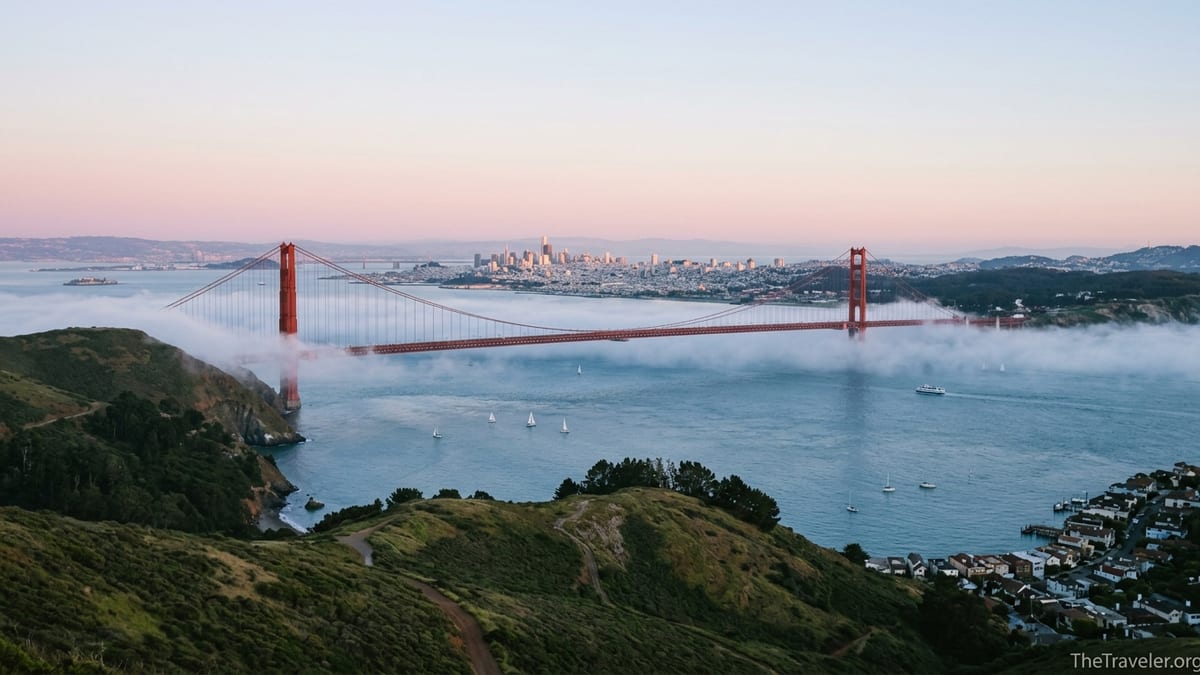
How to Choose Your Bay Area Base
The Bay Area is built around three main commercial airports: San Francisco International (SFO), Oakland International (OAK) and San Jose Mineta (SJC). On top of that, popular visitor hubs such as downtown San Francisco, Berkeley, Sausalito, Silicon Valley cities like Palo Alto and Mountain View, and the wine country valleys to the north all sit a drive apart. It is entirely possible to spend half your holiday in rideshares if you pick the wrong base.
As a rough guide, travelers focused on classic sightseeing and car free exploring usually do best in San Francisco proper, especially areas handy to BART and the historic cable cars. Those prioritizing lower prices and a more local vibe often look to Oakland or Berkeley on the East Bay side of the bridges. Visitors here mainly for tech meetings or early morning flights often stay near the Peninsula or South Bay, close to offices in San Mateo County or San Jose. Wine lovers and relaxed couples’ breaks lean north toward Sonoma or Napa, while road trippers aiming for Highway 1 sometimes choose bases around Daly City or Pacifica for a quick escape to the coast.
Hotel rates move a lot by season, major conferences and big events. In summer, a midrange hotel in central San Francisco commonly runs in the range of 250 to 400 US dollars per night before taxes and fees, while similar properties in Oakland or Berkeley might sit closer to 180 to 300 dollars. Weeknights next to big corporate campuses in Silicon Valley can be surprisingly expensive, while some wine country inns adopt two night minimums on weekends. Booking flexible rates and checking prices across several Bay Area cities often reveals big savings for travelers who are open to staying outside San Francisco itself.
The key is to match your base to your priorities: airport access, transit, nightlife, family friendly ambience, road trip positioning or wine tasting. In practice, many visitors choose two bases for a week long stay, such as three nights in San Francisco for sightseeing and two or three nights in Sonoma or Napa for a quieter finish.
San Francisco: Best for First Timers and Car Free Sightseeing
For first time visitors, San Francisco itself remains the most convenient base. Districts around Union Square, Fisherman’s Wharf, Nob Hill and the northern waterfront cluster many hotels, cable car lines and transit connections. Around Union Square you find big name properties like large business hotels with easy access to BART trains direct to SFO, plus frequent buses and light rail toward the Embarcadero and Oracle Park. This district works well for travelers who want department stores, theater, and late running transit within a few blocks of their lobby.
Families and first timers who want to be close to the water, ferries and classic attractions often choose Fisherman’s Wharf. Here you can walk from your hotel to Pier 39’s sea lions, Ghirardelli Square, and Alcatraz ferry departures. Many midrange chains operate here, with sample summer rates often around 280 to 420 dollars for a standard room with two beds. The trade off is that the area feels distinctly touristy, with higher restaurant prices and busy sidewalks, and it is farther from nightlife centers like the Mission or Hayes Valley. For many visitors who plan early starts for boat trips and harbor walks, that is a fair price to pay.
Travelers seeking a more classic city feel with grand architecture and sweeping views often look to Nob Hill or the adjoining Russian Hill and North Beach areas. Historic hotels near the top of Nob Hill offer cable car access down to Union Square in one direction and Fisherman’s Wharf in the other, as well as rooftop bars with skyline views. North Beach below has independent inns above Italian cafes and jazz clubs, popular with couples who want walkable evenings without relying on rideshares. These neighborhoods give easier access to dining streets like Polk Street and Columbus Avenue while still keeping you close to the main tourist sights.
If nightlife and modern hotels matter most, consider SoMa or the Mission adjacent corridors. Around the Moscone Center you will find high rise properties popular with business travelers, often with better weekday availability and quick access to bars, clubs and contemporary restaurants. Farther out, small boutique hotels and guesthouses near Valencia Street offer a neighborhood feel, close to taquerias, cocktail bars and live music venues. These areas are better suited to confident city travelers comfortable using late night transit or rideshares, and they work particularly well for younger visitors and couples who prioritize dining and nightlife over waterfront views.
Oakland: Urban Energy, Better Value and Nightlife
Across the Bay Bridge, Oakland has grown into a strong alternative base for visitors who want a more local, creative atmosphere and often better value lodging. Downtown and Uptown Oakland sit on top of two major BART stations at 12th and 19th Street, giving you train rides to downtown San Francisco in around 15 to 20 minutes in light traffic conditions. Around these stations you will find a mix of branded hotels and smaller independent options, typically with lower nightly rates than comparable rooms in Union Square.
Uptown Oakland in particular has become known for its arts scene, historic theaters and bar hopping strips. On a Friday night you can walk from a midrange hotel near 19th Street BART to cocktail bars, breweries, live music venues and late night taco spots without needing a car. Travelers in their 20s and 30s, especially those visiting friends or attending concerts at the Fox Theater or the Paramount, often base themselves here to minimize travel after dark. Daytime brings cafes, galleries and street murals that give the area a distinct local flavor compared with downtown San Francisco’s business towers.
Jack London Square on the waterfront offers a different Oakland experience. Here, several hotels sit beside the marina, with easy access to the San Francisco Bay Ferry that can whisk you across to the Embarcadero in roughly half an hour. This area suits visitors who like morning runs along the water, al fresco dining and a calmer feel at night while still staying close to transit. The Amtrak station nearby also makes Jack London a smart base for travelers continuing by train to Sacramento or down the Central Valley. For families, the flat waterfront paths and open plazas are easier with strollers than San Francisco’s legendary hills.
Oakland International Airport lies only a short drive south of downtown, and airport area hotels, while less atmospheric, can work for late arrivals or early departures. Those primarily visiting the East Bay for events at the Oakland Coliseum, meetings in nearby business parks or road trips toward Yosemite often appreciate the ease of starting and ending days without crossing a major bridge. This side of the bay can be especially appealing to travelers watching their budget or those who have already explored San Francisco on previous trips and now want a different urban perspective.
Berkeley and the East Bay for Culture, Campus Life and Families
North of Oakland, Berkeley offers a distinct mix of university town energy, independent shops and residential calm that works well for families, academics and visitors who prefer bookshops and cafes to big city bustle. Downtown Berkeley clusters several hotels near the BART station, giving direct rail access to San Francisco in around 25 minutes. Staying near this core makes it easy to walk to the University of California campus, performance venues and restaurants ranging from casual noodle houses to white tablecloth spots.
For travelers attending events or conferences at the university, a hotel within walking distance of campus can save time and taxi fares. Parents visiting students often prefer this central Berkeley area, allowing short strolls to lecture halls, the campanile tower and student filled streets like Telegraph Avenue. Rates here typically land below equivalent San Francisco properties, particularly outside peak graduation and move in periods. Families also appreciate that many Berkeley hotels offer larger rooms or suites with kitchenettes, which can be helpful for longer stays or younger children.
Just north of downtown, the neighborhood popularly known as the Gourmet Ghetto spreads along Shattuck Avenue. This area, home to well regarded food markets, bakeries and long running restaurants, appeals to travelers who build itineraries around meals. Small inns and guesthouses within a few blocks place you in easy reach of morning coffee spots, casual lunch options and destination dinners. The streets here feel more residential, with leafy sidewalks and classic craftsman houses, making it a comfortable base for travelers who like to retreat from city intensity at the end of the day.
Further afield on the East Bay, smaller cities like Alameda and El Cerrito host additional midrange chain hotels often used by road trippers looking for free parking and straightforward freeway access. These are less interesting bases for sightseeing but can work for travelers passing through with a rental car, especially those driving onward to Tahoe or the Sierra foothills. For most visitors who still want quick access to San Francisco, however, downtown Berkeley and central Oakland remain the most practical options.
Sausalito and Marin: Scenic Bases for Couples and Road Trips
On the north side of the Golden Gate Bridge, Sausalito and the broader Marin County coastline provide some of the most scenic overnight bases in the Bay Area. Sausalito itself curves along the waterfront with hilltop homes, boutique inns and harbor front restaurants. Many hotels here offer rooms with direct views across the bay to the San Francisco skyline, especially at sunrise and sunset. Couples on romantic getaways often choose Sausalito to combine city access by ferry with quieter evenings in wine bars and waterfront bistros.
From Sausalito, you can board commuter style ferries into the Ferry Building area of San Francisco in roughly half an hour, making day trips into the city straightforward without driving. At the same time, you are well placed for road excursions north into Marin Headlands, Muir Woods National Monument and the small beach towns of Stinson Beach and Bolinas. Travelers planning to hike and explore nature as much as museums often find this side of the bridge more convenient than staying in downtown San Francisco and fighting morning bridge traffic.
Hotel rates in Sausalito and nearby Tiburon typically sit at the higher end of the Bay Area spectrum, with boutique waterfront properties frequently charging 400 dollars or more per night during peak seasons. In exchange, you gain a resort style base with easy access to kayaking, sailing and cycling along the shore path. Parking is generally simpler than in central San Francisco, a factor that road trippers with rental cars appreciate, especially if they are carrying luggage for longer California itineraries up the coast or into the redwoods.
For travelers seeking even more nature, inland Marin towns like Mill Valley and Larkspur offer smaller hotels and lodges near trailheads and redwood groves. These make excellent bases for those planning multiple days of hiking or biking, perhaps combined with a single full day devoted to San Francisco sightseeing. The feel here is firmly suburban and outdoors oriented, better for travelers who are content with a handful of local restaurants rather than nightly bar hopping.
The Peninsula and Silicon Valley: For Airports, Business and Families with a Car
Between San Francisco and San Jose stretches the Peninsula, a chain of cities including South San Francisco, San Bruno, Burlingame, San Mateo, Redwood City and Palo Alto. This corridor lines up closely with Highway 101 and the Caltrain rail line, and it is where you will find most corporate offices and tech campuses. For business travelers flying into SFO with meetings in Silicon Valley, basing somewhere along this stretch can dramatically cut commute times compared to staying in San Francisco and driving south every morning.
Airport focused travelers often look to the hotel clusters around SFO itself, particularly in Burlingame and Millbrae. These areas house many large branded properties, often with complimentary airport shuttles and on site parking. Sample rates can range from around 140 to 260 dollars per night depending on season and demand, generally lower than central San Francisco while still allowing you to ride BART or Caltrain into the city for day trips. Families on road trips along Highway 1 sometimes choose these airportside bases for their combination of free parking, easy freeway access and straightforward chain dining options nearby.
Farther south, cities like Palo Alto, Mountain View and Sunnyvale offer numerous midrange and upscale hotels, reflecting their roles as hubs for major tech firms and Stanford University. Weeknights bring high demand from corporate travelers, so leisure visitors often find better deals on weekends, especially outside major college football dates and tech conferences. These cities suit travelers who are here mainly for meetings, university visits or sports events at Stanford, and they place you closer to attractions like the Computer History Museum and Shoreline Amphitheatre.
For families with a car who want to mix San Francisco, Silicon Valley attractions such as tech company visitor centers, and coastal drives to Half Moon Bay and Santa Cruz, a base around San Mateo or Redwood City can be a good middle ground. From here you can drive into San Francisco in around 30 to 45 minutes in lighter traffic, head south toward Santa Cruz in roughly an hour and reach SFO in under twenty minutes. The trade off is that you will rely heavily on your vehicle, as these suburban centers are less walkable and have fewer late night entertainment options than the big city.
San Jose and the South Bay: Practical for SJC Flights and Family Attractions
At the southern end of the bay, San Jose anchors the South Bay region with its own international airport, major sports arenas and convention facilities. Staying in downtown San Jose puts you close to restaurants, craft breweries and cultural institutions such as the Tech Interactive science museum and the San Jose Museum of Art. Visitors attending events at the SAP Center, from NHL games to concerts, often choose hotels within walking distance to avoid parking hassles and post event traffic.
Families flying in and out of San Jose Mineta International Airport may find nearby hotels ideal for early flights or for trips focused on South Bay attractions. Popular family stops include the hands on Children’s Discovery Museum of San Jose, the Winchester Mystery House in neighboring Santa Clara and theme parks such as California’s Great America. A base in or near Santa Clara can work well for groups planning a day at the park, perhaps combined with a tour of the nearby professional football stadium if schedules allow.
Compared with San Francisco, San Jose’s hotel scene often offers more space for the price, with all suite properties and extended stay hotels common along freeway corridors. Travelers staying several nights for youth sports tournaments or tech conferences frequently appreciate amenities like kitchenettes, self service laundry and complimentary breakfasts. Parking is typically easier and cheaper than in San Francisco, a clear advantage for travelers with rental cars.
The downside for classic Bay Area sightseeing is distance. Driving from downtown San Jose to central San Francisco can take an hour or longer in peak traffic, and even Caltrain rides can feel long for daily commuting. As a result, San Jose works best as a base if your main activities are in the South Bay, or if you are combining a Bay Area visit with a broader driving trip down to Monterey, Carmel and Big Sur.
Wine Country Bases: Napa, Sonoma and Beyond
North of the bay, the wine regions of Napa Valley and Sonoma County lure visitors with rolling vineyards, tasting rooms and small towns built around food and wine. For couples and groups planning to spend most of their time on tastings and leisurely lunches, basing in one of these valleys often makes more sense than commuting from San Francisco. Towns like Napa, Yountville, St. Helena and Calistoga in Napa Valley, and Sonoma, Healdsburg and Sebastopol in Sonoma County, each offer their own blend of inns, resorts and vacation rentals.
Napa Valley generally leans more upscale, with luxury resorts that can easily exceed 600 dollars per night, extensive spa facilities and on site fine dining. Yountville, for example, packs a remarkable number of high end restaurants and tasting rooms into a compact, walkable village, making it a favorite for honeymooners and special occasion trips. Sonoma County tends to be a little more relaxed and varied, mixing country inns, farm stays and small town hotels at somewhat more moderate price points, particularly away from peak harvest season in the fall.
From a logistics perspective, staying in wine country simplifies daylong touring because you can focus on shorter drives between wineries and restaurants instead of long motorway returns to the city. Many visitors hire local car services or shared tour operators so nobody in the group has to drive after tastings. For those planning both city sightseeing and wine touring, a common pattern is to spend three nights in San Francisco, followed by two or three nights in Sonoma or Napa before flying out of SFO or OAK.
One practical consideration is that wine country towns are more spread out and rural than San Francisco or Oakland. Evening options after dinner might be limited to hotel bars and a few lounges, and ride share availability can drop sharply late at night. Travelers who value walkable nightlife, theaters or sports bars may be happier splitting their time rather than basing solely in the valleys for an entire week.
The Takeaway
Choosing where to stay in the San Francisco Bay Area comes down to balancing convenience, budget and the kind of atmosphere you want when you step outside your hotel. San Francisco itself delivers the densest package of sights, transit and dining, ideal for first timers and travelers who prefer to explore on foot or by public transport. Across the bay, Oakland and Berkeley bring better value and a more local, creative vibe that works well for repeat visitors and those drawn to food, music and arts scenes.
North of the Golden Gate Bridge, Sausalito and Marin County suit couples and road trippers who want views, nature and quieter evenings, while the Peninsula and Silicon Valley cities are practical bases for early flights, tech meetings and families with a car. At the south end, San Jose and nearby towns reward travelers focused on South Bay attractions and broader road trips toward the central coast. For many trips, adding a two or three night stay in wine country caps the experience with vineyard views and lingering dinners under the stars.
If your trip is short and your priority is classic San Francisco icons, base yourself in the city. If you have more time or a car, consider splitting your stay between a city hub and a more relaxed base like Sausalito, Sonoma or the South Bay. Whatever you choose, thinking through airport logistics, traffic patterns and your daily plans before you book will help you spend more time enjoying the Bay Area and less time stuck on its freeways.
FAQ
Q1. What is the best area to stay in the Bay Area for first time visitors?
For a first visit focused on iconic sights without a car, areas in central San Francisco such as Union Square, Fisherman’s Wharf or Nob Hill work best because they combine dense transit options, walkable streets and quick access to major attractions like the Embarcadero, Alcatraz ferries and Golden Gate Bridge viewpoints.
Q2. Where should I stay if I want the lowest hotel prices but still visit San Francisco?
Travelers watching their budget often stay in downtown Oakland or Berkeley, where hotel rates are usually lower than central San Francisco and BART trains link directly to the city in under half an hour, making day trips straightforward while keeping lodging costs more manageable.
Q3. Which base is most convenient for visiting Napa or Sonoma wine country?
If wine tasting is your main goal, staying in Napa Valley towns like Napa or Yountville, or Sonoma County towns such as Sonoma or Healdsburg, is usually most efficient, but if you only plan one wine day, a base in San Francisco or Sausalito combined with a guided day tour or private driver can also work well.
Q4. Is it better to stay in Sausalito or San Francisco for Golden Gate Bridge views?
Both offer memorable views, but Sausalito hotels along the waterfront often provide direct, room facing vistas of the bridge and city skyline, while San Francisco properties on Nob Hill or along the northern waterfront tend to offer more limited or partial views alongside easier access to downtown attractions.
Q5. What is the most practical place to stay for an early morning flight from SFO?
For very early departures, airport area hotels in Burlingame, Millbrae or South San Francisco are the most practical, since they usually offer shuttle services, quick access to terminals and reduced risk of being delayed by bridge or downtown traffic during the morning commute.
Q6. Where should families with kids stay in the Bay Area?
Families often like Fisherman’s Wharf in San Francisco for easy access to Pier 39, harbor cruises and flat waterfront walks, or they choose larger chain hotels near SFO or in the South Bay, where rooms and suites can be more spacious, parking is easier and driving to regional attractions and theme parks is straightforward.
Q7. Which area is best for nightlife and dining?
For the most concentrated nightlife, central San Francisco neighborhoods such as SoMa, the Mission and parts of the Marina are strong choices, while travelers who prefer a more local, arts focused scene often enjoy staying in Uptown Oakland or downtown Berkeley, both of which offer live music, craft breweries and varied restaurants.
Q8. Is it worth renting a car if I stay in downtown San Francisco?
For stays centered in downtown San Francisco, many travelers skip renting a car because parking is expensive and transit or rideshares cover most needs, but a car can be worthwhile if you plan multiple day trips to places like Muir Woods, Point Reyes, Napa or Santa Cruz during your visit.
Q9. How many bases should I plan for a one week Bay Area trip?
On a seven night trip, many visitors find that using two bases works well, for example four nights in San Francisco for city sightseeing followed by three nights in wine country, Sausalito or the South Bay, which keeps hotel changes manageable while still reducing backtracking on long driving days.
Q10. Is staying in San Jose too far from San Francisco for sightseeing?
San Jose is quite a distance from central San Francisco, and daily trips can feel long, so it usually makes more sense to base in San Jose only if your main plans involve South Bay attractions, meetings or flights from SJC, and to stay in or near San Francisco on nights when you plan intensive city sightseeing.