


From a San Francisco base, choosing between Napa Valley and Sonoma can feel like a high-stakes multiple-choice question. Both are classic Northern California wine regions with world-class bottles, rolling hills and romantic inns, yet the on-the-ground experience is strikingly different. The better choice depends less on which valley is “best” and more on how you like to travel, what you want to spend and how you picture your ideal day in wine country.
Getting There From San Francisco and Getting Around
For most Bay Area visitors, Napa Valley and Sonoma start with a similar reality: you will almost certainly need a car or a driver. From downtown San Francisco, plan on about 1.5 to 2 hours to reach central Napa or downtown Sonoma in typical daytime traffic, a bit less very early in the morning and more on holiday weekends. Many visitors pick up a rental car near Union Square or Fisherman’s Wharf and drive north across either the Golden Gate Bridge toward Sonoma or the Bay Bridge and then through the East Bay toward Napa.
Napa’s core tasting corridor, Highway 29 and the parallel Silverado Trail, is compact and linear, which makes it easy to string together several wineries in a single day. The tradeoff is heavier traffic, especially between the city of Napa and St. Helena at peak harvest times in September and October. Sonoma is more spread out, with several distinct areas like Sonoma Valley, Russian River and Dry Creek. You will spend more time on smaller, winding roads, but those drives often feel more relaxed, with fewer tour buses and more stretches of open countryside.
If you prefer not to drive after tasting, both regions have plentiful tour options from San Francisco, including shared small-group vans that visit three or four wineries and private drivers who will use your rental car. Expect shared tours to start around the low 200s per person for a full-day excursion that includes transportation but not most tasting fees, while private drivers typically charge by the hour and can easily reach several hundred dollars for a full day. Napa also has specialty options such as the Napa Valley Wine Train and a growing number of downtown tasting rooms within walking distance of hotels, which can reduce your need to drive between appointments.
Public transit is limited in both destinations, so neither is ideal if you want to rely solely on trains and buses once you leave San Francisco. Rideshare services like Uber and Lyft operate in both Napa and Sonoma but can be sporadic at night or in more rural pockets. For a smooth day, especially for couples or small groups, it often makes sense to choose one compact sub-area, such as Yountville in Napa or the town of Sonoma and its surrounding valley, and keep driving distances short between tastings and meals.
Wineries and Wine Styles: Polished Versus Laid-Back
Napa Valley is known globally for polished Cabernet Sauvignon and ambitious estate experiences. Many flagship properties offer seated tastings in architect-designed salons, caves or terraces with vineyard views. Standard tastings frequently focus on Cabernet and Bordeaux-style blends, along with some Chardonnay and Sauvignon Blanc. Expect advance reservations to be the norm, even on weekdays, especially at well-known estates. Elevated experiences that include vineyard walks, food pairings or library wines can easily run to the higher end of typical tasting fee ranges.
Sonoma’s wine scene feels more eclectic and, in many pockets, more relaxed. While you can certainly find impressive chardonnay and pinot noir estates in areas like Russian River Valley and Sonoma Coast, you will also encounter rustic family-run wineries in places like Dry Creek Valley that still pour zinfandel and field blends on shaded patios. Drop-in tastings are more common here than in Napa, though booking is still wise on weekends. The atmosphere tends to be less formal, and staff at smaller wineries often have time to chat about winemaking decisions, vineyard sites and local recommendations.
In terms of cost, visitors currently report standard Napa tastings running roughly in the 40 to 80 dollar range per person at many mid-range wineries, with top-tier Cabernet houses reaching well into the 100 to 200 dollar bracket for reserve or paired experiences. In Sonoma, a typical standard tasting at a quality winery often falls closer to the 30 to 50 dollar bracket, with higher-end or paired tastings moving into the 60 to 90 dollar range. In both valleys, many smaller properties still credit tasting fees toward a bottle purchase, which can stretch your budget if you plan to bring wine home.
If your goal is to taste benchmark Cabernet Sauvignon and you are happy to pay for a more curated, appointment-driven day, Napa fits that brief better than anywhere else in the United States. If you value variety, from sparkling wine to old-vine zinfandel, and you enjoy discovering under-the-radar producers on quieter country roads, Sonoma often delivers more surprises and fewer crowds for the price.
Hotels, Inns and Where to Stay
Napa Valley’s lodging scene is dense and upscale, which is part of its appeal for couples seeking a splurge. Towns like Yountville and St. Helena are lined with intimate inns, design-forward boutique hotels and big-name luxury resorts. A newer wave of properties, including renovated resorts outside the city of Napa and fresh boutique openings in St. Helena, has added more options at the high end. Midweek, you might find a stylish downtown Napa property in the mid 300s to 400s per night before taxes, but it is common for popular inns in Yountville or St. Helena to climb into the 600 to 900 dollar range or higher on fall weekends.
Sonoma offers a broader spread of price points and a more small-town feel. Around Sonoma Plaza, you will find historic inns and modest boutique hotels that can sometimes be booked in the low to mid 300s midweek outside peak harvest. Move a bit farther north toward Glen Ellen, Kenwood or into Healdsburg in northern Sonoma County and the mix widens to include simple roadside lodges, contemporary design hotels and wine-country resorts. The highest-end resorts in Sonoma now rival Napa on nightly rates, but visitors consistently report that it is easier to find a comfortable, characterful room under 400 dollars per night in Sonoma than in the central Napa Valley towns.
For travelers watching their budget closely, it is common to base in the city of Napa or even in nearby American Canyon, Fairfield or Santa Rosa, then drive into tasting areas. Newer chain hotels and refreshed midscale properties in those areas can shave a significant amount off your nightly rate, especially on weekends. The tradeoff is more time spent in the car and fewer wine-country restaurants within easy walking distance in the evenings.
Couples prioritizing convenience and walkability tend to gravitate to downtown Napa, where modern hotels sit within a few blocks of tasting rooms, riverfront promenades and a growing restaurant scene, or to the town of Sonoma, where you can stroll from your inn on or near the plaza to wine bars, historic sites and dinner. If you like quiet evenings, mineral springs and dark skies, Calistoga at the top of Napa Valley or the backroads between Sonoma and Glen Ellen offer a more retreat-like atmosphere.
Dining, Atmosphere and Nightlife
Both Napa and Sonoma have seriously good food, but the tone is different. Napa Valley dining leans toward polished, special-occasion experiences. In and around Yountville, you will find tasting-menu icons alongside casually elegant bistros and brasseries. Dinner for two with a shared appetizer, two mains and a modest bottle of local wine can easily land in the 200 to 300 dollar range before tip at mid- to high-end spots, while multi-course tasting menus reach significantly higher. The city of Napa has filled in with contemporary wine bars, tapas-style spots and riverfront restaurants that offer slightly more accessible price points while still feeling celebratory for a weekend away.
Sonoma’s food scene tends to feel more local and relaxed, especially around Sonoma Plaza, Glen Ellen and Healdsburg. Here you might mix a long lunch at a farm-to-table restaurant, where ingredients come directly from surrounding farms, with dinner at a neighborhood trattoria or wine bar serving small plates. Entrées at many well-regarded Sonoma restaurants often come in a bit below their Napa counterparts, and it is easier to find an informal spot where two people can eat well for closer to 120 to 180 dollars including a glass of wine each.
When it comes to nightlife, neither valley offers big-city energy, and many tasting rooms close by late afternoon. Napa’s downtown has the livelier after-dark scene, with cocktail bars, live-music venues and late-running restaurants. You can realistically plan on a stroll along the riverfront after dinner and still find a drink. In Sonoma, evenings are quieter, with people drifting back to inn fireplaces and hot tubs rather than going out for a second round of drinks. That slower pace is precisely the charm for many couples who want a restful break from urban life.
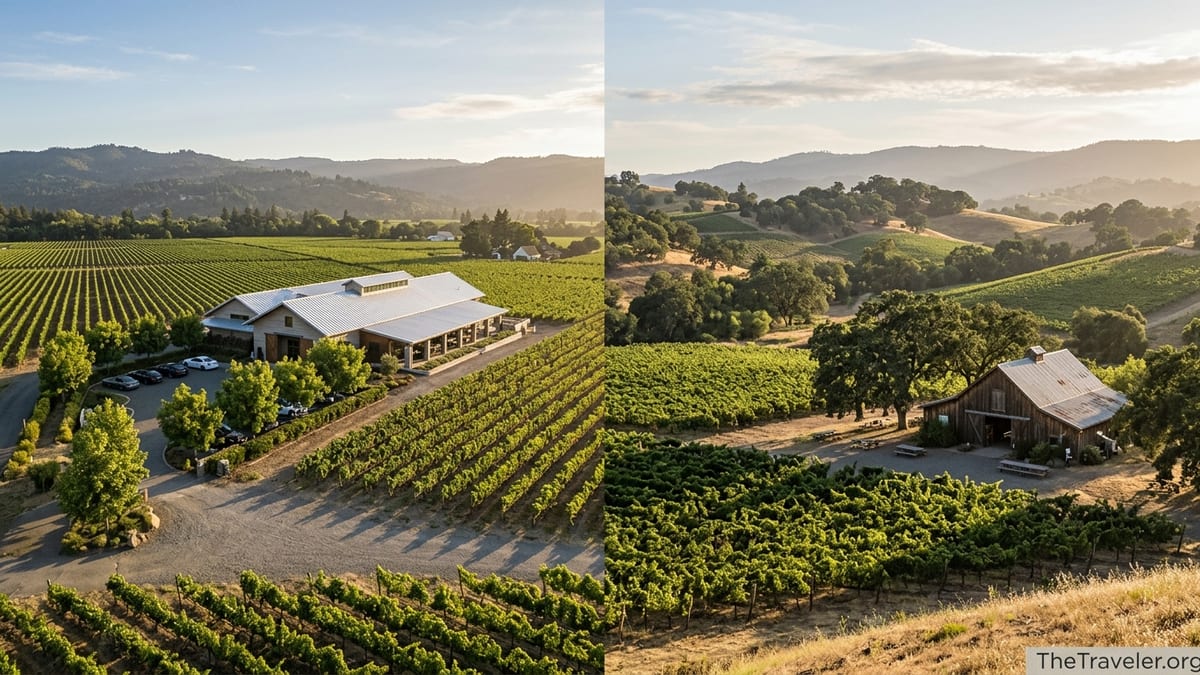
For daytime scenery, both valleys deliver. Napa’s main corridor is lined with manicured vineyards, eye-catching winery architecture and carefully landscaped gardens. Sonoma’s landscapes feel more agricultural and varied, with oak-dotted hills, mixed farms, historic missions and, in some areas, cooler coastal influences. Many visitors describe Sonoma days as more about meandering drives, stopping at farm stands and wineries as the mood strikes, while Napa days feel more scheduled around timed tastings and restaurant reservations.
Tours, Experiences and Things To Do Beyond Wine
If you like your tastings packaged into one seamless experience, Napa has a slight edge. The Napa Valley Wine Train offers daytime excursions that pair multiple pours with multi-course meals in restored railcars, often with optional winery stops. Hot-air balloon companies launch at sunrise over both valleys, but early-morning flights over Napa’s linear vineyards are a classic image. Many Napa wineries offer behind-the-scenes cave tours, barrel tastings and small-group blending workshops where you can create your own custom red blend to bottle and bring home.
Sonoma’s experiences are a bit more low-key and spread out, but they reward curiosity. You can cycle between quieter wineries on backroads near Healdsburg or in Dry Creek Valley, kayak on the Russian River in season, or follow small brown signs to cheese makers and farm stands dotted through the countryside. The town of Sonoma adds a strong historical element, with a preserved mission, barracks and other 19th-century buildings surrounding the central plaza, which pairs naturally with a tasting-room stroll.
Both regions host seasonal events. Napa’s late-summer and fall calendars fill with wine auctions, harvest parties and food festivals where top chefs collaborate with wineries. Sonoma leans into more casual community events, from small-town farmers’ markets to regional wine weekends focused on particular grape varieties or subregions. These events can influence lodging prices, so it is wise to check local calendars and book early if your dates overlap with major festivals or long weekends.
For couples who are not singularly focused on wine, it helps to think about what you will do in the hours when you are not tasting. Napa offers more structured attractions, like curated art spaces at certain wineries and a compact downtown where you can browse a cluster of shops and tasting rooms without getting back into the car. Sonoma offers more room to roam, whether that is an afternoon hike in nearby regional parks, a scenic drive toward the Sonoma Coast or an unscripted picnic in a vineyard-adjacent park.
Costs, Value and Which Travelers Each Valley Fits Best
From a budget perspective, Napa is the more expensive choice almost across the board. Typical per-day spending for a couple that includes a hotel night in central Napa Valley, two or three winery tastings and one nicer dinner can easily push into the 600 to 1,000 dollar range or more, particularly in peak months. Tasting fees at marquee wineries, parking charges at some hotels and resort-style amenities can add up quickly, even if you try to offset tastings by purchasing bottles.
In Sonoma, that same couple can often structure a satisfying day for somewhat less, especially if they stay in the town of Sonoma, Santa Rosa or another nearby community rather than at a luxury resort. By mixing one higher-end tasting with one or two simpler visits at smaller, family-run wineries and choosing at least one casual meal, many visitors report that daily budgets in the 400 to 700 dollar range are manageable outside peak event weekends. Gas, rental cars and gratuities will be similar in both valleys, but lodging and tasting-fee differences often tip the balance.
For first-time visitors who prioritize iconic labels, ambitious architecture, spa-centric resorts and a sense of being in the heart of a famous wine destination, Napa Valley understandably tops the list. It caters especially well to special-occasion trips like honeymoons, milestone birthdays and anniversaries where you are comfortable splurging on a few big experiences. For repeat Bay Area travelers, serious wine hobbyists who want to explore varied grape varieties, and couples who prefer quieter rural landscapes and lower-key hospitality, Sonoma tends to feel like the better long-term fit.
If you are still undecided, one practical approach is to base yourself where lodging fits your budget best, then consider a single day trip across to the other valley. From the city of Napa, it is feasible to spend one day tasting across the county line in Sonoma and then return to your original hotel, and the same is true in reverse from the town of Sonoma or Santa Rosa. This hybrid approach works particularly well for travelers with four or five days in the region who want to experience both without packing and unpacking multiple times.
The Takeaway
Choosing between Napa Valley and Sonoma from a San Francisco base is less about crowning a single “best” wine region and more about matching the valley to your personality and priorities. Napa offers compact convenience, polished wineries, high-end hotels and a strong sense of occasion. It is the right choice if you dream of big-name Cabernet tastings, destination restaurants and poolside time at a resort. You will pay more for almost every component of the trip, but for many visitors celebrating something special, that concentrated glamour is worth it.
Sonoma, by contrast, spreads its charms over a wider area, with more diverse landscapes, a mix of well-known and under-the-radar wineries, and a generally more relaxed rhythm. Rooms, tastings and meals can cost less here, and the vibe often feels more like visiting a working agricultural region than a dedicated tourism showcase. If you like unhurried drives, spontaneous stops, historic town squares and the sense that most people you meet live and work locally, Sonoma is likely to feel like the better fit.
For couples who love wine and have the time and budget, the ideal solution is not necessarily either or but when. Experience Napa on a focused, slightly indulgent weekend built around a few reservation-only tastings and memorable dinners, then return another season for a longer, slower Sonoma trip that uses farmers’ markets, hikes and small wineries as its anchor points. Seen this way, the Bay Area’s two great wine valleys become complementary chapters rather than competing choices in your Northern California story.
FAQ
Q1. Which is closer to San Francisco, Napa Valley or Sonoma?
Napa and Sonoma towns are both roughly 1.5 to 2 hours from central San Francisco in typical daytime traffic. Your exact timing depends more on bridge choice, time of day and where in each valley you are heading than on pure distance.
Q2. Is Napa really more expensive than Sonoma?
On average, yes. Visitors commonly find that Napa hotels, tasting fees and higher-end dinners cost more than comparable options in Sonoma, especially in towns like Yountville and St. Helena. Sonoma still has upscale resorts, but it generally offers more midrange and lower-key options at softer price points.
Q3. Can I visit both Napa and Sonoma in one day trip from San Francisco?
It is technically possible but not ideal. You would spend a large share of the day driving instead of tasting and relaxing. Most travelers are happier choosing one valley per day and saving the other for a separate trip or an overnight stay.
Q4. Do I need reservations for wineries in Napa and Sonoma?
In Napa, reservations are strongly recommended and often required, especially at well-known estates and on weekends. In Sonoma, some smaller or more casual wineries still accept walk-ins, but booking ahead is wise during peak seasons to avoid disappointment.
Q5. Which valley is better for couples on a romantic getaway?
If your idea of romance includes luxury resorts, cabanas by a pool and multi-course dinners, Napa Valley is usually the better match. If you picture quiet inns, drives on country lanes, picnics and smaller tasting rooms where you can linger, Sonoma often feels more intimate.
Q6. Where should I stay if I want to walk to tasting rooms and restaurants?
In Napa, downtown Napa and Yountville both offer clusters of tasting rooms and restaurants within walking distance of several hotels. In Sonoma, look for lodging near Sonoma Plaza or in central Healdsburg, where you can stroll between wine bars, shops and dining without getting back into the car.
Q7. Is one valley better for casual wine drinkers, not experts?
Many casual wine drinkers feel more at ease in Sonoma, where there are plenty of relaxed, family-run wineries and less emphasis on formal seated tastings. Napa can still be enjoyable for beginners, but the polished format and higher fees sometimes feel more suited to travelers who prioritize specific producers or styles.
Q8. Are there good non-wine activities in Napa and Sonoma?
Yes. Napa offers spa resorts, art installations at some wineries and attractions like the Wine Train and hot-air balloon flights. Sonoma adds historic sites around Sonoma Plaza, river kayaking, hiking in nearby parks and scenic drives toward the coast, so both regions can keep non-wine lovers engaged.
Q9. What is the best time of year to visit?
Spring and fall are the sweet spots in both valleys. Spring brings green hills and fewer crowds, while fall offers harvest energy and golden vineyards. Summer is popular but warmer and busier, and winter can be peaceful, with lower hotel rates but a higher chance of rain.
Q10. If I have to choose just one, which should I pick?
Choose Napa if you want a concentrated, polished wine-country experience with famous names and are prepared for higher costs. Choose Sonoma if you value a more relaxed pace, diverse wine styles, slightly gentler prices and a broader mix of small-town and rural scenery.