


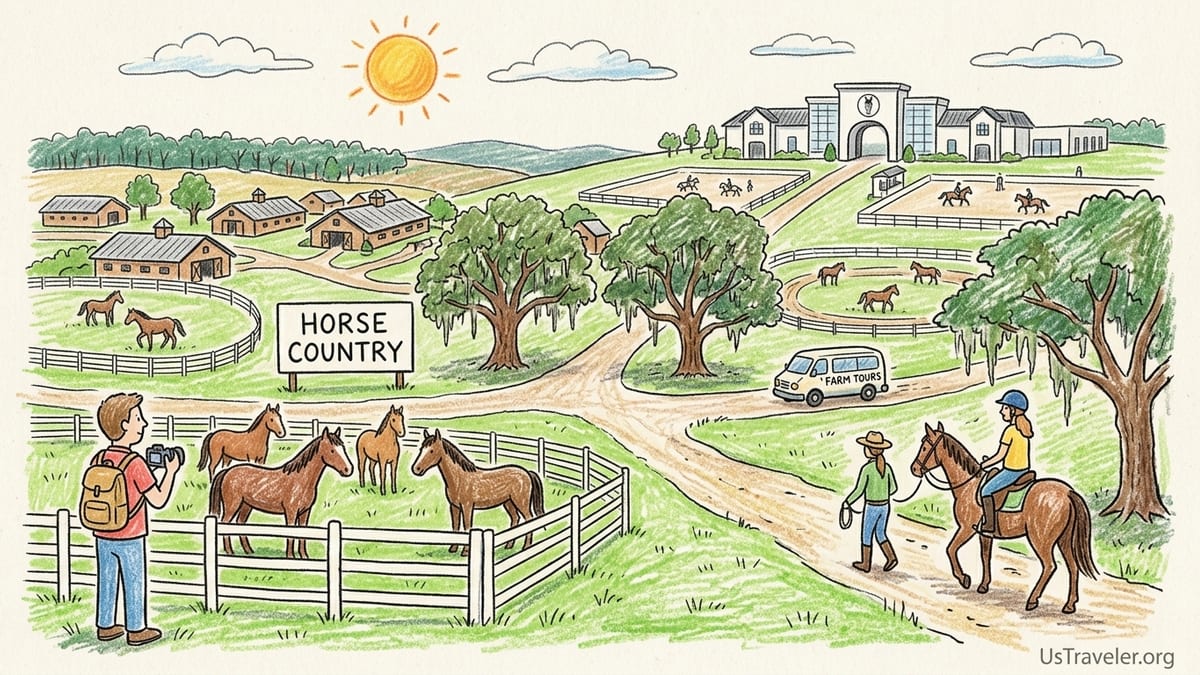
Ocala markets itself as the Horse Capital of the World for good reason. More than a thousand farms spread across rolling, oak‑draped pastureland, and many now welcome visitors on guided tours, trail rides and structured equestrian experiences. Whether you are a first‑time rider who simply wants to meet foals and snap photos, or a dedicated horse enthusiast curious about bloodlines, training surfaces and competition schedules, Ocala offers a surprising range of options behind the gates of working farms and at the World Equestrian Center.
Understanding Ocala’s Horse Country Today
Ocala’s equestrian identity is not a marketing slogan but a living industry that has reshaped the region. Marion County is home to roughly 1,200 horse farms and training centers, including Thoroughbred breeding operations, show‑jumping barns, dressage stables and Western programs. Many high‑profile racehorses and Olympic mounts have spent part of their careers in these pastures, and visitors quickly see that most farms are working properties first and tourist venues second.
The atmosphere you will encounter is very different from a theme park. A typical farm road leads through live oaks into clusters of training barns and open paddocks, where grooms are hand‑walking horses or tractors are dragging training tracks. At the same time, a growing number of operators structure guided tours so outsiders can safely step into that world. Companies such as Farm Tours of Ocala and The Horse Capital Tours coordinate access to private facilities that usually are not open to drop‑ins, giving visitors a curated glimpse of daily life behind the gates.
For travelers, this means there are two broad ways to experience Ocala’s horse culture. One is observational, centered around farm tours, stallion visits and spectating at shows. The other is experiential, focused on getting into the saddle on a guided trail ride or taking a lesson. Many visitors combine both approaches over two or three days, perhaps booking a morning farm tour, then riding at a nearby equestrian center in the late afternoon.
Guided Horse Farm Tours: Behind the Gates of Working Farms
Guided farm tours are the easiest way for non‑industry visitors to understand why Ocala is so influential in the horse world. Operators typically run small‑group tours that last about 3 to 4 hours, visiting two or three farms with a knowledgeable guide. Farm Tours of Ocala, for example, has long offered half‑day outings that leave from a central meeting point, then travel by van through the countryside to a mix of Thoroughbred and sport‑horse farms. The Horse Capital Tours offers individually booked itineraries that might include a boutique dressage stable one day and a large training center the next.
On a typical tour, you can expect to meet trainers, grooms and sometimes farm owners, watch morning workouts or schooling sessions, and walk through center‑aisle barns while your guide explains everything from feed programs to how young horses learn to load on a trailer. Many Thoroughbred operations highlight their graduates and stakes winners, with walls of win photos and racing silks. Some visits include controlled, hands‑on moments such as feeding carrots to retired broodmares or petting yearlings through the fence, always under staff supervision.
Most farm tours are designed with first‑time visitors in mind, so you do not need prior horse experience to enjoy them. Enthusiasts, however, will appreciate companies that emphasize working Thoroughbred farms such as de Meric Stables or stallion stations like Pleasant Acres, where guides are prepared to discuss bloodlines, conformation and training schedules in more detail. Expect prices to be similar to a half‑day excursion in other destinations, with per‑person rates that are comparable to a guided city tour or wildlife cruise.
Advance reservations are strongly recommended, especially in winter and early spring when many racing and show circuits are in full swing. Operators commonly require at least 24 to 48 hours’ notice for cancellations or changes, and tours go out in most weather unless severe storms are in the forecast. Comfortable walking shoes and farm‑appropriate clothing that you do not mind getting dusty are essential.
Working Thoroughbred Farms and Serious Equestrian Visits
Travelers who follow horse racing or sport horse breeding will find that Ocala offers a depth of access that is hard to match elsewhere. Large Thoroughbred farms around Ocala specialize in breeding, breaking and preparing young racehorses for tracks around North America, and a number of them periodically open their doors through organized tours. Facilities such as de Meric Stables, Bridlewood Farm and Pleasant Acres have become recognizable names for fans, and many visitors plan trips specifically to see where future stakes winners are raised.
These working farm experiences typically feel more technical than generalist tours. Your guide might walk you along the training track while explaining interval workouts, show you starting gates where young horses learn to break, or stand you at the rail while two‑year‑olds breeze past in the mist. In stallion barns or breeding sheds, the focus is often on pedigrees, stud careers and breeding management, with staff outlining how mares are matched with stallions and how foals are handled in their early months.
For serious enthusiasts, including amateur breeders and long‑time racing fans, booking a private or semi‑private tour is worth the extra cost. Smaller groups allow more time for detailed questions and possibly a look at areas that are not shown on standard itineraries, such as treadmill rooms or therapy pools. Visitors should remember, however, that these are production facilities with young, high‑value horses, so safety and biosecurity rules take precedence over photo opportunities.
Out of respect for farm operations, children on these more technical tours are often subject to higher minimum age requirements, commonly around 10 to 12 years. Photography may be limited in certain barns, and touching horses is usually more restricted than on casual family‑focused tours. Enthusiasts will still find the access remarkable, but expectations should be aligned with the fact that the horses here are equine athletes in active training.
Trail Rides and Hands‑On Horseback Experiences
For many visitors, the highlight of an Ocala trip is getting into the saddle. Around the city and in nearby countryside you will find a mix of trail‑ride outfitters, lesson barns and small horse farms that welcome guests for rides ranging from one hour to half a day. Some, such as family‑run stables on the outskirts of town, specialize in beginner‑friendly group rides through quiet pastures and wooded lanes. Others focus on more advanced riders, offering faster paces or small‑group outings across gently rolling fields.
Typical beginner trail rides last 60 to 90 minutes and are conducted at a walk, with occasional short stretches of trotting if the group is comfortable. Before heading out, staff usually help riders mount using a mounting block, adjust stirrups and give a simple briefing on how to hold the reins and ask the horse to move or stop. Horses tend to be calm, trail‑savvy mounts that are used to carrying first‑timers, and guides ride alongside, ready to assist anyone who feels nervous.
More experienced equestrians can seek out operations that advertise private or small‑group rides and that are willing to tailor pace and terrain. Some local farms and equestrian centers offer English or Western lessons for adults and teens, often in an arena setting, which can be a good option if you want to focus on skills rather than scenery. Riders might, for example, spend a morning on a farm tour and then book a late‑afternoon lesson to school over poles or practice dressage basics on a schoolmaster horse.
Height, weight and age limits vary by operator, so it is vital to ask about restrictions at the time of booking. Helmets are usually provided and may be mandatory for minors. Close‑toed shoes with a small heel are almost always required, and many stables advise riders to wear long pants and avoid loose scarves or dangling bags. During Ocala’s humid months, lighter fabrics and sun protection make rides more comfortable.
World Equestrian Center: Spectating, Carriage Rides and Resort Stays
The World Equestrian Center Ocala has quickly become the area’s centerpiece for visitors who want a concentrated dose of horse life. This massive complex on the northwest side of town features multiple climate‑controlled indoor arenas, grand outdoor stadiums, on‑site hotels, an RV park, restaurants, shops and landscaped walking areas. It hosts a full calendar of hunter‑jumper, dressage, Western and specialty shows throughout the year, and many events are free for the public to watch from the stands.
First‑time visitors are often surprised by how accessible the competition atmosphere feels. On a typical show day you can stroll from arena to arena, watching ponies navigate hunter courses in one ring while jumpers gallop under lights in another. Spectators who book terrace tables at on‑site restaurants such as the main arena’s dining room can dine while watching evening grand prix classes. For non‑riders traveling with horse‑obsessed family members, this combination of sport and amenities makes the center an easy all‑day outing.
Beyond spectating, the World Equestrian Center occasionally offers experiences that appeal to broader audiences, such as seasonal light displays, holiday events and carriage or wagonette rides around decorated grounds. During winter festivities, for instance, the property transforms with extensive lighting, and families can pair a stroll through the displays with a short horse‑drawn carriage loop if available that year. Offerings change by season, so it is wise to check current event calendars and inquire about carriage schedules when planning a visit.
The on‑site equestrian‑themed hotel and nearby equestrian resorts position the complex as a base for longer stays. Guests can wake up with arena views, walk to morning classes, then drive a short distance to off‑site farm tours or trail rides. Dedicated enthusiasts might time trips to coincide with major hunter‑jumper circuits or dressage shows, while beginners can simply come on a busy weekend to soak up the atmosphere, shop in tack boutiques and take photos of impeccably groomed horses warming up under Florida sunshine.
Carriage Rides, Walking Tours and Non‑Rider Appeal
Not everyone in a travel party wants to ride or spend hours talking about bloodlines, and Ocala’s equestrian scene does a good job of accommodating non‑riders. On many farm tours, time is split between standing at the rail watching horses work, strolling through shaded barn aisles and pausing by paddocks. Even those who are nervous around large animals often enjoy photographing foals napping in the grass or listening to guides explain how a two‑year‑old progresses to the racetrack.
Some farms, particularly those with distinctive breeds or strong storytelling elements, lean into this broader appeal. Gypsy horse farms south of Ocala, for example, structure “horses and history” experiences that blend breed history, farm anecdotes and up‑close interactions with eye‑catching, feather‑legged horses. These tours tend to be highly visual and narrative‑driven, which suits visitors who are more interested in culture and photography than technical training details.
Seasonally, carriage rides at the World Equestrian Center or on select farms add a romantic or family‑friendly layer. A short horse‑drawn circuit around manicured showgrounds or down a quiet farm lane requires no riding skills, and many operators allow young children to ride with adults. These experiences are usually relatively brief, often 15 to 30 minutes, and bookable on‑site during events or through hotel concierges.
Because walking surfaces on farms can be uneven and barns may require stepping over thresholds or walking up small ramps, visitors with limited mobility should communicate needs in advance. Some tour operators can accommodate guests who prefer to remain near the vehicle or need minimal walking, focusing instead on drive‑through pasture viewing and time in one accessible barn. Even within these constraints, non‑riders generally report that the visual drama of Ocala’s sweeping pastures and powerful horses is compelling in its own right.
Planning Tips: Beginners vs Enthusiasts, Kids, Timing and Booking
Selecting the right experience in Ocala largely depends on your comfort level around horses, your attention span for technical details and who is in your group. True beginners and families with younger children usually do best with a combined program: a farm tour or breed‑focused visit in the morning, followed by a short, slow trail ride or pony experience in the afternoon. This mix allows them to absorb information while fresh and then enjoy hands‑on time in the saddle once they feel more familiar with horses.
Dedicated horse enthusiasts, in contrast, may want fewer stops and more depth. They often prioritize a private or small‑group tour at a major Thoroughbred farm or sport‑horse facility, ideally guided by someone involved in training or breeding decisions. Many then add an afternoon of spectating at the World Equestrian Center, timing trips to overlap with headline classes or championship weeks. This pattern provides a behind‑the‑scenes industry look in the morning and high‑level sport in the evening.
When children are involved, age rules matter. Many trail‑ride operations have minimum ages that range from about 6 to 10 years for full‑size horses, with younger children sometimes offered led‑line pony rides instead. Standard farm tours are often open to school‑age kids, but some working Thoroughbred experiences and breeding‑shed visits set higher minimums. Checking these details at the booking stage avoids last‑minute disappointments.
Across all experiences, advance booking is crucial in peak season, roughly December through March, when Ocala hosts major circuits and many farms are at their busiest. Morning slots are typically more comfortable, particularly in late spring and summer when midday heat and storms are common. Travelers should build in extra transit time, as farms are spread across rural roads, and plan flexible clothing layers that account for cool mornings, warm afternoons and the occasional Florida downpour.
The Takeaway
Ocala’s claim as the Horse Capital of the World becomes persuasive as soon as you leave the highway and start driving past miles of white fences and training barns. For visitors, the key advantage is access. Guided farm tours open the gates of private Thoroughbred and sport‑horse facilities, structured rides and lessons put you in the saddle even if you have never sat on a horse before, and the World Equestrian Center offers an all‑in‑one arena for spectating, dining and equestrian‑themed resort stays.
Beginners can craft itineraries that emphasize safety, storytelling and gentle interaction, from walking through calm broodmare barns to enjoying slow trail rides on steady horses. Enthusiasts can seek out deeper, more technical experiences at working racing farms and plan trips around major competition weeks. Non‑riders, too, will find plenty to appreciate in the landscapes, architecture and spectacle of top‑level events.
With thoughtful planning, realistic expectations and a willingness to get a little barn dust on your shoes, an Ocala horse country visit can feel far richer than a standard sightseeing stop. It is a rare destination where you can watch future champions gallop at dawn, ride through live‑oak hammocks by afternoon and end the day with arena lights reflecting off polished tack as horses fly over fences under the Florida night sky.
FAQ
Q1. Do I need prior riding experience to enjoy Ocala horse farm tours?
Most farm tours are designed for complete beginners and non‑riders, focusing on barn visits, pasture viewing and trainer commentary rather than riding. You can enjoy seeing and learning about the horses without ever getting into the saddle.
Q2. How far in advance should I book tours and trail rides?
In peak season, roughly December through March, it is wise to book farm tours and trail rides at least one to two weeks in advance, especially for weekends or private options. Outside peak months, a few days’ notice often works, but last‑minute availability is never guaranteed.
Q3. Are children allowed on farm tours and trail rides?
Yes, many operators welcome families, but age minimums vary. Standard farm tours often accept school‑age children, while trail rides may require riders to be around 6 to 10 years old to mount full‑size horses. Younger kids are frequently offered pony rides or shorter interactions instead.
Q4. What should I wear for a farm visit or trail ride in Ocala?
Closed‑toe shoes, long pants and weather‑appropriate layers are recommended for all farm visits. For riding, choose long pants, shoes with a small heel and a comfortable top. Helmets are usually provided and are mandatory for minors at most stables.
Q5. Can non‑riders still enjoy the World Equestrian Center?
Absolutely. Non‑riders can watch competitions from the stands, explore shops and restaurants, stroll landscaped grounds and, in some seasons, book carriage rides or enjoy special events and light displays. The experience is visually engaging even if you never ride.
Q6. What is the difference between a general farm tour and a working Thoroughbred farm visit?
General farm tours prioritize accessible, family‑friendly experiences, often visiting a mix of barns with simple explanations and photo opportunities. Working Thoroughbred farm visits are more technical, focusing on training tracks, breeding programs and racing details, and may have stricter age limits and fewer hands‑on moments.
Q7. Are Ocala horse experiences suitable for travelers with limited mobility?
Some tours and venues can accommodate limited mobility, particularly drive‑through pasture viewing and visits to accessible barns. However, uneven ground, steps and mounting for rides can be challenging. Discuss your needs directly with operators so they can suggest the most suitable options.
Q8. How long do typical farm tours and trail rides last?
Most guided farm tours around Ocala run 3 to 4 hours, often visiting multiple properties. Beginner trail rides generally last 60 to 90 minutes, while some operators offer shorter pony experiences or longer, more advanced outings by special arrangement.
Q9. Is there a best time of year to visit Ocala for horse activities?
Winter and early spring are especially active, with major shows and many horses in training, and temperatures are usually comfortable. Summer brings heat and afternoon storms, but morning tours and rides still operate, and crowds are lighter outside the main competition season.
Q10. Can I combine farm tours, riding and a stay at an equestrian resort?
Yes. Many visitors base themselves near the World Equestrian Center or at nearby equestrian‑themed resorts, then book farm tours and trail rides within a short drive. This approach allows you to experience behind‑the‑scenes farm life, hands‑on riding and polished resort amenities in a single trip.