


Northeast Florida’s shoreline stretches from the quiet dunes of Amelia Island to the palm lined boardwalks of Jacksonville Beach, the coquina colored sands of St. Augustine Beach and the gated oceanfront communities of Palm Coast. Along this coast, vacation rentals are not an afterthought. Cottages, condos, villas and large family homes sit directly on or steps from the sand, often with full kitchens, pools and space for multigenerational groups. This guide looks at how to choose and book those rentals in four of the region’s most popular beach areas, with a focus on real world examples, typical costs and what to know about fees, beach access, minimum stays, parking, pools and pet policies.
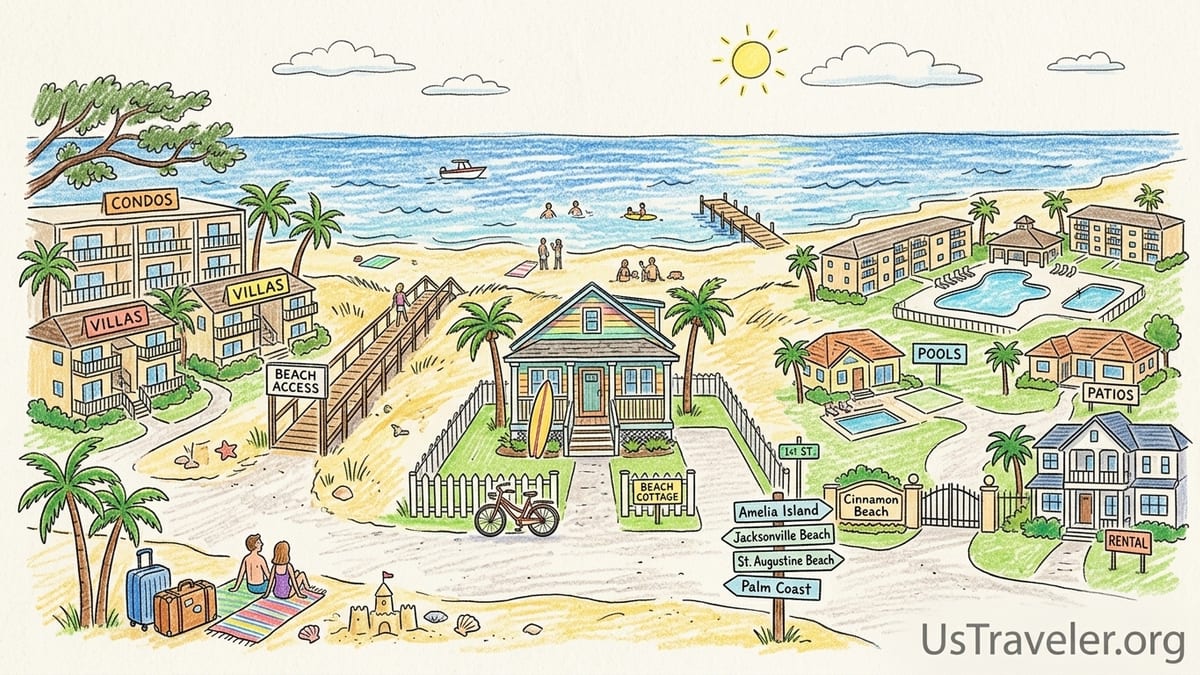
How Vacation Rentals Fit Into Northeast Florida’s Beach Scene
Vacation rentals play a central role in the accommodation mix along this part of Florida’s Atlantic coast. On Amelia Island, the official tourism site highlights island inspired vacation rentals and describes one to four bedroom cottages, condos and beachfront villas that offer the comforts of home and extra space for families and longer stays. Local companies such as ERA Fernandina Beach Realty manage more than 150 condos and homes ranging from compact ocean view one bedroom units to four and five bedroom houses with direct beach paths, reflecting how embedded rentals are in the destination’s lodging market.
Farther south, St. Augustine Beach, Crescent Beach and Butler Beach have clusters of low rise condo resorts and standalone homes that function almost entirely as vacation rentals. Travelers searching large platforms routinely encounter two bedroom oceanfront condos in complexes like Ocean Gallery or St. Augustine Beach & Tennis Club, typically offering shared pools, private balconies and direct or semi direct beach access. In Palm Coast and Flagler County, the visitor bureau promotes both oceanfront condos and single family homes in neighborhoods such as Cinnamon Beach and The Hammock, many of them managed as short term rentals with resort style amenities.
Jacksonville Beach and its neighbors Neptune Beach and Atlantic Beach have a slightly different profile, with more year round residents and a mix of small hotels, but vacation rentals remain common. A typical search yields renovated three bedroom beach cottages a block or two from the ocean along 1st Street or 2nd Street, often with fenced yards and driveways rather than resort style shared amenities. Across the region, the choice is less about whether rentals are available and more about which style, size and setting match your trip.
For many visitors, the appeal lies in combining the space and privacy of a home with proximity to the water. A family of five might opt for a three bedroom condo in Cinnamon Beach with a full kitchen and washer dryer, while a couple on Amelia Island might choose a one bedroom villa in the gated plantation area that includes resort pool access. Understanding these patterns by destination makes it easier to narrow down locations and property types before you dive into individual listings.
Amelia Island: Condos, Villas and Cottages With Resort or Neighborhood Vibes
Amelia Island offers one of the most mature vacation rental markets in Northeast Florida, and it divides roughly into two experiences. On the south end, near the Omni Amelia Island Resort and within the gated plantation communities, you find clusters of oceanfront and golf view condos such as Shipwatch, Beachwalker and Turtle Dunes, along with attached villas marketed as part of the resort. These one to three bedroom units often include tile or luxury vinyl floors suited to sandy feet, balconies facing the Atlantic, and access to building specific pools. When booked through the resort’s program or certain approved managers, guests frequently gain privileges at main resort amenities such as larger pool decks and on site dining, though this usually comes at a premium nightly rate and higher resort style fees.
On the north end around Fernandina Beach and Fort Clinch State Park, rentals skew more residential. ERA Fernandina Beach Realty and other local managers list traditional beach houses and small cottage style duplexes a block or two from the shoreline, sometimes with screened porches, private outdoor showers and space to park two or three cars in a driveway. A four bedroom ocean view home here might rent for a mid range nightly rate in shoulder seasons, edging higher during peak summer and holiday weeks. Travelers trading Omni’s resort pool complex for this neighborhood feel often gain quieter stretches of sand and an easy drive into downtown Fernandina’s historic district.
Minimum stay requirements on Amelia Island vary with season and property type. Oceanfront condos and resort villas often require three to seven night stays in summer, while smaller cottages and non oceanfront townhomes may allow two night stays in shoulder seasons. Cleaning fees on locally managed properties typically appear as a flat charge per stay rather than per night; for a two bedroom condo that might fall somewhere in the low to mid hundreds, while larger four bedroom homes can carry higher cleaning and linen fees. When comparing a three night condo stay on a national platform versus booking the same complex through a local firm, travelers sometimes find that local managers charge similar base rates but lower or more transparent service fees.
Beach access and parking differ by zone. In plantation and resort areas, access is usually via private walkovers reserved for guests and owners, and parking is often unassigned surface lots near the buildings or covered spaces for higher end units. In Fernandina Beach, many homes sit within a short walk of public beach access points with small parking lots, useful if anyone in your group has mobility concerns. Pet policies are mixed: some condo associations on the island ban pets for renters entirely, while freestanding homes and duplexes managed by local companies are more likely to accept one or two dogs with added pet fees and written approval. If traveling with a pet, it is important to confirm not only host rules but also local beach regulations about dogs on the sand and leash requirements.
Jacksonville Beach: Casual Houses and Condos Near the Sand
Jacksonville Beach, Neptune Beach and Atlantic Beach collectively offer a more laid back, residential take on vacation rentals compared with resort oriented Amelia or gated Palm Coast communities. Many options are single family homes and duplexes tucked behind the dune line. A typical three bedroom, two bath cottage a block from the ocean might feature a modernized open kitchen, small fenced backyard and driveway parking for two cars. Rates often reflect the mix of beach visitors and business travelers drawn by Jacksonville’s broader metropolitan economy, with nightly prices that fluctuate based on events, holidays and weekend demand rather than purely on school vacation calendars.
Condo inventory in Jacksonville Beach tends to concentrate in a handful of mid and high rise buildings along 1st Street. Here you might see listings for two bedroom oceanfront condos with balconies and shared pools, marketed through both large platforms and local broker managers. Some buildings enforce one week minimum stays, particularly in peak summer, while others allow three or four night bookings. Cleaning fees are similar to other parts of Northeast Florida, and guests booking through large platforms will also see platform service fees added at checkout that can add a meaningful percentage to the total cost.
Parking is a key consideration in these beach towns. Older cottages may have only street parking, which can be competitive in summer, while newer homes have paved driveways or garages. Condo buildings often include one assigned space per unit, with a limited number of guest spots that may not be guaranteed. If you plan to arrive with multiple vehicles or a large SUV, it is worth confirming clearance and availability in advance. Beach access is straightforward, with frequent public walkovers at the end of numbered streets and a large public pier area in Jacksonville Beach, though the tradeoff for convenience can be busier sands and nightlife noise near the central bar districts.
Pet friendly options are fairly common, particularly among stand alone homes. Many hosts allow one medium sized dog with a modest pet fee, while enforcing rules about no pets on furniture and use of the yard. Local regulations typically allow dogs on the beach during limited hours if leashed, but enforcement and seasonal rules can shift; travelers should check the latest city guidelines close to their arrival date. For families who value quick access to city amenities such as the St. Johns Town Center shopping district or downtown museums along with beach time, this part of the coast offers a practical compromise.
St. Augustine Beach: Condo Resorts and Family Houses Close to History
St. Augustine Beach and the surrounding shoreline south to Crescent Beach combine a classic Florida condo strip with pockets of single family homes, all within driving distance of historic downtown St. Augustine. Many first time visitors gravitate to established condo communities. A two bedroom oceanfront unit in a complex like St. Augustine Beach & Tennis Club or Ocean Gallery, for example, typically includes a full kitchen, washer dryer, covered balcony and access to one or more shared pools, along with tennis courts or boardwalks over the dunes to the beach. Resort Rentals of St. Augustine and other local managers curate portfolios of such condos, often emphasizing amenities like gated entries, elevators and consistent housekeeping standards.
Beach house rentals in the area cater to families and small groups who want a bit more space and privacy. A single family home one block off the sand in St. Augustine Beach might include three or four bedrooms, a private or semi private pool, an outdoor grill area and space to park several cars in the driveway. Local managers highlight perks such as “one minute walk to beach access” and “onsite parking for four cars,” which can be important in a city where public beach parking fills quickly on weekends. Some houses sit east of A1A with dedicated beach walkovers, while others are west of the road and rely on nearby public access points.
When comparing booking channels, travelers will see many of the same condos appear on global platforms and the websites of local companies. On a national platform, a two bedroom ocean view condo in Crescent Beach might list at a certain nightly rate plus a cleaning fee in the low hundreds and a sizable platform service fee. Booking through a local company such as Resort Rentals of St. Augustine or other established agencies can sometimes produce similar nightly pricing but with lower total service fees, clearer information about building specific rules and access to staff who live in the area. Reviews on third party sites often reference responsiveness of these local managers, which can be important if you encounter maintenance issues during a stay.
Minimum stays in St. Augustine Beach commonly hover around three to seven nights in peak season for oceanfront condos, with more flexibility for inland townhomes and off season visits. Pool access is nearly universal in condo complexes, though not all pools are heated year round. Pet policies depend heavily on association rules: some oceanfront complexes prohibit renters from bringing any pets, while others allow smaller dogs under weight limits with additional fees. Beach regulations about dogs, driving and alcohol vary by section of coastline, so guests should review county and city websites close to arrival for the latest conditions, particularly around holidays and special events that draw large crowds.
Palm Coast and the Flagler Beaches: Gated Oceanfront and Quiet Neighborhoods
South of St. Augustine, Palm Coast and the unincorporated Flagler Beaches offer a mix of master planned resorts and low key residential enclaves. Within Palm Coast’s Hammock Beach Resort area, the official Hammock Beach Vacation Rentals program markets both condo units and larger homes, including three bedroom oceanfront condos at Cinnamon Beach and multi bedroom houses within Yacht Harbor Village and nearby streets. Guests booking through the resort’s program often gain access to resort amenities, from multi level pool complexes and lazy rivers to on site dining and golf courses, which can be a significant differentiator compared with independent rentals.
Cinnamon Beach in particular has become a focal point for oceanfront rental condos. Local specialists such as Cinnamon Beach Vacations and SHS Realty Services manage three bedroom units with balconies facing either the ocean or the golf course lagoons. A typical condo includes a full kitchen with stone countertops, a separate dining area, and living rooms that open to wide terraces where guests can watch waves or golfers. The community offers both an oceanfront quiet pool with hot tub and a family oriented pool with zero entry and kids’ splash zone, as well as a small clubhouse, fitness room and seasonal snack bar. For many traveling families, this layout combines the space of a condo with the amenities of a small resort.
Beyond the gates, Palm Coast and neighboring Flagler Beach have standalone beach houses and duplexes managed under various brands, some listed on large platforms and others booked through local brokers. The regional tourism office positions these rentals as ideal for keeping extended families “under the same roof,” with options ranging from modest two bedroom bungalows across A1A to substantial oceanfront houses large enough for reunions. One notable example in the area is an 11 bedroom home in the Cinnamon Beach community marketed for retreats and large gatherings, illustrating the scale possible for those coordinating multigenerational trips.
Rules and fees in these communities can be more complex than in independent beach towns. Gated resorts may have strict occupancy limits, vehicle caps, and amenity wristband systems; some homeowner associations enforce quiet hours and prohibit events or weddings. Cleaning fees generally scale with property size, and resort managed units may add resort access fees or club usage charges on top of standard taxes. Minimum stays often run seven nights during peak spring and summer weeks, though shorter visits can be found in shoulder seasons or for smaller inland condos. Travelers focused on budget and flexibility may prefer Flagler Beach’s independent homes, while those seeking structured amenities and on site recreation gravitate to Hammock Beach and Cinnamon Beach.
Comparing Platforms, Local Managers and Hidden Costs
Travelers booking Northeast Florida vacation rentals today typically choose between three paths: large international platforms, official resort programs and independent local management companies. Platforms such as Airbnb and Vrbo provide broad visibility and guest reviews, and many owners list exclusively there. A two bedroom oceanfront condo in St. Augustine Beach might appear with high quality photos, real time calendars and detailed amenity breakdowns. Travelers value the ability to filter quickly for pet friendly properties, number of bedrooms or presence of a pool. However, these platforms add their own service fees, often calculated as a percentage of the booking subtotal, which can significantly increase the final price once combined with cleaning fees and taxes.
Local property managers, by contrast, typically charge a nightly rate plus cleaning, optional damage waiver and taxes, but they do not layer on an additional third party service fee. In practice, a three night stay at a two bedroom condo in Cinnamon Beach booked through a local manager might come in slightly lower in total than the same unit booked via a large platform, even if the base nightly rate is similar. Local managers also tend to have more flexibility in handling special requests, late arrivals, and mechanical issues, since their offices and maintenance staff are nearby. For example, if an air conditioning unit fails during a July heat wave, a manager based in Palm Coast or Amelia Island can often dispatch technicians from prearranged vendors more quickly than an absentee owner.
Official resort programs, such as those at Omni Amelia Island or Hammock Beach Resort, work differently. They may charge higher base rates but include access to pools, fitness centers, kids’ clubs and other facilities that are not available to guests who rent a condo in the same complex from an independent owner. A family comparing a two bedroom Omni villa to a similar sized condo rented outside the program will need to weigh the value of daily resort access, on site charging privileges and housekeeping services against the price difference and any required resort fees. In some cases, resort managed units also come with stricter cancellation policies than independent rentals.
Regardless of channel, travelers should pay close attention to the fee breakdown. Cleaning fees in this region often hover in the low hundreds for standard two bedroom condos and climb higher for large houses. Some managers add separate linen or booking fees, while others fold everything into one cleaning charge. Taxes in Florida vary slightly by county but generally combine state sales tax with local tourist development tax and can add more than ten percent to the base rent and cleaning. Parking, Wi-Fi and basic cable are usually included, but access to club facilities, separate boat docks or additional parking passes can carry surcharges in resort communities. It is wise to click through to the final price screen or request an itemized quote from a local company before committing.
What to Look For: Beach Access, Kitchens, Parking, Pools and Pet Rules
Because beaches and neighborhoods differ along this stretch of coast, the same term can mean different experiences from destination to destination. “Oceanfront” on Amelia Island’s south end typically denotes a condo directly facing the Atlantic with an unobstructed dune and water view, while “ocean view” might indicate a unit angled toward the sea or partially screened by vegetation. In St. Augustine Beach, an “oceanfront” condo may overlook a wide lawn or pool before the dunes. In Jacksonville Beach, many homes described as “steps to the beach” are actually a short walk down cross streets to public walkovers, with houses on the oceanfront side of 1st Street relatively scarce.
Kitchen quality is another key differentiator. Families staying a week or more often prefer full sized refrigerators, ample cookware and dishwashers. Resort affiliated villas and professionally managed condos generally meet this standard, while some budget friendly older units may have smaller appliances and limited utensils. Travelers who plan to cook daily should scan listing photos closely, looking for ovens rather than countertop units and enough seating at dining tables or breakfast bars to match their party size. In Palm Coast’s newer condos and homes, granite or quartz counters and modern stainless appliances are common, reflecting the recent age of construction in master planned communities such as Cinnamon Beach and The Hammock.
Parking varies by community design. In St. Augustine Beach and Flagler Beach, many single family houses offer generous on site parking for multiple vehicles, a perk for groups arriving from different states. Oceanfront condo buildings, conversely, might restrict each unit to one assigned space and one visitor pass, which can complicate plans for large families with several cars or trailers. Gated resorts often require vehicle registration with license plates before arrival and issue windshield passes at security checkpoints. Guests driving oversized vehicles or rooftop cargo boxes should confirm height limits for any covered parking garages in condo towers.
Pools and pet policies require especially careful reading of listing details. Condo complexes from Amelia Island to Palm Coast often feature at least one pool, but some are unheated or closed seasonally, and quiet pools may carry posted rules about children and floatation devices. Private pools at single family homes range from small plunge pools to larger, fully screened enclosures ideal for long afternoons out of the wind. Many homes in St. Augustine Beach, Flagler Beach and Jacksonville Beach market themselves as pet friendly, but weight limits, breed restrictions and per stay pet fees vary. In contrast, a number of condo associations in Amelia Island plantation areas or oceanfront St. Augustine complexes prohibit pets entirely for renters, regardless of owner preferences, so travelers with dogs may need to focus on standalone houses or select townhome style developments.
The Takeaway
Planning a Northeast Florida beach trip around a vacation rental is less about finding availability and more about choosing the right mix of space, setting and services for your group. Amelia Island delivers a blend of resort affiliated villas and neighborhood homes framed by live oaks; Jacksonville Beach favors relaxed cottages and condos close to dining and nightlife; St. Augustine Beach pairs family friendly condo resorts with access to America’s oldest city; and Palm Coast offers gated oceanfront communities with multi pool complexes and golf. Each area has its own rhythm, price patterns and rules around stays, amenities and pets.
Booking decisions often hinge on whether you value resort style amenities and on site dining or prefer the simplicity of a house with a grill and driveway parking. Large platforms make it easy to browse and compare, but local property managers and official resort programs can provide cleaner fee structures and better support when something goes wrong. Whichever channel you choose, reading the fine print on cleaning fees, minimum stay rules, parking, beach access and pet policies will pay off in a smoother stay.
For couples, a one bedroom oceanview condo on Amelia Island or a compact St. Augustine Beach unit near a boardwalk can keep costs manageable while preserving ocean proximity. Families with children might look to St. Augustine’s townhouse style rentals with pools or Palm Coast’s three bedroom Cinnamon Beach condos that combine kitchen convenience with kid friendly amenities. Larger groups eyeing reunions or milestone celebrations can tap into the region’s growing inventory of five bedroom and larger homes, especially in Palm Coast and Amelia’s northern neighborhoods, making it possible to keep everyone under one roof without sacrificing privacy.
With thoughtful planning and realistic expectations about fees and rules, a Northeast Florida vacation rental can feel less like temporary lodging and more like a temporary home on the Atlantic. Start by choosing the beach community that best matches your priorities, then work with reputable managers or carefully vetted hosts to secure a property whose layout, amenities and policies line up with your group. The payoff is waking up to the sound of waves, cooking breakfast in your own kitchen and ending each day with a short walk over the dunes back to a space that feels distinctly your own.
FAQ
Q1. Are vacation rentals in Northeast Florida cheaper than hotels for families?
For couples on short stays, hotels can be competitive, but for families or groups needing two or more bedrooms, condos and houses often work out cheaper per person once you factor in full kitchens and shared living space.
Q2. How far in advance should I book an oceanfront condo on Amelia Island or St. Augustine Beach?
For peak spring and summer weeks, many prime oceanfront condos are booked several months in advance, so starting your search three to six months ahead is prudent, especially for school holiday periods.
Q3. What is a typical minimum stay for vacation rentals in this region?
Minimum stays vary, but three to four nights is common for condos and homes outside peak seasons, while resort affiliated units and large oceanfront houses often require seven night stays during summer and major holidays.
Q4. How much should I expect to pay in cleaning and service fees?
Cleaning fees for standard two bedroom condos often fall in the low hundreds per stay, with higher amounts for larger homes, and large booking platforms add separate service fees that can meaningfully increase the final total.
Q5. Is beach access usually included with vacation rentals?
In oceanfront condos and resort communities, beach access is typically via private walkways for guests, while neighborhood homes often rely on nearby public access points, some with small parking lots and some pedestrian only.
Q6. Do most rentals include private pools, or just access to shared pools?
Condo rentals from Amelia Island to Palm Coast generally include access to shared pools, while single family homes may or may not have private pools, so travelers who view a pool as essential should filter specifically for that feature.
Q7. How strict are pet policies at beach rentals in Northeast Florida?
Policies vary widely; many standalone homes accept at least one dog with a pet fee, but numerous condo associations prohibit renters from bringing pets entirely, so pet owners need to verify both host and building rules before booking.
Q8. Is parking usually free at these vacation rentals?
Most beach houses offer free onsite parking in driveways or garages, while condos typically include at least one free space, though some buildings limit the number of vehicles and may require vehicle registration for security purposes.
Q9. Are kitchens in vacation rentals fully equipped for cooking?
Resort villas and professionally managed condos usually provide full kitchens with standard appliances and cookware, but budget oriented or older units may have more basic setups, so it is wise to check photos and amenity lists if you plan to cook frequently.
Q10. Should I book through a large platform or a local property manager?
Large platforms make it easy to compare many options and read guest reviews, while local property managers often provide clearer fee structures, better local support and may offer the same units at similar or slightly lower total cost.