


Northeast Florida is one of the few places in the Southeast where you can ride a historic trolley in the morning, kayak past dolphins in the afternoon, and creep through a lighthouse on a ghost tour after dark. St. Augustine has one of the deepest tour inventories in the region, and nearby Jacksonville and Amelia Island add river cruises and eco-adventures that turn a simple beach break into a full trip. This guide compares the main types of bookable tours, what they realistically look like on the ground, and when you are better off exploring independently.
St. Augustine Trolley Tours: The Easiest First-Day Overview
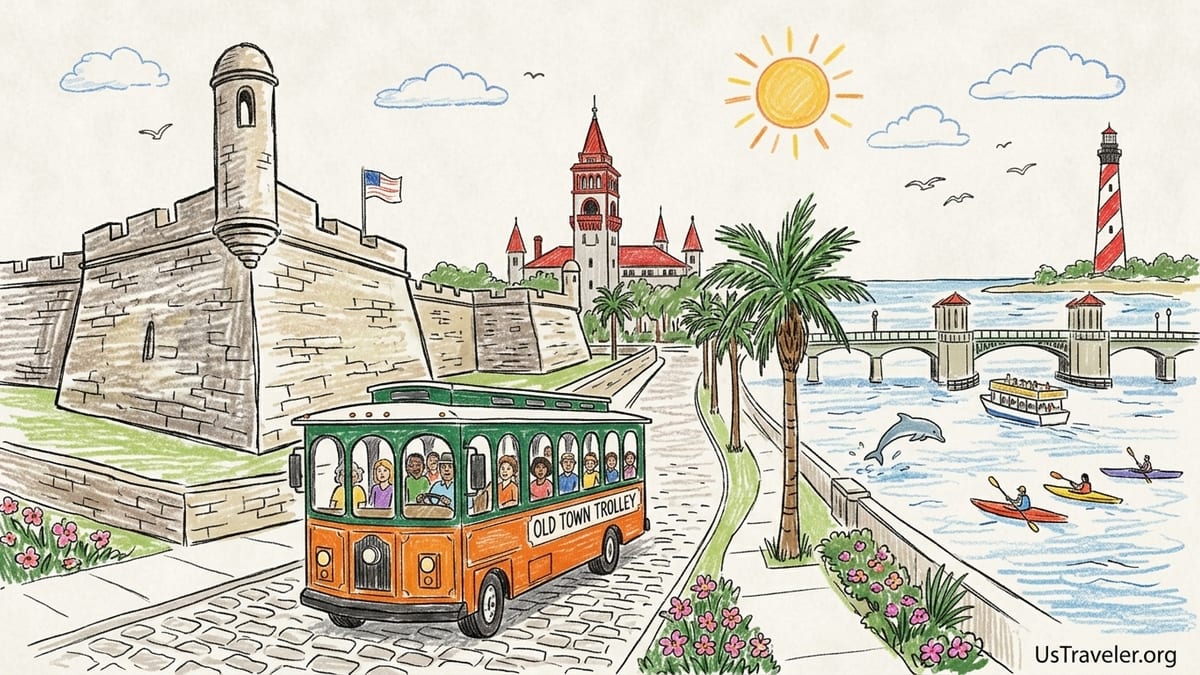
For most visitors, the Old Town Trolley hop-on hop-off service in St. Augustine is the most efficient way to get oriented. Routes cover about seven miles around the historic district with roughly 20-plus designated stops, including the Castillo de San Marcos, the Colonial Quarter and the Lightner Museum. One continuous loop takes about 70 to 90 minutes, but most travelers use it as rolling transportation, hopping off for an hour at one site and then rejoining later. Trolleys typically run every 15 to 20 minutes during the day, which keeps wait times manageable even in high season.
Tickets are sold as a day pass, with a second consecutive day often offered at a reduced add-on. Families in particular value the bundled extras, which regularly include free entry to the small St. Augustine History Museum and shuttles to selected hotels and to St. Augustine Beach. The live commentary is heavy on easygoing anecdotes rather than academic history, so you will get broad context and a few local legends rather than deep analysis. Budget around half a day if you plan to ride most of the loop and visit two or three attractions in detail.
Compared with driving and hunting for metered parking around the historic core, the trolley’s main advantages are convenience and stress reduction. The trade-off is that you share the experience with a large group and are tied to the scheduled stops. Independent travelers who enjoy walking may prefer to do one morning on the trolley to understand the layout, then explore the same streets on foot later for photography, quiet corners and cafes that buses cannot reach.
Private options in this category are limited. If you want a more intimate, customizable version of a city overview, consider booking a smaller golf-cart style history tour or a licensed guide for a private walking circuit. These cost more per person but can be tailored to your mobility needs, pace and specific interests, from Gilded Age architecture to African American history.
Walking, History and Food Tours in the Oldest City
Once you know the basic geography of St. Augustine, walking tours are the best value for travelers who actually want to understand the city. Typical historical walks run 90 minutes to two hours and cover a compact area around St. George Street, the Plaza de la Constitución and the bayfront. Group sizes can be as small as 8 to 14 guests with independent guides, which allows for questions and photo stops. Pricing is usually in the moderate range per adult, with discounted child rates, and many guides work on a mix of base fee plus gratuities.
Specialist operators offer thematic routes that go beyond the standard Spanish forts and Flagler-era hotels. Examples include tours devoted to the city’s minorcan community, civil rights history, or the lives of enslaved people at local sites. These typically require advance booking, especially on weekends, but they can be worthwhile if you have already seen the headline attractions or are returning for a second or third visit. Travelers with limited time can pair a morning walking tour with an afternoon trolley loop to balance depth and convenience.
Food tours add another layer, combining a guided stroll with tastings at local restaurants, wine bars and dessert spots. Half-day experiences lasting three hours are common, with 4 to 6 stops that might range from a craft cocktail bar to a family-run empanada shop. Portions are usually generous enough to count as lunch or dinner, and vegetarian options are often available if requested in advance. Expect these to cost more than basic walking tours due to the included food and drink, but note that you are effectively pre-paying for a multi-course progressive meal.
Independent exploration can work well if you are comfortable researching on your own. St. Augustine’s historic core is compact, and it is easy to create a self-guided route between major sites. However, visitors on tight schedules, or those new to the city’s complex 16th-century to 20th-century story, generally come away with a richer understanding when they invest in at least one professionally guided walk or food tour.
Ghost Tours, Night Experiences and Family Suitability
St. Augustine’s ghost tours are among the most diverse and heavily reviewed in the United States, with options ranging from family-friendly trolley rides to late-night investigations using EMF meters. The best-known products include Old Town Trolley’s Ghosts & Gravestones tour, which uses an open-air trolley to shuttle guests between sites like the Old Jail and other reputedly haunted corners of the historic district. These typically last around 60 to 75 minutes and focus on atmospheric storytelling rather than jump scares, making them suitable for older children and teens who enjoy spooky tales.
For a more intense experience, independent companies such as GhoSt Augustine and Ghost Tours of St. Augustine offer small-group walks and semi-private investigations that run up to two or three hours. Some include access inside specific historic buildings after dark or time using simple ghost-hunting gear. These tours often start later in the evening and may have minimum age requirements, so they are better suited to adults or families with older teens. The storytelling generally blends folklore, reported experiences and a dose of local history; it is wise to read recent reviews to decide whether you prefer a theatrical or more research-based style.
One standout option is the Dark of the Moon ghost tour at the St. Augustine Lighthouse, where small groups climb the historic tower and explore the grounds at night. This experience combines classic ghost lore with architectural and maritime history and is frequently cited as one of the area’s most atmospheric tours. Spots are limited and tours sell out quickly, especially around holidays and popular travel dates such as Halloween, spring break and summer weekends, so advance online booking is strongly recommended.
When deciding between a ghost tour and wandering the city at night on your own, consider your comfort level and goals. If you primarily want eerie ambiance and photo opportunities, a self-guided evening walk around the Castillo and bayfront can be memorable and free. If you enjoy stories, insider access and the social element of sharing a few scares with others, a paid tour will usually deliver more value, and in some cases provides access to locations not open to the general public at night.
St. Augustine Boat Cruises and Kayak Trips
Seeing St. Augustine from the water gives you a completely different perspective on the city’s skyline and wildlife. Short scenic cruises in Matanzas Bay typically last 75 to 90 minutes and operate on mid-sized boats with indoor seating and open decks. Companies based near the historic downtown marina offer daytime sightseeing trips, dolphin-spotting outings and popular sunset cruises where you watch the sun drop behind the rooftops of the historic district. Commentary generally covers the city’s history, local marine life and landmarks like the Bridge of Lions.
Dolphin-watching and eco-focused boat tours tend to use slightly smaller vessels and venture a bit farther along the Intracoastal Waterway. While wild dolphins are never guaranteed, sightings are common, especially in warmer months. Many operators keep group sizes moderate on these trips to allow for easier movement around the boat and better photo angles. Families appreciate the relatively short duration, bathroom access and the ability to sit in the shade, which makes these cruises practical even for younger children and grandparents.
Kayak tours appeal to travelers who want a more active experience and closer wildlife encounters. Guided paddles around salt marshes and tidal creeks near St. Augustine generally last two to three hours, including a safety briefing. Tandem kayaks are commonly used for families and beginners, and operators usually provide all gear plus dry bags for phones. Conditions vary with tides and wind, so tours may start early in the morning or late in the afternoon to avoid midday heat. Participants should be comfortable sitting for an extended period and with the possibility of getting wet from paddle splash or light chop.
Deciding between a boat cruise, a kayak tour or going out alone depends largely on your paddling experience and expectations. Casual visitors with limited water skills are far better off booking a guided tour, where local captains understand tides, channels and shifting sandbars. Experienced kayakers who routinely paddle coastal waters can consider renting equipment for a self-guided trip but should still ask about local conditions, protected areas and wildlife etiquette before launching.
Jacksonville River Cruises and Urban Day Trips
While St. Augustine dominates the tour landscape for history and ghost offerings, nearby Jacksonville delivers a different flavor with its wide urban river and modern skyline. Sightseeing cruises on the St. Johns River typically operate from downtown Jacksonville and run about 60 to 90 minutes, with both daytime and evening departures. These cruises highlight waterfront architecture, bridges and the city’s maritime and industrial history, and are an easy add-on if you are staying in Jacksonville or passing through on business.
Special event cruises, such as sunset happy-hour trips or game-day shuttles for football season, shift the focus toward socializing, drinks and city views rather than detailed commentary. They can be a good fit for groups of friends, corporate outings or couples seeking a night out without having to drive from restaurant to bar. As with St. Augustine boat tours, these are generally shared experiences with dozens of passengers; private charters are available but come at a premium and make more sense for family reunions, weddings or corporate events.
Getting between Jacksonville and St. Augustine by car takes a bit under an hour in normal traffic, which means you can feasibly combine a river cruise in Jacksonville with a trolley tour or ghost walk in St. Augustine on the same day. However, you will need to pay attention to departure times and rush-hour congestion. Those who prefer a slower pace may find it more enjoyable to dedicate one full day to each city rather than squeezing both into a single tight schedule.
Independent exploration in Jacksonville works well for travelers who enjoy walking riverfront districts and discovering their own bars and cafes. The riverfront area is more spread out than St. Augustine’s compact core, so guided cruises and occasional walking or bike tours can help you cover distance more comfortably, especially in hot weather.
Amelia Island Eco-Tours and Coastal Wildlife Trips
North of Jacksonville, Amelia Island and neighboring barrier islands have become a leading eco-tourism destination in Florida. The focus here is less on historic buildings and more on salt marshes, maritime forests and wide Atlantic beaches. Boat-based eco-tours from Fernandina Beach typically last between 1.5 and 2.5 hours and explore waterways around Cumberland Island and the Amelia River. These cruises highlight coastal birds, sea turtles in season and, with some luck, wild horses grazing on distant shores.
Operators on Amelia Island offer a mix of general wildlife cruises, dedicated birding trips and specialty experiences like shrimping demonstration tours, where crews pull a small trawl net and talk about the area’s shrimping heritage. Narration tends to balance natural history with stories about local industries and families who shaped the region. Smaller boats and open decks help maintain a closer connection to the environment, although exposed seating means you should come prepared for sun and occasional spray.
On land, state parks such as Fort Clinch and Amelia Island State Park provide easy access to nature trails and quiet beach stretches. Some resorts and local nature centers host guided walks and bike-based eco-tours led by in-house naturalists, with topics ranging from dune ecology to shorebird identification. These outings usually last about two hours and involve gentle walking or cycling on relatively flat terrain, making them accessible to most reasonably active travelers.
Independent nature lovers can certainly explore Amelia Island without booking formal tours, especially if they are comfortable reading trail maps and tide charts. However, first-time visitors interested in wildlife often benefit from at least one guided outing early in their stay. Local guides know current nesting zones, seasonal closures and the best times and places for spotting everything from roseate spoonbills to dolphins, which can prevent unintentional disturbance to sensitive habitats.
Shared vs Private Tours, Booking Strategy and When to Go Solo
Across Northeast Florida, most experiences fall into shared-group categories, with group sizes ranging from a dozen people on a walking tour to several dozen on a trolley or larger boat. Shared tours are almost always the most economical option and can be surprisingly social, especially for solo travelers and couples. They do, however, operate on fixed schedules and routes, which limits how long you can linger at a viewpoint or museum and what topics your guide can cover.
Private tours are widely available in categories such as history walks, golf-cart sightseeing, small-boat charters and custom eco-excursions. These can be cost-effective for families or groups of four to six people who would fill most of a shared tour anyway. The main advantages are flexibility in start time, route and content, along with the ability to tailor the pace to mobility needs. Families with young children often appreciate the freedom to pause for snacks or bathroom breaks without feeling like they are delaying strangers.
Booking strategies vary by season. From roughly March through early August, and again during October festival and Halloween periods, the most popular tours in St. Augustine and on Amelia Island regularly sell out in advance, particularly sunset cruises, night ghost tours and limited-capacity lighthouse experiences. In these windows it is wise to reserve key tours at least several days, and ideally a week or more, before your visit, especially for weekends. In quieter months and midweek, you may find same-day availability for many offerings, but it is still sensible to book morning or sunset slots early in the day.
Knowing when to skip a paid tour is just as important. Confident walkers who enjoy wandering will often get plenty of satisfaction exploring St. Augustine’s historic streets, Amelia’s beaches or Jacksonville’s riverfront on their own with a good map or mobile app. Save guided experiences for activities where local knowledge or logistics clearly improve safety or depth: paddling tidal waterways, night access to historic sites, or specialized eco-trips into sensitive habitats. That balance keeps costs under control while still delivering a rich, well-rounded Northeast Florida trip.
The Takeaway
Northeast Florida rewards travelers who mix a few well-chosen guided experiences with unstructured time on their own. In St. Augustine, a daytime trolley circuit or walking tour builds a solid foundation, while evening ghost outings and lighthouse climbs add atmosphere and storytelling. On the water, boat cruises and kayak trips reveal a quieter side of the region’s marshes and bays that most road trippers never see.
Jacksonville and Amelia Island broaden the picture with big-river skylines and low-key eco-adventures among dunes, forests and barrier-island channels. Families, couples and solo travelers can all find a good fit here, whether that means a shared trolley full of commentary, a private guide unpacking centuries of history for your group alone, or a simple self-guided beach walk at sunrise.
If you prioritize a handful of experiences that align with your interests, book popular tours in advance during peak seasons, and leave room in your schedule for unguided wandering, you will come away with a deeper sense of Northeast Florida’s coastal character than any single attraction can provide.
FAQ
Q1. Are St. Augustine trolley tours suitable for young children and seniors?Yes. The hop-on hop-off trolleys are designed for all ages, with frequent stops, relatively short segments between them and narration that keeps kids engaged. Seniors appreciate avoiding steep walks and limited parking in the historic core, though those with mobility challenges should confirm step heights and any accessibility accommodations when booking.
Q2. How far in advance should I book ghost tours in St. Augustine?In busy periods such as spring break, summer weekends and October, it is wise to book popular ghost tours and lighthouse night experiences at least several days, and ideally a week, in advance. On quieter midweek dates in the off-season you may find same-day availability, but last-minute shoppers may not get preferred time slots, especially for late-evening departures.
Q3. Can I explore St. Augustine’s historic district without any tours?Yes. The historic district is compact and walkable, with clear signage and many sites visible from public streets. You can easily design a self-guided route around the Castillo de San Marcos, the Plaza, St. George Street and the bayfront. However, many visitors find that one guided walking or trolley tour early in their stay gives context that makes later independent wandering more meaningful.
Q4. What is the difference between a boat cruise and a kayak tour in this region?A boat cruise is more relaxed and accessible, with seating, shade and bathrooms on board, making it ideal for families with kids, older travelers or anyone who prefers a low-effort outing. A kayak tour is more active and immersive, suited to reasonably fit participants who want to be close to the water and wildlife and are comfortable paddling for up to two or three hours in variable conditions.
Q5. Are Amelia Island eco-tours family-friendly?Most Amelia Island eco-tours are well suited to families, though age minimums vary by operator and activity. Short wildlife cruises and gentle nature walks are typically open to children, while longer kayak trips or bike-based tours may require a minimum age or certain fitness level. It is best to discuss your children’s ages and comfort with guides before booking.
Q6. Do I need a car to reach these tours in Northeast Florida?A car is helpful but not always essential. Many St. Augustine tours depart from central locations that are walkable from downtown hotels, and some trolley companies offer limited hotel shuttle service. Jacksonville river cruises and Amelia Island eco-tours usually require a short drive from accommodations. Rideshares can bridge the gap for travelers who prefer not to rent a vehicle.
Q7. What should I wear for ghost tours and evening activities?Comfortable walking shoes are essential, as many ghost tours involve cobblestone streets and uneven surfaces. Even in warmer months, evenings near the water can feel breezy, so a light layer is recommended. For lighthouse climbs or longer walks, bring water and be prepared for stairs or moderate exertion, even after dark.
Q8. Are private tours worth the extra cost?Private tours are worth considering if you have specific interests, limited time, mobility needs or a small group that would nearly fill a shared tour anyway. The higher price buys flexibility in start time and route, the ability to go deeper into topics that interest you and a more relaxed pace, which many families with children or multigenerational groups find valuable.
Q9. Is tipping expected on tours in Northeast Florida?Yes. While policies vary, it is customary to tip guides and crew on most tours in the region when service is good. Many travelers use a sliding scale per person depending on tour length and cost, adjusting up for exceptional experiences. For fully private charters or custom tours, gratuities are often a significant part of staff compensation and are appreciated unless explicitly included in the rate.
Q10. What if the weather is bad on the day of my tour?Most operators continue running in light rain, especially for trolley tours, boat cruises with covered areas and indoor-access experiences. Severe thunderstorms, high winds or unsafe marine conditions can lead to delays or cancellations, in which case companies typically offer rescheduling or refunds according to their policies. It is wise to check forecast and confirmation messages on the morning of your tour and build some flexibility into your schedule.