


Northeast Florida quietly offers some of the most varied beach experiences on the Atlantic coast. From the 13 miles of dune-backed shoreline on Amelia Island to roughly 22 miles of sand along the Jacksonville Beaches, plus classic stretches around St. Augustine and laid-back Flagler Beach, this corner of Florida gives travelers a surprisingly wide menu of options. The trick is matching each beach strip to the kind of vacation you actually want, whether that is easy family swimming, serious surfing, walkable nightlife or a quiet condo right on the sand.
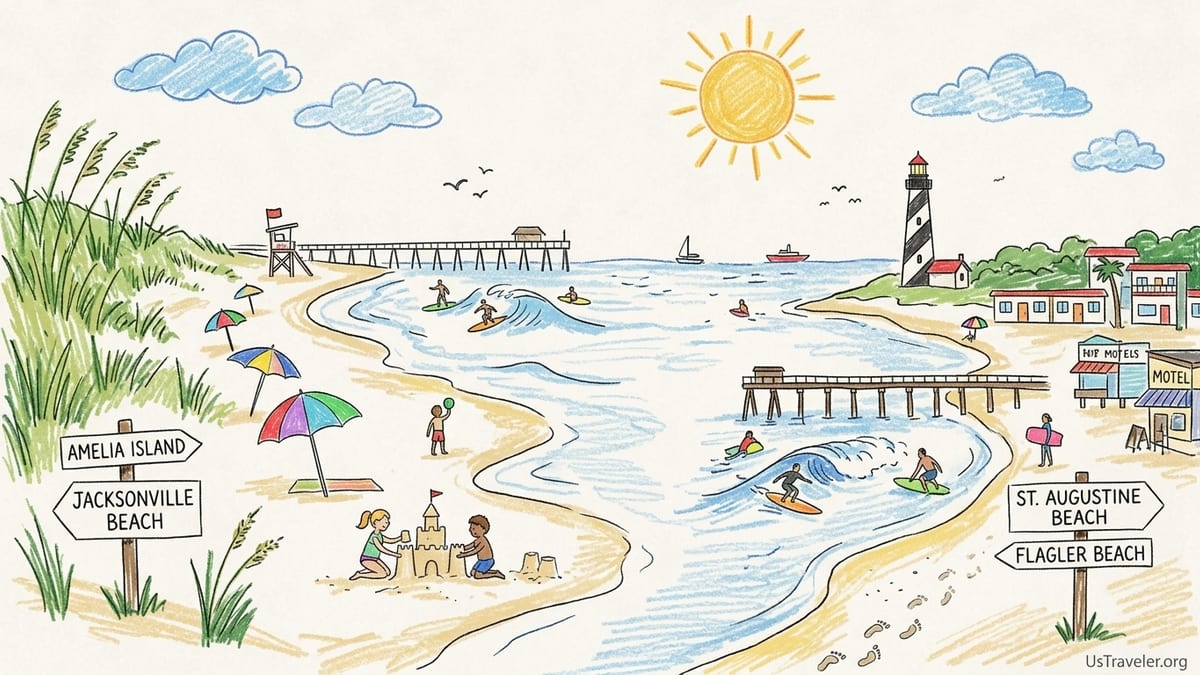
How Northeast Florida’s Beaches Compare at a Glance
Think of Northeast Florida as a continuous ribbon of Atlantic coastline with distinct personalities along the way. To the north, Amelia Island delivers 13 miles of uncrowded beaches with large natural dunes and a low-rise feel. Farther south, the Jacksonville area alone offers about 22 miles of beaches, including Atlantic Beach, Neptune Beach, Jacksonville Beach and Ponte Vedra Beach, with a mix of lively piers, surf breaks and quiet residential stretches. Continue down A1A and you reach Vilano Beach, St. Augustine Beach, Crescent Beach and then Flagler Beach, each with its own spin on sand, surf and scene.
In practical terms, these beaches differ in four big ways that matter to visitors: how wide the sand is at low tide, how easy the water is for casual swimming, what kind of surf is typical, and how developed the immediate beachfront feels. Families who want shallow sandbars and lifeguards may gravitate toward Main Beach on Amelia Island or St. Augustine Beach, while surfers will keep a close eye on Jacksonville Beach Pier, Mayport poles, Vilano and certain Flagler sandbars. Travelers chasing an old-Florida, less polished vibe often end up in Crescent Beach or Flagler, where oceanfront motels and mom-and-pop cafes still dominate.
Access and logistics also vary. Jacksonville’s beaches and Amelia Island are close to Jacksonville International Airport, often under an hour’s drive in normal traffic, so they work well even for a long weekend. St. Augustine Beach, Vilano and Crescent Beach are about 15 to 20 minutes from historic downtown St. Augustine, making it easy to split days between the sand and the city’s Spanish-era sites. Flagler Beach sits roughly an hour south of Jacksonville and about 40 minutes north of Daytona Beach, a quieter midway point along the coast.
Amelia Island: Dunes, Wide Sands and a Relaxed Resort Feel
Amelia Island is the northern gateway to Florida’s Atlantic beaches, a barrier island roughly 13 miles long with Victorian-era Fernandina Beach on its north end and a cluster of gated resorts and condos on the south. Visitors often describe Amelia’s beaches as wide, gently sloped and backed by tall dunes rather than wall-to-wall high-rises, which helps them feel less crowded even in peak season. Main Beach Park on the north end is the hub for classic beach-day amenities: large parking lot, restrooms, lifeguards in season, grassy picnic area, a playground and options like Sandbar Amelia Island or the local Salt Life Food Shack for a casual lunch within sight of the water.
Swimming here is generally straightforward on calm days, especially at lower tides when the beach widens out, but as along all Atlantic beaches, rip currents can occur and visitors should heed the flag system and lifeguard advice where available. Surfers head to different sandbars near Main Beach and down toward Seaside Park when swells line up, although the island is less of a high-performance surf destination than Jacksonville Beach or Flagler. Families with young kids often like Amelia because there is room to spread out on the sand, and many condo complexes and resorts south of Seaside Park offer direct beach walkovers, pools overlooking the dunes and on-site dining, which simplify logistics with children.
Public access is a strong point. The island has dozens of numbered beach walkovers plus major access points such as Main Beach Park, Seaside Park, Peter’s Point and Burney Park at American Beach, each with varying amounts of parking and facilities. In practice, a family staying in a mid-range condo near Seaside Park can often walk straight over the dune without moving the car, while day-trippers may choose Main Beach or Peter’s Point for the larger parking lots. South-end luxury resorts cluster along a particularly scenic stretch of dunes, appealing to travelers wanting a full-service beach vacation with golf, spa and multiple restaurants on property but still easy access to a long, walkable shoreline.
Jacksonville’s Beaches: Atlantic, Neptune and Jacksonville Beach
East of downtown Jacksonville, a roughly 20- to 30-minute drive in normal traffic brings you to the string of communities known collectively as the Jacksonville Beaches. Atlantic Beach, Neptune Beach and Jacksonville Beach run together along a continuous ribbon of sand, but on the ground they feel subtly different. Atlantic and Neptune lean more residential and relaxed, with low-slung beach houses, small inns and a walkable “Town Center” area where Atlantic Boulevard meets the ocean. Jacksonville Beach is livelier, with a pier, oceanfront bars and larger hotels and condo towers closer to the sand.
For swimming, all three share similar conditions: a sandy bottom, moderate Atlantic surf and a beach that widens nicely at low tide. On typical summer days, waves are gentle enough for bodyboarding and beginner surfing, especially south of Atlantic Beach where sandbars create manageable whitewater. Jacksonville Beach usually has lifeguards in season around the pier and busy access points, which is reassuring for families. These are true multi-use beaches, so on a sunny weekend you will see kids with sand buckets, surfers paddling out near the pier and people jogging or biking near the waterline when the tide is low enough.
Surfing here tends to be more consistent than many visitors expect. Local surfers watch sandbars near the Jacksonville Beach Pier and the “Poles” by Hanna Park for the best shape on bigger swells. Rental soft-top boards and lessons are typically available from surf shops along Jacksonville Beach, which makes it a good spot for travelers who want to try surfing without committing to hauling gear. In the evenings, casual spots like beachside taco joints, pizza places and sports bars fill with a mix of locals and visitors, so you can walk from an oceanfront hotel or vacation rental to dinner in flip-flops.
Parking and access are generally good but vary by neighborhood. In Jacksonville Beach, many east-west streets terminate at the ocean with small public parking lots or parallel spaces, often paid in busier seasons. Atlantic and Neptune have more limited public parking, especially near their central restaurant district, but side-street spaces make it workable if you arrive earlier in the day. For an actual beach vacation where walking everywhere is the goal, staying in an oceanfront or one-block-off rental in Jacksonville Beach or near Atlantic/Neptune’s Town Center gives the best combination of sand access, dining and nightlife.
Ponte Vedra Beach: Quieter Sand and Upscale Stays
South of Jacksonville Beach, the character shifts as you enter Ponte Vedra Beach, a mostly residential and resort community known for golf courses, private clubs and some of the more exclusive stretches of sand in Northeast Florida. The beach itself is similar in width and wave profile to Jacksonville’s, but lower density development and limited public parking mean it often feels less crowded. Large dune lines, sea oats and a backdrop of multi-story beach homes and resort buildings define much of the view, particularly near established golf resorts.
Swimming is appealing here for travelers who like a quieter scene. On a typical summer morning, you might share a wide section of sand with only a handful of walkers and joggers, especially around the public access points where parking is minimal. Surfing can be good on the right sandbars, though visiting surfers may find it easier logistically to head to Jacksonville Beach or down toward St. Augustine where public access and parking are simpler. Families who prioritize calm vibe over built-in playgrounds or piers often appreciate Ponte Vedra, especially if they are staying in a condo or resort with its own beach walkover.
Because much of the oceanfront is lined with private homes and club-controlled areas, public access points are more spaced out than in Jacksonville Beach or Amelia Island. Where those exist, you typically find small lots or roadside pull-offs rather than large parks. There are some upscale oceanfront resorts and boutique hotels that offer direct beach access plus amenities like pools, on-site restaurants and kids’ programming, so travelers willing to pay resort-level prices can create a self-contained beach vacation without needing a dense strip of shops or bars nearby. For budget travelers or anyone who wants the easiest public parking, Ponte Vedra is better treated as a day-trip beach rather than a base.
St. Augustine Area: Vilano, St. Augustine Beach and Crescent Beach
Approaching from the north, Vilano Beach is the first St. Johns County shoreline you reach. Sitting just across the Intracoastal from historic St. Augustine, it has a different personality than the more resort-style beach strip to the south. The sand at Vilano can be coarser with a noticeable slope toward the water, and near the inlet the waves and currents can be stronger, which attracts more experienced surfers but can be tricky for small children. A small town center near the main oceanfront access offers a few restaurants and accommodations, including low-rise hotels close to the beach, making Vilano a good base for travelers who want quick access to downtown St. Augustine while staying in a quieter beach community.
St. Augustine Beach, several miles to the south, is the most classic family-oriented beach in the area. Here you find a wide stretch of sand, especially at low tide, with gentle slopes and sandbars that suit wading and boogie-boarding. The St. Johns County Ocean Pier area typically has lifeguards in season, restrooms, splash pads or small playgrounds and convenient parking, which concentrate families near this hub. Behind the dunes, a mix of mid-rise condo buildings, vintage motels and chain hotels line A1A Beach Boulevard, many within walking distance of the sand and casual restaurants serving seafood baskets, tacos or breakfast platters to barefoot vacationers.
Crescent Beach, stretching farther south, is where the development thins out and the landscape opens up. The sand here tends to be very wide and hard-packed at low tide, which historically made it popular for beach driving in designated areas when allowed, and it still feels more spacious than St. Augustine Beach. Condos and beach houses dot the shoreline, but there are fewer full-service hotels, and shops and restaurants are more spread out. Swimmers appreciate the room to spread out and the relative quiet, while surfers check sandbars along this stretch on bigger swell days. Many visitors who want to split their vacation between historic St. Augustine and a less crowded beach favor Crescent Beach for its middle-ground mix of access and tranquility.
Across these three, logistics are generally favorable. St. Johns County manages multiple public access points with parking lots and dune walkovers, though lots near the pier can fill by late morning on holiday weekends. A family staying in a simple roadside motel at St. Augustine Beach might pay a mid-range nightly rate, walk five minutes to the sand with a wagon full of gear and wander to a taco stand by the pier for lunch. A couple staying in a rental condo at Crescent Beach might drive 15 to 20 minutes into downtown for dinner and live music, then return to a much quieter shoreline under dark skies.
Flagler Beach: Old-Florida Vibes and Surf-Friendly Sandbars
Farther south, roughly halfway between St. Augustine and Daytona Beach, Flagler Beach feels like a throwback in the best ways. The town hugs the coastline with A1A running right alongside the dunes and a wooden fishing pier acting as the visual anchor. There are no high-rise condos here; instead you see two- and three-story motels, pastel beach houses and independent cafes and bars facing the ocean. The sand is often tinged a light cinnamon color due to crushed coquina shell, and at lower tides you get a broad, gently sloping beach that works well for long walks, shell hunting and dawn or dusk surf sessions.
Surfing is a central part of Flagler’s identity. On active Atlantic swells, the sandbars around the pier and at various street-end access points can shape fun, rippable waves for shortboards and longboards alike. Local surf shops in town sell wax, leashes and rentals and often post daily surf reports. Swimming is comfortable on smaller wave days, though visitors should still watch flags and local advisories, as shorebreak can be punchy when swells pick up. Compared with Jacksonville Beach or St. Augustine Beach, you will usually find fewer crowds spread along a longer visible oceanfront, especially on weekdays outside of holiday periods.
Flagler Beach works well for travelers who like a walkable, small-town base and accept a slightly longer drive from major airports. Many motels and vacation rentals sit directly across A1A from the beach, often at price points lower than bigger resort markets. You can roll out of bed, cross the street with a chair and cooler and be on the sand in minutes, then rinse off and stroll to a beachfront bar or cafe for fish tacos or a burger with an ocean view. Parking is mainly roadside along A1A and small public lots near the pier, which keeps the feel casual but requires some circling for spots during peak times.
For an extended beach vacation, Flagler appeals to visitors who prioritize character over convenience: there are fewer chain hotels and big-box stores and more independent businesses. Day-trippers from inland cities or from St. Augustine and Daytona appreciate it as a change of pace. If you want a place where you can surf in the morning, fish off the pier in the afternoon and listen to live music at a tiki-style bar at night without ever getting in the car, Flagler Beach fits that bill better than most.
Choosing the Right Beach for Your Vacation Style
When you compare Amelia Island, the Jacksonville Beaches, Ponte Vedra, Vilano, St. Augustine Beach, Crescent Beach and Flagler Beach side by side, patterns emerge that make planning easier. For pure, laid-back resort comfort with wider sands and strong family infrastructure, Amelia Island and St. Augustine Beach come out ahead. Amelia Island’s combination of tall dunes, lower-rise skyline and full-service resorts on the south end appeals to visitors who want an easy, all-in-one oceanfront stay. St. Augustine Beach adds the bonus of being a short drive from historic downtown, ideal for travelers who want museums and nightlife in the evening after a day in the surf and sun.
Travelers primarily interested in surfing and younger-skewing nightlife often put Jacksonville Beach and Flagler Beach near the top of their list. Jacksonville Beach offers a denser strip of oceanfront hotels, bars and restaurants, plus surf spots like the pier and nearby Hanna Park, while still being within commuting distance of downtown Jacksonville’s concerts and sports arenas. Flagler Beach delivers a more compact, low-rise surf town scene where almost everything is within a short walk along A1A, with enough local bars and cafes to keep evenings interesting without feeling rowdy.
For quieter escapes, Crescent Beach, Ponte Vedra Beach, Atlantic Beach and Neptune Beach play different versions of the same card: more residential atmosphere, fewer big hotels directly on the sand and a focus on beach houses and condo rentals. Crescent Beach tends to offer more obvious public parking and beach parks interspersed between condo buildings, while Ponte Vedra leans into private access via homes and resorts. Atlantic and Neptune sit in the middle, with a genuine neighborhood feel plus a compact dining district at their shared town center. A couple renting a small cottage three blocks off the sand here might bike to coffee, walk to the beach with a backpack and spend evenings at a corner bistro without ever feeling like they are in a major resort.
Budget is also a factor. Generally, Amelia Island’s luxury resorts and Ponte Vedra’s golf-focused properties command the highest nightly rates. St. Augustine Beach and Jacksonville Beach offer a mix of price points, from older motels and mid-range chains to more polished boutique options. Crescent Beach and Flagler Beach often host the best-value beachfront motels and condos, especially if you book for a full week outside school holidays. For many travelers, the sweet spot is a clean, older oceanfront motel at St. Augustine Beach or Flagler, where you can still walk out your door and be on the sand in under two minutes without paying big-brand resort pricing.
FAQ
Q1. Which Northeast Florida beach is best for families with young children?
St. Augustine Beach and Amelia Island’s Main Beach are strong choices, thanks to wide, gently sloping sands, seasonal lifeguards, playground areas and easy access to restrooms, parking and casual restaurants that welcome sandy feet.
Q2. Where should surfers base themselves for the most consistent waves?
Jacksonville Beach and Flagler Beach generally offer the most consistent surfing, with well-known sandbars near the Jacksonville Beach Pier, Hanna Park and the Flagler Beach Pier, plus local surf shops for board rentals and lessons.
Q3. Which beaches feel the least crowded in peak season?
Crescent Beach, sections of Amelia Island away from Main Beach and some stretches of Ponte Vedra and Flagler Beach typically feel less crowded, especially on weekday mornings when parking lots have not yet filled.
Q4. Are there true oceanfront hotels in this region, not just “near the beach” properties?
Yes. Jacksonville Beach, St. Augustine Beach, Amelia Island’s south end and parts of Ponte Vedra and Flagler Beach all have oceanfront hotels or resorts that sit directly on or across a small road from the sand with their own beach walkovers.
Q5. Which beaches have the easiest public parking for day trips?
Main Beach and Peter’s Point on Amelia Island, multiple street-end lots in Jacksonville Beach, the pier area at St. Augustine Beach and the central pier area in Flagler Beach usually provide the most straightforward public parking for day visitors.
Q6. If I want nightlife and walkable restaurants, where should I stay?
Jacksonville Beach, Atlantic/Neptune Beach Town Center, St. Augustine Beach near the pier and central Flagler Beach all offer clusters of bars and restaurants within easy walking distance of many hotels and rentals.
Q7. Which beaches are best for a quiet couple’s getaway?
Ponte Vedra Beach, Crescent Beach, quieter stretches of Amelia Island and residential areas of Atlantic or Neptune Beach work well for couples seeking peaceful walks, ocean views and a handful of intimate restaurants rather than a busy strip.
Q8. How does beach width compare among these destinations?
Beach width varies with tides, but Amelia Island, Jacksonville Beach, St. Augustine Beach and Crescent Beach all tend to offer notably wide sands at low tide, giving ample room for walking, games and spreading out even on busy days.
Q9. Is it realistic to visit multiple beaches in one trip?
Yes. Many travelers base in one location, such as St. Augustine Beach or Jacksonville Beach, and take half-day or day trips by car to nearby spots like Vilano, Crescent Beach, Ponte Vedra, Amelia Island or Flagler Beach along the same coastal highway.
Q10. For an “all-in-one” beach vacation with minimal driving, where should I focus?
Look at Amelia Island’s resort area, Jacksonville Beach’s oceanfront hotel strip, central St. Augustine Beach around the pier or Flagler Beach’s walkable oceanfront blocks, where you can reach the sand, restaurants and basic services entirely on foot.