


Northeast Florida’s stretch of Atlantic coastline from Amelia Island down through Jacksonville Beaches, Ponte Vedra, St. Augustine Beach and Palm Coast offers some of the most family-friendly sand in the state. It is a region where classic full-service resorts sit right beside low-rise condo complexes and vacation homes, and choosing between them can significantly change how your trip feels and what it costs. This guide looks in detail at how the main resort and beach hotel options stack up for families, and how they compare with multi-bedroom condos and vacation rentals for both quick getaways and longer stays.
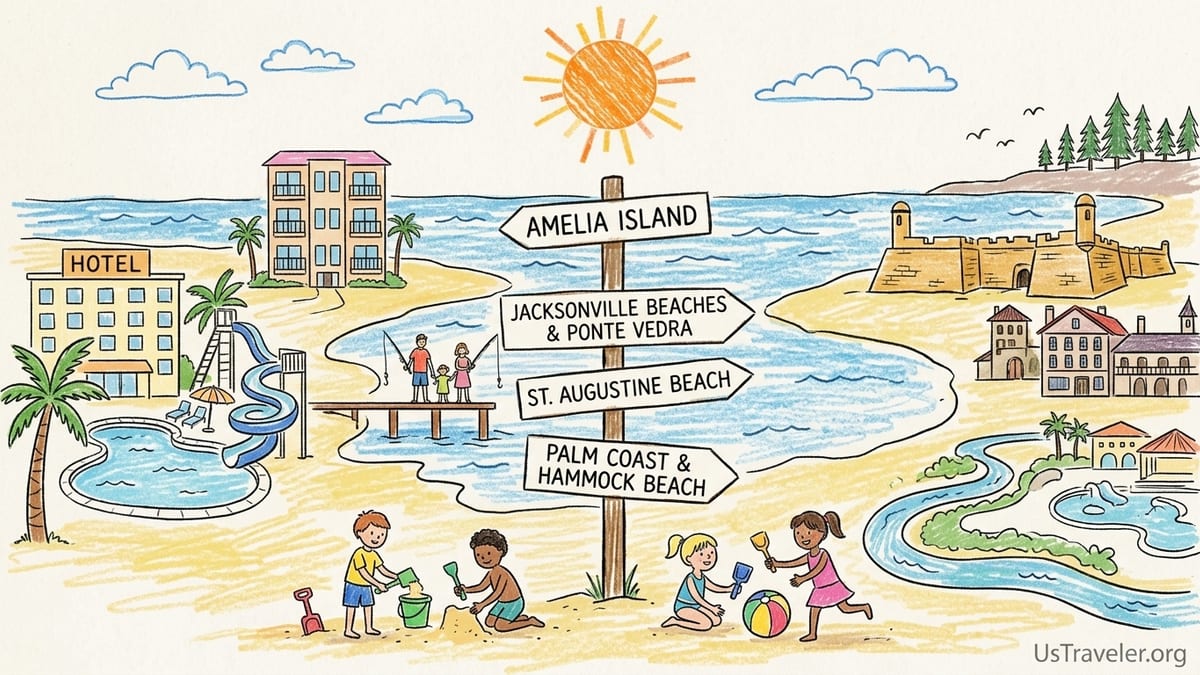
How Northeast Florida’s Beach Towns Compare for Families
For families, the choice between Amelia Island, Jacksonville Beaches and Ponte Vedra, St. Augustine Beach and Palm Coast is less about which place is objectively “best” and more about which mix of beach, amenities and attractions fits your kids’ ages and your budget. Amelia Island and Ponte Vedra lean into classic resort experiences with kids clubs and organized activities. St. Augustine Beach pairs wide, easygoing sand with a historic city five to ten minutes away. Palm Coast offers more of a self-contained resort environment, while Jacksonville Beach and neighboring Atlantic and Neptune Beach feel like lived-in beach towns with playgrounds, fishing piers and a mix of chain and independent hotels.
Families flying in often choose Amelia Island or Ponte Vedra for full-service resorts close to Jacksonville International Airport, then add a day trip to historic St. Augustine. Road trippers driving the Interstate 95 corridor can easily sample more than one base in a week: for example, three nights at a big pool complex in Palm Coast followed by three nights in a beachfront condo on St. Augustine Beach for more space and a kitchen. Because driving distances between these hubs are typically 30 to 90 minutes, you can treat the region almost like one long family playground and build an itinerary around what your kids enjoy most: water slides, surf lessons, mini golf or history and wildlife.
Weather is also part of the equation. Summers are hot and humid with warm ocean water that suits hours in the pool. Spring and fall are prime for families who want to balance beach time with sightseeing in St. Augustine’s historic district or nature preserves along the coast. Winter can still be pleasant for playgrounds and shell hunting, but families who want to spend all day in the water will get more value from late March through October.
Amelia Island: Full-Service Resorts vs Family Condos
Amelia Island is home to two marquee family-friendly properties: Omni Amelia Island Resort and The Ritz-Carlton, Amelia Island. Omni Amelia Island anchors a large oceanfront resort community with a 402-room hotel, lagoon-style pools, kids activities and a wide sandy beach. Families can book traditional hotel rooms, oceanfront suites or multi-bedroom villas within the associated resort neighborhood, which is especially helpful if you want kitchen space but still value an onsite front desk, housekeeping and resort pools. The Ritz-Carlton, Amelia Island leans more toward luxury, with polished service, supervised kids programs at certain times of year and direct beach access, appealing to families that prioritize a quieter atmosphere and top-tier service.
For a more residential feel, two-bedroom condos within the Amelia Island Plantation and nearby complexes like Beach Wood or Sand Dollar Villas offer a different value equation. A renovated two-bedroom, two-bath condo in the Beach Wood area, for example, typically includes a full kitchen, a living room where kids can spread out and a balcony or patio, often just a short walk from both the beach and a shared pool. Many have bedding layouts specifically set up for families, such as a primary bedroom with a king bed and a second bedroom with a queen and twin or twin bunks. You lose the onsite kids club, but you gain the ability to cook breakfast, pack lunches for the beach and put younger children to bed in a separate room while older siblings watch a movie in the living area.
On cost, a standard oceanfront hotel room at a luxury Amelia Island resort can easily run in the mid-range to high range per night in peak spring or summer, before adding resort fees and parking. A well-located two-bedroom condo might be similar or slightly lower per night, but when you factor in that the condo sleeps a family of five or six comfortably and allows you to self-cater some meals, the total trip budget often tilts in favor of the condo for stays of five nights or more. For a quick long weekend, many families still value the ease of ordering poolside lunch on a room charge and letting the resort handle the logistics.
Jacksonville Beaches & Ponte Vedra: Beach Town Hotels and Classic Resorts
The Jacksonville Beaches, including Jacksonville Beach, Neptune Beach and Atlantic Beach, offer a classic family beach-town feel. Hotels here tend to be smaller than big destination resorts, but properties such as oceanfront chain hotels and independent boutiques like One Ocean Resort in Atlantic Beach give families direct beach access with the convenience of being able to walk to casual restaurants, playgrounds and the Jacksonville Beach Pier for an evening stroll or fishing. Many rooms offer two queen beds and mini fridges, and some hotels have suites with separate living areas and sleeper sofas that work for families of five.
Drive 20 to 30 minutes south and you reach Ponte Vedra, where oceanfront resorts take on a more club-like atmosphere. Ponte Vedra Inn & Club, a long-established AAA Five Diamond resort, sits along a wide stretch of beach and combines hotel-style rooms and suites with resort amenities including multiple pools, golf, tennis and a kids environment that skews toward school-age children who can move comfortably around a large property. Certain oceanfront suites here include separate bedrooms plus living rooms with sofa beds and kitchenettes, allowing parents to stay up after putting kids to bed and to handle simple breakfasts or snacks in the room.
Families choosing between Jacksonville Beach hotel options and Ponte Vedra resorts often weigh total cost against amenities. A beachfront chain hotel in Jacksonville Beach typically offers free or lower-cost parking and no or modest resort fees, plus walkable access to pizza, ice cream and playgrounds. Daily room rates can be lower than in Ponte Vedra, though suites with full ocean views may still be pricey during summer and holiday weekends. Ponte Vedra’s resorts, by contrast, can carry higher nightly rates and fees but deliver a more insulated, private feel and more on-property activities, which may appeal if you prefer to park once and stay mostly on site.
For larger or multigenerational groups, a vacation home or townhouse a few blocks off the beach in Jacksonville Beach or Neptune Beach is another practical choice. These rentals often provide three or four bedrooms, a small yard, a grill and a full kitchen, making them ideal for two families traveling together. You give up the resort pool and kids club but gain the ability to live more like a local and avoid paying per-room rates for multiple hotel rooms.
St. Augustine Beach: Balancing Sand, History and Space
St. Augustine Beach, on Anastasia Island, pairs wide, family-friendly sand with one of the most historically rich small cities in the United States just across the bridge. Many families choose to stay in beachfront hotels or low-rise condo complexes here, then drive ten to fifteen minutes into downtown St. Augustine to explore the Castillo de San Marcos, the pedestrian historic district and kid-pleasers like the pirate museum or the Alligator Farm Zoological Park.
On the resort side, properties along St. Augustine Beach typically offer outdoor pools, direct beach access and rooms with two queens or suites that add a small living space and sometimes a kitchenette. At the boutique end of the spectrum, small oceanfront inns with balconies overlooking the sand give families an easy base for sunrise beach walks and boogie-boarding afternoons. Larger chain-affiliated beachfront hotels add conveniences like onsite breakfast rooms, coin laundry and predictable room layouts, which can be important for families traveling with infants or toddlers.
Condos make up a large share of the family accommodation inventory on St. Augustine Beach. A typical two-bedroom ocean-side condo with a shared pool will include a full kitchen with standard appliances, a dining table big enough for family meals, and a balcony or patio. Many complexes sit a short walk from the sand, with boardwalks over the dunes, which makes it manageable to haul beach carts, coolers and shade tents. Nightly rates for two-bedroom condos can be competitive with or even undercut beach hotels in high season, especially if you stay five nights or more and can take advantage of weekly pricing. The ability to prepare breakfast, snacks and several dinners at “home” can trim your food budget noticeably compared with eating out for every meal in nearby St. Augustine.
For parking and logistics, most condo resorts on St. Augustine Beach include at least one dedicated parking space per unit, which is useful in summer when public beach lots fill quickly. Hotels typically offer onsite parking at no or modest additional cost. If you plan to visit the historic district frequently, factor in that garage and lot parking downtown often carries an hourly or daily fee, which adds to the total cost of your stay regardless of where you sleep.
Palm Coast & Hammock Beach: Self-Contained Resort vs Nearby Rentals
Palm Coast’s flagship family property is Hammock Beach Golf Resort and Spa, an oceanfront complex on a stretch of private coastline. Hammock Beach is widely regarded as one of the most family-oriented resorts in the region, with a fantasy-style pool complex featuring multiple outdoor pools, a lazy river, water slide features and an indoor pool that keeps kids happy even on windy days. The resort folds in two golf courses and a spa, so parents and grandparents can build in their own relaxation time while kids enjoy the water features.
Accommodation at Hammock Beach tends to blur the line between resort and condo. Many units are multi-bedroom suites, villas or condos with full kitchens, dining areas and separate living rooms, all managed under the resort umbrella. This can be ideal for a family of five or six that wants the comforts of a vacation rental along with hotel-style services such as housekeeping and onsite restaurants. The trade-off is price: peak season nightly rates for multi-bedroom units can be high, and resort fees and parking costs can add a noticeable percentage to the total bill.
Outside the main resort, Palm Coast and neighboring beach communities offer a wide supply of independent vacation rentals. Ocean-view condos in smaller buildings and townhouses in gated communities often share a pool and beach access but operate without resort fees. For example, a two-bedroom condo in a low-rise complex a short walk from the sand might sleep four to six people, include free parking and charge a cleaning fee instead of a nightly resort fee. For a week-long stay, families who are comfortable cooking breakfast and several dinners in their unit often find this model reduces their overall cost compared with booking two adjoining hotel rooms at a resort.
Because Palm Coast sits roughly midway between St. Augustine and Daytona Beach along the coast, it can also serve as a quieter base for families who want to day-trip in multiple directions. Drive times of 30 to 45 minutes to bigger attractions mean you will spend more time in the car compared with staying directly at St. Augustine Beach, but many parents consider that trade worthwhile for the calmer, more controlled environment of a self-contained resort or gated rental community.
Comparing Resorts vs Multi-Bedroom Condos for Family Stays
When you look across Amelia Island, Jacksonville Beaches and Ponte Vedra, St. Augustine Beach and Palm Coast, a key decision is whether to book a traditional resort or opt for a multi-bedroom condo or vacation home. Resorts typically win on convenience. You check in at a front desk, receive wristbands or room keys that access pools and sometimes kids clubs, and can usually charge meals, snacks and rentals like beach chairs or bikes to your room. At Omni Amelia Island and Hammock Beach, for example, families can spend entire days rotating between pool complexes, the beach and onsite restaurants without moving their car.
Multi-bedroom condos and vacation homes excel on space and value. A two-bedroom unit in Amelia Island’s Beach Wood area or a similar condo on St. Augustine Beach can comfortably host a family of four or five, with separate bedrooms, a living area and a full kitchen. Parents can close the bedroom door at night while older kids wind down in the living room, and nap schedules for toddlers are much easier to maintain. On a per-person basis, nightly costs for a condo are often lower than booking two connecting hotel rooms, especially once cleaning fees are spread over a stay of five nights or more.
The trade-offs show up most clearly in services and flexibility. At a resort, you are paying for staffed pools, organized kids activities, beach towel service, maintenance teams and front-desk support if something in your room needs attention. At a vacation rental, you are largely self-reliant. A condo might have a property manager on call, but day-to-day you will wash your own towels, take out trash and handle small issues yourself. For some families that independence is part of the appeal. Others, especially those traveling with very young children or grandparents, prefer the extra support of a resort environment.
Another consideration is how you like to eat on vacation. If you enjoy restaurant meals for lunch and dinner, a resort with several dining venues or a beach hotel within walking distance of cafes might make more sense than a standalone condo. On the other hand, families with picky eaters or food allergies often find that a rental kitchen reduces stress and waste. Being able to serve cereal and fruit before an early-morning beach walk, prep picnic lunches for the sand and cook simple pasta dinners can both reduce costs and make daily routines easier with kids.
Understanding Total Family Cost: Rates, Fees and Parking
Sticker price is only part of what you will pay for a family stay in Northeast Florida. Most larger resorts, including some on Amelia Island and in Palm Coast, charge nightly resort fees that cover use of pools, fitness centers, Wi-Fi and sometimes beach chairs or bike rentals. These fees can add a significant amount per night to your bill. Parking policies vary: some resorts include self-parking, others charge a nightly fee, and valet parking can cost more. For a family staying five or six nights, these add-ons can equal or exceed one extra night’s nominal room rate.
Beach hotels in Jacksonville Beach, St. Augustine Beach and parts of Amelia Island sometimes charge lower or no resort fees, and many include self-parking. However, they may not include extras like complimentary beach chairs or umbrellas. Renting two chairs and an umbrella on the sand can cost a modest daily amount, so families should factor that into their daily budget. Over a week, the difference between bringing your own gear and renting it every day can add up to a family meal or an attraction ticket.
Vacation rentals introduce a different fee structure. Nightly rates might appear lower than resorts of similar size, but most condos and homes charge a one-time cleaning fee and often a service fee through booking platforms. For longer stays these fees become more manageable when averaged out per night, which is why rentals often shine for week-long or multi-week stays. Many include free parking for at least one car and no resort fee. Utility costs are baked into the nightly rate, so once you arrive, your extras are largely optional: groceries, dining out, attraction tickets and any beach rentals you choose.
To estimate total family cost, it often helps to sketch out a realistic daily plan. If you expect to spend all day at a resort pool with included activities, paying a higher nightly rate and resort fee may still be cheaper than buying separate water park passes and entertainment elsewhere. If your plan involves exploring state parks, historic sites and free public beaches, a condo with a full kitchen and included parking can make more financial sense, even if the initial nightly rate looks similar to a midrange hotel.
The Takeaway
Northeast Florida’s coast offers a wide spectrum of family-friendly accommodations, from polished resorts on Amelia Island, Ponte Vedra and Palm Coast to relaxed beachfront hotels in Jacksonville Beach and St. Augustine Beach and thousands of multi-bedroom condos and vacation homes scattered along the barrier islands. There is no single best choice for every family. Instead, the right base depends on how much you value resort-style services versus space and independence, how long you plan to stay and how you like to balance beach time with other activities.
For a shorter trip where convenience is paramount and you want to unpack once and stay mostly on property, a full-service resort with a strong pool scene and some form of kids programming can be worth the higher nightly rate. For week-long or multi-week stays, especially with larger families or multigenerational groups, multi-bedroom condos or vacation rentals near the beach often deliver more room to spread out, full kitchens to control meal costs and parking that does not add up night after night.
Whichever route you choose, the underlying strengths of this region remain the same: wide, swimmable beaches, kid-friendly attractions within a short drive and a gentler pace than some of Florida’s more crowded resort corridors. With a bit of advance planning around suites, adjoining rooms, kitchens, pools, parking and fees, you can match your lodging to your family’s travel style and build a Northeast Florida beach vacation that feels both relaxed and financially sensible.
FAQ
Q1. Which Northeast Florida beach town is best for a first family trip? For a first visit, many families choose Amelia Island or St. Augustine Beach. Amelia Island works well if you want a resort-focused stay with organized activities and a contained environment. St. Augustine Beach is ideal if you want easy beach days combined with frequent trips into the historic district for sightseeing, dining and attractions.
Q2. Are resorts or condos better for families with young children? Resorts offer convenience: you can walk straight from your room to pools and restaurants without driving, and some have kids programs that give parents breaks. Condos generally provide more space and a quieter environment, along with full kitchens that make it easier to manage naps and early bedtimes. For babies and toddlers, many parents prefer condos or villa-style resort units with separate bedrooms so adults can relax after bedtime.
Q3. How far in advance should I book for peak summer or spring break? For peak times such as March school holidays and mid-June to early August, it is wise to book well in advance. Resorts on Amelia Island and in Palm Coast often fill months ahead for prime dates, especially for suites and multi-bedroom units. Beachfront condos in St. Augustine Beach and Amelia Island also see strong demand, so booking three to six months out improves your chances of getting the layout and price point you want.
Q4. Do I need a car if I stay at a beach resort in this region? A car is highly recommended for most families. While you can spend much of your time on property at larger resorts like Omni Amelia Island or Hammock Beach, having a car lets you explore nearby attractions, grocery stores and restaurants. At St. Augustine Beach and Jacksonville Beach, a car makes it easier to visit the historic district, parks and other beaches along the coast.
Q5. How do resort fees and parking charges affect the total cost? Resort fees and parking charges can significantly increase your total cost over several nights. A nightly resort fee plus nightly parking can add up to the cost of an extra night over a week-long stay. Always check the fine print when comparing options and include these charges, plus taxes, when you calculate your budget. Vacation rentals often replace resort fees with a one-time cleaning fee and usually include free parking.
Q6. Are there genuinely oceanfront multi-bedroom options, or are most condos set back from the beach? The region offers both. On Amelia Island, St. Augustine Beach and in Palm Coast, you can find true oceanfront condos and resort-managed villas with direct or very short walks to the sand, often through private boardwalks. There are also many units across the street or a block back, which may be more affordable but require a slightly longer walk with beach gear.
Q7. What kinds of kids programs can we expect at the larger resorts? Larger resorts in this region usually offer seasonal kids activities that can include crafts, games, nature programs and occasional themed evenings, with more structured kids clubs operating during busy periods like summer and holidays. Ages and hours vary by property, and some activities carry extra fees. It is worth checking current schedules directly with the resort as offerings can change year to year.
Q8. Is it realistic to visit both the beach and historic St. Augustine from one base? Yes, it is very realistic. From St. Augustine Beach, the drive to the historic district is typically about ten to fifteen minutes. From Ponte Vedra or Palm Coast, you are looking at longer but manageable drives, often 30 to 45 minutes. Many families split their time, spending beach-focused mornings and early afternoons by the water and heading into the historic district for evening walks and dinners.
Q9. How should we think about food costs when comparing resorts and rentals? Food costs can be a major part of a family vacation budget. At resorts and beach hotels, you may rely more on restaurant meals and snacks, which adds up quickly, especially with multiple children. Rentals with full kitchens let you handle breakfast and many lunches in the unit and choose when to dine out, which can reduce your daily spend. When comparing options, estimate how many meals you are likely to eat out per day in each scenario.
Q10. Is Northeast Florida a good choice for multigenerational trips? Northeast Florida works well for multigenerational groups because it offers something for every age. Resorts like those on Amelia Island, Ponte Vedra and Palm Coast give grandparents comfortable spaces and quieter corners while kids enjoy pools and the beach. Multi-bedroom condos and vacation homes let extended families stay under one roof, with common living areas for shared meals and private bedrooms for downtime, making it easier to balance togetherness and personal space.