


Northeast Florida quietly hides two of the state’s most appealing coastal getaways: relaxed, resort-focused Amelia Island and history-packed, walkable St. Augustine. Travelers often weigh the same decision you are facing now: should you book a quiet beach escape on Amelia Island, dive into centuries of history and nightlife in St. Augustine, or split your time between the two? With only about 70 miles of road between them and very different personalities, it is a choice worth making carefully.
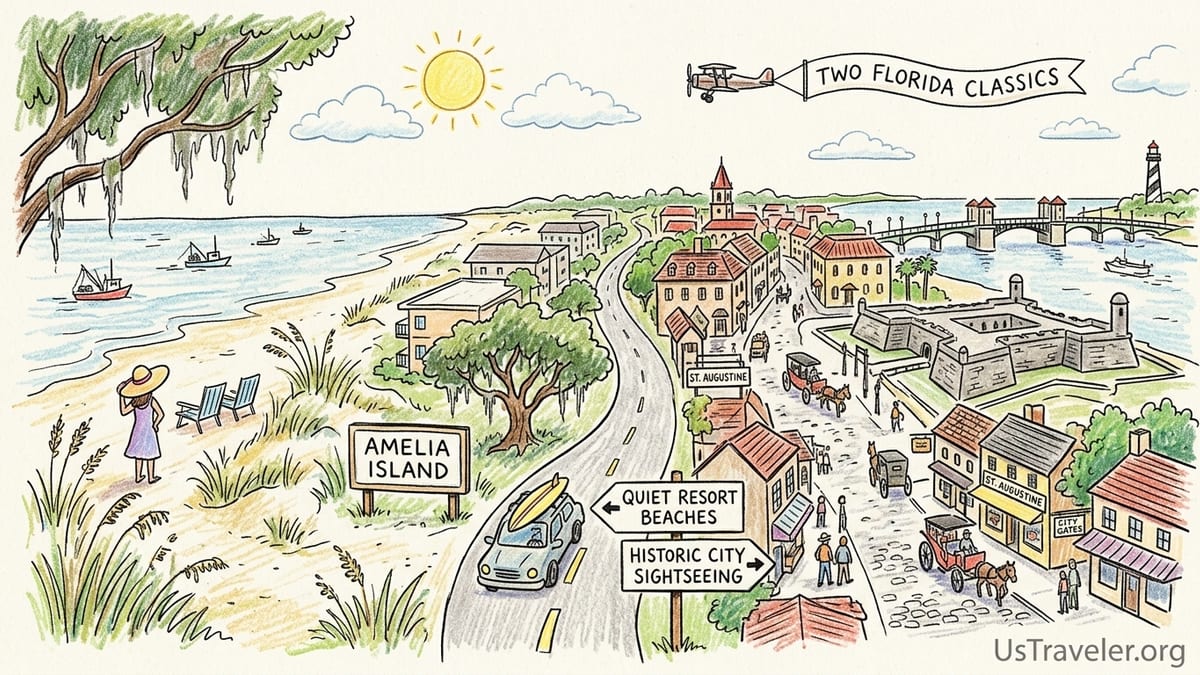
Overview: Two Very Different Northeast Florida Classics
Amelia Island sits at Florida’s far northeast corner near the Georgia line, with the historic town of Fernandina Beach at its northern tip. The island feels like a classic small resort community, with moss-draped live oaks, low-rise oceanfront resorts and 13 miles of wide Atlantic beach where it is still possible to spread out. Visitors often describe the atmosphere as calm and grown up, with evenings that revolve around sunset cocktails, seafood dinners and early morning beach walks rather than late-night bar hopping.
St. Augustine, about an hour and twenty minutes south by car, is a different kind of coastal escape. Marketed as the nation’s oldest city, its compact historic core is filled with Spanish colonial architecture, stone fortifications, museums, churches and lively streets that stay busy well into the night. You still get Atlantic beaches on nearby Anastasia Island and Vilano Beach, but the heart of a St. Augustine trip is walking through history, hopping between attractions and restaurants, and soaking up a city-like energy on a much smaller scale.
For many travelers, the simplest way to frame the choice is this: Amelia Island is the quieter beach-and-resort retreat, while St. Augustine is the stronger history, sightseeing and walkable-city destination. Both work well for long weekends or four- to five-night trips, and because they are close together it often makes sense to combine them into a single itinerary.
Driving between Amelia Island and St. Augustine typically takes around 1 hour 20 minutes, depending on traffic, with a road distance in the upper 60-mile range. That makes it realistic to book flights into Jacksonville International Airport, spend a few nights on Amelia, then drive down A1A along the coast to cap the trip with two or three nights in St. Augustine’s historic district or on Anastasia Island.
Beaches and Coastal Atmosphere
If beach time is the core of your trip, Amelia Island usually comes out ahead. The island offers about 13 miles of accessible Atlantic beachfront, much of it backed by dunes, maritime forest and low-density development. Even in busier seasons you can usually find pockets of space, especially around Peters Point, Burney Park near historic American Beach, and the quieter central sections between the main public parks. The feel is more about long walks, shell hunting and gentle surf than crowded beach bars and umbrellas stacked shoulder to shoulder.
St. Augustine’s beaches are a patchwork of separate communities that each have a distinct feel. St. Augustine Beach, on Anastasia Island, is the busiest, with a pier, oceanfront hotels and condos, and a main strip along A1A lined with casual restaurants and surf shops. Vilano Beach, just across the Intracoastal from downtown, has a more residential vibe with a small town center and a wide, often windier beachfront popular with locals and anglers. Farther south, areas like Crescent Beach and Butler Beach feel quieter and more low-key, with long stretches of firm, walkable sand.
For pure sand-and-silence, Amelia Island is usually the better choice. It is common to walk out from a resort like The Ritz-Carlton, Amelia Island or Omni Amelia Island Resort and see only a handful of people in either direction, especially outside of peak holiday weekends. Sunrise often brings a few joggers and shell seekers, and by midday the water is dotted with families and paddleboarders rather than loud party groups.
St. Augustine’s beaches win if you want more dining and activity right off the sand. Around the St. Johns County Ocean Pier at St. Augustine Beach, you can step from your hotel to local spots for tacos, ice cream, or a casual seafood dinner in just a few minutes. Couples may enjoy a pattern of spending the day on Anastasia Island’s beach and then heading over the Bridge of Lions into the historic district at night for cocktails and live music.
History, Culture and Sense of Place
When it comes to history and sightseeing, St. Augustine is the clear heavyweight. Its compact historic district features centuries-old streets, plazas and structures, with layers of Spanish, British and American influences. Visitors typically tour the Castillo de San Marcos, a 17th-century coquina stone fort overlooking Matanzas Bay, then wander St. George Street, peek into courtyards, churches and small museums, and perhaps step into the former Flagler-era hotels that now house a college and a museum. Even a simple evening walk from the waterfront to the old city gates feels steeped in heritage.
The city’s cultural calendar also adds depth. Throughout the year you will find events such as heritage festivals, food and wine weekends, and multi-day music festivals that fill outdoor stages around town. During the winter Nights of Lights season, streets and landmarks glow with millions of white lights and the historic core feels almost like a European holiday market by the sea.
Amelia Island has a strong, if quieter, sense of history of its own. Fernandina Beach’s downtown is a well-preserved Victorian-era seaport district, with brick storefronts, historic saloons, a working marina and small museums that touch on the island’s past under eight different flags. You can stroll Centre Street in the evening, window-shop antiques and galleries, or take a historic walking tour that covers everything from the shrimping industry to the island’s role in Gilded Age tourism. It is atmospheric, but on a smaller, less museum-heavy scale than St. Augustine.
If your ideal trip includes several days of structured sightseeing, guided tours and historic attractions, St. Augustine has more to keep you occupied. If you are more interested in a few hours of light exploring before returning to the pool or spa, Amelia Island’s historic town provides just enough culture without dominating the trip.
Where to Stay: Resorts, Inns and B&Bs
Lodging style is one of the biggest differences between these destinations. Amelia Island shines for resort stays and beach-centric boutique properties. On the south end, Omni Amelia Island Resort and The Ritz-Carlton, Amelia Island anchor large stretches of shoreline, with full-service spas, multiple pools, on-site golf, and kid-friendly programming. Nightly rates at these properties often run from the upper 300s into the high 700s in busier seasons, with shoulder-season deals sometimes dipping below that. For something more intimate, oceanfront inns like Elizabeth Pointe Lodge offer the feel of a New England coastal B&B transplanted to Florida, with fewer than 30 rooms, porches lined with rocking chairs and breakfast included.
Midrange travelers on Amelia will find a mix of chain hotels near the beach, simple motels set back along A1A, and an increasing number of vacation rentals ranging from condo units in gated communities to historic cottages near downtown Fernandina Beach. Expect many standard hotels a short walk from the water to price roughly in the 150 to 250 dollar per night range outside of holiday peaks, with oceanfront units commanding more.
St. Augustine’s accommodations are more diverse and more urban in feel. In the historic district you will find dozens of bed-and-breakfasts and small inns tucked into historic houses, especially around streets like Aviles and St. George. Many offer 8 to 20 rooms, complimentary breakfast, small courtyards and walkable access to nearly all major sights. Prices vary widely, but it is common to see well-located historic inns starting around the low 200s per night and climbing higher for the most sought-after buildings and suites.
On Anastasia Island and St. Augustine Beach, the focus shifts to midrise oceanfront hotels, condo-style resorts and vacation rentals. Here you can often balance beach access with lower nightly rates than Amelia’s top-tier resorts, especially if you are comfortable staying a block or two off the sand. For budget-conscious travelers, it can be more affordable to book a simple hotel on Anastasia Island and drive or take a ride-share into the historic district than to stay in the heart of downtown.
Dining, Nightlife and Evening Atmosphere
St. Augustine offers the more varied and energetic food and nightlife scene. The historic district alone supports a long list of restaurants, from fine-dining spots housed in historic homes to simple courtyards serving tacos and local seafood. You can find Spanish-inspired tapas and paella, Southern coastal fare, craft cocktail bars, breweries, a distillery offering tours and tastings, and dessert spots and chocolate shops that stay open into the evening. On a typical night you might enjoy a leisurely dinner along Avenida Menendez overlooking the water, then wander into a side street wine bar or catch a band at an outdoor music venue.
Nightlife here tends to be busy but not wild, especially on weekends and during events. Expect live music spilling out from bars, ghost tours weaving through the streets with costumed guides, and pedestrians strolling with to-go cups in designated areas where that is permitted. The atmosphere suits couples looking for a romantic city break, groups of friends who want dinner and drinks without a clubbing scene, and solo travelers who enjoy urban people-watching.
Amelia Island’s dining scene is smaller but quietly excellent. Downtown Fernandina Beach has a cluster of high-quality independent restaurants tucked into historic storefronts, ranging from white-tablecloth seafood and steak to creative Southern bistros and cozy wine bars. At the resorts on the south end, you will find notable on-site restaurants including chef-driven tasting menus, oceanfront grills and casual poolside fare. The island also hosts food-focused events during the year, such as dining months and shrimp or seafood festivals that highlight its culinary roots.
Evenings on Amelia Island are calmer overall. After dinner, many visitors head back to their inn or resort for a nightcap on the porch, a stroll along the beach or an early night in. There are a handful of lively local bars and some live music venues, but you will not find the same density of nighttime options as in St. Augustine. For travelers who want the day to center around the beach and the night to be relaxed and quiet, that is a feature rather than a drawback.
Activities, Excursions and Family Appeal
Families and active travelers will find plenty to do in both destinations, but the flavor of the activities differs. St. Augustine stacks its schedule with historic attractions, trolley tours, museums and hands-on sites like living history areas and small maritime or pirate-themed exhibits tailored to children. A typical family day might include a morning at the fort, an afternoon trolley loop with hop-on, hop-off stops at various museums, and a sunset cruise on Matanzas Bay. Many of these experiences are relatively low-cost per person, making it easier to fill several days without blowing the budget.
On Anastasia Island you can add classic beach-town fun. The state park offers quieter shoreline and nature trails, while the St. Johns County Ocean Pier surrounds itself with playgrounds, surfboard rentals and casual food. Older kids and teens can try stand-up paddleboarding or surfing lessons, and in the evening many families enjoy ghost tours or carriage rides through the historic district that keep younger travelers engaged in the city’s stories.
Amelia Island leans into outdoor recreation and low-key exploration. The island is wrapped in marshes and tidal creeks that are ideal for kayaking tours, where you might spot dolphins, wading birds and even wild horses across the water on nearby Cumberland Island in Georgia. Biking is popular, especially through maritime forests and along quiet residential streets. Golfers can choose from several courses, including those attached to the larger resorts. State parks near the island offer additional hiking, birding and beachcombing opportunities.
For families, Amelia Island works especially well with younger children or kids who do not need a constant stream of attractions. Days here often fall into an easy rhythm of beach time, pool time and an excursion or two such as a guided kayak paddle, a boat tour to look for wildlife, or a visit to a small local museum. Parents who want a self-contained resort environment with kids’ clubs and on-site dining often gravitate to the Omni or Ritz-Carlton complexes.
Costs, Length of Stay and When to Combine Both
In broad terms, Amelia Island skews slightly more expensive on the lodging side, especially if you prioritize upscale beachfront resorts, while St. Augustine can be more forgiving for budget and midrange travelers who are flexible about location. Dining prices are comparable for similar quality in both areas, ranging from modest seafood shacks and taco joints to splurge-worthy multi-course dinners. Activity costs in St. Augustine can add up if you visit multiple ticketed attractions, but there are also many low-cost or free experiences such as self-guided walking tours, church visits and simply exploring the waterfront and plazas.
For a relaxed long weekend focused on one destination, three nights is a comfortable minimum in either place. That gives you two full days plus partial arrival and departure days to combine beach time and exploration without rushing. Many travelers find four or five nights ideal on Amelia Island if they are content with a resort rhythm, while St. Augustine often rewards an extra day simply because there are more distinct attractions to see.
If you are considering a combined itinerary, one common pattern is to start with two or three nights in St. Augustine’s historic district, where you walk to most sights, then drive north to Amelia Island for another two or three nights at a beach resort. This structure front-loads your trip with sightseeing when you have the most energy and finishes with pure relaxation. Another option for families is to base in one destination for most of the trip and take a day trip to the other, though this does mean more time in the car.
Because both areas are part of Florida’s First Coast region, peak travel periods overlap. Spring break weeks, major holiday weekends, and special events such as big music festivals or holiday light displays can drive prices up and increase crowds. Shoulder seasons in late spring and early fall often offer a good balance of warm weather and more manageable rates, though summer can still be appealing if you are prepared for heat, humidity and afternoon thunderstorms.
Who Should Choose Which: Couples, Families and Different Travel Styles
For couples, the right choice often comes down to priorities. If you picture slow mornings on a balcony overlooking the Atlantic, afternoons by a resort pool and quiet dinners with a glass of wine, Amelia Island is likely the better fit. Its combination of polished resorts, cozy inns and a historic but uncrowded downtown makes it ideal for anniversaries, babymoons and low-key romantic weekends. Couples who want to avoid heavy nightlife, loud beach crowds or a packed schedule of activities often leave feeling refreshed.
Couples who love exploring cities and walking everywhere will gravitate toward St. Augustine. Staying in or near the historic district means you can arrive, park the car and navigate almost entirely on foot. You might spend the morning touring a museum in a former grand hotel, the afternoon on a tasting at a distillery or winery, and the evening moving between tapas bars, live music, and maybe a late-night stroll on the waterfront. For travelers who like to feel immersed in an old-world setting with plenty of restaurant choices, this is where St. Augustine shines.
Families with young children who primarily want safe, easy beach time, a kid-friendly pool and perhaps a playground or two may find Amelia Island’s resort environments appealing. Many parents appreciate the security of a self-contained property where kids’ activities, casual dining and the beach are all within a short walk. Meanwhile, families with school-age kids and teens who enjoy stories, hands-on exhibits and interactive tours often get more mileage from St. Augustine’s layered history and variety of attractions.
Solo travelers, remote workers and groups of friends should think about their preferred pace. Someone planning a working vacation with days spent on a laptop and evenings exploring will likely feel more stimulated in St. Augustine’s walkable core, while a solo traveler recovering from burnout might prefer Amelia Island’s quiet beaches, spa options and uncrowded nature trails. Groups looking for a blend of beach time and nightlife might base on Anastasia Island to split the difference between the sand and the historic district.
The Takeaway
Amelia Island and St. Augustine are not interchangeable Florida beach towns; they are complementary destinations that deliver very different kinds of Northeast Florida escapes. Amelia Island is first and foremost a quiet, polished island with wide beaches, high-caliber resorts and a charming Victorian seaport town that adds character without overwhelming the trip. St. Augustine is a compact coastal city defined by centuries of history, a walkable downtown, varied dining and an almost European sense of place, backed by a string of nearby beaches.
If your priority is a restorative beach and resort stay with occasional forays into a low-key historic district, Amelia Island deserves the edge. If you want to fill your days with sights, tours, food and nighttime energy while still having nearby sand and surf, St. Augustine is the stronger choice. Many travelers, especially those visiting for five nights or more, will get the best of both worlds by combining a few nights in each.
Whichever you pick, planning with your travel style in mind is more important than splitting hairs over which destination is objectively better. In practice, both represent some of the most character-rich corners of Florida’s Atlantic coast, far from the theme-park corridors and high-rise skylines farther south. Choose the place that matches the pace and mood you want, or design a trip that lets you experience both sides of Northeast Florida’s personality in a single journey.
FAQ
Q1. Is Amelia Island or St. Augustine better for a first-time visitor to Northeast Florida?
For a first visit, St. Augustine often makes more sense if you want a strong sense of place, walkable sightseeing and many dining options. Amelia Island is better if your main goal is a quiet beach and resort stay with a bit of historic character on the side.
Q2. Which destination has better beaches, Amelia Island or St. Augustine?
Amelia Island generally offers quieter, less crowded beaches with a more natural, low-rise backdrop. St. Augustine’s beaches have more development and nearby restaurants and shops, especially around St. Augustine Beach, which some travelers prefer for convenience.
Q3. Can I visit both Amelia Island and St. Augustine in one trip?
Yes. The drive between them is roughly an hour and twenty minutes, so it is practical to split a four- to seven-night trip between the two. Many travelers spend a few nights in St. Augustine’s historic district and then finish with a resort stay on Amelia Island.
Q4. Which place is more budget-friendly?
St. Augustine typically offers more budget and midrange options, especially if you stay a short drive from the historic core or on Anastasia Island. Amelia Island can be pricier on the lodging side, particularly at its major oceanfront resorts, though there are modest hotels and rentals if you book early and visit outside peak dates.
Q5. Is Amelia Island or St. Augustine better for families with kids?
Amelia Island is great for families who want safe, simple beach days and resort amenities like pools and kids’ programs. St. Augustine works well for kids who enjoy forts, pirate lore, trolley tours and interactive museums, paired with nearby beach time on Anastasia Island.
Q6. Which destination is more romantic for couples?
Both can be very romantic, but in different ways. Amelia Island leans toward relaxed luxury, spa days and quiet oceanfront dinners. St. Augustine offers atmospheric cobblestone streets, candlelit restaurants in historic buildings and evening strolls along the bayfront, plus more nightlife if you want it.
Q7. Do I need a car in Amelia Island or St. Augustine?
On Amelia Island, a car is helpful for reaching different beaches, parks and downtown Fernandina Beach unless you stay put at a full-service resort. In St. Augustine, staying in or near the historic district lets you walk to most sights and restaurants, though a car or ride-share makes getting to the beaches and outlying attractions much easier.
Q8. How many days should I plan for each destination?
Plan at least three nights in either place to avoid feeling rushed. Four to five nights on Amelia Island allows for true unwinding with a couple of excursions, while a similar length in St. Augustine lets you explore the historic sites, enjoy the beaches and sample a range of restaurants without packing each day too tightly.
Q9. When is the best time of year to visit?
Late spring and early fall often offer a good balance of warm weather, manageable humidity and somewhat lighter crowds. Summer brings hot, humid conditions and more families but also the warmest water. Winter can be cooler and breezier, especially on Amelia Island, but St. Augustine’s holiday lights and events make that season appealing for city-focused travelers.
Q10. Is Amelia Island or St. Augustine better if I want a quiet trip?
Amelia Island is usually the better choice if quiet is your top priority. Its beaches, resorts and small-town downtown stay relatively calm most evenings. St. Augustine can still feel charming and relaxed, but its historic core remains busier and livelier, especially on weekends and during festivals.