


Linking Los Angeles, Yosemite and San Francisco in a single California road trip is a classic first-time itinerary. It combines city neighborhoods and food scenes with high Sierra granite walls, giant sequoias and, if road conditions cooperate, Pacific coast curves along Highway 1. With some planning around seasons, driving distances and rental-car logistics, you can fit an impressive amount into 7, 10 or 14 days without turning the trip into a marathon of unpacking and repacking.
How long you really need: 7, 10 or 14 days
For a first California trip that combines Los Angeles, Yosemite and San Francisco, 7 days is the practical minimum. That gives you two nights in Los Angeles, three in or near Yosemite and two in San Francisco, with driving days doubling as sightseeing time. It is fast paced but workable if you are comfortable with 5 to 6 hours of driving on two or three days.
Stretching to 10 days lets you ease into each destination and adds flexibility for Highway 1 detours or an extra overnight in wine country or along the Central Coast. Many travelers use those extra days to break up the long Los Angeles to Yosemite drive with a stop around Bakersfield or Fresno on the inland route, or in Pismo Beach or San Luis Obispo if they route via the coast.
With 14 days you can slow the pace substantially. A two-week plan can include three nights in Los Angeles, four in the Yosemite region, three in San Francisco and three spread between the Central Coast and possibly a side trip to Monterey or Santa Barbara. Two weeks is also more forgiving if your dates fall in peak summer when Yosemite traffic and trailheads are busy and parking fills early in the day.
Whichever itinerary length you choose, the key is to avoid checking in and out every day. Base yourself for multiple nights in each main stop and treat scenic drives such as Highway 1 or Tioga Road as full sightseeing days on their own, not as quick transfers.
Best time to travel and what it changes
Yosemite is open year-round, but the experience changes sharply by season. The park’s busiest months are roughly late May through early October, with July and August carrying the heaviest crowds and traffic. In those peak months you can usually drive all the way into Yosemite Valley on clear roads, but you should expect congestion at popular viewpoints and aim to park early in the morning, then use the free valley shuttles for the rest of the day.
Late spring and early summer, roughly May and June, are the sweet spot for many travelers because snowmelt feeds Yosemite Falls, Bridalveil Fall and Vernal Fall, and most valley trails are open. By late August some waterfalls shrink to a trickle in drier years, though higher-elevation hikes around Tuolumne Meadows often remain beautiful then. Tioga Road, which crosses the high country, typically opens sometime between late May and July and closes around November, so access to that part of the park will depend on your dates and snowpack.
Shoulder seasons in April, September and October often mean cooler temperatures, fewer people and better value on lodging outside the park, especially in gateway towns like Mariposa, Oakhurst and Groveland. If you are mainly visiting Los Angeles and San Francisco, almost any month is workable, but your Yosemite plans will decide whether an April or November trip includes chains, snow and potentially closed roads, or a June or September itinerary offers warm days, cool nights and full trail access.
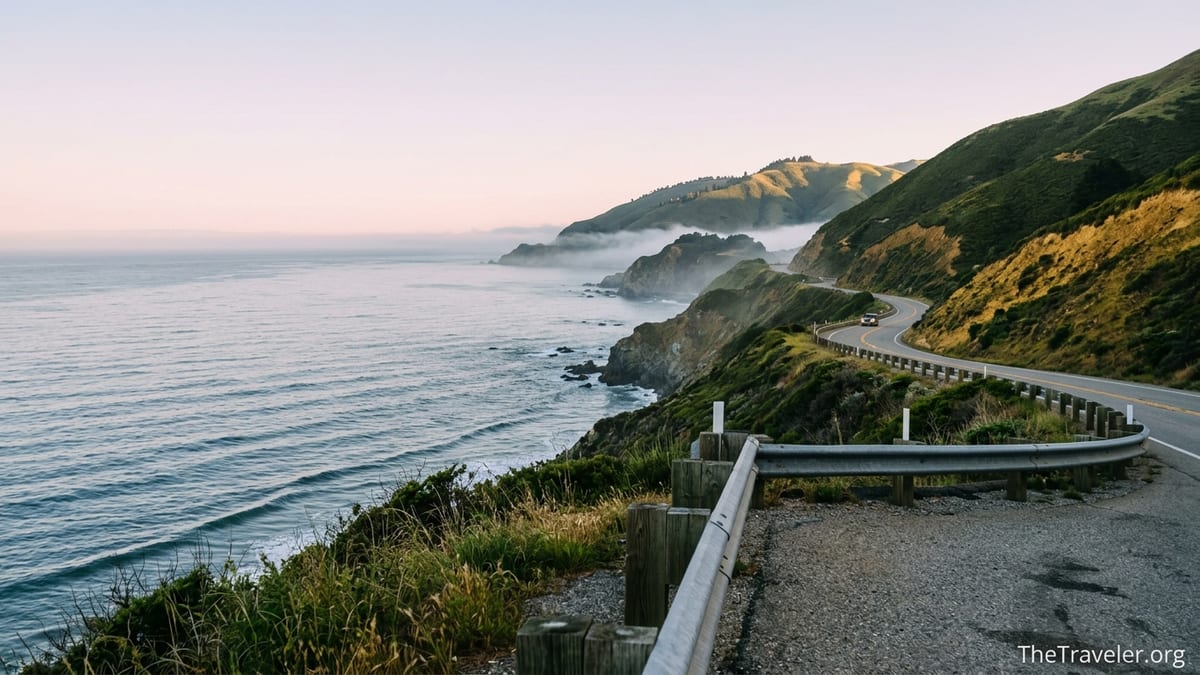
Highway 1 along Big Sur is another seasonal variable. A long stretch reopened in early 2026 after years of landslide repairs, but this coast road is inherently vulnerable to rockslides and temporary closures after storms. Before you finalize a route that relies on Highway 1 between roughly San Luis Obispo, Big Sur and Monterey, check for current advisories with California road authorities and be prepared with an inland fallback via US 101 or highways 101 and 156.
Rental-car logistics and driving strategy
Most visitors begin and end in one of the big cities, so the most efficient rental pattern is usually to pick up your car at your arrival airport and drop it at your departure airport. For example, you might fly into Los Angeles International, spend a couple of nights without a car if you are staying somewhere walkable like Santa Monica or Hollywood, then pick up a compact SUV before leaving the city. Dropping it later in San Francisco often carries a one-way surcharge, but that can be modest compared with the time and fuel cost of backtracking to your starting point.
As a rough guide, a midsize car rented in Los Angeles in shoulder season might run around 50 to 80 US dollars per day before insurance and fees, while a compact SUV could range closer to 70 to 120 dollars per day. Costs climb in July and August and around holiday weekends, and drop midweek in quieter months. Many international travelers buy a separate insurance package through third-party providers rather than through the rental counter, but you should verify what your credit card or travel insurance already covers before declining anything.
Plan for realistic driving times. Los Angeles to Yosemite via the most direct inland route, for instance using Interstate 5 and Highway 99 toward Fresno and then Highway 41 toward the park, is roughly 6 to 7 hours without long stops. San Francisco to Yosemite Valley via Highway 120 or 140 is typically around 4 to 5 hours. The coastal leg from Los Angeles to San Francisco using Highway 1 with sightseeing stops around Pismo Beach, Morro Bay and Big Sur can easily turn into a full day of 9 or more hours, which is why most travelers add an overnight in the Central Coast region.
Parking and fuel are easier outside the densest urban cores. In San Francisco you may choose a hotel with on-site parking in neighborhoods like Fisherman’s Wharf or near Union Square, then leave the car in the garage for two days while you rely on cable cars, buses and ride-hailing. In Los Angeles it is often cheaper to accept hotel parking fees in exchange for easy freeway access and then use a combination of driving and public transit rather than attempting to base entirely around trains and buses.
Sample 7-day itinerary: essentials at a faster pace
A compact 7-day plan works best for travelers who prioritize core highlights and are willing to accept some long drives. One workable pattern is to start and end in the same city, often Los Angeles, and drive in a loop: Los Angeles to Yosemite, Yosemite to San Francisco, then back to Los Angeles by the fastest inland route.
On day 1 you arrive in Los Angeles, settle into a hotel and explore a single area in depth instead of trying to see every famous sight. For example, stay in Santa Monica and walk the beachfront, the pier and the Third Street Promenade, or base near Hollywood and the Dolby Theatre and limit yourself to a short walk along Hollywood Boulevard, a drive up to the Griffith Observatory and dinner in Los Feliz.
Days 2 and 3 become your Yosemite Valley focus. Leave Los Angeles early, aiming to arrive at your Yosemite-area lodging by late afternoon. If you are staying outside the park, Mariposa on Highway 140 and Oakhurst on Highway 41 offer a mix of budget motels and mid-range chains. The next day, plan a full day in Yosemite Valley, combining a classic view stop at Tunnel View, an easy walk to the base of Yosemite Falls and, in season, a partial hike on the Mist Trail up toward Vernal Fall. Renting bikes in the valley can help you cover more ground without moving the car.
On days 4 and 5 you travel from Yosemite to San Francisco and spend one full day in the city. A typical approach is to exit via Highway 120 or 140, drive 4 to 5 hours to San Francisco, drop the car at a hotel with parking, then spend the evening in North Beach or along the Embarcadero. The following day you might join a timed-entry visit to Alcatraz Island, walk through Chinatown and finish with sunset views from Coit Tower or the Marin Headlands if you are willing to drive across the Golden Gate Bridge.
Days 6 and 7 are devoted to getting back to your starting point. If you must return to Los Angeles, the fastest option is Interstate 5, which runs through California’s Central Valley and can take about 6 to 7 hours with rest stops. If you are flying home from San Francisco instead, you simply add a second full day in the city for neighborhoods such as the Mission District or the Presidio and drop the car at the airport before departure.
Sample 10-day itinerary: adding Highway 1 and extra nights
A 10-day itinerary offers room to include Highway 1 along the Central Coast and still keep a reasonable pace. One popular pattern is a northbound line: start in Los Angeles, follow the Pacific coast up to the Big Sur and Monterey area, cut inland to Yosemite, then finish in San Francisco. This allows you to drop the car in San Francisco and fly outbound from there, avoiding a backtrack.
Days 1 and 2 can mirror the 7-day plan, with time in Los Angeles focused on a couple of neighborhoods. Many travelers pick one beach area and one urban core, such as combining a day around Venice and Abbott Kinney Boulevard with a second night downtown for a visit to the Broad museum and a walk around Grand Central Market. Leaving Los Angeles on day 3, you drive north on Highway 101 and switch to Highway 1 near Ventura or Santa Barbara, then spend the night around Pismo Beach, San Luis Obispo or nearby Avila Beach. These towns offer oceanfront motels, family-friendly beaches and easy access to wineries in the Edna Valley.
On day 4 you continue up Highway 1 past Morro Bay and Hearst Castle toward Big Sur. Even if you do not stop at every turnout, you can expect to spend the better part of the day on this section alone, especially if you pause at viewpoints near Ragged Point, McWay Falls and Bixby Creek Bridge. Booking a night at a Big Sur lodge or motel, such as one of the cabin-style properties under redwoods along the Big Sur River, lets you enjoy the late-afternoon light after most day-trippers have gone. Because unforeseen slides occasionally close stretches of the road, check conditions before departure and be prepared to reroute via inland highways if a major closure appears.
Day 5 takes you from Big Sur or Monterey inland toward Yosemite. Many travelers stop in Monterey or Pacific Grove for a few hours to visit Cannery Row or the Monterey Bay Aquarium, then drive east via highways connecting to Highway 152 and on toward Yosemite via 140 or 41. Depending on traffic and exact routing, this can be a 5 to 7 hour drive, so aim for a Yosemite-area base where late check-in is not a problem. Days 6 and 7 are then dedicated to Yosemite, including at least one full day in the valley and, if Tioga Road is open, an excursion to Tuolumne Meadows for shorter high-country walks with sweeping granite views.
Days 8 through 10 are devoted to San Francisco. From Yosemite you drive west to the city, drop the car at your hotel and shift into urban mode. With three nights, you can divide your time among the waterfront and Alcatraz, historic neighborhoods like Chinatown and the Castro, and urban nature in Golden Gate Park or the Presidio. Food-focused travelers often allocate one evening to a tasting-menu restaurant and another to more casual dining in areas such as the Mission or Hayes Valley, allowing a mix of splurge and everyday experiences.
Sample 14-day itinerary: slowing the pace and adding side trips
A 14-day itinerary gives you the freedom to add wine regions, small towns and more time on trails without rushing. One natural pattern is a loop: start in San Francisco, visit Yosemite, then travel down the Sierra foothills and across to Los Angeles, up the Central Coast on Highway 1 and back to San Francisco.
Days 1 to 3 may be spent in San Francisco itself, allowing for jet lag recovery and deeper exploration. You might use one full day for waterfront sights, including a morning ferry to Alcatraz Island and an afternoon at Fisherman’s Wharf and Pier 39, another day to explore neighborhoods like the Mission District, Haight-Ashbury and Japantown, and a third day to cross the Golden Gate Bridge to Sausalito or the Marin Headlands for coastal hikes and bridge views.
On days 4 to 7 you shift focus to Yosemite and the Sierra Nevada. After picking up a rental car, drive 4 to 5 hours east via Highway 120 or 140 and settle into accommodation either inside the park, such as Yosemite Valley Lodge or Curry Village tent cabins, or outside in a gateway town like El Portal or Mariposa. Over three full days you can mix classic valley experiences with deeper hikes, perhaps tackling the full Mist Trail to Nevada Fall, driving to Glacier Point when the road is open, or joining a guided ranger walk to learn about the park’s geology and history. If Tioga Road is open, a day trip to Tuolumne Meadows and Tenaya Lake delivers a distinct feel from the valley floor, with alpine meadows and granite domes.
Days 8 and 9 can follow the Sierra foothills south via small communities like Oakhurst and Visalia before turning west toward Los Angeles. Some travelers add a night near Sequoia or Kings Canyon National Park if their timing and road conditions allow, trading a bit of big-city time for an encounter with giant sequoias. Arriving in Los Angeles for at least two nights lets you explore multiple districts at a more leisurely pace, with time to visit the Getty Center, stroll in Santa Monica and sample Korean barbecue or regional Mexican cuisine that the city is known for.
Days 10 to 14 bring you up the coast. Leave Los Angeles and head for Santa Barbara, a compact city with Spanish-style architecture, urban beaches and tasting rooms pouring Central Coast wines. An overnight here followed by one or two nights around San Luis Obispo, Pismo Beach or Paso Robles sets you up to continue on Highway 1 through Big Sur toward Monterey, as long as road conditions are favorable. With five days to play with, you can pause for beach time, coastal hikes and slow drives between viewpoints instead of racing from one end of the state to the other.
Where to stay in each region
In Los Angeles, most first-time visitors choose to stay in Santa Monica, Hollywood or Downtown. Santa Monica works well for travelers who want walkable beach access and are willing to pay higher nightly rates for coastal hotels and motels. Hollywood suits visitors focusing on studios and attractions like Universal Hollywood, with a range of mid-range hotels and apartment-style rentals close to the Metro Red Line. Downtown offers a more urban feel with converted historic buildings, rooftop bars and relatively easy freeway access for day trips.
San Francisco is compact enough that many visitors abandon their car after arrival. Neighborhoods such as Fisherman’s Wharf and the Embarcadero provide straightforward access to ferries, waterfront views and cable car lines, while Union Square offers proximity to shopping and transit but can be busier at night. In recent years, areas like Hayes Valley and the Mission District have added boutique hotels that appeal to travelers focused on dining and nightlife rather than major tourist sights.
Yosemite lodging splits between inside the park and gateway communities. Staying inside Yosemite, for example at Yosemite Valley Lodge or Curry Village, cuts your commute and allows early starts on trails, but rooms can book out months ahead in peak season and carry premium prices. Outside the park, Mariposa, Oakhurst, El Portal and Groveland offer chains like Best Western, Holiday Inn Express and independent motels, often at lower rates, plus campgrounds and RV parks for travelers with their own gear.
Along Highway 1 and the Central Coast, common bases include Santa Barbara, Pismo Beach, San Luis Obispo, Cambria, Big Sur and Monterey. Each has a distinct feel: Cambria and Big Sur lean toward forested or bluff-top hideaways, often with limited cell reception but immersive scenery, while Pismo Beach and Monterey offer wider choices of mid-range hotels, family-friendly motels and vacation rentals. In high season, especially summer weekends and holiday periods, it is wise to book these coastal stays well in advance because local events can tighten availability.
Practical tips: reservations, passes and safety
Yosemite’s growing popularity means that reservations matter. In peak summer, park lodges inside the valley can sell out many months ahead, and even campgrounds and gateway town motels fill early on weekends. While Yosemite has experimented in recent years with entry reservation systems during busy times, current policies can change, so check the National Park Service’s Yosemite page in the months leading up to your trip and monitor for new announcements about timed entries or peak-hour restrictions.
For park entry, you can buy a standard vehicle pass at the gate, which is valid for multiple days, or consider an annual America the Beautiful pass if you will also visit other US national parks on the same trip. Keep the pass and your ID handy, since you may be asked for both when re-entering after a day outside the park. Within Yosemite, be prepared to carry tire chains in late fall, winter and early spring if you are visiting then, and follow all posted advisories about chain requirements and road closures.
On Highway 1 and in the Sierra, safety comes down to respecting conditions. The coast road includes narrow shoulders, steep drop-offs and frequent pullouts; use designated turnouts to let faster traffic pass and avoid stopping in travel lanes for photos. After major storms, be alert for temporary closures and obey barricades where rockslides or washouts have occurred. In mountain areas, plan fuel stops before you reach remote stretches and carry water, snacks and layers in case you encounter delays from traffic, construction or weather.
In the cities, parking regulations are strict and fines can be substantial, especially in San Francisco. Always read street signs carefully for street-cleaning schedules and permit restrictions, and when in doubt, choose a paid lot or garage rather than risk a ticket or towing. At night, keep valuables out of sight in your vehicle or, ideally, bring them into your accommodation, as smash-and-grab thefts from parked cars do occur in some popular tourist areas.
The Takeaway
A combined Los Angeles, Yosemite and San Francisco itinerary is one of the most rewarding ways to experience California on a first trip. With some thoughtful planning around seasons, road conditions and driving distances, you can link world-class museums and restaurants with granite cliffs, waterfalls and coastal vistas in as little as a week or as much as two leisurely weeks.
The right route length for you depends on your pace and priorities. A 7-day loop covers the greatest hits at speed, a 10-day trip adds Highway 1 and more time in each place, and a 14-day circuit lets you layer in side trips, wine regions and beach towns. Whatever you choose, aim for three or more nights in each major stop, stay flexible with coastal plans in case of Highway 1 disruptions, and book Yosemite-area stays early if you plan to travel in the busy months.
With a solid plan in place, the drive between Los Angeles, Yosemite and San Francisco becomes part of the experience rather than just a way to move between hotel rooms. Wide Pacific views, winding mountain passes and the silhouettes of city skylines at sunset all become highlights in their own right, stitched together into a route that many travelers remember as a once-in-a-lifetime introduction to California.
FAQ
Q1. Is 7 days enough for Los Angeles, Yosemite and San Francisco?
Seven days is enough to see core highlights in each place if you accept a faster pace and a couple of long driving days, but 10 or 14 days is more relaxed.
Q2. Which city should I start in, Los Angeles or San Francisco?
Start wherever flight prices and schedules work best. Many travelers begin in Los Angeles, drive via Yosemite and finish in San Francisco to avoid backtracking.
Q3. Do I need a 4x4 or SUV for Yosemite?
Most of the year a standard car is sufficient for paved park roads. In winter and early spring, chains may be required regardless of vehicle type when conditions are snowy.
Q4. How far in advance should I book Yosemite lodging?
For peak months from roughly May through October, booking park lodges 6 to 12 months ahead is wise. Gateway towns outside the park may have availability closer to your dates.
Q5. Is Highway 1 between Los Angeles and San Francisco always open?
No. Sections near Big Sur can close after storms or landslides. Always check current road conditions and be ready to reroute inland if needed.
Q6. What is the best month to see Yosemite waterfalls?
Late spring, especially May and early June, is typically best for big waterfall flows, although exact timing varies depending on winter snowpack and weather.
Q7. Can I visit Yosemite as a day trip from San Francisco?
It is technically possible on a long day tour, but driving 4 to 5 hours each way makes it tiring. Staying at least one night near the park is strongly recommended.
Q8. Are there public transport options between Los Angeles, Yosemite and San Francisco?
There are intercity buses and trains plus limited transit connections to Yosemite, but schedules are less convenient than driving. Most visitors find a rental car more practical.
Q9. How much should I budget for a rental car on this route?
Very roughly, expect around 50 to 120 US dollars per day before fuel and parking, depending on vehicle type, season, rental company and one-way drop fees.
Q10. Is it safe to drive in the mountains and along Highway 1?
The routes are generally safe in good weather if you drive cautiously, observe speed limits, use turnouts and avoid driving tired or distracted, especially at night.