


California is not one destination but many. In a single week you can move from Pacific beaches to granite cliffs, from world class cities to silent redwood groves. The challenge for most travelers planning a trip in 2026 is not what to see, but what to skip. This guide compares California’s headline destinations by trip style so you can decide whether Los Angeles or San Diego is worth your time, if Yosemite beats Lake Tahoe for nature, and how to fit Big Sur, Napa Valley, Santa Barbara, Monterey, Palm Springs and redwood country into a realistic itinerary.
How to Choose Your California Base in 2026
Before you start dropping pins on a map, decide what kind of California you want to experience. For first time visitors, a common one week loop is Los Angeles, the Pacific Coast Highway to Big Sur and Monterey, then San Francisco with a day trip to either Napa Valley or Muir Woods for redwoods. Travelers who care more about hiking than cities might instead fly in to San Francisco, drive straight to Yosemite National Park, continue to Lake Tahoe, then finish with a coastal stretch around Big Sur or Santa Barbara.
Time and driving distances matter more here than in smaller U.S. states. Los Angeles to San Francisco along the scenic Highway 1 can easily turn into a two day drive if you stop in Santa Barbara, Pismo Beach, Big Sur and Monterey. Los Angeles to Yosemite Valley is often six or more hours in summer traffic. For most travelers with 7 to 10 days, trying to visit Los Angeles, San Diego, San Francisco, Yosemite, Lake Tahoe and Big Sur on a single trip will leave you mostly in the car. A more satisfying plan is to choose one major city, one nature hub and one coastal stretch.
Seasonality shapes what is realistic. In August, Yosemite Valley can be hot and crowded, but the high country around Tioga Road usually offers cooler temperatures and wildflower meadows. In winter, Lake Tahoe becomes a ski destination and some mountain passes close, making a San Francisco to Yosemite to Tahoe loop longer but still possible via lower elevation highways. Coastal spots such as Santa Barbara, Monterey and San Diego stay pleasant for outdoor dining and beach walks for much of the year.
Budget is another deciding factor. A night at a basic roadside motel in California’s Central Valley might cost roughly the same as a single cocktail at a rooftop bar in downtown Los Angeles or San Francisco. Napa Valley tasting rooms routinely charge notable fees per person for standard flight tastings, while many Santa Barbara County wineries still offer more relaxed experiences at a lower price point. Planning your route with these differences in mind can stretch your budget without feeling like you are compromising.
Big Three Cities: Los Angeles, San Francisco, San Diego
Los Angeles is best if you want pop culture, diverse neighborhoods and wide beaches in a single base. Visitors typically pair a morning at the Griffith Observatory and Hollywood sign viewpoints with an afternoon in Santa Monica or Venice Beach. Families often add a day at a major theme park in nearby Anaheim. Driving is almost unavoidable and traffic can be heavy, so many travelers now cluster activities by area, spending one full day on the Westside beaches, another in Hollywood and the hills, and a third downtown and in the Arts District.
San Francisco is the better choice if you value walkable neighborhoods, cooler weather and quick access to nature. You can stand on the Golden Gate Bridge in the morning, browse food stalls at the Ferry Building in the afternoon, then watch the sunset in Lands End or at Ocean Beach. Without a car you can still reach Sausalito, Muir Woods shuttles in season, or Napa Valley buses and tours. For couples, compact districts such as North Beach, Hayes Valley and the Mission pack restaurants, wine bars and boutiques into a few blocks, making it easy to enjoy the city without spending much time in transit.
San Diego appeals to travelers seeking a slower pace with reliable sunshine. Long beach walks in La Jolla and Pacific Beach, an afternoon at Balboa Park, and a harbor cruise often fill a three day stay. The craft beer scene is strong and there are dozens of casual seafood spots where a plate of fish tacos and a local lager is a standard lunch. Families appreciate the world famous zoo and kid friendly beaches with gentle surf, while couples gravitate toward sunset viewpoints at Sunset Cliffs and the more relaxed restaurants in neighborhoods like North Park and South Park.
When choosing between the three, ask what you would actually do with three full days. If your list is mostly museums, food and day trips to wine country or redwoods, San Francisco will probably serve you better. If your must see list is the Hollywood sign, Studio City, Santa Monica and a day at a theme park, Los Angeles wins. If you picture morning surf lessons, afternoons in a park with palm trees and no rush, San Diego may be your best match.
Nature Icons: Yosemite, Lake Tahoe and Redwood Country
Yosemite National Park remains California’s signature nature experience, especially for first time visitors. The granite walls of El Capitan and Half Dome, along with Yosemite Falls when it is flowing in spring and early summer, create a valley floor that feels almost unreal. Day visitors commonly walk the paved trail to the base of Lower Yosemite Fall in about an hour, or choose longer hikes such as the Mist Trail toward Vernal Fall. In 2026 the park continues to manage summer congestion with changing traffic and parking controls, so it is worth checking official guidance before you commit to dates.
For hikers and photographers, shoulder seasons from late May to June and September to early October often balance open trails with more moderate crowds, although this varies by snowpack in any given year. In peak summer, lodging in or near the park is often booked months in advance and can be significantly more expensive than accommodations in gateway towns farther away. Many travelers base themselves in Mariposa, Oakhurst or Groveland, where mid range hotels and vacation rentals can be noticeably cheaper, then drive into the park early each morning.
Lake Tahoe, on the Nevada and California border, offers a different kind of mountain escape. In summer, people rent kayaks or stand up paddleboards in places like South Lake Tahoe, hike trails above Emerald Bay, or take short boat tours to see the lake’s deep blue water from the center. In winter, ski resorts around the lake draw visitors for downhill skiing, snowboarding and snowshoeing. Compared with Yosemite, Tahoe works better if you want both nature and a town atmosphere, since areas like South Lake Tahoe offer casinos, restaurants and lakeside bars within walking distance of many hotels.
Redwood country, which usually refers to the north coast of California, impresses more through quiet than drama. Visitors commonly stop at Redwood National and State Parks or at groves near towns such as Eureka and Crescent City. Trails through the tall trees tend to be shorter and gentler than Yosemite’s big climbs, which can be useful for families with younger children or travelers with limited mobility. The region feels more remote, with fewer large hotels and chain restaurants, but that is often part of its appeal. For many people, a single full day walking among the redwoods provides a lasting highlight between San Francisco and Oregon.
Coastal Classics: Big Sur, Santa Barbara and Monterey
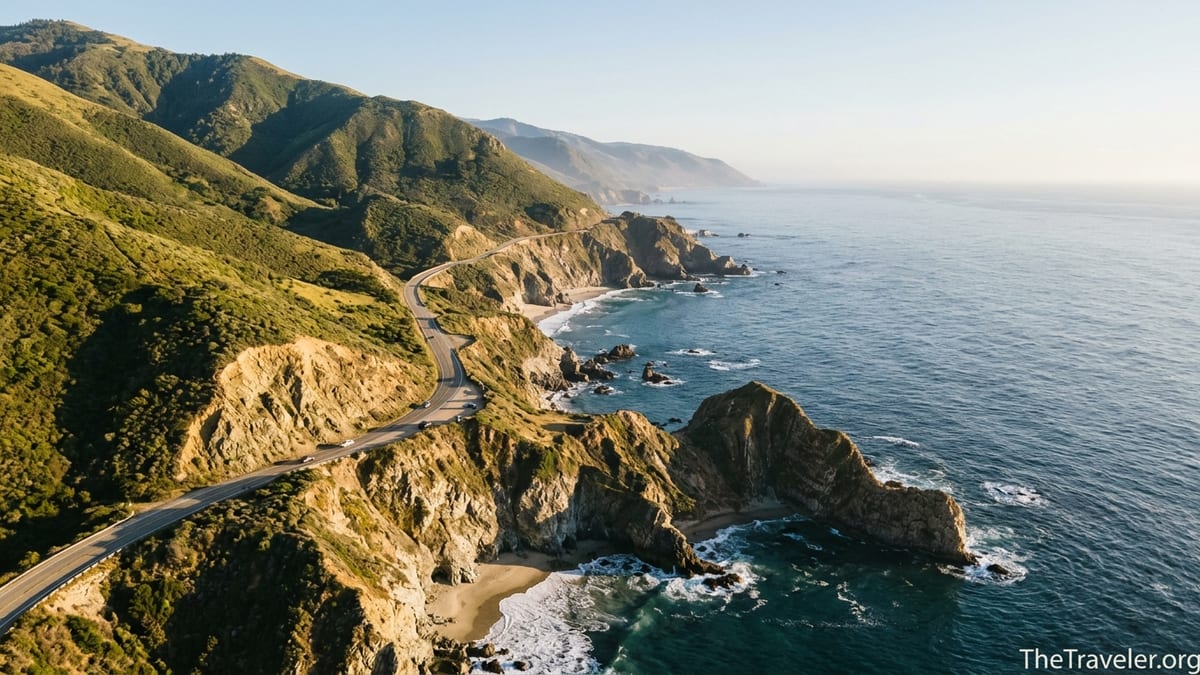
Big Sur is less a town than a wild stretch of coastline along Highway 1 between roughly San Simeon and Carmel. Travelers drive it for ocean views, cliffs and bridges such as Bixby Creek. Short walks lead to beaches at places like Garrapata State Park, while longer hikes leave from state parks in the region. In recent years, storm damage has occasionally closed sections of Highway 1, forcing detours inland, so checking current road conditions shortly before your trip is essential. When the road is fully open, many visitors break the drive with a coffee stop at a cliffside café, a picnic at a pullout overlooking the Pacific and a short hike to a waterfall viewpoint.
Because development in Big Sur is limited, accommodation is concentrated in a small number of rustic lodges, cabins and upscale resorts. Prices can be high compared with nearby inland towns. A common strategy is to stay in Monterey, Carmel or even San Luis Obispo, then dedicate one very long day to driving through Big Sur and stopping frequently. This works well for couples and solo travelers but can feel rushed with younger children, who may prefer a sandier beach town like Pismo Beach or Santa Cruz.
Santa Barbara, sometimes called the American Riviera, combines a relaxed small city with good beaches and wine country access. The waterfront includes a long bike path where visitors rent cruisers for an afternoon ride between the harbor and the more residential east beach area. Stearns Wharf offers casual dining, and State Street concentrates many of the city’s restaurants and bars. In the nearby Santa Ynez Valley, wine tasting rooms welcome day trippers from Santa Barbara, making it possible to combine a morning in the vineyards with an afternoon at the beach.
Monterey and next door Carmel by the Sea work well for travelers who want coastal scenery, marine life and a quieter atmosphere than Los Angeles or San Francisco. The Monterey Bay Aquarium is a standout for families and ocean lovers, with exhibits that can easily fill most of a day. Scenic drives such as 17 Mile Drive pass golf courses and viewpoints overlooking the Pacific. Many visitors walk the coastal path from Monterey toward Pacific Grove at sunset, watching for sea otters and harbor seals. This area also serves as a northern gateway to Big Sur, which begins just south of Carmel.
Wine Country and Desert Escapes: Napa Valley and Palm Springs
Napa Valley remains California’s most recognized wine region, with a string of small towns including Napa, Yountville, St. Helena and Calistoga connected by a single main road. The focus is firmly on wine and food. Many wineries now require reservations, especially on weekends, and tasting fees have climbed accordingly, so a full day of tastings can become one of the more expensive parts of a California trip. On the positive side, service standards are generally high and winery architecture and gardens are often attractions in their own right, which makes the region particularly good for couples on a celebratory trip.
For travelers who like the idea of wine country but not Napa prices, nearby regions such as Sonoma Valley and the Russian River often feel more casual. However, Napa’s proximity to San Francisco, with driving times of roughly 90 minutes to 2 hours depending on traffic, makes it easy to add to a city stay without moving hotels. Many San Francisco visitors book a single long day trip with a small group tour or private driver so they can avoid driving after tastings.
Palm Springs, on the edge of the Coachella Valley, offers a completely different landscape. Here the appeal is a mix of mid century modern architecture, resort pools and desert scenery. Many hotels orient around central pools with cabanas, and in cooler months guests spend entire days rotating between loungers, short walks into town and evening dinners outdoors. The Palm Springs Aerial Tramway lifts visitors from the desert floor to a high mountain station where temperatures can be noticeably cooler, giving an easy taste of alpine forest without a long hike.
Palm Springs also works as a base for day trips into nearby desert parks. While Joshua Tree National Park is not on the main list for this article, it lies close enough that many Palm Springs visitors add a day there to see the namesake trees and rock formations. Compared with Yosemite, roads and popular viewpoints in Joshua Tree are shorter and easier to cover in a single day, which can be useful if your trip is only three or four nights.
Best Picks for Couples, Families and Road Trips
For couples, the strongest combinations often pair a walkable city or town with nature or wine country. San Francisco plus Napa Valley and a night in Big Sur or Carmel gives you excellent restaurants, wine tasting and dramatic coastlines without requiring a car for the entire trip. Another popular pairing is Santa Barbara with Los Angeles or with nearby wine regions, offering beach walks, Spanish style architecture and intimate boutique hotels. In the desert, Palm Springs serves as a grown up getaway with poolside cocktails and low key nightlife rather than big city clubs.
Families usually prioritize practicalities such as driving time, hotel options with larger rooms and a manageable mix of activities. San Diego regularly ranks high for family trips because it combines beaches, a major zoo, theme parks nearby and a compact downtown. Monterey is another strong option: children can engage deeply with marine life at the aquarium, then burn off energy on coastal walks and beaches. Yosemite works well for families who enjoy hiking and are willing to plan early for accommodation, but it is important to build in rest days or light activity days around big hikes like the Mist Trail.
Road trippers have the widest set of options but also the greatest risk of overplanning. A classic one way drive between San Francisco and Los Angeles along the coast might look like this in practice: two or three nights in San Francisco, one in Monterey or Carmel, one or two along the Big Sur and San Simeon stretch, then two or three in Santa Barbara and Los Angeles. Adding Yosemite or Lake Tahoe is attractive but adds substantial driving. Many seasoned visitors recommend treating the mountains and the coast as separate trips unless you have at least 12 to 14 days.
If you do want both, one workable loop for a 10 to 12 day honeymoon or extended vacation could be San Francisco, Yosemite, Monterey or Carmel, Big Sur, then Santa Barbara and Los Angeles, returning the car at Los Angeles International Airport. This way you experience a major city, a high impact national park and the signature coastal drive without doubling back, and you end the trip with a few slower days by the beach.
The Takeaway
California rewards repeat visits, but your first or second trip can still capture the state’s greatest hits if you make deliberate choices. Los Angeles, San Francisco and San Diego each deliver a different version of city life, from studio tours and surf breaks to foggy hills and bridges. Yosemite, Lake Tahoe and the redwoods offer contrasting flavors of nature, while Big Sur, Santa Barbara and Monterey supply the coastal atmosphere many people picture when they think of the Pacific.
Rather than racing to tick every name off a list, pick one primary focus: perhaps Yosemite and Lake Tahoe for hiking, or San Diego and Santa Barbara for beaches, or San Francisco combined with Napa Valley and Big Sur for food and scenery. Then allow at least two or three full days in each major stop. With that approach, your California trip in 2026 will feel less like a checklist and more like a set of distinct, vivid experiences that you can build on during future returns.
FAQ
Q1. How many days do I need for a first trip to California
For a first visit that includes a city, a coastal stop and one major nature destination, plan on 10 to 12 days. With a week you can still have a great trip but should limit yourself to a single city and either the coast or a national park rather than trying to see everything at once.
Q2. Should I choose Los Angeles, San Francisco or San Diego if I only have time for one city
If you want iconic film locations and big beaches, Los Angeles fits best. For walkable neighborhoods and quick access to wine country and redwoods, pick San Francisco. For a more relaxed pace with lots of sunshine and easy beach access, San Diego is usually the strongest choice.
Q3. Is Yosemite or Lake Tahoe better for nature
Yosemite delivers more dramatic scenery with its granite cliffs and waterfalls and is ideal for hikers and photographers. Lake Tahoe offers a mix of clear blue water, mountains and developed resort towns, which works better if you want both outdoor activities and dining or nightlife in one place.
Q4. When is the best time to visit Yosemite National Park
Late May through June often brings strong waterfalls and open valley trails, while September and early October can offer cooler temperatures and fewer crowds. Winter visits are quieter but require preparation for snow and some road closures, and exact conditions vary each year.
Q5. Is driving Highway 1 through Big Sur safe and worth it
Highway 1 through Big Sur is a highlight for most visitors, with constant ocean views and dramatic cliffs. The road is paved but narrow and winding in places, so it is important to drive slowly, avoid distractions and check for any closures or construction before you set out.
Q6. How expensive is Napa Valley compared with other California wine regions
Napa Valley generally has higher tasting fees and lodging prices than many neighboring regions, reflecting its international reputation. Travelers on moderate budgets often limit Napa to a single day visit or choose to stay and taste in nearby areas such as Sonoma, which can feel more relaxed and slightly less costly.
Q7. Is California a good destination for families with young children
Yes. Destinations like San Diego, Monterey, Santa Barbara and Lake Tahoe all offer child friendly beaches, outdoor activities and attractions such as aquariums and zoos. Families who enjoy hiking can also have a rewarding trip to Yosemite or redwood country with carefully chosen shorter trails.
Q8. Do I need a car to enjoy California
In the major cities you can get by without a car for a few days using public transit and ride hailing services, especially in San Francisco and some parts of Los Angeles and San Diego. However, to reach national parks, wine regions and most of the Pacific Coast Highway, renting a car remains the most practical option.
Q9. How should couples plan a romantic California itinerary
Many couples combine a walkable city such as San Francisco with wine country and a scenic coastal stretch. A common pattern is two or three nights in San Francisco, two in Napa Valley or Sonoma, then two or three in Carmel, Big Sur or Santa Barbara for beaches and sunsets.
Q10. Can I realistically visit Los Angeles, San Francisco and Yosemite in one trip
It is possible in about 10 to 12 days, for example by flying into San Francisco, driving to Yosemite for three nights, then continuing to Los Angeles via the coast with overnight stops around Monterey and Santa Barbara. With fewer days, you will spend a large percentage of your time in the car, so it is usually better to choose just two of the three.