


California’s national parks range from glacier-carved granite valleys to cactus-filled desert, primeval redwood forests and the hottest place on earth. Choosing between Yosemite, Joshua Tree, Sequoia and Kings Canyon, Death Valley and the redwood parks will shape the kind of trip you have: epic hikes, scenic drives, easy family strolls, star-filled skies or cool coastal escapes. This guide compares the state’s headline parks with practical trip-planning details so you can match the right park or park combo to your time, budget and travel style.
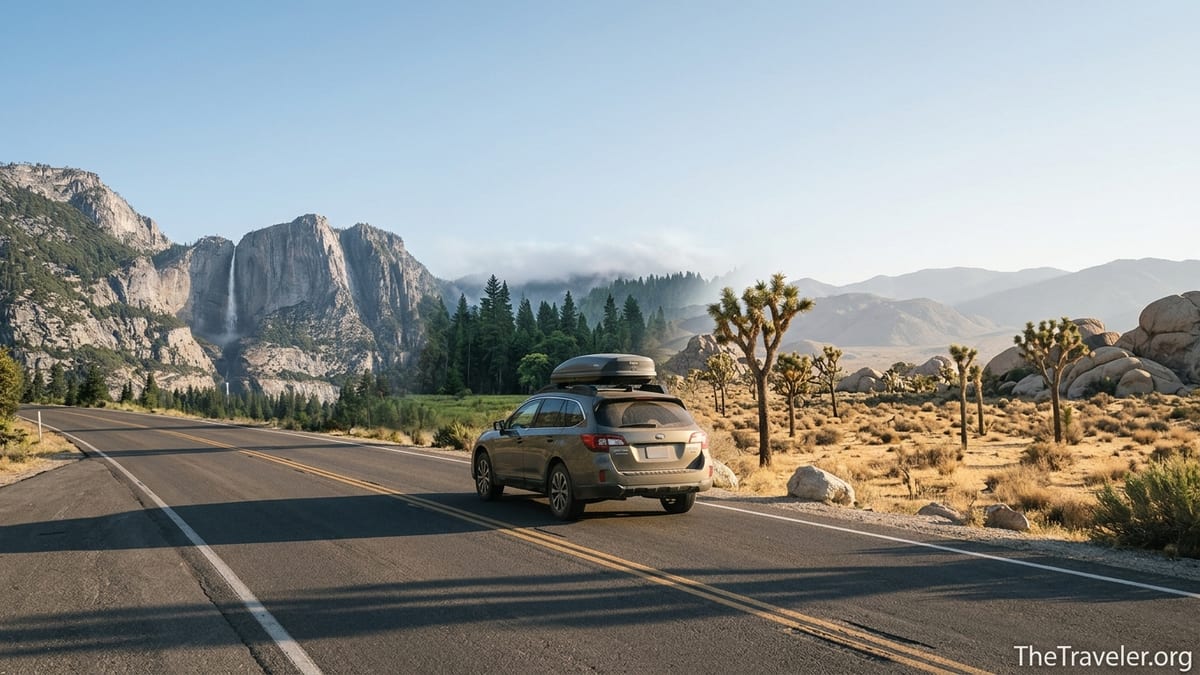
How California’s Big Parks Compare at a Glance
Yosemite, Joshua Tree, Sequoia and Kings Canyon, Death Valley and the redwood parks all deliver dramatic scenery, but in very different ways. Yosemite is the classic mountain park, famous for sheer granite walls like El Capitan, towering waterfalls and high-country meadows. A first-time visitor driving in on California Highway 140 and emerging into Yosemite Valley often compares the view to an outdoor cathedral, especially when Bridalveil Fall is running strong in late spring. In contrast, Joshua Tree offers a lower-elevation desert of giant boulders and its namesake Joshua trees, with sunsets that turn the sky pink and orange over Skull Rock or Hidden Valley.
Sequoia and Kings Canyon National Parks, usually planned together as one trip, are all about scale: the General Sherman Tree, accessible from a short paved trail near Wuksachi Lodge, is among the world’s largest by volume. Nearby Kings Canyon holds a glacial valley that feels like a quieter cousin of Yosemite, with cliffs, waterfalls and a scenic drive along the South Fork Kings River. Death Valley is the extreme outlier, with salt flats at Badwater Basin, sand dunes near Stovepipe Wells and mountain viewpoints like Dante’s View that can be 20 to 30 degrees cooler than the valley floor on a summer afternoon.
Redwood experiences in California are split between Redwood National and State Parks in the far north and groves in places like Muir Woods National Monument closer to San Francisco. The northern complex, which includes Prairie Creek Redwoods and Jedediah Smith Redwoods State Parks, tends to be the better choice for a multi-day trip, with long drives through foggy coastal forests and elk often grazing near Gold Bluffs Beach. If your time is short, a day trip to Muir Woods from San Francisco can still deliver that sense of walking beneath trees over 200 feet tall.
In practical terms, Yosemite and Sequoia and Kings Canyon work best for travelers seeking classic mountain hikes and a mix of lodges and campgrounds. Joshua Tree and Death Valley suit winter road trips and stargazing. The redwood parks pair naturally with a Highway 1 or US 101 coastal drive. Many visitors combine two parks in one itinerary, such as a week split between Yosemite and Sequoia for mountains and giant trees, or between Joshua Tree and Death Valley for a week of desert landscapes.
Best Seasons and Trip Length for Each Park
Choosing when to go often matters more than which park you pick. Yosemite is open year-round, but the full experience depends on road access. The high country along Tioga Road typically opens sometime in late spring or early summer and closes again with the first big snow, often in November. In a typical year, a late May or June visit combines heavy waterfall flow in Yosemite Valley with at least partial access to higher-elevation trails. A long weekend of three nights in or near the Valley is enough to see major sights like Tunnel View, Yosemite Falls and Glacier Point, while five nights lets hikers venture to places like the Panorama Trail or Clouds Rest.
Sequoia and Kings Canyon also vary with elevation. The sequoia groves around the Giant Forest Museum can be snow-covered into spring, while lower-elevation areas open earlier. A recent summer trip planner from the park service shows core campgrounds like Lodgepole and Potwisha open through the main season, with some campgrounds such as Buckeye Flat closed due to past storm damage, so checking current conditions is important. For most visitors, two to three nights in Sequoia and Kings Canyon is enough time to walk the sequoia trails, drive to Moro Rock for sunset and explore at least part of the deep Kings Canyon road.
Joshua Tree works best from about late October through April, when daytime highs are typically comfortable for hiking. Many Los Angeles and San Diego residents drive in on Friday evenings for two-night camping weekends, reserving developed campgrounds like Black Rock or Jumbo Rocks months in advance for peak season. In summer, midday heat makes long hikes strenuous, so those still visiting often hike at sunrise near Barker Dam and then retreat to shaded rentals in nearby Joshua Tree or Twentynine Palms.
Death Valley has an even more extreme rhythm. Winter and early spring are the most popular times, when temperatures in Furnace Creek often sit in the 60s and 70s Fahrenheit. A three-night stay allows time to see Badwater Basin, Artist’s Drive, Golden Canyon, Mesquite Flat Sand Dunes and at least one sunrise from Zabriskie Point. By contrast, July and August can bring temperatures well above 110 degrees, which shifts the schedule to short sunrise or sunset walks and long midday drives between air-conditioned lodgings like the park’s main resorts at Furnace Creek or Stovepipe Wells.
For redwood trips, the most reliable weather arrives in late spring through early fall. Fog is common, but daytime highs often stay in the 50s and 60s along the northern coast, which feels especially pleasant for travelers coming from hotter inland areas. Many visitors plan three nights between Trinidad and Crescent City, using scenic drives like the Newton B. Drury Scenic Parkway as a base for short hikes into cathedral-like groves, then adding time inland or further south on the coast if they are combining the trip with wine country or San Francisco.
Scenery and Hiking Highlights: What Each Park Does Best
Yosemite’s signature hikes tend to be steep but rewardingly scenic. The Mist Trail to Vernal and Nevada Falls includes hundreds of stone steps carved into the hillside, with water often spraying the trail in early season. On summer mornings, lines of hikers with daypacks and rental trekking poles from Yosemite Valley’s gear shops form near the trailhead, and completing the loop via the John Muir Trail becomes a full-day outing for many travelers. For those who want iconic views without the climb, the walk to the base of Lower Yosemite Fall or the flat path to the Bridalveil Fall viewpoint are accessible and take less than an hour.
In Joshua Tree, the best hikes are shorter but rich in desert detail. Hidden Valley is a one-mile loop through a boulder-ringed basin that introduces new visitors to Joshua trees, pinyon pines and rock formations that attract climbers from around the world. The 3-mile round-trip Ryan Mountain trail climbs to one of the best viewpoints in the park, with broad desert vistas. Many travelers pair daytime walks with nighttime stargazing, driving to pullouts along Park Boulevard or to the Cholla Cactus Garden near sunrise and sunset, when spines glow in side light.
Sequoia and Kings Canyon excel at short, unforgettable walks among giant trees. The Congress Trail near the General Sherman Tree winds through a dense grove of sequoias, where visitors often find themselves comparing tree widths to cars or buses. It is common to see families pushing strollers along the paved portions, then branching off onto dirt loops. Deeper into Kings Canyon, the Zumwalt Meadow loop circles a lush valley floor with views of granite walls and the Kings River. Many people who have already seen Yosemite’s Valley appreciate Kings Canyon for its quieter atmosphere and easier parking even in high summer.
Death Valley’s hiking is a mix of short, rugged canyon walks and dune wanderings. The Golden Canyon and Gower Gulch loop takes half a day and leads through colorful badlands, with side trips to viewpoints that overlook the rippled terrain. At Mesquite Flat Sand Dunes near Stovepipe Wells, there is no formal trail, but travelers often walk a mile or so from the parking area to get photos of wind-sculpted dunes at sunrise. For visitors more comfortable in cooler climates, these hikes are best done from November through March, starting early in the day with plenty of water and sun protection.
Redwood trails focus less on elevation gain and more on immersion. In Prairie Creek Redwoods State Park, the James Irvine Trail to Fern Canyon creates a full-day experience through tall-tree forests and lush ravines, while shorter options like the Lady Bird Johnson Grove near Redwood National Park’s Kuchel Visitor Center offer an introduction in less than two hours. In Muir Woods, the main boardwalk loop along Redwood Creek is flat and accessible, with many visitors stopping at interpretive panels that explain how old-growth coastal redwoods differ from the giant sequoias seen in Sequoia National Park.
Where to Stay: Lodging, Camping and Typical Costs
Lodging inside these parks ranges from historic hotels to simple motels and tent cabins, and prices reflect high demand. In Yosemite Valley, rooms at the park’s flagship hotel and the more casual lodge typically book up months ahead for summer and holiday periods, with peak-season rack rates that can run several hundred dollars per night. Many budget-focused visitors instead stay at Yosemite Valley campgrounds, where standard tent and RV sites usually cost a few dozen dollars per night, or they book vacation rentals in gateway communities like Mariposa or Oakhurst and drive 45 to 90 minutes each day into the park.
In Joshua Tree, there are no large traditional hotels inside the park boundaries. Most visitors stay in small roadside motels in Twentynine Palms or Yucca Valley, where weekday winter rates can be relatively modest, or in desert-style vacation rentals with hot tubs and outdoor fire pits scattered around the town of Joshua Tree. Developed campgrounds such as Black Rock near the park’s northwest corner require reservations during the busy season, with nightly camping fees that are typically similar to or slightly higher than many national park campgrounds elsewhere in the Southwest. First-come, first-served campgrounds like Hidden Valley sometimes fill early on Friday afternoons in peak months, so late arrivals often find themselves backtracking to private campgrounds along Highway 62.
Sequoia and Kings Canyon offer a classic mix of in-park lodges and campgrounds. Wuksachi Lodge in Sequoia’s Giant Forest area is the primary full-service hotel in the park, positioned a short drive from the General Sherman Tree parking area and the Moro Rock trailhead. Rooms there appeal to travelers who want to return from a day of hiking to hot showers and on-site dining rather than cooking at a campsite. Nearby campgrounds such as Lodgepole and Potwisha provide a more affordable way to stay inside the park, though a recent conditions update notes that some, including Buckeye Flat, are closed for the 2026 season due to storm damage, pushing more demand to the remaining open campgrounds.
Death Valley’s main lodging hubs are around Furnace Creek and Stovepipe Wells. At Furnace Creek, a historic resort property offers upgraded rooms and a palm-shaded pool, attracting travelers who want a resort-style experience and air conditioning that can handle triple-digit heat. Just down the road, a more budget-oriented ranch-style property and the motel at Stovepipe Wells provide simpler rooms that still allow guests to step outside at night into very dark skies. Campgrounds in Death Valley include both reservable and first-come options, with some, like Texas Springs, operating seasonally and subject to closure. The park’s current conditions page indicates which campgrounds are open at any given time, an important check before long drives in from cities like Las Vegas or Los Angeles.
In the redwood parks, lodging is mostly found in nearby coastal towns. Around Redwood National and State Parks, many visitors base themselves in Trinidad, Arcata or Crescent City, where small inns, highway motels and vacation rentals line US 101. Prices here are often lower than in top-tier mountain parks, especially outside midsummer and holiday weekends. For a more immersive experience, state park campgrounds like Gold Bluffs Beach and Jedediah Smith Redwoods offer tent and RV sites among the trees, but reserving months ahead is common practice for July and August stays.
Reservations, Permits and How to Avoid Crowds
Entry reservations and permits change frequently, so checking current rules is crucial, especially in Yosemite. For 2026, Yosemite National Park states that no vehicle reservations are required to enter the park, including during peak summer and the popular late-winter “firefall” viewing period. That change means travelers can once again drive in on the spur of the moment, but campgrounds and in-park lodging still book up months in advance through national reservation systems. Yosemite’s backpacking permits remain under a quota system that opens months before the summer season, and hikers hoping to secure Half Dome cables permits typically need to enter a seasonal lottery.
Joshua Tree does not require advance reservations for entry, but developed campgrounds are a different story. The park service notes that sites at campgrounds such as Black Rock, Indian Cove and Jumbo Rocks can be reserved on a rolling six-month window and often sell out for Friday and Saturday nights between late fall and spring. Travelers who hope to wing it should aim for midweek visits or shoulder months, and arrive early in the day to check remaining first-come, first-served sites at campgrounds like Hidden Valley, Belle and White Tank. Even then, recent trip reports suggest that finding a site without a reservation late on a busy weekend can be difficult.
In Sequoia and Kings Canyon, there are separate systems for campgrounds and wilderness access. Drive-in campgrounds use reservations for most of the spring through fall season, and a recent summer trip planner lists a number of open campgrounds in both parks, including Azalea and Sunset in Kings Canyon’s Grant Grove area and Lodgepole and Potwisha in Sequoia. Wilderness permits are required for overnight backpacking trips that start on trailheads inside the parks, with reservations often opening up to six months ahead. Because dispersed camping is not allowed within the national park boundaries, campers looking for free or more flexible options often shift to nearby national forest lands such as Sequoia National Forest.
Death Valley does not currently require a general entry reservation, but conditions greatly affect what is open. The park’s alerts and conditions page is updated regularly and can show temporary closures of campgrounds like Texas Springs and long-term road repair projects that may last into 2027. These updates matter for trip planning because one closed campground can shift many travelers to remaining options around Furnace Creek or Stovepipe Wells, reducing last-minute availability. Backpacking in Death Valley generally requires a backcountry permit or at least adherence to specific rules about where roadside camping is allowed, so it is wise to stop at a visitor center for current guidance before heading into remote canyons or backroads.
In the redwood parks, there is no timed entry system for Redwood National and State Parks at present, but popular groves can feel crowded on summer weekends. One way to avoid crowds is to visit early or late in the day or to focus on less-publicized trails. Farther south, Muir Woods near San Francisco uses a mandatory parking and shuttle reservation system, so anyone planning a redwood side trip there must reserve a time slot for vehicle entry or shuttle boarding. Travelers who show up unreserved at the gate are typically turned away or redirected to the online reservation system, which can be difficult to manage on a weak mobile signal, so booking in advance is strongly recommended.
Road Trip Logistics and Pairing Parks in One Itinerary
California’s size makes park-to-park drives an important part of planning. For many travelers, Yosemite combines well with Sequoia and Kings Canyon in a week to 10 days. One common loop begins in San Francisco, drives to Yosemite for three or four nights, then continues south to Sequoia and Kings Canyon for two or three nights before returning to the Bay Area via Fresno. On this route, approximate drive times are four to five hours from San Francisco to Yosemite Valley in normal traffic, then four to six hours from Yosemite’s southern entrance to the Giant Forest area in Sequoia, depending on road conditions and stops.
Joshua Tree pairs naturally with Death Valley for winter road trips routed through Las Vegas or Los Angeles. A typical itinerary might start in Los Angeles, spend two or three nights in Joshua Tree, then drive about four to five hours to the Furnace Creek area of Death Valley, before finishing with a two-hour drive into Las Vegas. This route highlights contrasts between boulder fields and Joshua trees, vast salt flats and narrow canyons, with nights spent in small desert towns or resort-style properties at Furnace Creek. Fuel planning matters here, as gas stations inside Death Valley are limited and often more expensive than pumps in Pahrump, Beatty or Baker.
The redwood parks slot neatly into coastal itineraries along US 101 and Highway 1. A traveler might fly into San Francisco, spend a day or two in the city, then spend several days driving north through Mendocino and Humboldt County, staying in towns like Mendocino, Trinidad or Arcata while visiting groves in Prairie Creek Redwoods and Redwood National Park. Continuing north to Crescent City and then looping inland toward Crater Lake in Oregon creates a longer multi-park trip. Because coastal speeds are often lower than interstate travel, it is realistic to plan on only 150 to 200 miles of driving per day on these winding routes.
Combining mountains and coast in a single journey is also possible with careful timing. In early summer, for instance, a traveler might spend three nights in Yosemite to catch peak waterfalls, then drive west to the Bay Area and north to the redwoods for cooler hiking under the canopy. Another option is to fly into San Francisco or San Jose and loop south through Big Sur before cutting inland toward Sequoia and Kings Canyon, then back to the coast. These more complex itineraries work best with at least 10 to 14 days, both to absorb drive times and to build in weather flexibility, particularly when Sierra passes are opening or closing for the season.
Budgeting, Gear and Practical Tips on the Ground
Daily budgets in California’s national parks vary widely, but costs are generally higher than in many other parts of the United States. Standard private rooms in gateway towns for Yosemite and Sequoia often run at mid-range hotel prices in peak season, and food in isolated locations such as Furnace Creek or remote redwood towns can be more expensive than in large cities because of transport costs. Renting an economy car instead of an SUV, shopping for groceries in larger cities like Fresno, Bakersfield, Las Vegas or Eureka before entering the parks and using national park annual passes to cover repeat entrance fees are common ways travelers reduce expenses.
For gear, most visitors can get by with standard hiking shoes or trail runners, a layered clothing system and a sun hat. In Yosemite and Sequoia, temperatures can shift rapidly between cool mornings in the high country and warm afternoons at lower elevations, so packing a light insulated jacket and rain shell is important even in summer. In Joshua Tree and Death Valley, sun protection and water capacity matter more; it is common for visitors to carry at least several liters of water per person on longer hikes, using refill stations near visitor centers and campgrounds when available. Trekking poles can help on steep granite trails like Yosemite’s Mist Trail or loose desert slopes in Death Valley.
Food and services also differ by park. Yosemite Valley and Sequoia’s Giant Forest area both have grocery stores with basic supplies, simple grab-and-go eateries and sit-down restaurants that can be convenient but more expensive than bringing your own cooler stocked in advance. In Joshua Tree and Death Valley, on the other hand, in-park options are limited mainly to small general stores and a couple of resort restaurants, so many travelers either cook on camp stoves at their sites or drive to nearby towns for meals. In the redwood region, small coastal towns often have local cafes and seafood restaurants that become part of the experience, though hours may be reduced in winter.
Crowds are a practical reality in Yosemite, Joshua Tree and the sequoia groves. To manage them, experienced visitors often build their days around early starts and late finishes. For example, hiking the Mist Trail at dawn can mean quieter conditions on the steps and more available parking, while visiting Tunnel View at sunset after day-trippers have left yields more elbow room. In Joshua Tree, midweek winter visits often feel much calmer than three-day holiday weekends, while in the redwoods, simply walking half a mile beyond the main boardwalk can shift you from a busy pullout to near silence among tall trees.
FAQ
Q1. How many days do I need for Yosemite compared to Joshua Tree?
Most first-time visitors are satisfied with three to four full days in Yosemite to see Yosemite Valley, Glacier Point and a high-country area if open, while Joshua Tree can be experienced in two to three days focused on Hidden Valley, Keys View and a couple of desert hikes. If you are combining parks, plan at least a week so you are not spending most of your time driving.
Q2. Do I need a reservation to enter Yosemite, Joshua Tree or the redwood parks?
For 2026, Yosemite does not require a vehicle reservation to enter, though camping and in-park lodging still require advance booking. Joshua Tree and Redwood National and State Parks do not currently use timed entry reservations, but certain places such as Muir Woods National Monument use a separate parking and shuttle reservation system that must be arranged in advance.
Q3. Which park is best for families with young children?
Yosemite and Sequoia and Kings Canyon are particularly family-friendly thanks to short, mostly paved walks to major sights like Lower Yosemite Fall and the General Sherman Tree. The redwood parks also work well for families, with flat boardwalk-style trails beneath the trees. Joshua Tree and Death Valley can be great for kids who enjoy rock scrambling and short canyon walks, but heat and sun exposure need careful management.
Q4. When is the best time to visit Death Valley and Joshua Tree?
The most comfortable months for both desert parks are typically from late fall through early spring, roughly November through March. During this period, daytime highs are usually cool enough for hiking, and nights can be chilly but good for stargazing. Summer visits are still possible, but activities should be limited to early morning and late evening due to extreme heat.
Q5. How far in advance should I book campsites in Yosemite or Sequoia and Kings Canyon?
In peak season from late spring through early fall, it is wise to be ready to book the moment reservations open, which can be up to several months in advance depending on the campground. Valley campgrounds in Yosemite and popular sites like Lodgepole in Sequoia often sell out within minutes of release. If you miss those windows, look at nearby national forest or private campgrounds as backups.
Q6. Can I visit giant sequoias and coastal redwoods on the same trip?
Yes, many travelers combine Sequoia National Park’s giant sequoia groves with coastal redwoods further north. A sample itinerary might include two nights near Sequoia’s Giant Forest area, then several days driving north along US 101 to visit Redwood National and State Parks. This combination highlights the difference between the massive, inland giant sequoias and the tall, slender coastal redwoods.
Q7. Which park is best for serious hiking and backpacking?
Yosemite and Sequoia and Kings Canyon generally offer the most extensive networks of backcountry trails, including multi-day routes into the High Sierra. Backpacking here requires wilderness permits and careful planning for elevation, weather and bear safety. Joshua Tree, Death Valley and the redwood parks offer excellent day hikes and some overnight options, but the range of long-distance high-mountain routes is more limited.
Q8. Is it realistic to visit Yosemite and Death Valley in the same trip?
It is realistic if you allow enough time and plan for seasonal road conditions. Many itineraries connect Yosemite and Death Valley through the Eastern Sierra, using passes like Tioga Road when open, and then driving south along US 395 before cutting into Death Valley. This works best from late spring through fall when high passes are typically open; in winter, you may need to detour further south on lower highways.
Q9. Are there good options for travelers without a car?
There are limited options, but some exist. In Yosemite, regional bus services connect nearby towns to the Valley, and a free shuttle runs inside the park during peak seasons. Guided tour operators from major cities sometimes offer day or overnight trips to Yosemite, Joshua Tree or the redwoods, though schedules can be infrequent. In general, having a rental car offers far more flexibility for exploring these large, spread-out parks.
Q10. How should I prioritize if I only have one week in California?
If you have one week and it is your first visit, many travelers focus either on mountains or desert rather than trying to do everything. A classic mountain itinerary might include four nights in or near Yosemite and two or three nights in Sequoia and Kings Canyon. A desert-focused week could split time between Joshua Tree and Death Valley, based out of Los Angeles or Las Vegas. If coast and forests appeal more, spending the full week between San Francisco and the northern redwood parks creates a slower-paced but equally memorable trip.