


Planning a first trip to California can feel overwhelming. The state is larger than many countries, with major cities, famous national parks, wine regions, surf towns, deserts, and that legendary Highway 1 coastline. This guide narrows it down to the essentials for first-time visitors, with a focus on Los Angeles, San Francisco, San Diego, Yosemite, coastal drives, beaches, wine country, typical costs, weather patterns, and how to get around in a realistic, on‑the‑ground way.
How to Structure Your First California Trip
Most first-time visitors underestimate California’s size. Driving from San Diego to San Francisco takes around 8 to 10 hours without long stops, and adding Yosemite or other national parks can easily turn a one-week holiday into a rushed blur. A realistic first trip is usually 10 to 14 days and focuses on either Southern California (Los Angeles, San Diego, nearby beaches and desert) or a classic north–south route that connects San Francisco, Yosemite, wine country, and portions of the coast.
A common two-week loop for first-timers arriving into San Francisco might look like: three nights in San Francisco, three nights in Yosemite, two nights in Sonoma or Napa wine country, one or two nights along the central coast, then three nights in Los Angeles with a final night near your departure airport. Visitors flying into Los Angeles often reverse this pattern. With only one week, it is usually wiser to choose either a city-and-coast itinerary (for example San Francisco, Monterey, and Santa Barbara) or a city-and-parks itinerary (for example Los Angeles and Yosemite) instead of trying to see the entire state.
Think in terms of travel segments rather than a long linear trip. For instance, you might fly into San Francisco, spend a few days, rent a car for a Yosemite and wine-country loop, then drop the car before flying to San Diego for a beach-focused finale without the hassle of driving. Building your itinerary around direct flights between major hubs like San Francisco, Los Angeles, and San Diego can save time and car rental days.
When choosing dates, consider school holidays and major events. Summer and early autumn weekends often sell out in national parks and wine regions. Large conferences in San Francisco or Los Angeles, or big game days in college towns, can quietly push hotel prices far higher than usual, so it pays to check events calendars as you plan.
Los Angeles, San Francisco, and San Diego: What to Expect
California’s three major coastal cities each offer a very different feel. Los Angeles is sprawling and car-centric, built around film studios, beach neighborhoods, and hillside residential areas. Expect to spend a lot of time in a car or ride-hail, whether you are going from Santa Monica to Hollywood or from Griffith Observatory to the studios in Burbank. Visiting landmark sites such as the Getty Center, Venice Beach, and the Hollywood Bowl typically requires at least two full days, and many visitors easily fill four or five.
San Francisco is compact and walkable by American standards, with dense neighborhoods like North Beach, Chinatown, and the Mission clustered around the historic core. First-timers usually aim for the Golden Gate Bridge, Fisherman’s Wharf, Alcatraz Island, and the cable cars, then spend evenings in dining districts such as Hayes Valley or along Valencia Street. Because hills are steep and parking is scarce and expensive, many visitors rely on a combination of walking, public transit, and ride-hail rather than renting a car for the city portion of their stay.
San Diego is more relaxed than either Los Angeles or San Francisco and is heavily shaped by beaches and the bay. Popular areas for visitors include the Gaslamp Quarter downtown, Old Town for historic sites, Balboa Park for museums and the zoo, and beach communities like La Jolla, Pacific Beach, and Coronado. The city’s layout makes a rental car helpful, but you can also base yourself in one neighborhood and use ride-hail for occasional longer trips, especially if your main focus is the beach.
In all three cities, first-time visitors are often surprised by how quickly costs add up. A casual restaurant meal in a central neighborhood can easily reach a moderate price point once you factor in tax and tip. Museum tickets, cable car rides, and attraction passes are typically in the modest range per person, so it is worth prioritizing a few experiences that matter most to you instead of attempting every paid attraction in a single trip.
Highway 1, Beaches, and Coastal Travel in 2026
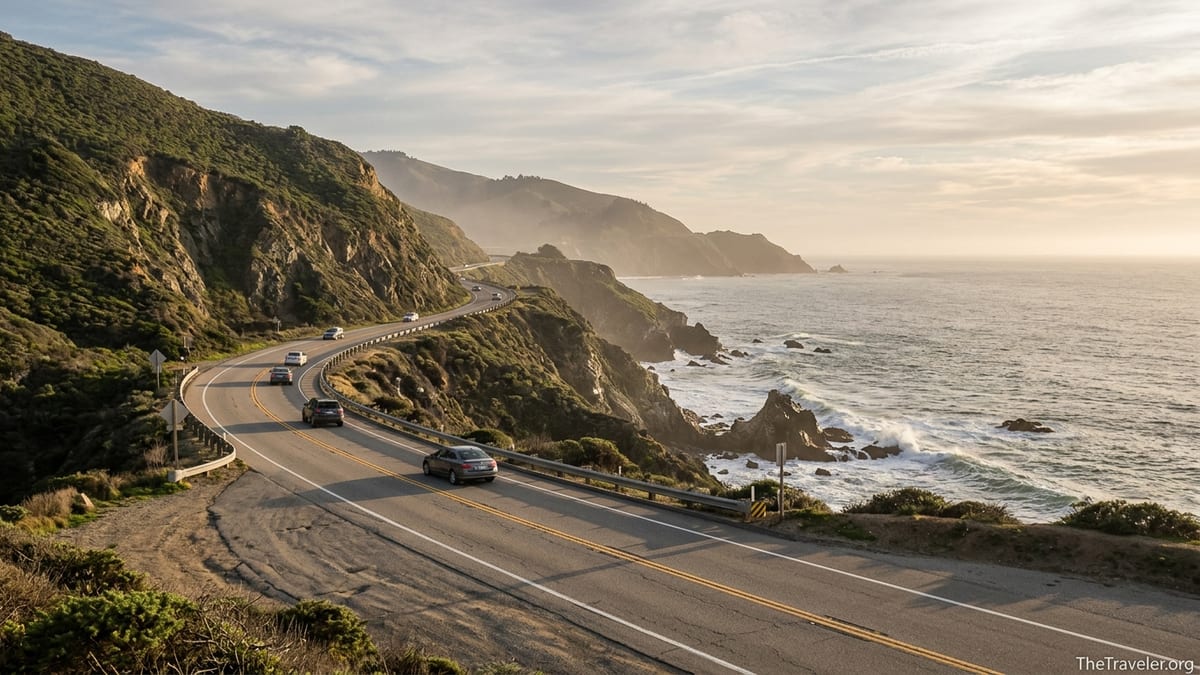
California’s Highway 1, also known as the Pacific Coast Highway along some stretches, is a highlight of many first-time itineraries. The road traces much of the central and southern coastline, with cliffs, beaches, and small towns like Pismo Beach, Morro Bay, and Carmel-by-the-Sea along the way. However, conditions can change with storms and landslides, particularly around Big Sur between Monterey and San Simeon. As of mid-August 2026, that section has been affected by closures and one-way traffic controls in places, and travelers need to check current highway information and local advisories shortly before driving.
If your dates coincide with an extended closure in the Big Sur region, you can still enjoy sections of Highway 1 by treating them as out-and-back drives from accessible hubs. For example, you might stay in Monterey or Carmel and take a half-day drive south along the open portion of the coast, stopping at viewpoints and beaches before returning the same way. Further south, Santa Barbara, Malibu, Laguna Beach, and San Diego’s coastal suburbs offer classic California scenes with fewer landslide concerns.
Beach towns vary from sophisticated to casual. Santa Monica pairs an urban feeling and a popular pier with bike paths and shopping promenades. Laguna Beach and La Jolla have bluff-top walks and coves that attract both surfers and families. In contrast, places like Huntington Beach lean into surf culture with long beaches, volleyball courts, and casual restaurants right behind the sand. For a first-timer, building in at least two or three nights in a single coastal base allows time for relaxed mornings, sunset walks, and a day trip along nearby stretches of Highway 1 without rushing.
Weather along the coast is often milder than visitors expect. Summer mornings can be cloudy and cool, a pattern locals call “June gloom” or “May gray,” especially in Los Angeles and San Diego. San Francisco’s summer temperatures can feel chilly near the water, with wind at viewpoints like the Golden Gate Bridge. Pack layers, including a light jacket and long trousers, even if your visit is in July or August, and remember that ocean water temperatures are cool year-round compared with many tropical destinations.
Yosemite and Other National Parks for First-Timers
Yosemite National Park is the most common national park add-on for a first California trip. By 2026, the park has paused its peak-hours vehicle reservation system, so you no longer need to secure timed-entry passes just to drive into the park. You will still pay a vehicle entrance fee or use an appropriate national parks pass on arrival. This change has made access more flexible but also means that popular summer weekends can see very heavy traffic and full parking lots, particularly in Yosemite Valley.
A typical first-time Yosemite stay includes at least two nights, ideally three, so you have one full day in the valley and another for viewpoints like Glacier Point or the Tioga Road high country if it is open. Because summer lodging inside the park, such as hotels and cabins in Yosemite Valley or lodges at Wawona and Tuolumne Meadows, often sells out months in advance, many visitors base themselves in gateway communities like Mariposa, Oakhurst, or Groveland. From these towns, the drive into Yosemite Valley can range from about one to two hours depending on road and traffic, so plan early-morning starts.
Beyond Yosemite, other California national parks are appealing but often require more driving. Sequoia and Kings Canyon, south of Yosemite in the Sierra Nevada, offer giant sequoia groves and deep canyons. Joshua Tree lies east of Los Angeles in the high desert, and is commonly combined with Palm Springs or the Coachella Valley during cooler months. Death Valley, on the border with Nevada, has stark desert landscapes best visited from late autumn through early spring when temperatures are more manageable. For a first trip, it is usually sensible to choose either Yosemite plus one other park or to focus on Yosemite alone rather than trying to string together multiple distant parks.
Always verify current conditions before traveling to any park. Winter storms sometimes close mountain passes, and summer wildfires can prompt temporary closures, smoky conditions, or evacuations in forested regions. Park service websites and visitor centers offer up-to-date details on road status, trail closures, and any seasonal restrictions that could affect your plans.
Wine Country, Neighborhoods, and Where to Stay
California’s wine regions stretch from just north of San Francisco to parts of the Central Coast and Southern California, but most first-time visitors focus on Napa Valley and Sonoma County. Napa has a polished, resort-like feel in towns such as Yountville and St. Helena, with high-end hotels and tasting rooms that feature carefully curated experiences. Sonoma tends to be more spread out, with vineyard-dotted valleys and relaxed small towns like Sonoma, Healdsburg, and Sebastopol. Both regions offer tasting rooms where you can walk in during quieter periods, alongside wineries that require advance reservations for tastings and tours, especially on weekends.
Plan on at least one night in wine country if you want to fully enjoy tastings without rushing back to a city the same day. Many visitors split two or three nights between San Francisco and nearby wine regions, combining mornings among the vines with afternoons at spas or farm-to-table restaurants. Even if you do not drink alcohol, these regions are pleasant for scenic drives, hot air balloon outings, and cycling along back roads lined with vineyards.
In cities, your choice of neighborhood affects how you experience California. In Los Angeles, staying near the beach in Santa Monica feels very different from basing yourself in Hollywood or downtown. In San Francisco, a hotel near Union Square offers easy access to public transit and shopping, while neighborhoods like Fisherman’s Wharf are closer to the waterfront attractions but more touristy. In San Diego, you might choose between a downtown hotel in the Gaslamp Quarter, a resort on Mission Bay, or a boutique place in La Jolla. Look at where you will spend most of your time, then pick a base that minimizes daily commuting.
Accommodation types range from large chain hotels and boutique properties to vacation rentals and roadside motels. In many areas, especially around national parks and beach towns, basic motels and locally owned inns remain an important part of the lodging mix. These can be good value if you are mainly looking for a clean place to sleep and plan to be out exploring all day, but they often book up during peak seasons, so booking ahead is important for popular weekends and holidays.
Transportation, Typical Costs, and When to Go
First-time visitors often debate whether to rent a car. In practice, most California itineraries outside of the dense cores of San Francisco and a few other districts are significantly easier with a vehicle. A rental car allows you to reach coastal viewpoints, trailheads in Yosemite, wineries outside town centers, and suburban neighborhoods. You can still plan city segments without a car by timing your rental for the days when you will be leaving the city for day trips or moving between regions.
Within cities, public transit varies. San Francisco has light rail, buses, and historic streetcars that cover much of the central city, supplemented by regional trains and ferries for farther-flung areas. Los Angeles has a growing rail network but is still largely organized around freeways, so visitors often combine a few metro rides with ride-hail to bridge gaps. San Diego’s trolley system connects downtown with some neighborhoods and the Mexican border at San Ysidro, but a car is still helpful for reaching beaches and hilltop viewpoints. Taxis are less common than ride-hail services in many neighborhoods, so plan on using smartphone apps for most point-to-point rides.
Travel costs in California are among the higher in the United States, particularly for lodging, food, and car-related expenses. Hotel rates in central San Francisco, popular parts of Los Angeles, and beach neighborhoods in San Diego often fluctuate widely based on demand. During quiet midweek periods in the shoulder seasons, you might find moderate nightly rates for standard rooms, while peak summer weekends, major conventions, or holiday periods can push prices significantly higher. National park gateway towns and wine regions see similar seasonal peaks, so flexible dates can make a noticeable difference in your budget.
Timing your trip around weather can help you avoid extremes while still enjoying California’s main sights. Late April through early June and September through October are often comfortable months for many regions, with generally pleasant temperatures and fewer domestic school holidays. Summer brings reliably warm weather but also more crowds and higher prices in parks and beach areas. Winter is cooler and wetter in the north and along the coast, yet it can be a good time to explore cities and wine country, especially if you are not planning mountain driving where snow and chain controls may be a factor.
First-Time Planning Tips and On-the-Ground Practicalities
Beyond big-picture decisions like where to fly and whether to rent a car, small planning choices can make your first California trip smoother. Start by limiting the number of hotel changes. Every time you move, you lose at least half a day to packing, check-out, driving, and check-in. For a two-week trip that includes San Francisco, Yosemite, wine country, a coastal town, and Los Angeles, you might target four or five bases instead of a new place every night.
Build pockets of unstructured time into your itinerary. For example, after a full day visiting Alcatraz and walking the hills of San Francisco, give yourself a slower morning before a long drive to Yosemite. After hiking in Yosemite or exploring a crowded coastal viewpoint, plan a quiet evening in your hotel or a nearby restaurant instead of another ambitious outing. California’s distances and traffic can be tiring, and a few slower half-days help prevent burnout.
First-time visitors are also wise to consider travel insurance that covers changes due to wildfires, storms, or other disruptions, especially if they are visiting between late summer and early autumn when fire risk can be elevated. Keeping a flexible mindset helps as well. If a section of Highway 1 is suddenly closed, you might spend an extra night in Santa Barbara or divert inland through Paso Robles wine country instead of forcing a coastal drive that is no longer practical.
Finally, remember that California’s best experiences are often the unscripted ones: a detour to a farm stand outside Sonoma, a sunset at a roadside turnout overlooking the Pacific, or a quiet morning coffee in a San Diego beach town while surfers head into the waves. Leave enough space in your plans to say yes to these small, unexpected moments.
FAQ
Q1. How many days do I need for a first trip to California?
Most first-time visitors find that 10 to 14 days allows a comfortable overview of one major region plus one or two add-ons, such as pairing San Francisco with Yosemite and wine country or combining Los Angeles with San Diego and a short coastal drive. With only a week, it is better to focus on fewer bases rather than trying to cover the entire state.
Q2. Is it safe to drive Highway 1 right now?
Conditions on Highway 1, especially around Big Sur, change with landslides, fires, and roadworks. As of mid-August 2026, some stretches have experienced closures and controls, so you should check current state highway information and local advisories shortly before your drive and be ready to adjust your route if needed.
Q3. Do I still need a reservation to enter Yosemite National Park?
For 2026, Yosemite National Park has paused its general vehicle reservation system, so you do not need a timed-entry booking just to drive into the park, although you still pay the standard entrance fee or use a valid parks pass. Lodging and campgrounds inside the park continue to require advance reservations.
Q4. Should I rent a car or rely on public transport?
Public transport works reasonably well for central San Francisco and for selected corridors in Los Angeles and San Diego, but for most itineraries that include national parks, wine country, and coastal drives, renting a car for at least part of the trip makes travel much easier. Many visitors combine car-free days in cities with car rental days for regional exploration.
Q5. When is the best time of year to visit California?
Late spring and early autumn are often ideal for a first visit, with generally pleasant temperatures, fewer domestic school holidays, and more manageable crowds in popular areas. Summer offers long days and beach weather but also higher prices and busier parks, while winter is best for city breaks and lower-key wine country trips away from mountain snow.
Q6. How far in advance should I book hotels in places like Yosemite and wine country?
Inside Yosemite and in nearby gateway towns, summer and holiday dates can sell out several months ahead, so booking as early as you can is wise if your dates are fixed. In wine regions such as Napa and Sonoma, weekends during harvest season and major event periods also book up quickly, while midweek stays in shoulder seasons are often easier to arrange on shorter notice.
Q7. Are California’s beaches warm enough for swimming?
Ocean temperatures along much of the California coast stay relatively cool throughout the year, even in summer, due to cold currents. Many visitors still enjoy swimming and surfing, especially in Southern California, but locals often use wetsuits for longer sessions, and beach days typically involve as much time on the sand and promenades as in the water itself.
Q8. How expensive is California compared with other US destinations?
Overall, California is on the higher side for lodging, dining, and car-related costs, especially in central neighborhoods of San Francisco, popular parts of Los Angeles, and beach towns in San Diego and Orange County. You can moderate your budget by staying slightly outside the busiest districts, choosing a mix of restaurants and casual eateries, and traveling during shoulder seasons when demand is a bit lower.
Q9. Can I visit Los Angeles, San Francisco, San Diego, and Yosemite in one trip?
It is possible on a longer itinerary of at least two weeks, but travel days will be frequent. Many visitors find it more enjoyable to pick two cities and one park or coastal region for a first visit, then return on a future trip to explore areas they missed. Overloading your itinerary often leads to more time in transit and less time actually experiencing each place.
Q10. What should I pack for a multi-region California trip?
Layers are essential, since temperatures can vary widely between coastal cities, inland valleys, and mountain parks on the same day. A lightweight jacket, comfortable walking shoes, sun protection, and a small daypack are useful everywhere, while warmer layers and rain protection are important if you will visit Yosemite or other mountain areas outside the summer peak.