


Ask a dozen Florida regulars whether the Gulf Coast or the Atlantic Coast is better for a beach vacation and you will get a dozen passionate answers. Both sides of the peninsula deliver sunshine, sand and palm trees, but the experience feels very different in Clearwater or Destin than it does in Miami or Cocoa Beach. If you are staring at a map wondering which coastline to book, this guide breaks down the real-world differences so you can choose the side that fits your style, travel logistics and budget.
Big Picture: Two Very Different Coasts
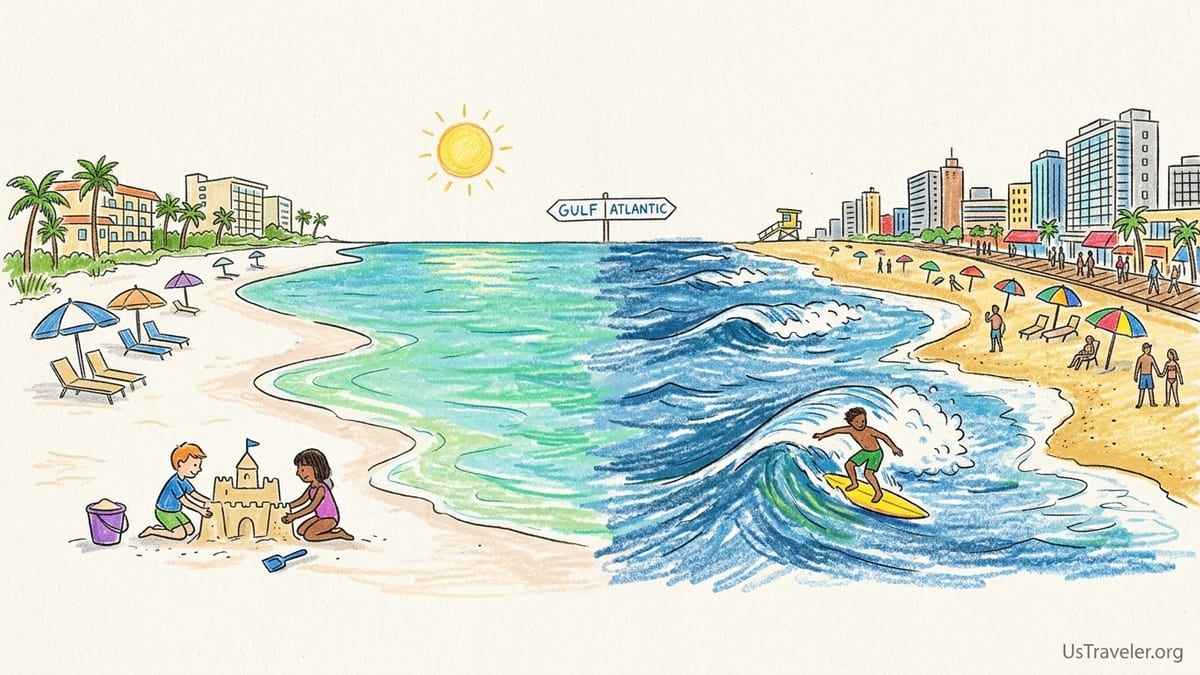
Florida’s Gulf Coast and Atlantic Coast share the same state but not the same personality. On the Gulf side, especially from Clearwater down through Siesta Key and Naples and west to Destin in the Panhandle, the water is typically gentler, clearer and warmer, with wide sweeps of soft, pale sand and a slower, resort-driven pace. Many visitors compare stretches such as the Emerald Coast around Destin or the beaches near Sarasota to the Caribbean in everything but the passport.
The Atlantic Coast, by contrast, faces open ocean. From Miami and Fort Lauderdale up through Cocoa Beach, Daytona Beach and St. Augustine into Northeast Florida, the waves are higher, the water is often cooler and darker, and the shoreline feels more urban and energetic. Beach towns are more likely to be woven into big metropolitan areas, and many spots, especially along the Space Coast and in South Florida, draw a strong surfing and nightlife crowd.
Broadly speaking, today’s search results and travel chatter frame the Gulf Coast as calmer and more overtly resort oriented and the Atlantic side as better for surfing and city energy. Reality is more nuanced. You can find nightlife in Clearwater, quiet in parts of Northeast Florida, and moments of surf on the Gulf when the weather cooperates. The choice comes down to which type of “Florida beach day” you picture most clearly when you close your eyes.
Using four Gulf examples (Clearwater, Siesta Key, Naples and Destin) and four on the Atlantic (Miami, Fort Lauderdale, Cocoa Beach, and Daytona/St. Augustine with the broader Northeast Florida coast), this comparison walks through water conditions, sand, family friendliness, surfing, sunsets, nightlife, access, storms and costs so you can make a confident decision.
Water & Sand: Calmer Gulf, Surfier Atlantic
The single biggest difference most travelers notice is the water. On a typical summer day, Clearwater Beach, Siesta Key, Naples and Destin offer warm, relatively calm Gulf water that gently laps the shoreline. In places like Siesta Key and Destin, the sea often appears turquoise or emerald green, with shallows that invite even cautious swimmers to wade in. The slope into the water is usually gradual, so you can walk out quite far before the depth changes quickly, which many families appreciate.
On the Atlantic side, Miami Beach, Fort Lauderdale, Cocoa Beach and Daytona tend to see more consistent wave action. The water color ranges from blue green in South Florida to a darker greenish brown farther north, depending on currents and weather. Along the Space Coast and up toward St. Augustine, waves can be strong enough that even on a “normal” day you feel more pull and push from the surf than you would on the Gulf. Swimmers need to be more aware of flags, surf advisories and, in some seasons, rip current warnings, especially with children.
Sand also feels different underfoot. Gulf Coast favorites like Clearwater and Siesta Key are famous for very soft, pale sand. Siesta Key in particular is known for sand that is largely composed of finely ground quartz, which tends to stay cooler underfoot and feel almost like flour when dry. Walking across a midday beach here often does not require sandals. Destin and much of the Emerald Coast advertise “sugar white” sand that squeaks as you walk and contrasts with the emerald water. On the Atlantic side, sand is more variable. Miami and Fort Lauderdale often have golden, medium-textured sand; Cocoa Beach and Daytona lean coarser and darker. Areas near St. Augustine mix in some shells and compact sand that can be hard enough for beach driving in designated zones such as Daytona Beach.
There are exceptions in both directions. After strong winds or storms, Gulf waters can turn choppy and cloudy, and on especially calm summer days the Atlantic can look almost glassy in sheltered coves. But if your priority is bathtub-warm, gentle water with soft, light-colored sand, the Gulf side delivers that experience more reliably. If you want to feel waves, play in the surf and do not mind cooler or more variable water clarity, the Atlantic side is where you will find it.
Best for Families: Gentle Gulf vs Active Atlantic
If you are traveling with younger children or anyone uneasy in the ocean, the Gulf Coast generally offers the easier introduction to Florida beaches. At Siesta Key Beach, for example, lifeguards typically staff the main stretch during daytime hours, the sand is wide and level for strollers and beach carts, and the water usually stays calm and shallow close to shore. Clearwater Beach has a similar setup, with a wide, gently shelving shoreline, on-duty lifeguards along the main public beach and a family-friendly strip of hotels and restaurants directly behind the sand.
Destin and the surrounding Emerald Coast towns add another family-friendly twist: bay and sound waters. Even if the Gulf is choppy, parents with toddlers can head to sheltered Choctawhatchee Bay for stand-up paddleboarding or splashing in water that is often as still as a lake. Destin’s beach parks usually pair pavilions, restrooms and easy parking with those postcard-white dunes, making it simple to spend an entire day outside without feeling rushed.
Naples brings a slightly more upscale but still laid-back family feel. The beaches near the Naples Pier and Lowdermilk Park are relatively wide, calm and backed by residential neighborhoods rather than high-rise strips. Many multi-generational trip planners choose Naples because grandparents can walk to quiet stretches of sand, while parents and kids have access to boat tours, nature preserves and casual waterfront dining that all feel polished but not raucous.
The Atlantic side can still work well for families, but you need to calibrate expectations and pick locations carefully. Miami Beach can be great for teens who want energy, shopping and music but may overwhelm parents of toddlers, especially near South Beach where nightlife runs late. Fort Lauderdale and Lauderdale-by-the-Sea often feel more relaxed, with lifeguarded beaches and calmer sections shielded from heavy surf on some days, though waves are still more present than on the Gulf. Cocoa Beach, Daytona and St. Augustine add attractions like the Kennedy Space Center, boardwalks, arcades and historic forts, appealing to older kids who prefer activities and history to long, quiet beach naps.
Surfing, Sunsets and Nightlife
Surf seekers lean Atlantic. Cocoa Beach is synonymous with Florida surfing, home turf of major surf brands and a lineup of local surf schools that line the main drag. Typical visitors can book a half-day lesson that includes a board and rash guard and be standing in whitewater waves by the end of the session. Nearby breaks cater to everyone from beginners to experienced surfers watching wave forecasts tied to offshore systems. Further south, breaks near Miami and Fort Lauderdale light up under the right wind and swell, and farther north, locals around Jacksonville Beach and St. Augustine watch for cold-front swells in cooler months.
The Gulf Coast simply does not see the same consistency or height of surf. Destin, Clearwater and Naples do get ridable waves when strong cold fronts or tropical systems push through, but many days are flat or feature only knee-high breakers ideal for children but not for serious surfing. Stand-up paddleboarding, kayaking and floating on inflatables are more typical water sports. If you want to pair your beach trip with surfing as a primary activity, you will be happier basing yourself on the Atlantic and, if needed, driving between multiple surf spots to chase the best conditions.
Sunsets are where the Gulf shines. From Clearwater’s Pier 60 to Naples Pier and beachside bars in Destin, the sun actually sinks into the water, often creating pastel streaks across the entire western sky. Many resorts and local tourism boards build daily rituals around this moment: street performers at Clearwater’s sunset festival, dockside happy hours in Naples, diners timing their reservations in Destin to catch the final glow over the harbor. While some Atlantic beaches have beautiful sunrises, your view there in the evening is usually back toward land, so you trade fiery sunset water views for morning light if you are willing to wake early.
Nightlife is strongest on the Atlantic side, especially in South Florida. Miami Beach is the clear heavyweight, with rooftop bars, late-opening clubs and restaurants that often fill with international visitors well into the night. Fort Lauderdale and Hollywood Beach spin a somewhat softer version of the same idea, focused on waterfront bars, craft cocktail lounges and live music along pedestrian promenades. Cocoa Beach and Daytona add a more laid-back surfer-bar and beach-shack band vibe, with spots that host evening trivia nights, karaoke and local rock cover bands rather than high-end DJs.
On the Gulf, nightlife exists but is generally quieter and more compact. Clearwater Beach has a strip of casual bars and seafood restaurants that stay lively until around midnight, especially in high season. Destin’s HarborWalk Village gathers family-friendly attractions, live-music patios and a few louder bars in one waterfront cluster but outside that core many areas quiet down early. Naples leans decidedly low-key and upscale, with wine bars, piano lounges and early dinner seating rather than nightclubs. Siesta Key Village offers bars and live music in the evenings but at a scale that still feels like a beach town, not a city.
Cities, Resorts, Airports and Driving Logistics
Think about what you want off the sand as much as on it. Miami and Fort Lauderdale place you in or near major metropolitan areas with skylines, museums, pro sports arenas and dense restaurant scenes. A beach day in Miami can be followed by a night at a performing arts center or a big-league game. Public transportation, rideshares and taxis are plentiful, though parking can be expensive. Fort Lauderdale offers easy boat tours on its canals, a walkable beachfront promenade and a sizable cruise port if you are pairing a beach stay with a sailing.
Daytona, Cocoa Beach and the broader Northeast Florida region feel more medium-city or small-town. Cocoa Beach connects easily to Orlando’s theme parks by highway, so families often spend three or four days at the beach before or after a Walt Disney World trip. Daytona pairs wide beaches with car and motorcycle events and a frankly nostalgic strip of motels and boardwalk amusements. St. Augustine and nearby Northeast Florida beaches such as Vilano and Ponte Vedra add Spanish colonial historic districts, cobbled streets and upmarket golf resort areas just inland.
On the Gulf side, Clearwater and St. Pete Beach sit next to the arts-driven city of St. Petersburg and within reach of Tampa’s big-city amenities, sports stadiums and international airport. Vacationers often split time between catching a game or museum in Tampa and unwinding in a Gulf-front resort. Siesta Key and surrounding Sarasota-area beaches plug into a mid-sized cultural hub known for performing arts, botanical gardens and a growing food scene. Naples connects to a smaller, affluent city center with designer shopping, galleries and access to the Everglades and Ten Thousand Islands for airboat or wildlife tours.
Destin occupies a slightly different niche. It is part classic resort town, part small Panhandle city, drawing road trippers from Alabama, Georgia and neighboring states who can reach the Emerald Coast in a day’s drive. While Destin-Fort Walton Beach Airport keeps adding flights, most visitors still arrive by car, often renting large beach houses or condos. Traffic along the main scenic highway can crawl at peak summer times, but once parked, many families settle into a routine of walking from their rental to the nearest beach access or pool.
Airport access often influences your coast choice. Miami International and Fort Lauderdale-Hollywood airports offer extensive domestic and international routes, including many budget carriers. Orlando International can work well for Atlantic beaches from Cocoa up through Daytona. On the Gulf side, Tampa International serves Clearwater, St. Pete and even Sarasota in a pinch, while Southwest Florida International near Fort Myers works for Naples and Marco Island. Destin-Fort Walton Beach and Pensacola provide regional and some national connections but at typically higher fares and with more connections than Miami or Orlando.
Hurricane Season, Weather and Sea Conditions
Both coasts share the same official Atlantic hurricane season, from June 1 to November 30, and both are vulnerable to tropical storms and hurricanes. Historically, parts of the Panhandle and Southwest Florida have seen significant Gulf landfalls, while South Florida and the Space Coast have taken hits from Atlantic-tracking storms. Patterns change year to year, and any specific trip in late summer or early fall should be booked with flexible policies and travel insurance, no matter which coast you choose.
From a practical traveler’s perspective, Gulf and Atlantic beaches both enjoy long, warm swimming seasons but with some differences in feel. In high summer, Gulf water at Clearwater, Siesta Key, Naples and Destin often feels almost bath-warm. For many travelers this is a plus, allowing long swims and evening dips with minimal chill, though those who crave a refreshing shock may find it too warm on still August afternoons. Atlantic water in Miami and Fort Lauderdale can also be quite warm in midsummer, but temperatures tend to run a little cooler overall, especially further north at Cocoa Beach, Daytona and St. Augustine, where catching a small wave can feel invigorating.
Wind and wave conditions diverge more consistently. The Atlantic coast’s stronger and more frequent surf means swimmers and especially less confident family members need to pay closer attention to beach flags and lifeguard advisories about rip currents. Lifeguards along popular Atlantic beaches often post colored flags that signal calm, moderate or hazardous conditions, and it is common for them to advise guests to stay in waist-deep water when surf is up. On the Gulf, colored flags appear as well, but many typical summer days register calmer seas, and red-flag conditions are less regular outside storm events.
In shoulder seasons such as April, May, late September and October, both coasts can offer near-ideal combinations of lower humidity, warm days and water still comfortable enough for swimming. During these months, the risk of direct storm impacts remains, but day-to-day beach conditions often improve compared with the peak of summer humidity. Northeast Florida’s Atlantic beaches can feel a bit cooler and breezier earlier in spring and later in fall than Gulf spots like Naples or Clearwater, which may influence your preference if you dislike heat.
Costs, Resorts and Overall Value
Vacation costs vary widely, even within the same coast, based on timing, exact location and the type of lodging you choose. As a general pattern, highly developed, globally known destinations such as Miami Beach and some sections of Naples can be among the priciest places in Florida to stay, with nightly rates at four and five star beachfront resorts commonly running into several hundred dollars or more during peak dates like spring break or Christmas week. South Beach in particular can add higher food, drink and parking costs to that baseline.
Gulf Coast destinations like Clearwater, Siesta Key and Destin offer a wider band of midrange resort and condo options, especially outside the most in-demand holiday weeks. A family might find a two-bedroom condo with kitchen access in Destin or near Siesta Key for less than the cost of two hotel rooms at a comparable quality level in Miami or Fort Lauderdale, particularly if they book a few blocks off the sand and are willing to walk or take a short trolley ride. Many Panhandle visitors share large multi-bedroom houses to spread nightly rates across extended families or groups of friends.
On the Atlantic side, Cocoa Beach, Daytona and much of Northeast Florida typically price below Miami and Fort Lauderdale, especially on non-event weeks. Older motels, basic oceanfront hotels and vacation rentals a street or two from the beach often undercut South Florida rates by a significant margin. Families willing to accept older decor or fewer on-site amenities can still secure ocean-view balconies and direct beach access at moderate prices, particularly in late August or in shoulder months when theme park crowds in Orlando start to thin.
Hidden costs can add up differently on each coast. Parking in Miami Beach, Fort Lauderdale and parts of Clearwater often involves daily resort or garage fees, while many stretches of the Panhandle and Northeast Florida still offer free or low-cost public beach parking lots. Resort fees are common in big-name Gulf and Atlantic resorts, so budget an extra daily charge that might cover Wi-Fi, beach chairs or pool access. Dining in Miami or Naples can be significantly more expensive than in Cocoa Beach or Daytona, where independent diners, seafood shacks and casual surfside grills dominate.
Which Coast Fits Which Traveler?
Choosing between Florida’s Gulf Coast and Atlantic Coast ultimately means matching your style to the environment. If your dream vacation looks like long, lazy days floating in warm, calm water, kids building sand castles on powder-soft sand, and low-key evenings watching the sun fall directly into the sea, the Gulf side is very likely to suit you best. Places like Siesta Key, Clearwater, Naples and Destin specialize in this rhythm, with plenty of condos, family resorts and beach houses built around pool-and-beach days rather than late-night clubbing.
If, instead, you want surf lessons at sunrise, people watching on a busy boardwalk, rooftop cocktails or a packed live-music bar after dark, and easy access to big-city culture, the Atlantic side has the edge. Miami and Fort Lauderdale add cosmopolitan layers that make them appealing for couples trips, friend getaways and travelers who want museums and restaurants as much as sand time. Cocoa Beach, Daytona and St. Augustine deliver more casual versions of that same template, pairing waves with local history and classic American seaside kitsch.
For many travelers, the right answer is not “Gulf or Atlantic” but “Gulf then Atlantic sometime later” or vice versa. Road-trippers with a week or more sometimes fly into Orlando, drive to Cocoa Beach or Daytona for a few nights, then cross the state to Clearwater or Sarasota to sample Gulf calm before flying home from Tampa. Others who have long loved one coast try the other during a different season, discovering that a winter morning surf session in Northeast Florida or a spring sunset in Naples delivers something they did not know they were missing.
What matters most is to be honest about your priorities: calm verses waves, nightlife verses quiet, city verses resort town, and budget verses indulgence. Once you know which side of each of those you lean toward, the decision between Gulf and Atlantic usually becomes clear.
The Takeaway
In the end, neither the Florida Gulf Coast nor the Atlantic Coast is objectively “better” for every traveler. Each offers a distinct version of the Florida beach dream. The Gulf Coast gives you languid, sun-warmed water, soft sand and resort towns that wind down earlier, punctuated by spectacular sunsets and an emphasis on family time, relaxation and comfort. The Atlantic Coast hands you surf, city skylines, busier boardwalks and nightlife that can run until sunrise, all set against a backdrop of historic towns, space launches and open-ocean horizon.
If you are planning your first Florida beach vacation and prioritize calm swimming, young kids’ safety and a gentle pace, starting on the Gulf in Clearwater, Siesta Key, Naples or Destin is a safe bet. If you are traveling with teens or adults who crave surf and city life, basing yourself along Miami, Fort Lauderdale, Cocoa Beach or Daytona and the Northeast Florida coast will likely feel more satisfying. Wherever you land, planning around your coast’s strengths, from sunset rituals to surf lessons, will turn “Gulf versus Atlantic” from a dilemma into a set of inviting options.
FAQ
Q1. Is the water really warmer on Florida’s Gulf Coast than on the Atlantic side?
The Gulf of Mexico is generally a bit warmer and calmer, especially in summer, so beaches like Clearwater, Siesta Key and Naples often feel like bathwater compared with the somewhat cooler, more wave-exposed Atlantic beaches farther north.
Q2. Which coast is better for a family with small children?
Most families with toddlers and younger kids prefer the Gulf Coast because the waves are usually smaller, the entry into the water is gentler and beaches such as Siesta Key, Clearwater and Destin are set up with lifeguards, wide sand and plenty of family-focused lodging nearby.
Q3. Where should I go if I want to learn to surf?
Head to the Atlantic Coast, particularly Cocoa Beach or stretches near Jacksonville and St. Augustine. Cocoa Beach has several surf schools that offer beginner lessons and typically has more consistent waves than Gulf Coast beaches.
Q4. Are sunsets really better on the Gulf Coast?
Yes, in the sense that the sun sets directly over the water on the Gulf, so places like Naples Pier, Clearwater’s Pier 60 and Destin’s beachfront bars often see dramatic nightly shows, while Atlantic beaches usually shine at sunrise instead.
Q5. Which coast is cheaper for a beach vacation?
Budget options exist on both coasts, but Atlantic spots such as Cocoa Beach, Daytona and parts of Northeast Florida often come in cheaper than Miami or Naples, while Gulf destinations like Destin and Siesta Key can offer good value in condos and rentals if you are flexible on exact location and travel dates.
Q6. How do airport options differ between the two coasts?
The Atlantic side benefits from major hubs in Miami, Fort Lauderdale and Orlando, which offer many direct flights and budget carriers. On the Gulf, Tampa and Fort Myers are the main gateways, while Destin and Pensacola have smaller airports with fewer routes and often higher fares.
Q7. Which coast has better nightlife?
The Atlantic Coast, especially around Miami and Fort Lauderdale, clearly has stronger nightlife, with clubs, rooftop bars and late-night restaurants. Gulf towns like Clearwater, Destin and Siesta Key offer more low-key bars and live music that typically wind down earlier.
Q8. Are hurricanes more likely to hit one coast than the other?
Risk fluctuates year by year, and both coasts have experienced major storms. Some decades see more impacts in the Panhandle and Southwest Gulf Coast, others on the Atlantic side. For trips during hurricane season, flexibility and travel insurance are advisable no matter which coast you choose.
Q9. Is it worth visiting both coasts in one trip?
If you have a week or more and enjoy driving, combining both can be rewarding. For example, you might split time between Cocoa Beach and Clearwater or between Miami and Naples to experience both surfier Atlantic energy and calmer Gulf days.
Q10. For a couple’s getaway, which side is more romantic?
Both can be romantic in different ways. The Gulf offers quieter, sunset-heavy evenings in places like Naples or Siesta Key, while the Atlantic provides urban buzz, rooftop cocktails and nightlife in Miami or Fort Lauderdale. Your choice depends on whether you picture candlelit quiet or city lights and music.