


Florida has more than 800 miles of coastline, but not all of its beaches feel the same. The calm, emerald shallows of the Gulf of Mexico are a world apart from the wavey Atlantic side, and knowing the difference can make or break a beach vacation. This guide compares some of Florida’s most popular stretches of sand coast by coast, from Siesta Key and Clearwater to Miami Beach, Cocoa Beach and the Florida Keys, so you can match your beach to your style, budget and travel crew.
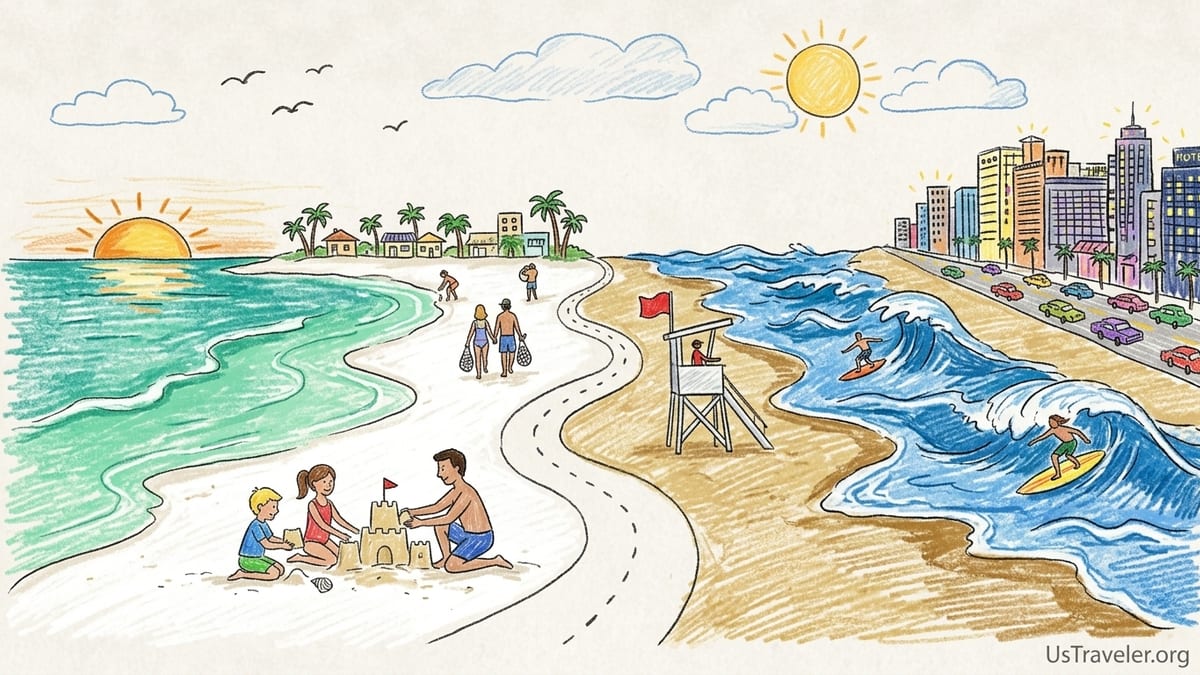
Gulf Coast vs Atlantic Coast: How the Beaches Really Differ
On the Gulf of Mexico side, beaches run from the Panhandle down past Tampa Bay, Sarasota, Naples and into the lower Gulf. Here you typically find sugar-white sand, gentle waves and water that can look emerald or pale turquoise on calm days. Families with small children often prefer the Gulf because the surf is usually mild, and sandbars create long, shallow wading zones. In places like Clearwater Beach, Destin and Siesta Key, it is common to see toddlers playing at the shoreline while parents sit only a few yards back in beach chairs.
Florida’s Atlantic coast, which includes Miami Beach, Fort Lauderdale and Cocoa Beach, has a different personality. The ocean is deeper and more energetic, with more consistent surf and a steeper drop-off. Swimmers and surfers like the rolling waves, and lifeguard stands are a familiar sight along much of this coast. The water is not usually as glassy-calm as the Gulf, but on clear days nearshore visibility can still be good, particularly in South Florida where the Gulf Stream brings warm, clear water close to shore.
For travelers, this split shows up in the details. Average visitors to Gulf beaches tend to be families, multi-generational groups and couples who want easy swimming, sunsets over the water and walkable resort strips. Atlantic beaches draw more surfers, nightlife seekers and urban travelers who want beach time plus a city break. Both coasts have luxury resorts and simple motels, but the vibe shifts sharply from laid-back coastal towns like Sanibel and 30A to full-on city beaches like Miami and Fort Lauderdale.
Costs also differ in everyday ways. In Clearwater or Pensacola Beach, you can still often find paid parking in the 20 to 40 dollar per day range in municipal or private lots, with some cheaper metered street parking if you arrive early. In South Beach in high season, valet parking at an oceanfront hotel can easily exceed that, and day visitors may pay premium rates at garages several blocks from the sand. Factoring in parking convenience can be as important as the sand itself, especially if you are hauling chairs, coolers and beach toys.
Siesta Key, Naples and Sanibel / Captiva: Southwest Florida’s Soft Side
Siesta Key near Sarasota is frequently singled out for its sand. Local tourism officials note that Siesta Beach is composed of about 99 percent quartz, washed down from the Appalachians, which keeps it unusually cool underfoot even under midday sun. The sand feels almost like flour when you walk on it, and the Gulf water here is usually calm enough for relaxed swimming with only small waves on typical days. A wide, free public parking lot serves the main beach, though it can fill by late morning in peak season, so many visitors aim to arrive before 10 a.m. and often stay at nearby condo-style properties and boutique hotels that are a short walk or trolley ride away.
Naples, a bit farther south, offers a more low-key, upscale version of the same Gulf experience. The sand is light and soft though not as powdery as Siesta, and the water clarity is often good on calm days. Waves tend to be gentle, making it popular with older travelers and families who like to float on inflatables just offshore. There is less of a party scene here; instead you find classic beachfront inns, high-end resorts near the historic pier area and condominium rentals lining the coast. Dining skews toward white-tablecloth restaurants a short stroll or drive from the sand rather than boardwalk burger shacks.
Sanibel and Captiva Island are known around the world for shelling rather than perfect swimming conditions. Their east-west orientation causes shells to wash ashore, and visitors still plan early-morning walks with mesh bags to collect conch fragments, scallops and coquinas after strong tides. Recent beach nourishment and storm recovery work means the shoreline continues to evolve, and shelling quality can vary season to season, so many regulars now advise checking local conditions and being flexible about which stretch of beach you choose. The Gulf water here can be slightly murkier than in Destin or Siesta on some days, but waves are generally modest, making wading and casual swimming comfortable outside of stormy periods.
In all three areas, nightlife is limited compared with Miami or Clearwater. In Siesta Key Village, evenings tend to center on casual seafood restaurants, live music at open-air bars and sunset views instead of big nightclubs. On Sanibel and Captiva, many visitors rent bikes to explore low-traffic island roads before settling in at small beach resorts where the main after-dark activity is watching the stars from a balcony. For travelers who want to pair quiet beaches with nature, including nearby wildlife refuges and kayaking among mangroves, southwest Florida delivers a slower pace that still feels polished.
Clearwater Beach, St. Pete Beach and Tampa Bay’s Resort Strip
Clearwater Beach sits on a barrier island west of downtown Clearwater and has evolved into one of Florida’s classic family resort beaches. The sand is bright white, soft and forgiving on bare feet, and the beachfront promenade is lined with mid-range to upscale hotels, from full-service resorts with kids’ clubs and pools to condo-style suites. Families often choose Clearwater because everything is walkable: you can park once in a city garage or hotel lot, then access the beach, restaurants, ice cream shops and sunset festivities near the central pier without needing a car for the rest of the day.
Water clarity in Clearwater usually ranges from decent to very good, especially on calm summer mornings and days with light winds. Waves are small, so most swimming happens close to shore, and beach attendants rent cabanas and loungers by the hour or day. Lifeguard towers along the main municipal beach make it comfortable for first-time visitors, and activities like dolphin cruises and short boat tours depart from the nearby marina. For nightlife, the scene combines casual rooftop bars, tiki-style patios and a few late-night spots, but it remains more family-friendly than rowdy.
St. Pete Beach, just to the south, balances retro Florida character with newer developments. Longtime beach hotels sit beside polished resorts, and the sand is wide and inviting. The Gulf water is similar in clarity and wave size to Clearwater, but with a slightly more laid-back feel and fewer high-rise towers in some sections. Parking is a mix of hotel lots, public access points and paid municipal lots, so day-trippers should pay close attention to signs and be ready to walk a bit from their car to the sand, especially in winter and spring peaks.
In the broader Tampa Bay barrier islands, including Treasure Island, Indian Rocks Beach and Madeira Beach, the vibe becomes more residential and local. These beaches appeal to travelers who want quieter condos or vacation rentals steps from the sand with easy Gulf swimming but who are happy to drive into Clearwater or downtown St. Petersburg for museums, baseball games or more structured nightlife. For visitors comparing the Tampa Bay area with places like Destin, the main differences are larger year-round crowds and a more urban backdrop, balanced by strong restaurant and hotel choices at nearly every price bracket.
Destin, 30A and Pensacola Beach: Emerald Coast Clarity and Sand
Northwest Florida’s Panhandle, particularly the Destin, 30A and Pensacola Beach area, is famous for its striking water color and fine quartz sand. On many days in late spring and early summer, the Gulf here can look almost Caribbean, with pale emerald and icy turquoise tones visible from the highway bridges as you arrive. When wind and surf are light, visibility in the shallows can be impressively clear, making it easy to spot small fish and stingrays gliding over the sandbars only a few meters offshore.
Destin and nearby Okaloosa Island are built up with high-rise condos, large resort complexes and family-friendly attractions like small waterparks and harborside entertainment districts. In peak seasons such as March and June, the beaches can be busy, but even then the wide shoreline and gentle waves keep them practical for families. Beach chairs and umbrellas are often rented through on-site vendors who set up in neat rows, and it has become common for multi-bedroom condo rentals to start several hundred dollars per night during school holidays for units within short walking distance of the sand.
The 30A corridor, stretching through planned beach communities like Seaside, Rosemary Beach and Grayton Beach, feels more curated. Architecture standards keep buildings lower in height, and many visitors get around by bike or golf cart. The sand is as fine and white as Destin, and the Gulf is usually calm, but the crowd skews slightly more adult and design-focused, with independent boutiques, farm-to-table restaurants and a wine bar or two in each town center. Families still come in large numbers, drawn by vacation homes and community pools, but the atmosphere is quieter at night than in Destin or Pensacola Beach.
Pensacola Beach, on Santa Rosa Island, blends military town history with classic beach culture. The water clarity and surf conditions are similar to Destin’s, though the long stretch of protected national seashore offers a more natural backdrop in places. Parking lots at public beach access points can fill on summer weekends, so locals often arrive before mid-morning to secure a spot. Nightlife centers on open-air bars playing live music, casual seafood joints and seasonal festivals. Travelers who want the Panhandle’s clear water and soft sand without the fully planned communities of 30A often find Pensacola Beach a good compromise.
Miami Beach, Fort Lauderdale and Cocoa Beach: Atlantic Energy and Nightlife
Miami Beach is Florida’s most famous urban beach, stretching from South Pointe up toward Bal Harbour. The sand here is golden-tan rather than pure white, and the Atlantic surf gives it more of an ocean feel than the Gulf. Waves range from gentle rolling swells on calm days to choppier conditions with stronger rip currents during weather systems, so swimmers should pay close attention to lifeguard flags and posted advisories. Water clarity can be good, particularly in late spring and early summer when winds are light, but is rarely as glassy as a calm morning in Destin or Siesta Key.
What Miami Beach offers in exchange is unmatched nightlife and urban convenience. Oceanfront hotels line the shore, ranging from historic art deco properties in South Beach to modern high-rises farther north. Guests can step out of lobbies directly onto the sand, then be at high-end restaurants or late-night clubs within a few blocks. Daybed and cabana rentals are common at many hotels, with prices varying widely by property, and beach vendors offer jet ski rentals and parasailing just offshore. Parking is primarily in garages and valet services, and day visitors should be prepared for higher fees than at many Gulf beaches.
Fort Lauderdale, just north of Miami, has matured into a more relaxed but still sophisticated Atlantic beach city. The beachfront promenade is lined with hotels, cafes and casual bars, and the sand is generally clean and well maintained. Surf is similar in character to Miami, with regular waves that appeal to casual surfers and bodyboarders. Families who want an Atlantic experience without the intensity of South Beach often choose Fort Lauderdale because it offers an easy mix of beachfront pools, boat tours on the Intracoastal Waterway and accessible dining that stays lively but more low-key.
Cocoa Beach, on the Space Coast, is one of Florida’s classic surf towns. The sand here is a bit darker and more compact, and the Atlantic waves tend to be more consistent than in South Florida, especially in winter and early spring. Surf schools operate directly from the beach, offering beginner lessons that include board rental and a couple of hours of group instruction, often within walking distance of oceanfront motels. The water is usually cooler and less clear than the Gulf, but travelers come for the combination of surf culture, nearby space launch viewing opportunities and lower prices on accommodations and parking compared with Miami Beach.
The Florida Keys: Clear Water, Modest Sand and Outstanding Snorkeling
The Florida Keys operate on different rules from the rest of the state’s beaches. Because the islands are the exposed portions of an ancient coral reef, much of their shoreline is rocky or lined with mangroves instead of deep sand. There are only a handful of broad, swimmable beaches, and many visitors discover that the Keys are more about being on the water than sitting beside it. What they offer in return is exceptionally clear, warm water and access to the only living coral barrier reef in the continental United States, with snorkeling and boating trips that leave from Key Largo to Key West.
For a traditional beach day, Bahia Honda State Park near Big Pine Key frequently tops lists of the best beaches in the Keys. Its protected coves offer clear, shallow water that is ideal for wading and relaxed swimming, though a park entrance fee and popularity mean early arrival is wise in high season. Sombrero Beach in Marathon is another well-regarded spot, with a wide public shoreline, picnic pavilions and typically calm, shallow water that suits families. Near Key West, Fort Zachary Taylor Beach combines a small sandy area with rockier shoreline that provides some of the better shore-accessible snorkeling in the Keys, where swimmers can spot small fish and rays fairly close to the beach on calm days.
Sand quality in the Keys often differs from the powdery Gulf beaches. It is commonly made of crushed coral and shell fragments, giving it a slightly coarser feel and a pale beige or pinkish tint. Water clarity, however, can be excellent when winds and tides are favorable. Many regular visitors plan at least one snorkel or glass-bottom boat trip to offshore reefs such as those near Key Largo, Islamorada or the Dry Tortugas, booking with operators that provide gear and guides. Prices vary, but half-day snorkel trips are typically a significant but manageable splurge for families compared with a simple beach afternoon.
Because beach lounging is not the main event, accommodations in the Keys range from simple motels clustered around marinas to boutique resorts with small man-made beaches and lagoon-style pools. Nightlife is concentrated in specific areas, especially in Key West around the historic district, where bars, live music and sunset celebrations draw visitors each evening. Travelers who put a premium on a long, natural sandy beach often choose to combine a Keys trip with time at a Gulf Coast destination on the same itinerary, using the Keys for water-based adventures and the mainland for traditional beach days.
Comparing Sand, Swimming, Families and Nightlife Across the Coasts
Sand texture and color are often the first thing travelers notice. Destin, 30A, Siesta Key and Clearwater share the softest, whitest sand, made largely of quartz particles that stay comfortable underfoot. Sanibel and Captiva trade some softness for shell content, which can be delightful for collectors but a bit rougher when walking barefoot. On the Atlantic side, Miami, Fort Lauderdale and Cocoa offer firmer, more compact sand in shades of beige or light brown, easier for jogging but less powdery for children building sand castles.
Water clarity follows a general pattern. The calmest, clearest days in the Panhandle and around Siesta Key and Naples can produce translucence that surprises first-time visitors, especially in late spring with light winds. Clearwater and St. Pete Beach also see plenty of clear-water days but can experience occasional murkier periods following storms or strong onshore winds. Atlantic water tends to be more dynamic; visibility can be quite good in South Florida but is more often moderate along the central Atlantic coast near Cocoa. The Keys, even with their limited beaches, frequently deliver some of the clearest water for snorkelers when seaweed and weather cooperate, particularly near offshore reefs reached by boat.
For families with young children, safety and convenience often outweigh nightlife. In that equation, Siesta Key, Clearwater, St. Pete Beach, Destin, 30A, Pensacola Beach and Sombrero Beach in the Keys stand out. They combine gentle or moderate waves with lifeguards on the busier stretches, straightforward access from parking lots or nearby hotels and a range of casual dining spots where sandy feet are welcome. Many Gulf Coast resorts now include zero-entry pools that allow toddlers to transition from pool to beach within the same property, reducing the need to haul gear long distances.
Nightlife, by contrast, is clearly strongest in Miami Beach and Key West, followed by Fort Lauderdale and central Clearwater Beach. Travelers who prioritize dancing, cocktail lounges and late-night dining will be happiest in these hubs, where evening activity continues well after sunset. On 30A, Sanibel, Captiva and much of Naples, after-dark options tilt more toward quiet bars, sunset viewing and early dinners, which many families and early risers prefer. Matching your preferred evening pace to your daytime beach style is one of the easiest ways to avoid disappointment on a Florida coastal trip.
Choosing the Right Florida Beach for Your Trip
For first-time visitors, a practical way to narrow choices is to think about your primary goal. If you want classic soft sand, calm water and easy swimming, focus on Gulf Coast destinations such as Siesta Key, Clearwater, St. Pete Beach, Destin or 30A. If surfing, people-watching and nightlife are more important, then Miami Beach, Fort Lauderdale or Cocoa Beach on the Atlantic may be a better fit. Travelers who dream of snorkeling in exceptionally clear water and exploring coral reefs should consider the Keys, ideally pairing a few days there with a Gulf or Atlantic beach to round out the experience.
Budget and logistics matter too. In the Panhandle, vacation rentals can offer good value for families, especially outside peak school holidays, though you may need a car for everything. In the Tampa Bay and southwest Florida areas, you can often fly into larger airports and reach the beach within an hour’s drive, with a spectrum of hotels from basic roadside inns to high-end beachfront properties. Miami and Fort Lauderdale provide the easiest car-free vacations, combining airport access with public transportation, rideshares and walkable beachfront neighborhoods, but accommodation and dining can be more expensive overall.
Seasonality also plays a role in how beaches feel. Gulf waters in the Panhandle can be cool in winter, limiting comfortable swimming for some, while South Florida and the Keys remain swimmable much of the year. Summer brings heat, humidity and the possibility of afternoon storms statewide along with larger crowds in family-oriented destinations. Shoulder seasons in late April to May and late September to early November often provide a helpful balance of warm water, somewhat lighter crowds and manageable prices, though travelers should always monitor tropical weather forecasts in hurricane season.
Whatever coast you choose, pay attention to small planning details such as parking options, beach access rules, availability of restrooms and showers, and whether your preferred beach has lifeguards. Many popular stretches offer real-time information on conditions and occasional advisories related to rip currents, bacteria levels or wildlife like jellyfish. Building in flexibility to shift beaches or adjust your swimming plans in response to local conditions will help ensure that your Florida beach trip feels like a highlight rather than a hassle.
FAQ
Q1. Which Florida beach has the softest sand for bare feet?
Siesta Key, Destin and 30A are often singled out for their ultra-fine, quartz-based sand that feels very soft and stays relatively cool underfoot.
Q2. Where is the clearest water for swimming in Florida?
On calm days, the Emerald Coast around Destin and 30A and parts of the lower Florida Keys near Bahia Honda and offshore reefs often have some of the clearest water.
Q3. Which Florida beaches are best for families with small children?
Clearwater Beach, Siesta Key, St. Pete Beach, Destin, 30A and Sombrero Beach in Marathon are popular with families thanks to gentle waves and convenient facilities.
Q4. What is the best Florida beach for nightlife?
Miami Beach and Key West lead for nightlife, with Fort Lauderdale and central Clearwater Beach offering a strong mix of bars, live music and late-night dining.
Q5. Are the Florida Keys good for a traditional beach vacation?
The Keys have a few good sandy beaches, but they are better for snorkeling, boating and on-the-water activities. Many travelers pair the Keys with a Gulf Coast beach.
Q6. Which side of Florida has better waves for surfing?
The Atlantic side offers more consistent waves, especially around Cocoa Beach and other central and South Florida surf spots, compared with typically calmer Gulf beaches.
Q7. Where can I find good snorkeling directly from the beach?
Fort Zachary Taylor Beach in Key West, parts of Bahia Honda and some rocky areas in the Keys offer the most accessible shore snorkeling, though boat trips reach better reefs.
Q8. Is parking easier on the Gulf Coast or Atlantic Coast?
In general, parking is easier and sometimes cheaper at many Gulf destinations like Clearwater, St. Pete Beach and Destin than in dense Atlantic cities such as Miami Beach.
Q9. Which Florida beaches feel less crowded but still have amenities?
Sections of 30A, parts of Sanibel and Captiva, and some stretches near Naples and Madeira Beach can feel quieter while still offering nearby lodging and casual dining.
Q10. If I only have one week, which two Florida beach areas pair well together?
A common pairing is a few days in the Tampa Bay area or Siesta Key for classic beach time, followed by several days in the Florida Keys for snorkeling and boating.