


I used to give the same neat answer when friends asked for the best time to visit New York State: “Fall.” Then I did something that quietly wrecked that certainty. I took multiple trips across the state in different seasons and let the weather, daylight, crowds, and closures decide the itinerary for me. The result was humbling. New York is not one destination with four outfits. It is a patchwork of regions that peak at different times, and I felt that in my skin: sticky subway heat that followed me up the Hudson, lake water that looked swimmable but shocked my legs numb, shoulder-season roads that turned slick in a shaded curve, and a winter weekend where snowbanks reshaped how far “a quick drive” really is.
Spring In New York State: Mud, Blossoms, And The First Real Weekends Back
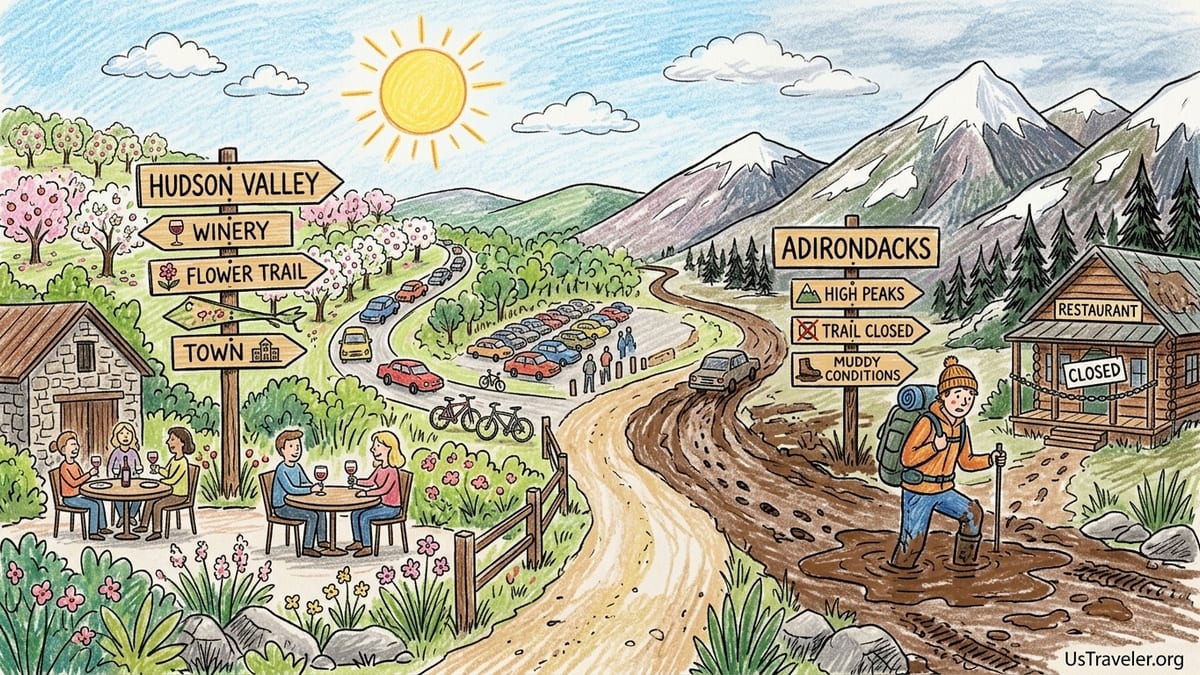
Spring was the season that surprised me most because it felt like two different realities depending on where I was. In the Hudson Valley, the first warm Saturdays brought a rush of people acting like they had been released from storage: packed patios, full trailhead lots, and a steady line of cars nose-to-tail on scenic roads where everyone was chasing the same idea of “fresh air.” It was energizing and a little chaotic, and it taught me to plan spring weekends like I would plan a concert night: early starts, reservations when possible, and a backup plan if my first choice had a wait.
Up north, spring meant something else. “It’s spring” didn’t automatically translate to “it’s hiking season,” especially in the Adirondacks and higher elevations. I experienced the classic shoulder-season contradiction: sunshine in town, and then a trail that turned into soft, wet, boot-sucking mud the moment I stepped under tree cover. It wasn’t just messy, it slowed everything down. My mistake was packing like I was going for a clean, brisk walk. The right call would have been waterproof boots with real traction, extra socks, and a willingness to turn around before I churned up fragile trails.
The closures also hit differently in spring. Some seasonal attractions and services felt like they were still stretching awake, with limited weekday hours, reduced boat operations on lakes, and restaurants in smaller towns running on shorter schedules. In the Hudson Valley, the tourism machine spins up earlier, so it was easier to build a full weekend around food, galleries, and short hikes. In the Adirondacks, I learned to check operating calendars before I assumed anything would be open after dinner, especially midweek.
If your spring goal is a high-reward, low-stress trip, my objective guidance is this: pick the Hudson Valley for spring weekends when you want easy logistics and lots of open doors. Save the Adirondacks for later in the season unless you specifically want a quiet, in-between experience and you pack for mud, cold nights, and changeable conditions.