


Florida’s resort scene is built for big vacations: beachfront pools, kids clubs that run all day, adults-only spas and easy access to theme parks or the Keys’ turquoise water. What is less obvious when you start comparing options is how much details like resort fees, parking, kids clubs and walkability will shape your trip. This guide looks at the best resorts in Florida by trip type, with concrete examples of what you actually get for your nightly rate and how to choose the right property before you book.
How to Choose the Right Florida Resort for Your Trip
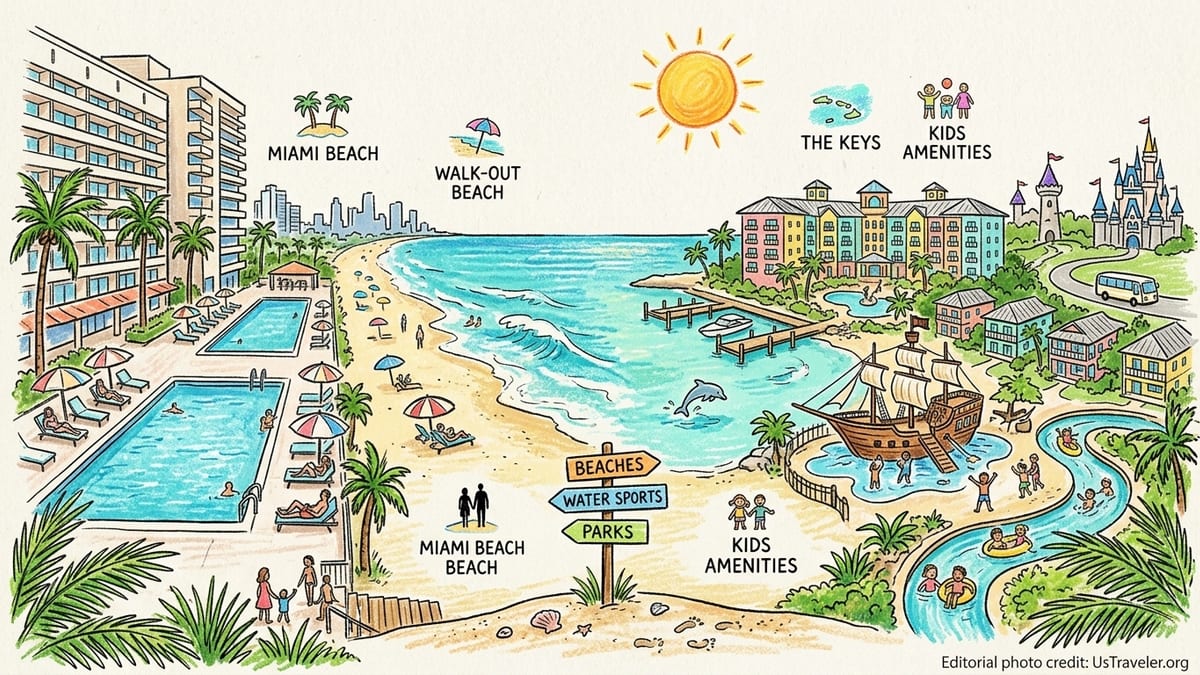
Before you fall for a glossy pool photo, decide what kind of trip you are booking. A long weekend for two in Miami Beach looks very different from a week with toddlers near Orlando or a Keys escape where you mostly stay on property. In practice, this means thinking through not just location but also whether you want a walk-out beach, oversized pools and slides, a full spa, or simply the shortest shuttle ride to the parks. Once you know that, comparing resorts becomes much easier.
Beachfront access is a major dividing line. On Florida’s Atlantic and Gulf coasts you can find true walk-out beaches, like the wide sands at Fontainebleau Miami Beach or Hilton Sandestin Beach Golf Resort & Spa in Miramar Beach, where you step from pool deck to sand in a few seconds. On the Florida Keys, by contrast, classic sandy beaches are rare, so properties such as Baker’s Cay Resort in Key Largo or Hawks Cay on Duck Key emphasize man-made lagoons, piers and water sports rather than miles of natural surf.
Price in Florida is about more than the base rate. Many destination-style resorts add daily resort fees that cover things like beach chairs, Wi-Fi and fitness classes, plus valet or self-parking that can run from roughly 25 to 55 dollars a night in cities like Miami and Orlando. In Miami Beach, it is common to see resort fees around the 40 to 50 dollar mark per night even at mid-range properties, while higher-end hotels like Ritz-Carlton or St. Regis layer those fees on top of already premium room rates. In Orlando, some large resorts have followed suit, though a few, such as certain Drury-branded properties near Disney Springs, still advertise no resort fees but charge nightly parking.
Families will want to look closely at kids amenities. Dedicated kids clubs, splash pads, lazy rivers and multi-bedroom suites can transform the feel of your stay. Resorts like Hawks Cay in the Keys, Hilton Sandestin on the Panhandle or the on-site Disney and Universal hotels in Orlando lean hard into kid-focused pools and daily programming. Couples and adults may instead prefer properties with adults-only pools, more intimate spas and quieter dining, such as The Boca Raton’s adults-friendly towers and spa complex or high-end Keys and Palm Beach retreats.
Luxury Beach Resorts on Florida’s Coasts
For travelers who picture Florida as an endless strip of white sand and cabanas, the state’s Atlantic and Gulf coasts deliver some of the most polished resort experiences. On Miami Beach, Fontainebleau Miami Beach is a classic choice for travelers who want big-resort energy: multiple oceanfront pools, a long stretch of sand, a high-end spa and a dozen or so dining and nightlife options all on 22 acres. Rooms here typically cost more than midrange Miami hotels, and you should budget for a resort fee and valet parking, but in return you get a destination-style property where you rarely need to leave the grounds.
North of Miami, The Breakers in Palm Beach is one of Florida’s grand resorts, often cited among the state’s best for both couples and families. Its oceanfront setting, several pools including family and adults-only options, extensive dining and a kids club make it popular for multi-generational trips and special occasions. Rates generally reflect its status as a luxury icon and climb significantly in winter, but guests highlight the overall level of service and the fact that many activities, from golf to spa to kids programming, are available on site for a fee.
On the Gulf side, Hilton Sandestin Beach Golf Resort & Spa in Miramar Beach is one of the Panhandle’s largest beachfront resorts, with multiple pools, a spa and direct access to a wide white-sand beach. Families like the mix of indoor and outdoor pools and the ability to book rooms or suites that sleep more than four people. Expect a resort fee that typically includes beach set-up, Wi-Fi and fitness access, as well as daily parking charges if you bring a car. Compared with Miami or Palm Beach, nightly rates outside peak summer and spring break can feel like better value for the amount of space and amenities you receive.
Farther south on the Gulf Coast, luxury brands such as Ritz-Carlton in Naples or Amelia Island and new high-end projects in Naples and Sarasota pair long, walkable beaches with upscale spas, club lounges and attentive pool service. Properties in this category tend to have smaller kids clubs than Orlando or Keys resorts but excel at quiet, well-maintained beaches and polished dining, which is ideal for couples trips or families with older children who do not require water slides and character breakfasts.
Florida Keys Resorts: Waterfront Escapes and Lagoon Pools
Resorts in the Florida Keys operate a bit differently from those on the mainland. Because the islands are built on coral rock and protected by offshore reefs, swimmable sandy beaches are limited. Instead, you will find resorts that carve out man-made coves, decks over the water and extensive pool complexes. If you are picturing long walks on a wide beach, you may want a Gulf or Atlantic resort; if you want laid-back, tropical water views and boating access, the Keys are hard to beat.
In Key Largo and Islamorada, properties such as Baker’s Cay Resort, Playa Largo Resort & Spa and Cheeca Lodge & Spa are frequently recommended for travelers who want a polished Keys experience without driving all the way to Key West. These resorts typically feature lagoon-style pools, small man-made beach areas, on-site piers and marinas and water sports like paddleboarding and snorkeling excursions. Baker’s Cay, for example, markets itself as both family- and dog-friendly, with multiple pools and a relaxed but upscale vibe, while Cheeca Lodge mixes historic Keys character with golf and spa facilities.
Midway down the Keys, Hawks Cay Resort on Duck Key is one of Florida’s best-known family resorts. It has several pools, including a pirate ship splash area for younger kids and an adults-only pool, plus a small saltwater lagoon, on-site dolphin experiences, a kids club and a wide variety of villas and hotel rooms. Families often choose Hawks Cay because it feels like a self-contained village, but that convenience comes with a resort fee and additional charges for parking and many activities. Budget-conscious travelers can manage costs by cooking some meals in a villa kitchen and prioritizing a few key activities instead of booking every option.
In Key West and the lower Keys, many luxury properties focus on waterfront decks and sunset views rather than beaches. Resorts like Ocean Key Resort & Spa or waterfront hotels near Mallory Square emphasize pools perched above the harbor, lively bars, spa services and walkable access to Old Town dining and nightlife. Guests pay a premium for central location and sunset views, and parking is often valet-only with a nightly fee, but you can often explore the island on foot, reducing the need for a rental car.
Miami and Palm Beach Luxury Properties for Couples and Spa Lovers
Miami Beach and Palm Beach concentrate a high number of luxury hotels, which is useful if your priority is a polished spa, strong restaurant scene and visually striking design. On the northern end of Miami Beach, The St. Regis Bal Harbour stands out for travelers who want a quieter, high-end oceanfront experience. The resort occupies several acres with around 600 feet of direct Atlantic frontage, ocean-view pools, a well-regarded spa and a kids club for families. The style here skews sleek and residential, and most guests rely on valet parking for an additional nightly fee.
Within Miami Beach proper, a collection of oceanfront luxury properties from brands like Ritz-Carlton, Edition, 1 Hotel and various boutique hotels line Collins Avenue. Nearly all of them charge resort fees that cover beach chairs, fitness classes and Wi-Fi, with parking charges on top. When comparing options, couples often weigh whether they prefer a quieter mid-beach location such as 1 Hotel South Beach, which focuses on sustainability and a great rooftop pool, or a more central South Beach address that shortens walks to nightlife at the cost of more noise.
In Palm Beach County, The Boca Raton and The Breakers are two of Florida’s most prominent high-end resorts. The Boca Raton operates as a full-scale resort community with a Forbes-rated spa, multiple pools including a large Harborside pool club with a lazy river, beach club access across the waterway and a wide range of restaurants and bars. It tends to work especially well for couples and families who want to stay on property for most of their stay and are willing to pay for resort-wide amenities, including daily resort and parking fees.
For travelers who want Palm Beach’s Atlantic setting in a somewhat smaller package, properties like Tideline Ocean Resort & Spa on Palm Beach island combine a beachfront setting with a full-service spa and a single main restaurant. These hotels can be a good fit for shorter getaways where you plan to dine both on and off property, and where you prefer simpler pool scenes over multi-acre water parks.
Orlando Resorts: Pools, Water Parks and Theme Park Access
In Orlando, the main decision is how close you want to be to the theme parks and how much resort-style recreation you need outside of park hours. Disney’s on-site resorts, such as Disney’s Beach Club Resort or Polynesian Village Resort, are popular with families who want themed pools, extended park hours and easy access via monorail, boats or walking paths. Rates are relatively high compared with off-site Orlando hotels, and most Disney resorts now add parking costs for guests with cars, though they do not typically charge traditional resort fees.
Universal Orlando’s hotels, including Loews Royal Pacific Resort and other on-site properties, are attractive for families planning to focus on Universal’s parks. Select Universal hotels include unlimited Universal Express ride access as part of the room rate, which can offset the nightly cost. The resorts feature large pools, splash areas, game rooms and multiple dining venues, and provide complimentary transportation to the theme parks, so you can often avoid renting a car entirely.
Just outside the main gates, large independent resorts and branded properties provide an alternative that emphasizes water parks and condo-style rooms. Margaritaville Resort Orlando in Kissimmee spans hundreds of acres, with a resort hotel, vacation cottages and a separate water park. Guests have access to several pools, a spa, kids club and complimentary shuttles to nearby theme parks. This type of property often charges daily resort and parking fees, but can be cost-effective for extended families who share a multi-bedroom cottage with a kitchen.
Upmarket resorts on the south side of Orlando, near Grande Lakes and Lake Buena Vista, target travelers who want luxury amenities as much as park access. Properties such as the JW Marriott and Ritz-Carlton at Grande Lakes or Four Seasons Resort Orlando combine full-service spas, lush pool complexes with lazy rivers and slides and refined dining with shuttles or short drives to Disney and Universal. Nightly rates at these resorts can be high, and resort and parking fees are the norm, but many travelers treat them as much as a resort holiday as a theme-park trip.
Best Resorts for Couples vs Families
Some Florida resorts try to be all things to all people, while others lean clearly toward either couples or families. For couples, the sweet spot often involves strong spa and restaurant offerings, quieter pools and room categories that favor balconies and ocean or lake views over pull-out sofas. Resorts such as The Boca Raton, St. Regis Bal Harbour, many Ritz-Carlton properties along the coasts and select adult-leaning Keys resorts fit this profile. Many of them still welcome children, but the atmosphere, pricing and amenities are not built primarily around water slides and kids clubs.
Families, especially those with younger children, tend to prioritize pools, suites and kids programming. Hawks Cay in the Keys, Hilton Sandestin on the Panhandle, large Orlando resorts near the parks and all-inclusive-style properties on the Gulf coast provide combinations of multi-bedroom units, shallow splash areas, kids clubs and casual dining that welcomes sandy feet. Parents should look closely at whether kids clubs are included in the resort fee or charged hourly, as the cost can add up quickly over a week-long stay, especially during school breaks.
Parking and resort fees play out differently for these two groups. Couples on short stays may be more comfortable paying for valet parking and larger resort fees in exchange for convenience and high-touch service, particularly in urban locations like Miami Beach or downtown Orlando. Families on longer trips might focus on resorts with lower or no resort fees, reasonable self-parking and in-room kitchens so they can save on meals. In practice, that can mean choosing a self-contained Keys villa at a family resort, a condo at a property like Wyndham Bonnet Creek near Disney or a Gulf Coast resort where free or low-cost parking is still common.
Another key distinction is proximity to major attractions. For couples, being slightly removed from crowds can improve the experience, so a Palm Beach resort north of the busiest stretches of Miami, or a lakefront Orlando resort that is a 15-minute drive rather than a 5-minute walk, may be appealing. For families, shaving 20 minutes off a daily commute to Disney or Universal can feel priceless, even if it means sacrificing a bit of quiet or paying more for an on-site resort that offers early entry or express passes.
The Takeaway
Florida’s best resorts share a few traits: strong pools, reliable service and locations that make it easy to enjoy either beaches, theme parks or the unique environment of the Keys. How you define “best” for your trip depends on whether you care more about a real walk-out beach, a lazy river and kids club, quick access to roller coasters, or a spa and quiet adults-only pool. On Miami Beach and in Palm Beach, luxury brands deliver polished stays with resort and parking fees that reflect their status. Along the Gulf Coast, larger beachfront resorts balance family appeal with slightly softer pricing outside peak seasons. In the Keys, the focus shifts from sandy beaches to lagoon pools, marinas and the feeling of being surrounded by water.
When comparing resorts, build your shortlist around trip type first: a Keys escape, an Orlando theme park week, a Gulf Coast beach holiday, a Miami or Palm Beach long weekend or a Panhandle family gathering. Then look carefully at the details that directly affect your budget and comfort: whether the beach is truly swimmable, how extensive the pools and kids clubs are, what the resort and parking fees add up to over your dates and how far you will be from the attractions you care about most. With that information in hand, Florida’s sprawling resort landscape becomes much easier to navigate, and you can book a property that matches not just your wish list but also the way you actually travel.
FAQ
Q1. Which Florida resort is best for a luxury beach vacation with a true walk-out beach?
The most reliable choices for a traditional walk-out beach are along the Atlantic and Gulf coasts rather than in the Keys. Properties such as The Breakers in Palm Beach, several Ritz-Carlton resorts in Naples or Amelia Island and large Gulf Coast resorts like Hilton Sandestin Beach Golf Resort & Spa offer long, swimmable stretches of sand directly in front of the hotel, plus multiple pools and full-service beachfront set-ups.
Q2. Where should I stay in the Florida Keys if I want a resort that works well for families?
Hawks Cay Resort on Duck Key is one of the strongest all-around family picks thanks to its multiple pools, shallow saltwater lagoon, on-site dolphin experiences and kids club, along with a wide range of villas and hotel rooms. In the upper Keys, Baker’s Cay or family-friendly sections of Playa Largo and Cheeca Lodge also work well for families who want a relaxed, water-focused stay without driving all the way to Key West.
Q3. What are the main differences between Miami Beach and Palm Beach resorts for couples?
Miami Beach resorts tend to sit in a denser, more nightlife-oriented environment, with louder pool scenes and easy access to clubs and restaurants, while Palm Beach resorts such as The Breakers or Tideline Ocean Resort & Spa emphasize a quieter, more traditional luxury atmosphere. Both offer oceanfront pools, spas and fine dining, but Palm Beach often feels more residential and low-key, whereas Miami Beach is higher energy and more urban.
Q4. How expensive are resort fees and parking at Florida luxury resorts?
Resort fees at high-end Florida properties commonly run in the 35 to 55 dollar per night range and cover amenities such as Wi-Fi, fitness classes and beach chairs, although inclusions vary. In major markets like Miami Beach and Orlando, valet or self-parking can add another 25 to 55 dollars per night. Before you book, check both fees for your dates and factor them into your nightly budget, as they can significantly increase the total cost of a stay.
Q5. Which Orlando resorts are best if I want a big pool complex and easy access to theme parks?
Families who prioritize both water time and theme park access often look at Disney’s Beach Club Resort, with its Stormalong Bay pool complex and walkable access to Epcot, or Universal Orlando hotels like Loews Royal Pacific, which combine large pools with included Universal Express ride access at select properties. Independent resorts such as Margaritaville Resort Orlando or the Grande Lakes area hotels also offer lazy rivers and on-site water activities plus shuttles or short drives to the main parks.
Q6. Are Florida Keys resorts a good choice if I want long sandy beaches?
In general, no. Because the Keys sit on a coral archipelago, they have fewer classic sandy beaches than mainland Florida. Many Keys resorts instead focus on man-made lagoons, piers, pools and water sports. If your priority is walking long stretches of soft sand, you will likely be happier on the Atlantic coast, the Panhandle or the Gulf Coast around Naples or Sarasota rather than in the Keys.
Q7. What kind of resort works best for a multi-generational family trip?
Destination-style resorts that offer a variety of room types, from standard hotel rooms to multi-bedroom suites or villas, usually work best. Properties such as Hilton Sandestin on the Panhandle, Hawks Cay in the Keys, or large Orlando resorts with condo-style units give grandparents, parents and kids their own spaces while keeping everyone within the same complex. Look for resorts with multiple pools, casual and upscale dining options and kids clubs so family members can split up and reconvene easily.
Q8. Are there Florida resorts without resort fees?
A handful of properties, particularly some midrange and select-service hotels near Orlando attractions, advertise no resort fees and instead build costs into the room rate. However, even these often charge nightly parking and may not have the same level of resort-style amenities. If avoiding resort fees is important, filter for properties that state “no resort fee” in their descriptions and compare the overall nightly cost, including parking, against full-service resorts that charge separate fees but may include more amenities.
Q9. How far in advance should I book Florida resorts for peak season?
For winter and early spring, when demand is highest in South Florida, the Keys and Orlando, it is wise to start looking three to six months in advance, especially for school holiday weeks and long weekends. Popular family resorts and luxury properties can sell out of the most desirable room categories well before those dates. Flexible travelers sometimes find better value by targeting late spring or early fall, when temperatures are warm but crowds and prices ease.
Q10. What is the best way to balance budget and amenities when choosing a Florida resort?
Start by deciding which amenities are non-negotiable, such as direct beach access, a kids club or proximity to a specific theme park, and which are nice-to-have extras. Then compare a mix of high-end and midrange properties in the same area, making sure to add resort and parking fees into your calculations. In many cases, a slightly less famous resort that still offers a great pool and convenient location will deliver a similar experience at a lower total cost than the most talked-about luxury property in the same destination.