


North Central Florida is where turquoise springs cut through shady hardwood forests, horse farms roll across the horizon and tiny Old Florida towns shelter around rivers and the Gulf. Gainesville anchors the region, but the real magic lies in the ring of spring country, Suwannee River hamlets, horse country around Ocala and the Gulf islands of Cedar Key. Use this guide to choose the best bases and day trips for families, kayakers, history fans, food lovers, anglers and anyone in search of a quiet weekend.
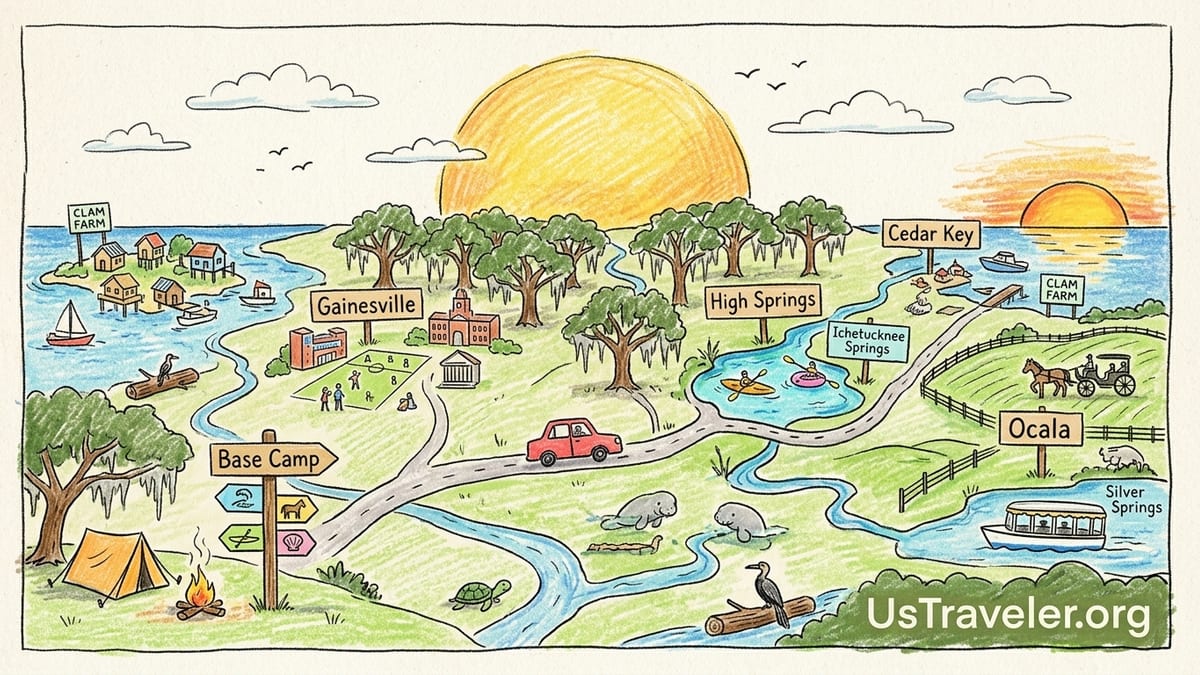
How to Plan a North Central Florida Base Camp
North Central Florida covers a broad swath of spring country and river towns, so it helps to think in hubs. Gainesville works best as the urban base: it has the region’s most reliable air connections, plenty of chain and boutique hotels, and a huge range of dining near the University of Florida. Within roughly a 60 to 90 minute drive of Gainesville you can reach High Springs and Ichetucknee Springs, most of Suwannee River country, Ocala and Silver Springs, and the Gulf islands at Cedar Key, so many travelers choose to spend several nights in Gainesville, then add one or two nights in a quieter outpost.
For a fully spring-focused trip, High Springs or Fort White make more strategic bases than Gainesville, especially in summer when tubing and paddling dominate. You can wake up a short drive from Ichetucknee Springs State Park instead of facing an early morning highway run. Travelers who want Gulf sunsets, fishing and kayaking often devote at least two nights to Cedar Key, which is about an hour and a half by car from Gainesville. Horse lovers and families gravitating to theme-park style glass-bottom boats find Ocala and the Silver Springs area better as their primary base.
Smaller towns like Micanopy, White Springs and Suwannee River campgrounds are rewarding as overnight bases if you prize quiet over nightlife. In practice, many visitors stitch together a loop: two or three nights in Gainesville, one or two in High Springs or Suwannee River country, two in Cedar Key, with day trips to Ocala or Silver Springs. The region’s distances are manageable, but you will want a car and you should factor in slower rural roads when planning day trips.
Gainesville: Lively Hub for Culture and Short Drives
Gainesville is the only true small city in this part of Florida, and that matters on a practical level. The hotel selection ranges from budget motels along Southwest 13th Street to business hotels near Butler Plaza and a growing number of boutique-style properties close to downtown. That variety, combined with a strong restaurant scene and late hours when the university is in session, makes Gainesville the most flexible base if you want both springs and city comforts. Everything from taco joints and vegan cafes to upscale Southern-inspired restaurants is within a short drive.
Families in particular appreciate Gainesville’s rainy-day options. The Florida Museum of Natural History, with its fossil hall and butterfly rainforest, and the nearby Cade Museum for Creativity and Invention give kids something memorable between spring days. Sports fans can time trips around University of Florida football or baseball games, while music fans find a rotating slate of shows at downtown venues and breweries. Because hotel prices rise on big game weekends, it is worth checking major sports and graduation dates before you commit.
As a base for springs, Gainesville sits about 30 to 45 minutes from popular Santa Fe River springs like Poe and Gilchrist, and around an hour from Ichetucknee. That means day trips are easy if you are comfortable driving out and back each time. On a typical long weekend, you might book three nights in Gainesville, spend one day tubing or paddling Ichetucknee Springs, another exploring High Springs and the Santa Fe River, and a third driving south to Ocala and Silver Springs. This pattern works well for couples or families who want lively dinners and craft beer after quiet days on the water.
High Springs, Fort White and Ichetucknee: Spring Country at Your Door
The small towns of High Springs and Fort White are the closest gateways to some of Florida’s clearest springs. High Springs in particular has become a laid-back base for divers, kayakers and tubers on the Santa Fe and Ichetucknee Rivers. You will not find large resorts here, but there are small motels, cabins at nearby campgrounds, and an increasing number of vacation rentals that cater to spring-goers. For a four-day adventure focused almost entirely on paddling and swimming, this area makes an excellent overnight base.
Ichetucknee Springs State Park, northwest of Fort White, anchors many itineraries. The park protects nine major springs that feed a glassy, 72 degree river, with tubing offered seasonally. In summer, a popular pattern is to rent tubes from outfitters just outside the park and use the park shuttle to float a mid-length run that takes under two hours, while in cooler months visitors often favor kayaks or canoes to explore the river more quietly. The park now concentrates tubing on the lower section of the river for environmental reasons, while paddling remains open year-round with launches from the north entrance and interior points.
Beyond Ichetucknee, the Santa Fe River corridor is dotted with individual springs such as Poe, Gilchrist and Ginnie, each with slightly different personalities. Some charge modest day-use fees and allow you to bring your own kayaks; others offer on-site rentals and campgrounds. High Springs works well as an overnight base if you want to sample several of these in a single trip. The town has a compact main street with a handful of cafes, a brewery and pizza spots that serve as post-river gathering places for locals and visitors.
Suwannee River Country and White Springs: Quiet Cabins and River Lore
North of the Santa Fe, the Suwannee River cuts a slower, darker path toward the Gulf, lined with river camps, small state parks and hamlets like White Springs. This is where to look if you want quiet riverfront cabins, live oaks draped with Spanish moss and evenings that end with the sound of frogs instead of traffic. Many travelers base themselves at campgrounds or simple cabin resorts that offer direct river access, often with canoe or kayak rentals on site. Several properties also run shuttle services, which lets you float downstream one way and have a ride waiting.
White Springs itself is a small town historically known for its mineral springs and steamboat era. Today it serves as a gateway to Stephen Foster Folk Culture Center State Park and segments of the Suwannee River Wilderness Trail. Weekend festivals and music events add a bit of culture, but most of the time this is a low-key base for paddling and hiking. Kayakers will find that sections of the Suwannee offer a different mood compared with the brighter spring runs: the tannin-stained water reflects cypress trunks and bluffs, and wildlife viewing can be excellent, with herons and turtles lining fallen logs.
Suwannee River country is best for travelers who do not need a full-service town. Grocery runs may require a short drive, and restaurant options are limited. In return, you get starry skies and mornings where you can carry a kayak down from your cabin and be on the river at sunrise. Many visitors treat this zone as a two-night retreat in the middle of a broader loop that starts in Gainesville or Ocala and ends with a couple of nights at the Gulf.
Ocala and Silver Springs: Horse Country and Classic Family Attractions
South of Gainesville, Ocala and its surrounding rolling pastures have branded themselves as the Horse Capital of the World, with dozens of thoroughbred farms scattered across the countryside. Ocala works well as a base for travelers who want a more conventional mid-sized city with chain hotels, shopping centers and family-friendly restaurants, plus easy access to Silver Springs and nearby spring-fed rivers. Compared with Gainesville, it has less of a campus feel and more of a suburban one, which some families prefer.
Silver Springs, just east of Ocala, is one of Florida’s oldest tourist attractions, famous for its glass-bottom boat tours that pass over clear springs teeming with fish and underwater vegetation. The state park that now manages the springs has shifted toward a more nature-focused experience, but the glass-bottom boats remain a highlight, particularly for families with younger children or older travelers who may not want to swim or paddle. Walking trails and a riverside boardwalk give you a chance to spot birds and maybe a manatee in cooler months.
For paddlers, the Silver River and nearby runs offer opportunities to rent kayaks or canoes and drift past cypress stands and turtles at your own pace. Unlike the Santa Fe, these runs feel more enclosed, with jungle-like vegetation close to the water. Ocala’s position also makes it a good springboard for day trips to Rainbow Springs to the west or Juniper Run in the Ocala National Forest, should you want more variety. Most visitors use Ocala or Silver Springs as an overnight base rather than a quick day trip, giving themselves two or three nights to mix boating, horse farm tours and downtown dinners.
Cedar Key: Old Florida Island for Kayaking, Fishing and Quiet Weekends
Far out on the Gulf, Cedar Key is a compact cluster of islands that feels like a world apart from inland spring country. With a year-round population of around 800 residents, it functions more like a small fishing and clamming village than a resort town. There are no big-box hotels or high-rise condos here. Instead, you will find a patchwork of small inns, pastel cottages, harbor-view suites and a few simple in-town motels. Because the lodging map is small, weekend rooms often book up well in advance, especially during festivals and winter high season.
Cedar Key is best used as an overnight base, ideally for two or three nights, rather than a rushed day trip. The appeal lies in taking your time: walking the compact historic core to see Old Florida wooden buildings, watching pelicans on the pier at sunrise, then heading out onto the calm Gulf waters in a rented kayak. Outfitters in town rent kayaks for half- or full-day paddles out to nearby islands that form the Cedar Keys National Wildlife Refuge, where you can land on shell beaches, watch shorebirds and explore traces of old fish camps.
Anglers appreciate Cedar Key for its access to inshore fishing grounds. Locals and visitors fish from the town pier for species like redfish and trout, or book charter boats that run to oyster bars and grass flats just offshore. Food-oriented travelers will notice that many menus showcase locally farmed clams, a major part of the modern economy, along with Gulf shrimp and fish. Evenings are slow and social, centered on a handful of waterfront restaurants and bars where sunset is the main event.
There is no true beach in the sense of long, broad white sand; rather, Cedar Key offers small sandy patches near the waterfront park and a broader landscape of marsh, mangroves and shallow Gulf water. That makes it less suitable if you picture a classic beach resort week, but ideal if your focus is birding, paddling, photography and quiet. The lack of big-box development and nightlife is a feature, not a bug, for travelers seeking a low-key Gulf coast experience.
Micanopy and Other Small Towns: Antiques, History and Slow Mornings
South of Gainesville, Micanopy bills itself as Florida’s oldest inland town and feels every bit the part. Oak-shaded streets, 19th century storefronts and porches lined with rocking chairs create a pleasantly sleepy atmosphere. The main draw here is browsing antique shops and small galleries, then lingering over coffee or lunch at a cafe on the main drag. A handful of bed-and-breakfasts and small inns in and around town make Micanopy a charming overnight option for couples who enjoy historic architecture and quiet evenings.
Because Micanopy sits only about 20 minutes from Gainesville, some visitors treat it as a half-day excursion from a city base. That works if you only want a quick look at the antique stores and a meal. However, staying overnight lets you experience the town’s early morning calm and bright stars, and puts you close to nature areas like Paynes Prairie Preserve, where you might see wild horses or bison from viewing platforms. Micanopy can also work as a base for splitting your time between Gainesville and Ocala, given its position roughly in between.
Other small towns in the region, such as McIntosh and Cross Creek, offer variations on the theme: historic homes, lakeside scenery and slow rhythms. They are best approached as short day trips for a walk and a meal, or as one-night stays in vacation rentals if you are building a deeply unhurried itinerary. Compared with High Springs or Cedar Key, these towns are less about specific activities and more about atmosphere, which makes them appealing add-ons for travelers who have already allocated days to springs and rivers.
Matching Destinations to Travelers: Springs, Families, Kayakers and Food Lovers
Choosing the right mix of bases and day trips in North Central Florida depends on what you care about most. For pure springs access, High Springs, Fort White and Suwannee River cabins are hard to beat, with short drives to multiple springs and rivers and quiet nights under the trees. Ichetucknee Springs is the headline act for tubing and snorkeling, while smaller spots on the Santa Fe and Suwannee offer more room to spread out on busy summer weekends. Traveling in shoulder seasons such as April or October can mean cooler air temperatures but fewer crowds and clearer water.
Families who like options on rainy days often gravitate to Gainesville or Ocala as their principal bases. From Gainesville you can reach multiple springs within an hour and still be back in time for a museum visit or a relaxed dinner. From Ocala, you have Silver Springs’ glass-bottom boats, a straightforward downtown grid and easy access to chain restaurants that keep picky eaters happy. Cedar Key works for families who enjoy nature and do not mind limited structured entertainment; kids who like fishing, birding and looking for crabs in tidal pools often find plenty to do even without arcades or big attractions.
Kayakers and canoeists can build entire itineraries around North Central Florida’s waterways. Many travel with their own boats, but it is also easy to rent from outfitters near Ichetucknee, High Springs, Silver Springs and Cedar Key. Typical prices for a half-day single kayak rental are moderate compared with coastal resort towns, and guided trips are available if you prefer a naturalist’s commentary or do not want to worry about shuttles. Serious paddlers sometimes design multi-day downriver journeys on the Suwannee, staying at river camps or simple lodges along the way.
Food-focused travelers will find the broadest selection in Gainesville, which has embraced everything from food trucks and craft breweries to seasonal farm-to-table menus. High Springs and Micanopy lean into cafe culture and small-town diners, while Cedar Key delivers on Gulf seafood, especially locally farmed clams and oysters when in season. None of these destinations are fine-dining capitals, but the combination of regional ingredients, local beer and relaxed patios can be compelling after a day on the water.
The Takeaway
North Central Florida rewards travelers who slow down, choose a few bases and let rivers and small towns shape each day’s rhythm. Gainesville offers the broadest range of lodging and dining and works well as an all-purpose hub, especially for first-time visitors. High Springs, Fort White and the Santa Fe and Suwannee corridors are where to base yourself if springs, tubing and paddling are your main priorities. Ocala and Silver Springs provide a comfortable blend of horse country scenery and family-friendly attractions, while Cedar Key adds Gulf sunsets, kayaking and fishing from a compact Old Florida island.
Smaller towns like Micanopy and White Springs round out the picture with antiques, history and quiet porches. In practice, many of the region’s highlights are best experienced as day trips from a handful of overnight bases. Whether you are planning a long weekend or a week-long loop, it is worth deciding up front whether your heart is set on springs, horses, Gulf islands or simply long quiet mornings under live oaks. From there, North Central Florida’s patchwork of college town, river camps and coastal village will fall into place.
FAQ
Q1. What is the best place to stay if I want to visit several springs? High Springs or Fort White make convenient bases for spring-hopping, with short drives to Ichetucknee Springs, the Santa Fe River springs and Suwannee River country, while Gainesville offers a more urban base within about an hour of many of the same spots.
Q2. Is Cedar Key better as a day trip or an overnight stay? Cedar Key is more rewarding as a two or three night stay so you can enjoy early morning birding, unhurried kayak trips to the islands and relaxed seafood dinners without rushing back inland.
Q3. Where should families with young children base themselves? Families often choose Gainesville or Ocala because both offer a wide range of hotels, casual restaurants and rainy-day attractions like museums, with easy day trips to nearby springs and state parks.
Q4. Which destinations are best for kayaking and canoeing? Ichetucknee Springs, the Santa Fe and Suwannee Rivers, the Silver River near Ocala and the calm Gulf waters around Cedar Key are among the best options, with outfitters in most gateway towns renting boats and arranging shuttles.
Q5. Are there good options for travelers who do not want to swim? Yes, Silver Springs’ glass-bottom boat tours, riverfront trails in Suwannee River parks, birding and fishing in Cedar Key and museum visits in Gainesville all offer ways to enjoy the region without getting into the water.
Q6. What time of year is best for visiting the springs? Late spring and early fall often balance warm enough air for swimming with somewhat lighter crowds, while summer brings peak tubing season and busier parks, and winter offers clearer water and better chances of spotting manatees in some rivers.
Q7. Is it necessary to rent a car to explore North Central Florida? In practice, yes, a car makes it far easier to reach scattered springs, Suwannee River access points, Ocala’s horse country and Cedar Key, since public transportation between these small towns is limited or nonexistent.
Q8. Which towns are best for a quiet romantic weekend? Cedar Key, Micanopy and riverfront cabins in Suwannee River country are especially good for couples seeking quiet mornings, small cafes or seafood restaurants and evenings under the stars.
Q9. Can I combine North Central Florida springs with a beach stay? Many travelers spend several nights around Gainesville or High Springs for the springs and rivers, then add a night or two at Cedar Key for Gulf views, or drive a couple of hours to Atlantic or Gulf beaches beyond the region.
Q10. How many days do I need to see the main highlights? With three or four days you can base in Gainesville or High Springs and fit in one or two major springs plus a side trip to Ocala or Cedar Key, while a full week lets you combine multiple bases for a deeper experience of springs, rivers and the Gulf.