


In North Central Florida, two spring systems dominate traveler debates: Ichetucknee Springs State Park and Ginnie Springs Outdoors. Both offer crystal-clear 72-degree water, tubing, paddling, and that lush, shaded river scenery Florida springs are famous for. Yet the on-the-ground experience could not feel more different. One is a tightly managed state park focused on conservation and family-friendly recreation. The other is a privately run spring playground known for its freedom, riverside camping, and a historically rowdy party reputation now evolving under new rules. If you only have time for one, the details below will help you decide where your time and money are best spent.
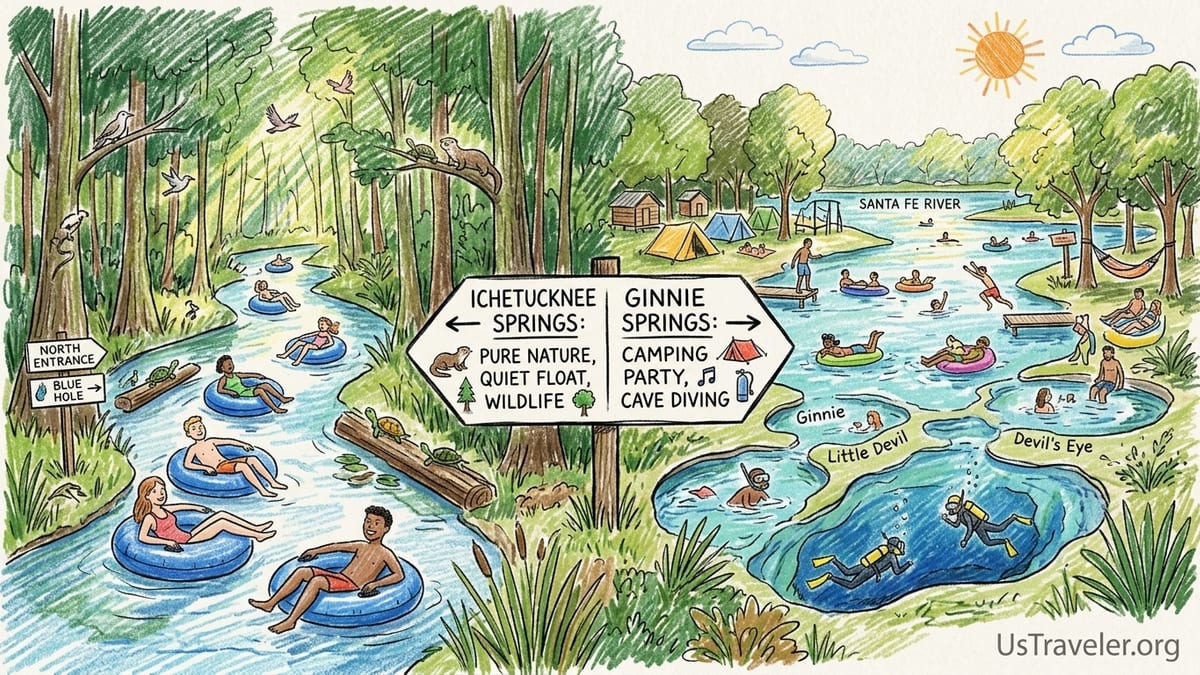
Overall Vibe: State Park Sanctuary vs Private Spring Playground
Ichetucknee Springs State Park, near Fort White, is managed by Florida State Parks and feels like a classic state park: controlled entry, clear rules, and a strong emphasis on protecting a pristine river corridor. Capacity limits on the tubing sections, prohibitions on alcohol throughout the park, and regular ranger presence result in an atmosphere that usually feels calmer and more nature focused, especially on weekday mornings or outside midsummer. Many recent visitors describe floating through shaded cypress and hardwood forest with only birds, turtles, and the occasional otter for company on early starts.
Ginnie Springs, near High Springs, operates very differently. It is a privately owned park with seven named springs feeding into the Santa Fe River, riverside camping, and fewer natural constraints on human behavior beyond the park’s own rules. Historically it has been known for big weekend crowds, music, and a party-heavy scene, particularly during college breaks and long summer weekends. Traveler reports and local discussion still mention loud campsites and late-night activity, although Ginnie has introduced a stricter alcohol and open-container policy since spring 2026 that aims to nudge the park toward a more family-friendly feel.
In practice, that means Ichetucknee usually suits travelers who prioritize wildlife, quiet, and a more curated experience, while Ginnie appeals to visitors who want maximum freedom to camp, hang out with friends by the water, and build a whole weekend around the springs. Both are beautiful, but it is the social atmosphere, not the water, that tends to be the deciding factor for most people.
If you picture your ideal spring day as drifting in near silence on cool, clear water, Ichetucknee is almost always the safer bet. If you envision a sprawling riverside campground where your group can grill, play music at your site, float multiple times a day, and wander between several springs, then Ginnie fits that brief better.
Tubing: Structured River Float vs Flexible DIY Runs
Tubing is where many visitors feel the difference most clearly. Ichetucknee’s tubing is built around a defined float down the Ichetucknee River, with designated launch and exit points managed by the park. During the main season, you typically choose between shorter and longer tube runs, with park tram shuttles and concessionaire shuttles moving people and rented tubes between the South Entrance and various launch points. The park closes the upper section once daily tuber limits are reached and requires everyone off the river by late afternoon, which helps keep the river from feeling overrun even on busy days.
At Ichetucknee, a full-length tubing trip in summer often means arriving at or near opening time, parking at the South Entrance, renting tubes if you do not bring your own, and catching the shuttle to the upper allowed launch. From there, a relaxed float with stops to swim in side pools and admire gar and turtles can take around 3 to 4 hours, depending on water level and how often you paddle. Families with younger children often opt for a mid-river launch when it is available, cutting the float to roughly 90 minutes to 2 hours and leaving time to swim at the headspring area afterward.
Ginnie Springs offers tubing on the Santa Fe River and between its internal springs, but it is much more of a do-it-yourself experience. There is no single state-managed “tube run” in the way Ichetucknee has. Instead, most visitors either launch from within Ginnie and float down to a takeout on the park’s riverfront or set up their own shuttle using two cars for a longer Santa Fe River run. The river channel near Ginnie is wide and fairly deep, so you spend more time in open sun and less tucked into a shaded canyon, which some visitors love and others find less scenic.
Practically, this means Ichetucknee wins for clearly defined, first-time-friendly tubing where logistics are mostly handled for you, while Ginnie is better for groups who already know how to run their own shuttle and want to float repeatedly over a weekend without firm limits on the number of runs, river capacity, or precise route.
Swimming, Snorkeling, and Diving: Headsprings vs Cave Systems
For swimming and casual snorkeling, both destinations offer postcard-worthy water clarity. Ichetucknee’s north entrance holds the main Ichetucknee headspring and the Blue Hole spring. The headspring area feels like a classic spring pool in the woods, with shallow shelves near shore that work well for kids and deeper water over the vent where snorkelers can hover above waving eelgrass. Blue Hole, reached by a short boardwalk trail, is deeper and more intense, with strong upwelling that experienced snorkelers and certified cave divers enjoy exploring. Water depth here can approach 40 feet with striking visibility, making it one of Florida’s more dramatic springs for underwater photography.
Ginnie Springs, by comparison, is a full spring complex. Day visitors gain access to multiple named springs such as Ginnie, Little Devil, and Devil’s Eye, along with the broader Santa Fe River. Each pool has slightly different character: some are broad, shallow bowls with sandy bottoms ideal for wading and learning to snorkel, while others sit over cave entrances where the water appears to boil up from the limestone. Because of the park’s private status, you also see more stand-up paddleboards, float toys, and even hammocks strung near the banks, which can make it feel more like a spring resort than a state park.
Divers often put Ginnie at the top of their list thanks to its famous cave systems, including the Devil’s Spring System. Certified cave divers travel from around the world to descend into the conduits here. Ginnie offers specific diver day rates and annual dive passes, and the infrastructure caters directly to the dive community with gear rental and fill stations. In contrast, Ichetucknee permits diving but in a far more limited way, and the park’s overall identity is not centered on diving. For non-diving snorkelers, both places work well, but Ginnie’s multiple pools give strong swimmers a bit more variety in a single day.
If your priority is world-class freshwater cave diving, Ginnie is the clear winner. If you want one or two striking spring bowls tied directly to a scenic river float and forest trails, Ichetucknee’s pairing of Ichetucknee headspring and Blue Hole is hard to beat.
Kayaking, Canoeing, and Time Planning
Both Ichetucknee and Ginnie can easily fill a full day, and kayakers or canoers can stretch either into a multi-day spring-hopping trip across North Central Florida. Ichetucknee’s paddling is largely focused on the Ichetucknee River itself. Outfitters at or just outside the park rent kayaks and canoes for downstream runs that often begin near the north or midpoint sections and end near the confluence with the Santa Fe River. Because the park caps tuber numbers and does not allow tubing from the north entrance, paddlers who start early often enjoy a quieter upper river with more wildlife encounters and fewer floating crowds.
On a typical high-season day, a relaxed paddle from near the north section to the south ends of the park and beyond can take 3 to 5 hours, depending on current and how far downstream you choose to exit. Adding time to swim at the headspring and walk the short trails makes Ichetucknee an easy full-day experience. Many travelers staying in nearby High Springs or Fort White also pair one Ichetucknee day with a separate day at another spring, such as Poe Springs or Gilchrist Blue Springs, rather than trying to squeeze both Ichetucknee and Ginnie into the same day.
At Ginnie, paddling is more about exploring the Santa Fe River corridor and moving between springs on your own schedule. You can put in within the park, paddle upstream or downstream along the Santa Fe, stop to swim in different pools, then return to camp or your car when ready. It is common for groups with their own kayaks or stand-up paddleboards to launch in the morning, float and paddle for a few hours, return for lunch at their campsite, then head back out for an evening session as the light softens. Because day passes typically expire at sunset, day users should watch both time and distance to avoid a long against-the-current paddle back.
As for how long to allow overall, plan at least one full day for either spring. For Ichetucknee, that usually means a morning tubing run, midday break, and afternoon swimming or hiking. For Ginnie, many people prefer at least one night of camping to enjoy the springs early and late in the day when crowds thin. A weekend at Ginnie might include two or three tube or paddle runs, multiple snorkel sessions in different springs, and unhurried time at camp.
Camping, Amenities, and Family Friendliness
This is where the contrast becomes stark. Ichetucknee Springs State Park does not offer on-site camping. Regulations focus the park strictly on daytime use, and everyone must exit by closing time. Travelers who want to camp nearby often choose O’Leno State Park about 18 miles away, or private campgrounds and RV parks around Fort White and High Springs. This separation keeps Ichetucknee’s spring and river corridor quieter in the evenings and avoids late-night noise around the water.
Ginnie Springs, in contrast, is built around camping. Primitive campsites spread along the river and under the trees, supplemented by a number of sites with electric and water hookups that cost extra. Campers can check in during gate or store hours, then access the springs almost around the clock, with different quiet-hour policies depending on location and season. For groups of friends or dive clubs, the ability to camp right by the water is a major advantage, and camping demand is especially high on holiday weekends.
For families with young children, this difference matters. At Ichetucknee, day use, alcohol bans, and controlled capacity tend to create a consistently family-oriented environment, especially outside the busiest summer weekends. Parents often appreciate seeing lifeguards or rangers in key areas, clear signage about water depth, and rules that discourage amplified music and disruptive behavior. Picnic areas and basic concessions round out the amenities without pushing the park toward a resort feel.
Ginnie’s atmosphere is more variable. On quiet winter weekdays, the springs can feel surprisingly tranquil and family-friendly, with children snorkeling in the shallows and divers drifting below. On peak summer weekends or during college-heavy periods, traveler reports still describe loud music, big groups, and a party-forward scene in some camping zones, even as new alcohol restrictions begin to reshape behavior. Families who choose Ginnie generally do best by visiting on off-peak weekdays, selecting campsites farther from the busiest riverfront zones, and arriving early to scope out a comfortable base.
Admission, Reservations, and Rules You Should Know
Budget and rules are often the tie-breakers between Ichetucknee and Ginnie. As a Florida State Park, Ichetucknee charges a relatively modest per-vehicle entry fee for day use, which makes it more economical for families or groups sharing a car. Tube rentals, tram transport, and paddling gear add extra costs, but the base gate fee typically stays well below the per-person rates charged by Ginnie. On busy summer days, the park often fills to capacity, especially for the tubing sections, so arriving early is essential if tubing is your main goal.
Some Ichetucknee services, such as paddling rentals or shuttles offered by the park’s concessionaire, can be reserved in advance, though gate entry is still first-come, first-served and not included in those reservations. The rules are straightforward: no alcohol anywhere in the park or on the river, no disposable containers in the water, and everyone off the river by early evening. Glass is prohibited, and coolers are subject to inspection. The park also limits where tubing can originate; for example, tubing from the north entrance is not permitted, reinforcing the balance between recreation and conservation.
Ginnie Springs has a very different pricing structure. Day admission works on a per-person basis, with adults paying a higher fee than minors and weekend or peak-season rates often sitting at the upper end of what you find among Florida springs. Separate camping fees are charged per person per night, with additional charges for electric and water hookups at designated sites. The result is that a family of four can pay significantly more for a day and night at Ginnie than for a day at Ichetucknee plus camping at a nearby state park. In exchange, you receive access to seven springs, extended hours for campers, and the flexibility that comes with a private recreation area.
Rules at Ginnie still permit alcohol on the property, but as of 2026 the park requires that open containers remain within designated campsite areas rather than roaming freely between springs and riverbanks. Glass is prohibited, quiet hours are posted, and there are specific regulations for divers, including registration and gear requirements. Day passes typically stop being issued mid-afternoon, and day visitors must leave by sunset, while campers can remain within posted operating guidelines. Travelers sensitive to noise or uncomfortable with party culture should avoid peak holiday weekends, when large crowds and high-energy behavior are still common despite evolving policies.
Crowds, Seasons, and When to Go
North Central Florida spring country is highly seasonal. Water temperatures stay near 72 degrees year-round, but air temperature, rainfall, and school calendars dramatically change how each park feels. At Ichetucknee, tubing season peaks from late spring into early fall, with Memorial Day through mid-August typically seeing the heaviest crowds. On sunny Saturdays in July, the park often hits capacity for tubers well before midday, and lines for shuttle trams and rentals can form. Weekdays, especially Tuesday through Thursday, are notably calmer, and winter or early spring visits offer quieter hiking and headspring swimming for those willing to brave cooler air.
Ginnie Springs operates year-round with a consistent flow of divers, campers, and locals, but its crowd profile shifts. Summer weekends and three-day holidays have a reputation for drawing very large, sometimes raucous crowds, a pattern that came under intense scrutiny after high-profile incidents during past Memorial Day weekends. In cooler months, and particularly on midweek days, the same park can feel like a relaxed base for divers and families, with easy parking, open campsites, and only a modest number of tubers on the Santa Fe River.
For travelers trying to choose between the two, timing is crucial. If your only available time is a Saturday in July and you dislike crowds, the quieter option is often to arrive at Ichetucknee at opening time, float the river once before late morning, then shift to headspring swimming or regional exploring once capacity and heat peak. If you have flexibility, visiting either spring on a weekday outside major holidays dramatically improves the experience. In shoulder seasons such as April or late September, Ginnie may offer pleasant camping and manageable crowds, while Ichetucknee balances comfortable air temperatures with water that still feels refreshing rather than shockingly cool.
Day-of-week can matter even more than time of year at Ginnie. Many repeat visitors who enjoy the springs but dislike the party scene now plan day trips on Monday through Thursday, leaving Friday and Saturday evenings to others. Ichetucknee, as a state park with earlier closing times and no camping, moderates its weekends somewhat by default, but its river corridor can still feel busy at high noon in midsummer.
The Takeaway: Which Spring Is Better for You?
Choosing between Ichetucknee Springs and Ginnie Springs starts with being honest about the type of experience you want. If your priorities are clear water, wildlife, defined tube runs, and a reliably family-friendly environment with strong conservation rules, Ichetucknee is usually the better choice. It offers a classic, slow river float under a shady canopy, capped daily to protect the ecosystem, and bookended by beautiful headsprings for swimming and snorkeling. It is also kinder to the budget, especially for families or groups traveling in one vehicle.
Ginnie Springs, on the other hand, is ideal for travelers who see the springs as the centerpiece of a social weekend. If you want to camp right on the river, float multiple times a day without worrying about state-imposed capacity limits, and explore a cluster of different spring pools and cave systems, Ginnie excels. Divers and experienced snorkelers often prefer Ginnie’s variety and depth, and groups of friends appreciate the freedom to build a multi-day basecamp around the water, accepting higher per-person fees and a livelier atmosphere as part of the package.
For many North Central Florida visitors, the perfect approach is not either-or but sequencing: spend a weekday at Ichetucknee for tubing and headspring swimming, then use another day or overnight at Ginnie for camping, paddling the Santa Fe, and sampling different springs. If you genuinely must choose just one, err toward Ichetucknee when traveling with young kids, older relatives, or anyone sensitive to noise and crowds, and lean toward Ginnie if your group consists of adults who value nighttime campfires, cave diving, and a more flexible, private-park style experience.
Whichever you choose, plan ahead, arrive early, and build your day around the rhythms of Florida’s spring country: cool morning fog rising off 72-degree water, bright midday sun that makes the sand glow white under the surface, and late afternoon quiet as most visitors head home. With realistic expectations and the right timing, both Ichetucknee and Ginnie can deliver an unforgettable North Central Florida spring adventure.
FAQ
Q1. Which spring is better for first-time tubers, Ichetucknee or Ginnie?
Ichetucknee is generally better for first-time tubers because it has clearly defined tube runs, park-managed shuttles, and staff used to walking visitors through the process step by step. Ginnie’s tubing is more flexible but requires a bit more self-planning, especially if you want longer floats on the Santa Fe River.
Q2. Is Ginnie Springs safe and suitable for young children?
Ginnie can be suitable for young children on quieter weekdays or in cooler months, especially if you choose campsites away from busy riverfront zones and stay close when they are in the water. On peak summer weekends, the combination of crowds, noise, and a lingering party culture makes many families with small kids prefer Ichetucknee or other state parks instead.
Q3. Can I camp at Ichetucknee Springs State Park?
No, there is no camping inside Ichetucknee Springs State Park. Travelers who want to camp nearby usually book sites at O’Leno State Park or private campgrounds and RV parks in the Fort White and High Springs area, then drive into Ichetucknee for daytime tubing and swimming.
Q4. Do I need reservations to visit Ichetucknee or Ginnie?
For Ichetucknee, regular day entry is first-come, first-served, and the park can reach capacity on busy days, so early arrival is more important than reservations. Some tubing and paddling services can be reserved through the park’s concessionaire. At Ginnie, day admission typically does not require reservations, but camping on busy weekends and holidays often fills up, so booking in advance is strongly recommended.
Q5. How much time should I plan for tubing at each spring?
At Ichetucknee, plan roughly 3 to 4 hours for a full-length float during tubing season, including shuttle time, or about 90 minutes to 2 hours for a shorter run. At Ginnie, a basic float on the Santa Fe can be done in an hour or two, but many visitors plan a full day so they can float more than once and still have time for swimming and snorkeling in the individual spring pools.
Q6. Which spring is better for snorkeling and diving?
For serious diving, especially cave diving, Ginnie Springs is the clear favorite, with multiple spring entrances, dedicated dive services, and well-known cave systems. Snorkelers who want variety in one place also tend to prefer Ginnie. Ichetucknee still offers excellent snorkeling at the headspring and Blue Hole, but its overall focus remains on tubing and gentle river recreation rather than advanced diving.
Q7. How do admission costs compare between Ichetucknee and Ginnie?
Ichetucknee, as a state park, typically charges a modest per-vehicle fee, which keeps costs relatively low for families traveling together. Tube and tram rentals are extra but still moderate. Ginnie charges per person for day admission and per person per night for camping, plus extra for electric and water hookups, so total costs for a group can be significantly higher, especially during peak season.
Q8. What are the alcohol rules at each spring?
Ichetucknee Springs State Park bans alcohol throughout the park and on the river, and rangers and concession staff enforce that rule. Ginnie Springs allows alcohol but now restricts open containers to designated campsite areas and prohibits glass; alcohol is not meant to circulate freely at the springs and riverfront the way it once commonly did.
Q9. When is the best time of year to visit each spring?
Late spring and early fall are often ideal, with warm air temperatures and thinner crowds than peak summer. For the quietest experiences, both springs are best on weekdays outside school holidays. Summer brings comfortable water-to-air temperature contrast for long swims but also higher humidity, more crowds, and capacity limits at Ichetucknee.
Q10. If I only have one day, is it realistic to visit both Ichetucknee and Ginnie?
It is technically possible, since they are about an hour apart by car, but most travelers find it rushed. A more realistic plan for one day is to dedicate your time to a full experience at one spring, then use a second day for the other or for nearby alternatives such as Gilchrist Blue or Poe Springs.