

North Central Florida looks compact on the map, but picking the wrong home base can mean long days in the car instead of on the water or trail. Gainesville, High Springs, Ocala, Cedar Key and Suwannee River cabins each offer very different vibes and access to springs, horse country, Gulf fishing and small-town Old Florida. This guide compares them side by side so you can answer the key booking question: which town should you actually sleep in for the trip you want?
How to Choose Your Base in North Central Florida
The first decision is less about a specific hotel and more about what you want your days to feel like. Do you picture walking to restaurants after a game at the University of Florida, rolling out of a cabin straight onto the Suwannee River at sunrise, or ending a day of paddling with oysters at a Gulf-front tiki bar in Cedar Key? Each base here shines for a different style of trip.
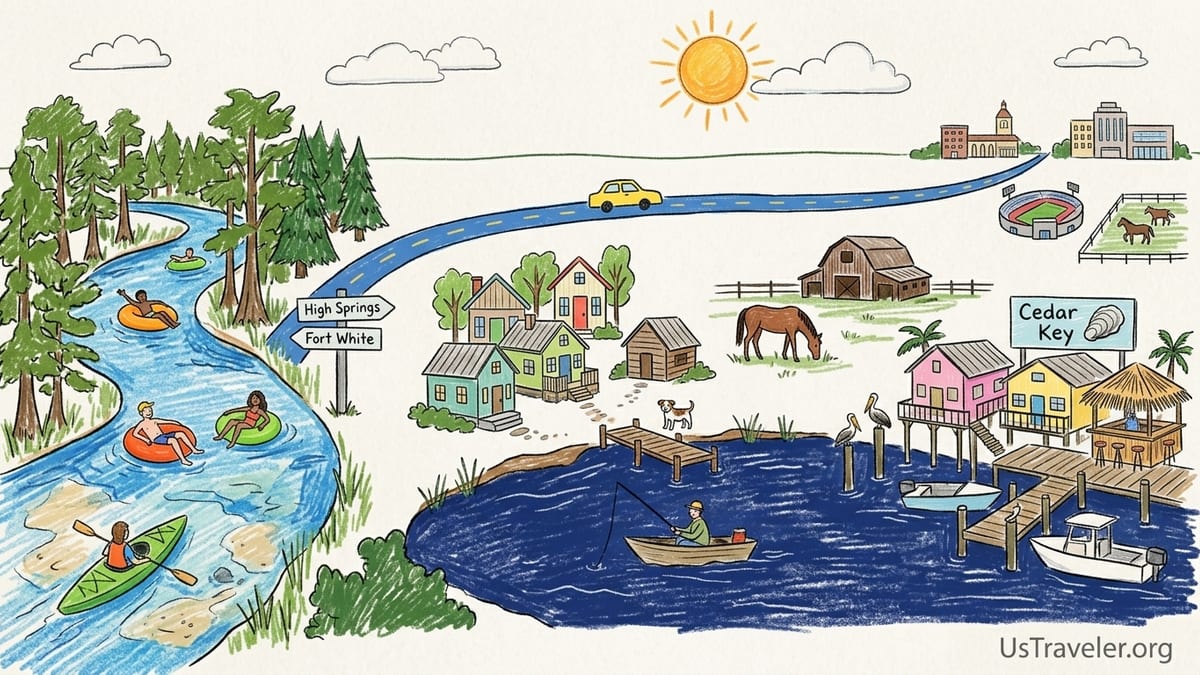
Roughly speaking, Gainesville is the hub for food, bars and central-road access to the region. High Springs and nearby Fort White are for people who want multiple crystal-clear springs within a 20 to 40 minute drive in almost every direction. Ocala works best if your priorities are horses, the World Equestrian Center and Silver Springs State Park. Cedar Key is the Gulf escape, a tiny fishing village with Old Florida cottages and walkable waterfront. Suwannee-area cabins along the river are ideal for unplugged outdoor trips, fishing and paddling, with long quiet nights and dark skies.
Distances matter more than they look. Gainesville to High Springs is about 25 miles, usually 30 to 35 minutes. Gainesville to Ocala is roughly 40 miles, about 45 minutes by interstate. Gainesville to Cedar Key is about 60 miles and often 75 to 90 minutes on two-lane roads. Many Suwannee cabins sit another 60 to 75 minutes west of I-75. If you want to hit a different spring every day and still have time to linger, building your itinerary around the right base will save you hours over a long weekend.
Below, you will find what each base is best for, realistic driving times to marquee attractions, and concrete examples of where to stay in each price band. Use it to decide not just what to do, but where to sleep each night.
Gainesville: Best for Restaurants, Nightlife and Central Access
Gainesville works best if you want a mix of outdoors by day and a real dining scene at night. As the home of the University of Florida, it has chain hotels, boutique options and plenty of vacation rentals. On a normal weeknight, midrange hotels such as national brands near Butler Plaza or along Archer Road can often be found in a moderate price range per night, with free parking and breakfast. On football weekends or graduation, rates can spike to several times that, and many properties sell out months in advance, so check the UF events calendar before you lock in dates.
Downtown Gainesville and the UF campus area give you the most walkable choices once you park the car. Boutique properties and remodeled older motels appeal to travelers who want local character and the ability to stroll to coffee, breweries and live music. National chains just off I-75 are better if you are simply overnighting on a road trip or want quick driving access to the springs.
From Gainesville, most major springs are a reasonable day trip. Ginnie Springs, one of the best-known private spring parks for tubing and diving, is typically 40 to 45 minutes northwest. Ichetucknee Springs State Park is about one hour away near Fort White. The Santa Fe River and its cluster of springs around High Springs are 30 to 45 minutes. To the south, Silver Springs State Park and the glass-bottom boat tours near Ocala are usually about an hour’s drive. Cedar Key and its Gulf fishing are about 75 to 90 minutes to the southwest, doable as a long day trip if you leave early.
If you are a first-time visitor who wants to sample “a bit of everything” in three or four days, Gainesville makes an efficient base. One realistic pattern is a day on the Santa Fe River, a day at Silver Springs or Devil’s Den near Ocala, and a final day exploring Paynes Prairie Preserve or the UF campus, with dinners at different local restaurants each night. The downside is that you will drive more, and you will not fall asleep to river frogs or Gulf waves the way you might in High Springs or Cedar Key.
High Springs & Fort White: Best for Springs-Hopping and Camping
High Springs and Fort White are where you stay if the springs themselves are your main event. Within roughly a 30 to 45 minute radius you can reach Ginnie Springs, Gilchrist Blue Springs, Poe Springs, Rum Island, Ichetucknee Springs and several smaller county and private parks. For many travelers, that means paddling or tubing during the day, grabbing tacos or barbecue in High Springs, and then turning in early to rest for another water day.
Lodging here skews small-scale and outdoorsy. You will find a few simple motels in High Springs, a scattering of vacation rentals on quiet residential streets, and campgrounds that range from primitive tent sites under the pines to full-hookup RV parks. Popular spring parks such as Ginnie Springs have on-site camping that can feel like a festival atmosphere on summer weekends, with music and large groups. Other parks, including state and county facilities, offer more low-key campgrounds or nearby cabins run by small operators. Many visitors book cabins or trailers on platforms such as Vrbo and similar sites, which can put you a 10 or 15 minute drive from multiple springs.
Fort White, just south of High Springs, is closest to Ichetucknee Springs State Park. Rental houses there often tout how quickly you can drive to the north or south entrance of the park for tubing runs. Expect early mornings and early nights: this is not a late-bar scene. A family might rent a two-bedroom house with a screened porch and grill for a moderate nightly rate, cheaper than most Gainesville hotels on a busy weekend, and cook breakfast before heading to the water.
Camping is a big draw in this corridor. At popular spring parks, tent sites are often just a short walk to a swim area or river put-in. In quieter county parks, you might wake to fog on the river and birds in the cypress trees. Many campgrounds near High Springs advertise reasonable nightly rates, with basic bathhouses and sometimes camp stores for ice and firewood. If your trip is centered on snorkeling, paddling and spending almost all of your waking hours around turquoise water, High Springs or Fort White beats Gainesville because you spend more time in the water and less in transit.
Ocala: Best for Horse Country, Silver Springs and Day Trips East
Ocala is the logical base if your trip revolves around horses, Silver Springs and the Ocala National Forest. The city sits among hundreds of thoroughbred farms and training centers and has branded itself as the Horse Capital of the World, with large equestrian complexes and farm tours. The World Equestrian Center west of town has become a destination in its own right, with an upscale hotel on-site that appeals to show-goers and travelers who like polished amenities and on-property restaurants.
In the midrange, Ocala has a dense cluster of national-brand hotels along Interstate 75 and State Road 200. Many offer outdoor pools, hot breakfasts and pet-friendly rooms, at prices that are often more stable than Gainesville during big university events. Travelers looking for more local character can find bed-and-breakfasts in older neighborhoods and vacation rentals on small horse properties or wooded lots. For a couple planning a long weekend, a renovated farmhouse on a few acres just outside town can cost roughly the same per night as an in-town chain hotel, but comes with porch swings and pasture views.
From central Ocala, Silver Springs State Park is typically a 15 to 25 minute drive east. Juniper Springs, Alexander Springs and Salt Springs in the Ocala National Forest are usually within 45 to 75 minutes, depending on which side of town you stay. The Gulf at Crystal River and Homosassa is about an hour to the southwest for manatee encounters in winter. Gainesville is roughly 45 minutes north, making it realistic to do a day trip for a UF game or museum visit while keeping your base in quieter Ocala.
Ocala camping tends to be either equestrian focused or national-forest rustic. The national forest campgrounds near springs like Juniper and Salt Springs provide easy access to swimming areas, with simple facilities and shady sites. Private RV resorts closer to I-75 cater to snowbirds and equestrian visitors, often offering full hookups, pools and social activities. If your ideal trip is riding in the morning, a glass-bottom boat ride at Silver Springs midday and a steakhouse dinner in a medium-size city, Ocala will fit better than High Springs or Cedar Key.
Cedar Key: Best for Gulf Fishing and Old Florida Atmosphere
Cedar Key feels like stepping back into a slower era of Florida, with clapboard cottages, low-rise condos and working docks instead of high-rise resorts. The village sits about 60 miles southwest of Gainesville on Florida’s Nature Coast and remains small, walkable and relaxed. Here, a “busy” day is paddling the back bay, browsing a few artist studios and lining up for seafood at sunset before strolling back to your cottage under dark skies.
Lodging on the island runs from restored historic inns to pastel-colored motels, waterfront condo complexes and freestanding cottages. Properties such as century-old inns with upstairs rooms, small bed-and-breakfasts in vintage homes and tiny fish-camp style resorts on the back bay appeal to travelers looking for Old Florida charm more than polished luxury. Vacation rental managers and local agencies list one- and two-bedroom condos in complexes with pools and docks, often in the midrange per night depending on season, with higher rates on winter and holiday weekends. Many units have full kitchens and balconies facing the Gulf, which is handy because restaurant hours can run limited on slower weekdays.
Fishing and paddling drive many booking decisions here. Some waterfront cottages sit on canals or bays with shared docks, where you can launch a kayak at sunrise or clean a catch at a fish-cleaning station in the afternoon. Several small marinas and tour operators offer inshore fishing trips for redfish and trout, shelling cruises and island-hopping tours. Anglers often choose rentals on the outer edges of town to be closer to open water, while couples who prioritize walking to restaurants and shops may favor condos near the main waterfront street.
As a base for regional exploring, Cedar Key works if you are content to stay mostly on the island or do an occasional inland excursion. It is about 75 to 90 minutes by car to Gainesville and roughly an hour and a half to some of the larger springs near Chiefland and Fanning Springs. That makes it a long day trip if you want to be on the water by 9 a.m. and back in time for dinner. For many travelers, Cedar Key is best as a two or three night Gulf-focused stay, either at the end of a week of springs-hopping or as a quiet standalone escape.
Suwannee River Cabins: Best for Remote Outdoor Trips and Quiet Nights
The Suwannee River corridor, especially from Branford down toward Old Town and the tiny community of Suwannee at the Gulf, is for travelers who want to trade nightlife for solitude. Cabins and stilt houses line stretches of the river and nearby creeks, often reached by narrow paved roads through pine and oak forest. Many of these rentals are simple, family-owned places that emphasize screened porches, boat docks and firepits over designer finishes.
Expect to find a mix of small cabin clusters in or near county parks, individual stilt houses on the river and a few larger lodges that cater to fishing groups. Some state parks along the Suwannee, such as Lafayette Blue Springs and others in the region, offer modest cabin loops where units are raised on stilts with wooden porches overlooking the forest or river floodplain. Nightly rates here can be pleasantly moderate compared with beach-town prices, but cabin availability is limited and often booked early for spring and fall weekends.
From a Suwannee base near Branford or Old Town, many springs and river runs are within a 20 to 40 minute drive. You might paddle at Troy Springs one morning, explore a limestone bridge and boardwalk at another park in the afternoon, and then sit on your own dock to watch the river current drift by at dusk. The Gulf fishing town of Suwannee at the river’s mouth is farther, typically 45 minutes to an hour from inland cabins but offers boat ramps, simple fish camps and charter captains who know the coastal shallows well.
The tradeoff is remoteness. Grocery stores are small and scattered, cell service can be patchy and restaurant options are limited to a few local favorites, some of which keep irregular hours. Camping is available at a subset of parks, usually in quiet campgrounds under tall trees, but these sites book up quickly in peak seasons. If your perfect trip is sunrise coffee on a foggy river, long paddling days and early nights by a fire, Suwannee cabins or nearby parks are a better fit than staying in a town like Gainesville or Ocala.
Comparing Lodging Types and Driving Distances by Base
To choose a base realistically, think about both lodging style and how much time you are willing to spend driving each day. Hotels dominate Gainesville and Ocala, with dozens of national brands near I-75 offering familiar amenities. In those cities, you can often decide between budget motels along the highway, midrange properties with pools and fitness rooms, and a smaller number of higher-end or boutique options closer to downtown. Vacation rentals and B&Bs fill in the gaps for travelers who want kitchens, extra bedrooms or historic character.
Cabins, campgrounds and small-scale rentals are more common in High Springs, Cedar Key and the Suwannee corridor. Around High Springs, riverside campgrounds and private spring parks cater to tent campers, RVers and groups, while small houses and mobile homes on a few wooded acres serve as quiet rental bases. Cedar Key’s cottages and waterfront condos blur the line between cabin and small hotel, with units that might share a pier or pool but still feel like individual retreats. Along the Suwannee, stilt cabins at state parks or private fish camps are often stand-alone, with full kitchens and porches that double as your living room.
In practical terms, base choice shapes which attractions you can reach without burning half a day. From Gainesville, expect 30 to 45 minute drives to most Santa Fe River springs, about an hour to Ichetucknee and Silver Springs, and around 75 to 90 minutes to Cedar Key. From High Springs, Ginnie Springs, Gilchrist Blue and other Santa Fe River springs can be within 10 to 25 minutes, Ichetucknee about 30 to 40 minutes and Gainesville roughly 35 minutes. From Ocala, Silver Springs is 15 to 25 minutes, forest springs about 45 to 75 minutes and Gainesville about 45 minutes.
Cedar Key sits about 45 minutes to an hour from nearest inland towns like Chiefland and 75 to 90 minutes from Gainesville. The Suwannee cabin belt around Branford and Old Town usually lies 45 to 75 minutes west of I-75, depending on your exact turnoff, with many springs and river parks within a 20 to 40 minute local drive. If you plan to explore multiple corners of the region in one week, consider a split stay: three nights in High Springs or Gainesville for springs and culture, then two or three nights in Cedar Key or on the Suwannee for a slower finale.
Which Town Should You Sleep In? Trip Scenarios
If your priority is eating well every night and having options for bars, coffee and live music without driving, stay in Gainesville. Book a downtown or campus-adjacent hotel or apartment, then plan day trips to nearby springs and parks. This works especially well for couples or small groups on a long weekend who want to spend each evening trying a different restaurant and do not mind 30 to 60 minute drives each morning.
If you are traveling specifically for springs and want to minimize driving, base in High Springs or Fort White. Reserve a cabin, simple motel or vacation rental within 20 minutes of the Santa Fe River, and plan your days around different spring parks. Families and groups who plan to cook, go to bed early and wake up with the sun will get more from their trip here than in a city hotel. Camping right at a spring park is ideal if you can get a reservation and like to walk from your tent to the water.
If horses and Silver Springs are the main draw, choose Ocala. Pick a hotel near I-75 and State Road 200 if you want easy driving access and chain-restaurant convenience, or splurge on an equestrian-themed resort if you plan to attend events at the World Equestrian Center. This base also works for travelers who like a mid-size city feel, with more shopping and services than High Springs or Cedar Key, and who may mix hiking and paddling in the national forest with dinners out.
If you picture seafood platters on a deck over the Gulf, golf carts puttering past wooden cottages and pelicans on pilings, stay in Cedar Key. Book a waterfront condo, small inn or cottage cluster and plan to spend most of your time on the water or simply wandering the island. Use Cedar Key as your base if you care more about Gulf views and Old Florida atmosphere than reaching multiple springs. You can still do one inland day trip, but backtracking daily to the springs from here is tiring.
If your dream is a quiet cabin with a dock on a tannin-dark river, where you can fish at dawn and listen to owls at night, aim for Suwannee River cabins. Choose this base if you are comfortable with limited dining choices and longer drives to big stores, and if you plan to spend most of your time paddling, fishing or relaxing on the porch. This suits anglers, paddlers and anyone who wants to truly unplug more than families who need playgrounds and easy restaurant options.
The Takeaway
North Central Florida rewards travelers who match their base to their priorities. Gainesville is your choice for restaurants, nightlife and central access to a little bit of everything. High Springs and Fort White are the practical bases for serious springs-hopping, with camping and cabins close to the water. Ocala serves horse lovers and those who want easy access to Silver Springs and the national forest. Cedar Key is the Old Florida Gulf village for fishing, seafood and sunsets. Suwannee cabins give you quiet, river-centered days far from crowds and traffic.
When you look at maps and booking sites, ask yourself how you actually want to spend each day. Count the driving minutes between your bed and the first place you want to be each morning. Think about whether you want to walk to dinner or grill on a porch. With those answers in mind, the right base often becomes obvious, and your North Central Florida trip will feel like it flows instead of fights against the region’s long, quiet roads.
FAQ
Q1. If I want to visit both springs and Cedar Key in one trip, where should I stay?
Staying first in High Springs or Gainesville for two or three nights, then shifting to Cedar Key for a Gulf-focused finale, keeps daily driving manageable and lets you enjoy both fresh springs and coastal sunsets.
Q2. Is Gainesville too far from the springs for a short weekend?
No, for a two- or three-night trip you can comfortably reach Ginnie Springs, the Santa Fe River and even Ichetucknee or Silver Springs as day trips from Gainesville, but you will spend 30 to 60 minutes in the car each way.
Q3. Are High Springs and Fort White better than Gainesville for families with kids?
They can be, if your kids mostly want to swim and tube. Being within 10 to 25 minutes of multiple springs reduces car time and makes it easier to return to your rental for naps or early dinners.
Q4. Should I stay in Ocala or Gainesville if I only care about Silver Springs?
Ocala is closer, with typical drives of 15 to 25 minutes to Silver Springs State Park, while from Gainesville you are usually looking at roughly an hour each way.
Q5. Is Cedar Key a good base for visiting several different springs?
Not really. Cedar Key shines as a Gulf and Old Florida destination. Most major springs are at least an hour to an hour and a half away, so it works better as a standalone coastal stay or as part of a split trip.
Q6. How far are Suwannee River cabins from basic services like groceries and gas?
It depends on the exact cabin, but many are 15 to 30 minutes from the nearest small town with a supermarket and gas station, so most visitors stock up on groceries on the way in and plan fewer restaurant meals.
Q7. Can I camp right at the springs, or do I need to stay in town?
Some private spring parks and several state or county parks near High Springs, Ocala and the Suwannee corridor offer on-site campgrounds, but sites are limited and popular weekends often book up months ahead.
Q8. Which base is best if I am traveling without a car?
Gainesville is the most practical choice without a car, since you can use rideshares locally and walk to restaurants, with guided tours or shuttles available for some springs and paddling trips.
Q9. Are vacation rentals or hotels cheaper overall in this region?
For couples or solo travelers, standard hotels in Gainesville or Ocala can be more economical, while families or groups often save by splitting the cost of a cabin or house in High Springs, Cedar Key or along the Suwannee.
Q10. Is it worth doing a split stay instead of one base for the whole week?
Yes, if you have five or more nights, a split between an inland base like High Springs or Ocala and a coastal or river base like Cedar Key or the Suwannee often delivers a richer, less repetitive trip.