


Florida can feel overwhelming when you are trying to decide where to stay. Theme parks in Orlando, nightlife in Miami, island escapes in the Florida Keys, sugar-sand Gulf beaches and historic St. Augustine all compete for your time and budget. This guide walks you through the main regions visitors consider, how to get there, and what staying there actually feels like day to day so you can choose the right destination before you ever click “book” on a hotel or vacation rental.
Start Here: How To Match Florida Regions To Your Trip Style
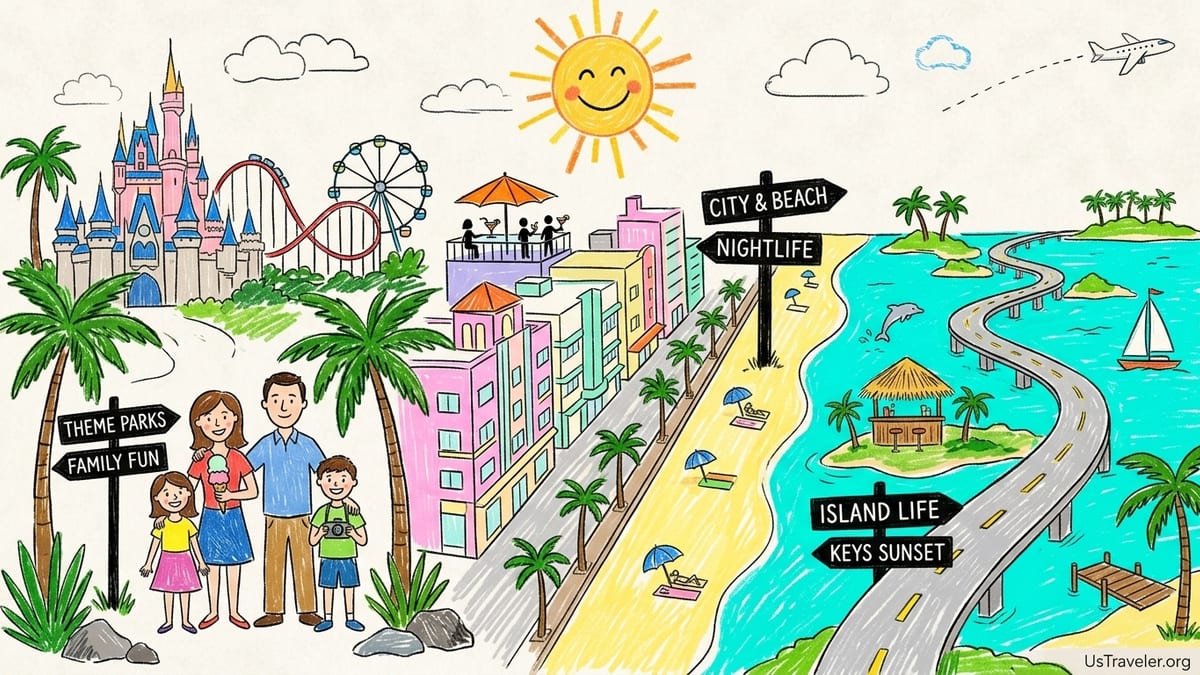
Before you compare specific hotels, decide what kind of Florida trip you want. If your children have been counting sleeps until they see Cinderella Castle or ride Hagrid’s Magical Creatures Motorbike Adventure, Orlando is the logical base. Travelers who picture Art Deco streets, rooftop cocktails and a quick walk from city hotels to a sandy beach usually gravitate toward Miami. If you want to unplug on islands with turquoise water and tiki bars, the Florida Keys may be a better fit. Those chasing classic white-sand, shallow-surf beaches often end up on the Gulf Coast in places like Clearwater Beach, Siesta Key or Destin.
Think practically too. If you are flying in for a long weekend, proximity to a major airport like Orlando International (MCO) or Miami International (MIA) can save hours. If you prefer not to rent a car, staying in central Miami Beach or Orlando’s International Drive gives you rideshare and shuttle options, while areas like Destin’s 30A or the middle Keys are much more car dependent. Your answers to a few questions about budget, driving tolerance and whether nightlife or kid-friendly quiet matters more will quickly narrow down the map.
For example, a family of four with school-age kids and a five-night budget of around 250 to 350 dollars per night will usually get the best value with a condo near Orlando’s theme parks, a vacation rental along Destin’s beaches or a mid-range hotel in Clearwater Beach. Couples planning a three-night splurge with a flexible budget may instead focus on oceanfront resorts in Naples or boutique hotels in Key West’s Old Town. Once you have picked the region that fits, then you can decide whether a big resort, vacation rental, or smaller inn best matches how you like to travel.
The sections below compare the major Florida bases most visitors consider: Orlando for theme parks, Miami for city and beach, the Florida Keys for island life, Clearwater and Siesta Key for Gulf beaches, Naples and Marco Island for resort stays, Destin and 30A for family beach vacations, and St. Augustine for history. For each, you will find airport options, whether you really need a rental car, what the beaches and nightlife are like, and what realistic day trips look like.
Orlando: Best For Theme Parks And All‑Inclusive Family Fun
Orlando is built around theme parks and family attractions, and staying here makes sense if visiting Walt Disney World, Universal Orlando, or SeaWorld is your top priority. Orlando International Airport (MCO) sits roughly a 20 to 30 minute drive from the main tourist corridor near Disney and Universal in normal traffic, so you can often land mid-morning and be checking into a hotel by lunchtime. Many hotels along International Drive and around Lake Buena Vista offer free or low-cost shuttles to the parks, and rideshare trips between MCO and the resort areas are common.
A rental car is helpful but not essential in Orlando. If you stay at an on-site Disney or Universal resort, you can move between parks, hotels and dining areas on internal transportation and use rideshares or taxis for the occasional off-property dinner. Families trying to keep costs in check often rent a car so they can stay in a vacation home community a 15 to 25 minute drive from the parks, then drive themselves each day. Parking fees at major parks run to a significant daily cost, so factor that into your decision. If you plan several days at different parks plus outlet shopping and a day trip to places like Kennedy Space Center, a car quickly becomes worthwhile.
Orlando does not have a beach, so if time is short and you want ocean swimming, this is not your best base. However, you can use Orlando as a hub for day trips: Cocoa Beach on the Atlantic coast is roughly an hour’s drive in light traffic, and Clearwater Beach on the Gulf is typically about two hours away. These are long but doable day trips if you just want one taste of the ocean. Nightlife in Orlando centers on Disney Springs, Universal CityWalk and bar and restaurant clusters along International Drive. You will find family-oriented evening entertainment rather than clubs that run until dawn.
Families are Orlando’s core market, so almost everything is set up with kids in mind: character breakfasts in resort hotels, large family suites and condo-style properties with kitchens, pool complexes with waterslides and lazy rivers, and mini golf or go-kart parks along US-192 and International Drive. Couples without kids can still enjoy the high-end resorts, spa days and fine dining at places like Walt Disney World’s Grand Floridian or Four Seasons Resort Orlando, but if you dislike crowds or school-holiday energy, consider another base outside peak times.
Miami: Best For City Energy, Culture And Beach In One Place
Miami works well for travelers who want an urban break that still includes serious beach time. Miami International Airport (MIA) is the main gateway, with frequent domestic and international flights and a direct public transport connection into the city. Depending on traffic, the drive from MIA to Miami Beach usually takes around 20 to 40 minutes. Fort Lauderdale-Hollywood International (FLL) is another option for price-conscious travelers, but reaching Miami Beach from FLL can easily add an extra 45 minutes or more to your transfer when traffic is heavy.
If you stay in South Beach, Mid-Beach or Brickell, you can manage comfortably without a rental car. These areas have dense clusters of hotels, restaurants, and nightlife, and you can rely on rideshares, taxis, and local trolleys. Many visitors book oceanfront hotels on Collins Avenue in Miami Beach so they can wake up, walk directly onto the sand, and then head to dinner or a rooftop bar on foot in the evening. A compact option is a boutique hotel in the Art Deco district in South Beach, where everything from coffee to clubs is within a short walk.
Miami’s nightlife is among the liveliest in Florida. Upscale clubs in South Beach, bars in Wynwood and rooftop lounges in Brickell stay busy well into the early morning. If that is part of your plan, look for hotels that specifically mention good soundproofing and avoid staying directly above busy bars if you are a light sleeper. Families often choose quieter sections of Miami Beach north of 41st Street or stay in neighborhoods like Coral Gables or Key Biscayne, where the atmosphere skews more residential and beaches feel calmer.
Day trips from a Miami base are varied. With a rental car, you can reach Everglades airboat tours in about an hour from many city hotels, or drive south along US-1 to Key Largo for snorkeling or a taste of the Keys in roughly 1.5 hours if traffic is smooth. Some visitors with longer trips split their stay between Miami Beach and a few nights in the Keys or Naples to add a different kind of coastline. If you do not rent a car, organized tours to the Everglades run from Miami Beach and downtown, and you can reach neighborhoods like Little Havana, the Design District and Coconut Grove by rideshare.
Florida Keys: Best For Island Stays And Laid‑Back Escapes
The Florida Keys offer a very different feel from the rest of the state. They stretch for more than 100 miles from Key Largo to Key West along the Overseas Highway, and most visitors arrive by flying into Miami or Fort Lauderdale and then driving south. In light traffic it takes around 3.5 to 4 hours to drive from Miami to Key West, although congestion, especially on weekends and holidays, can add time. Key West International Airport (EYW) does have direct flights from several U.S. cities, so if you prefer to avoid the long drive and can accept higher airfares, it is possible to fly straight into the end of the island chain.
Having a rental car is highly recommended in the Keys unless you plan to stay entirely within walkable Old Town Key West. The islands are spread out, with small towns like Key Largo, Islamorada, Marathon and Big Pine Key separated by long stretches of road and bridges. Many travelers base in Islamorada or Marathon for several nights and then add two or three nights in Key West, using the car for snorkeling trips, state-park beaches, and casual seafood restaurants set beside marinas. Parking is straightforward at most hotels and vacation rentals outside of Old Town Key West, where street parking can be tight.
Beaches in the Keys are smaller and more sheltered than the wide, wave-swept beaches of the Atlantic or Gulf coasts. People tend to come here more for boating, diving, snorkeling and fishing than for long beach days. Families who imagine running on deep sand may be happier in Clearwater, Destin, or Naples, but families who enjoy boat trips, shallow coves and wildlife viewing will find the Keys appealing. In Key West itself, staying near Old Town puts you within walking distance of historic sites, sunset celebrations and plenty of bars and live music venues, so this base suits adults and older teens best.
Nightlife is concentrated in Key West, where Duval Street bars, sunset cruises and live-music venues keep things lively. The rest of the Keys are much quieter after dark, with tiki bars and waterfront restaurants as the main evening options. From any base in the Keys, day trips are usually water-focused: reef snorkeling trips from Key Largo or Islamorada, visits to Bahia Honda State Park near Marathon, dolphin-watching tours and kayak outings through mangroves. If you want a few days of pure decompression, it can make sense to book a full-service resort on Key Largo or Duck Key where you have pools, on-site dining and water sports without needing to drive each day.
Clearwater And Siesta Key: Best For Classic Gulf Coast Beach Holidays
On the central Gulf Coast, Clearwater Beach and Siesta Key are two of the most popular places to stay. They deliver long stretches of soft, light-colored sand and generally gentle surf, which appeal to families with younger children and travelers who want laid-back swimming rather than big waves. Most visitors fly into Tampa International Airport (TPA), which is roughly a 30 to 45 minute drive from Clearwater Beach in normal traffic, or Sarasota Bradenton International (SRQ), which sits closer to Siesta Key. A rental car is useful here but not strictly required if you plan to stay put near the beach and use local trolleys or rideshares.
Clearwater Beach is compact and walkable, with mid- and high-rise hotels and condos lining the waterfront. Staying here means you can usually walk from your hotel lobby to the sand in a few minutes. Families like the easy access to casual restaurants, ice cream shops, and attractions such as the Clearwater Marine Aquarium. At busy times, parking can be tight, which is one reason many visitors choose to stay right on or just off the beach rather than commuting in from inland suburbs.
Siesta Key has a more residential, small-town feel, with low-rise condos, vacation rentals and smaller hotels spread along the island. The sand on Siesta Beach is famously soft, and families or couples looking for a slower pace often favor this area. Because accommodation is scattered, a rental car or bikes help you get between your lodging, the village area and beach access points. Nightlife in both Clearwater and Siesta Key is casual, focused on sunset drinks, waterfront bars, and live music rather than large clubs, making them comfortable choices for multigenerational trips.
From either Clearwater or Siesta Key, day trips include exploring downtown St. Petersburg’s museums, taking a boat tour to spot dolphins, or driving south to other barrier islands. It is possible to do a long day trip across the state if you want to sample Orlando’s theme parks or the airboat rides near the Everglades, but most travelers use these Gulf bases for pure beach time with perhaps one or two cultural or shopping excursions mixed in.
Naples And Marco Island: Best For Upscale Beach Resorts And Relaxation
Naples and nearby Marco Island sit farther south on the Gulf Coast and tend to attract travelers seeking a quieter, more upscale resort experience. Most visitors fly into Southwest Florida International Airport (RSW) near Fort Myers, then drive roughly 40 to 60 minutes to reach Naples or about an hour to Marco Island, depending on traffic and exact location. A rental car is strongly recommended because public transport is limited and many resorts, golf courses and shopping areas are spread out.
Accommodation here leans toward full-service beach resorts and well-equipped condo complexes. In Naples, resorts along the beachfront and near Fifth Avenue South provide easy access to both the shore and a walkable downtown with restaurants and galleries. On Marco Island, large beachfront properties front Crescent Beach, where you can step out from the pool area directly onto wide sand. Prices are often higher here than in some Panhandle or central Gulf destinations, especially in peak winter and spring seasons, but in exchange you usually get larger rooms, extensive pool complexes, and on-site dining that makes it easy to park the car and stay put.
These areas are very family friendly but skew toward a tranquil atmosphere rather than nightlife. Evenings commonly revolve around sunset on the beach followed by dinner at the resort or at a nearby waterfront restaurant. Those who want bars and clubs that stay open late may prefer Miami or downtown St. Petersburg. Day trips from Naples and Marco Island include boat tours into the Ten Thousand Islands, visits to nature preserves, and shopping excursions. Some travelers use Naples as a softer, resort-style base and then add a couple of nights in Miami or Key West to experience a more energetic scene.
For travelers who value beach quality and comfort over theme parks or nightlife, Naples and Marco Island can be ideal. The shallow Gulf water and soft sand suit families with small children and older travelers, and many resorts offer kids’ programs, spa facilities and golf. When budgeting, remember to factor in daily resort and parking fees at some larger properties, which can add significantly to the nightly rate.
Destin And 30A: Best For Family‑Friendly Panhandle Beaches
Destin and the stretch of Scenic Highway 30A in the Florida Panhandle are favorites for family beach vacations, particularly among visitors driving from the southern and central United States. The nearest major airports are Destin–Fort Walton Beach Airport (VPS) and Northwest Florida Beaches International Airport near Panama City Beach (ECP). In clear traffic, you can usually drive from either airport to most Destin or 30A communities in around 30 to 60 minutes, though weekend and summer turnover days can add extra time as coastal roads fill with check-in and check-out traffic.
A rental car is functionally essential in this region. While some resort complexes are somewhat walkable, many popular communities like Seaside, Rosemary Beach and Santa Rosa Beach are spread out, and public transport is very limited. Vacation rentals are the dominant accommodation type, ranging from small condos across the street from the beach to large multi-bedroom houses with private pools that cater to extended families or groups sharing costs. Book early for peak summer and school holiday weeks, as the most desirable homes near the sand often fill months in advance.
The beaches here are a major draw: soft, pale sand and generally calm, clear water create ideal conditions for children and casual swimmers. Most neighborhoods have designated beach access points, and some developments include private or semi-private boardwalks to the sand. Nightlife is low-key compared with Miami or even Clearwater, focused on seafood restaurants, beach bars, and seasonal events such as outdoor concerts. Many families cook in their rentals and gather around the pool or on decks in the evening rather than going out late.
Because of the relative isolation of the Panhandle compared with central and south Florida, day trips from Destin or 30A are usually localized. You might drive 30 to 60 minutes to visit different beach communities, state parks, or outlet malls, but you are unlikely to use this base for trips to Orlando, Miami or the Keys. This makes Destin and 30A best for travelers who want to commit to a pure beach week where everything revolves around sand, surf and simple pleasures like bike rides and sunset watching.
St. Augustine: Best For History, Walkability And Atlantic Beaches
St. Augustine, on Florida’s northeast coast, is often chosen by travelers who want history and walkability with easy access to the Atlantic Ocean. The city, founded in the 16th century, has a compact historic district with cobblestone streets, a waterfront promenade, and landmarks such as the Castillo de San Marcos. The nearest major airports are Jacksonville International (JAX), which is roughly an hour’s drive away, and smaller regional airports serving northeast Florida. Many visitors arrive by rental car as part of a wider road trip that might also include Orlando, Daytona Beach or Savannah.
Once you check into a hotel or inn in or near the historic district, you can explore much of St. Augustine on foot or by using local trolleys and trains that circulate between attractions. This makes it one of Florida’s better options for travelers who prefer to park the car for a few days. However, to reach the beaches on Anastasia Island or to venture farther afield to places like Ponte Vedra Beach, a car or rideshare is still helpful. Accommodation options range from small bed-and-breakfast inns in historic homes to modern waterfront hotels and chain properties closer to the highway.
St. Augustine’s beaches are wide and often less crowded than those near major resort strips. The Atlantic surf can be more energetic than the Gulf, which appeals to older kids and adults who enjoy body surfing or beach walks but may be less ideal for toddlers who need very gentle shallows. Nightlife is modest, centered mainly on bars, live music venues, and restaurants in the historic district. It is lively enough for couples who enjoy evening strolls and drinks but does not compete with Miami’s club scene.
St. Augustine works particularly well as part of a multi-stop itinerary. For example, you might spend four nights in Orlando focused on theme parks, then drive about two hours north to St. Augustine for two or three nights of history, quieter beaches and walkable dining before flying home from Jacksonville or back out of Orlando. For travelers interested in Spanish colonial history, ghost tours, and smaller-scale experiences, staying here delivers a very different perspective on Florida compared with the resorts and theme parks farther south.
Choosing Accommodation Types: Hotels, Resorts Or Vacation Rentals?
Once you have zeroed in on the right region, the next decision is where and how to stay within that area. In Orlando and Miami, you will find every category from roadside motels to luxury brands. On-site Disney and Universal resorts in Orlando cost more than many off-site options but buy you extra park perks such as early entry and in some cases access to included transportation. In Miami, oceanfront high-rise hotels along Collins Avenue and in Sunny Isles typically charge higher nightly rates and additional resort fees in exchange for direct beach access, pools and on-site dining.
Vacation rentals are common in Destin, 30A, the Gulf islands and the Keys. For a weeklong family vacation, a two- or three-bedroom condo with a kitchen and laundry often works out cheaper than booking two standard hotel rooms, especially when you factor in the ability to eat breakfast and some dinners in. The tradeoff is that you may not get daily housekeeping, room service or on-site restaurants. In lower-density areas like Siesta Key or Marathon, being in a rental a short walk or quick drive from a beach access point is often the sweet spot between price and convenience.
Resort-style properties dominate in Naples, Marco Island and some Key Largo or Duck Key developments. These are good choices if your priority is a self-contained environment with pools, restaurants, kids’ programs and water sports available steps from your room. Expect to see daily resort fees and parking charges at many of these properties; reading the fine print before booking helps avoid surprises. If you are mainly in the room to sleep and plan to be out exploring every day, you might instead choose a simpler chain hotel inland and drive to beaches or attractions.
For travelers without a rental car, location becomes the key factor. In Miami Beach, staying on or near Ocean Drive or Collins Avenue ensures you can walk to beaches, shops and dining, and use rideshares sparingly. In Orlando, a hotel on International Drive or inside the main resort areas gives you the best shuttle coverage. On the other hand, if you plan to have a car, you can trade immediate beachfront for a short walk or drive in exchange for lower nightly rates, especially in places like Clearwater, Destin and the Keys, where properties just off the water can be significantly cheaper than those directly on it.
The Takeaway
The key to choosing where to stay in Florida is to pick your region first, then fine-tune your exact base and accommodation type. Orlando is ideal when theme parks are the focus and you want dense family infrastructure. Miami fits travelers who crave city life with a side of beach and nightlife, while the Florida Keys are better for island time, water sports and a slower pace. Clearwater, Siesta Key, Destin and 30A shine for relaxed, family-friendly Gulf beaches, and Naples and Marco Island add a more luxurious resort layer for those willing to pay for comfort and quiet. St. Augustine provides a historic, walkable contrast with Atlantic beaches nearby.
As you plan, think realistically about how you will move around. Regions like Miami Beach and the Orlando resort corridor reward travelers who prefer to rely on shuttles and rideshares, while places such as the Keys, Destin and much of the Gulf Coast are easier with a rental car. Map your arrival airport, typical driving times, and what you want to do on a typical day. Once you align those practical details with your budget and your travel style, the right Florida base usually becomes clear, and choosing a hotel or vacation rental inside that region turns from a confusing chore into a straightforward final step.
FAQ
Q1. Is Orlando or Miami better if I only have four days?
For four days, choose based on your main priority. If you want theme parks and family attractions, Orlando is more efficient. If you prefer city energy, dining and beach time with less structured planning, Miami works better.
Q2. Do I need a rental car in the Florida Keys?
You can skip a car if you stay in walkable Old Town Key West and rely on bikes and taxis, but for exploring multiple Keys, snorkeling spots and state parks, a rental car is very helpful.
Q3. Which Gulf Coast beach is best for families with small children?
Clearwater Beach, Siesta Key, Destin and 30A all offer soft sand and generally gentle Gulf water. Choose Clearwater or Destin for more built-up amenities, or Siesta Key and 30A for a slightly quieter feel.
Q4. How far is Orlando from the nearest beach?
In light traffic, Cocoa Beach on the Atlantic coast is roughly an hour’s drive from the Orlando area, while Gulf Coast spots like Clearwater Beach typically take around two hours each way.
Q5. Is Naples worth the higher hotel prices compared with other beach towns?
Naples often costs more but delivers upscale resorts, quieter beaches and a refined dining scene. It is a good value if you prioritize comfort, service and a relaxed atmosphere over nightlife.
Q6. Can I visit the Everglades as a day trip from Miami Beach?
Yes. Many visitors do Everglades airboat tours as a half or full day trip from Miami using either rental cars or organized excursions that include hotel pickup.
Q7. Is Destin or 30A better for a multigenerational family trip?
Both work well. Destin has more large condo towers and attractions, while 30A offers smaller planned communities and houses ideal for extended families sharing a multi-bedroom vacation rental.
Q8. Which Florida base is best if I do not want nightlife noise?
Consider Naples, Marco Island, Siesta Key, 30A communities, or family-focused Orlando resorts. These areas are generally quieter at night than South Beach or Key West’s Old Town.
Q9. Is St. Augustine a good alternative to Orlando for kids?
St. Augustine lacks big theme parks but has a walkable historic district, a pirate museum, a fort to explore and nearby beaches, making it a good lower-key option for families who like history and outdoor time.
Q10. Can I combine multiple Florida regions in one trip without too much driving?
Yes, if you choose neighboring areas. Common pairings include Orlando with St. Augustine, Miami with the Keys, or Naples with Miami. Try to limit yourself to two main bases on a weeklong trip to keep driving manageable.