


I planned my Cooperstown Beverage Trail day the way I plan any spread-out tasting route: like a logistics problem first, and a flavor adventure second. Otsego County’s official loop runs roughly 37 miles, which is close enough to feel doable and far enough to make casual sipping-and-driving a terrible idea. So I built a responsible plan around a designated driver and tight time blocks at each stop, then let the region do what it does best: pour local personality into a glass. What follows is exactly how the day unfolded for me at current trail members: how I got to each tasting room, what I tasted, what the rooms felt like, what I ate, how long I stayed, and the one drink at each stop that I kept thinking about on the ride back to Cooperstown.
Before You Taste: Responsible Transport Is the Real Itinerary
The single biggest lesson I learned on the Cooperstown Beverage Trail is that planning transportation is not a footnote, it’s the foundation. The route connects Milford, Cooperstown, Fly Creek, and Burlington Flats, with long stretches of two-lane road between stops. If you’re tempted to “just do a quick flight” and move on, remember that quick flights add up fast.
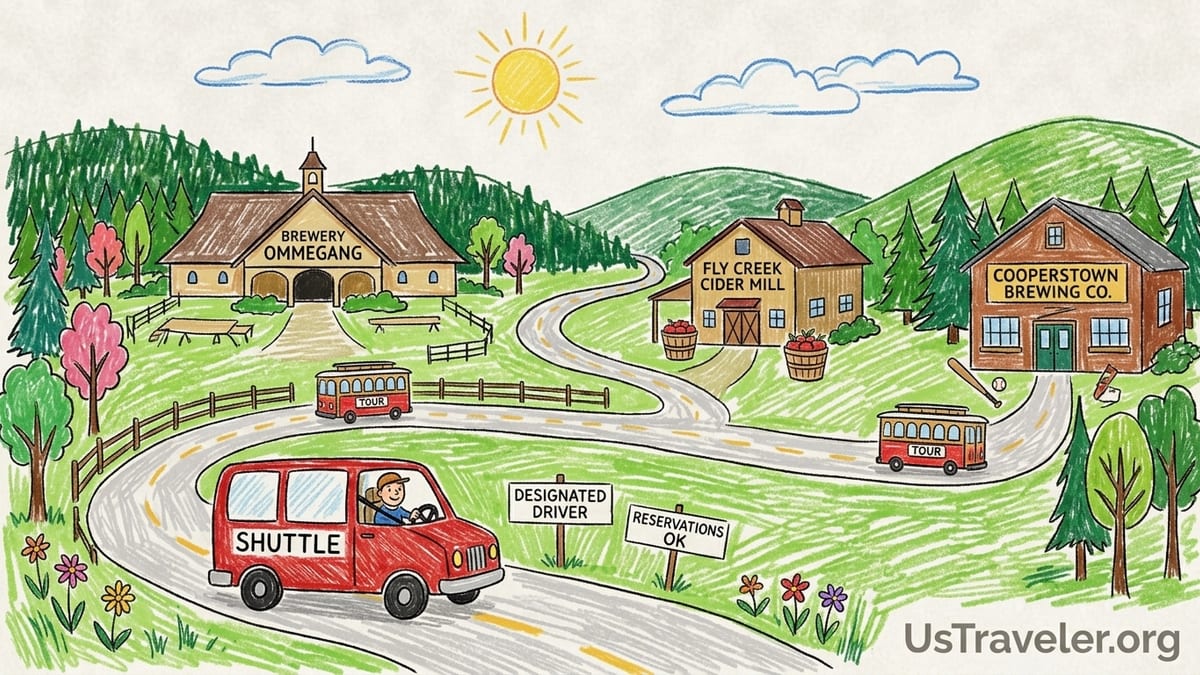
I did my loop with a designated driver and treated each stop like a timed reservation, even when it wasn’t. That meant I could order flights, share pours, and still enjoy the scenery without doing mental math about blood alcohol and back roads. If you don’t have a designated driver, the responsible alternatives are private transportation and local shuttle-style options that can be booked for wine-and-brewery days. In Cooperstown’s peak travel periods, it’s also common to find trolley-style rides and charter operators serving baseball weekends and group outings, but availability changes by season and weekend, so I recommend confirming what’s running for your specific date before you build your route.
My practical rule: pick three to five stops, not all of them, and give each at least 60 to 90 minutes door-to-door (arrive, taste, snack, browse, restroom, settle the tab, regroup). Even if you have all day, spacing things out keeps the experience fun and helps you actually remember what you tasted.
Stop 1: Brewery Ommegang, Where the First Pour Sets the Tone
I started at Brewery Ommegang, just outside Cooperstown on County Highway 33. We drove in mid-day and parked on-site, which immediately took the pressure off. The property has the feel of a destination brewery rather than a quick roadside taproom: open grounds, a polished visitor setup, and enough space to spread out. I walked in with the mindset of “one flight, one snack, one standout,” then move along.
The taproom, café, and mercantile setup felt like a hybrid between a tasting room and a casual hangout spot, with people arriving in small groups, browsing merchandise, and settling in for a longer visit. Hours matter here because they aren’t the same every day; when I planned my day, I built around the published tap house, café, and mercantile schedule rather than assuming a standard daily opening window. The menu format on-site made it easy to keep the tasting controlled: a few smaller pours rather than committing to full pints early.
What I tasted: I focused on classic Belgian-style direction and one lighter option to keep my palate fresh. If you’re new to Ommegang, this is the kind of place where it’s worth asking for guidance based on what you normally drink. The standout for me was a clean, bright Belgian-style pour that balanced spice and fruit without getting heavy. It was the one beer I kept returning to between sips of the others, the one that made me slow down and stop thinking about the schedule for a minute.
Food and timing: I treated this stop as a long lunch rather than a quick tasting. The café setup made it easy to order something filling, and I stayed about 90 minutes total. That longer first stop helped in two ways: it anchored the day with real food, and it prevented the common mistake of rushing into multiple tastings before you’ve eaten enough.
Stop 2: Cooperstown Brewing Company, A Taproom Built for a Baseball Town
From Ommegang, we drove to Cooperstown Brewing Company’s location in Milford, at 110 River Street. The drive itself is part of the day: rolling roads, greenery, and that feeling of being out in upstate New York rather than in a single walkable “brewery district.” We arrived in the afternoon, parked nearby, and walked in with the plan to taste quickly and deliberately.
The taproom felt relaxed and straightforward: a place where locals and visitors can settle in without the experience being overly precious. The brewery has been brewing in the area since the mid-1990s, and the vibe matches that longevity. When I visited, I kept my tasting to a manageable arc: something crisp, something hoppier, and something darker if it was available. I wanted a quick survey, not a palate overload.
What I tasted: the flight here felt like a good “middle of the day” reset, especially if you start with something clean and easy. My standout was the beer that tasted most at home in a baseball weekend context: approachable, balanced, and the kind of pint you can imagine ordering again with food. If you’re traveling with a mixed group, this is the stop I’d call most friendly to different beer preferences, because the lineup tends to include options that don’t require a specialty-beer dissertation to enjoy.
Hours and duration: I planned around their posted brewery hours (with later closing on Fridays and Saturdays). I stayed roughly 60 minutes, including time to order, taste, and chat briefly. This was a “taste and keep moving” stop for me, and it worked best that way.
Stop 3: Fly Creek Cider Mill, The Snack-and-Sip Stop That Can Take Over Your Day
Next we drove to Fly Creek Cider Mill at 288 Goose Street in Fly Creek, just minutes from Cooperstown. The distance looks short on paper, but it’s the kind of hop that changes the whole mood: you leave the brewery rhythm and arrive somewhere that feels like a landmark, part market and part tasting destination. When I visited, I appreciated that it’s clearly set up for people to linger, browse, and eat.
Hours were a key planning detail here. I timed my visit to comfortably fit within their published daily opening window of 9:00 a.m. to 6:00 p.m. through December 20, 2026. That long daytime schedule makes Fly Creek a natural early stop, but I deliberately made it mid-route so I wouldn’t fill up too soon. It’s also the kind of place where you can buy edible souvenirs that actually make sense: jarred items, baked goods, and snacks you can take back to your lodging.
What I tasted: I approached Fly Creek like a cider-focused tasting with breaks for browsing. The atmosphere felt more like a bustling country market than a quiet bar, with plenty of sensory distractions: smells from the snack areas, shelves of goods, and constant movement. My standout was the cider that tasted most like real orchard fruit rather than candy sweetness, the one that made me want food alongside it. I also made a point to drink water here, because it’s easy to forget hydration when you’re constantly grazing.
Food and duration: This was my longest stop after Ommegang, about 90 minutes. I ate something substantial and grabbed small items for later, which helped me avoid the end-of-day hunger crash. If you’re traveling with non-drinkers or families, this is the most flexible stop on the trail because the shopping and snack components stand on their own.
Stop 4: Pail Shop Vineyards, A Seasonal Tasting Room That Rewards Timing
From Fly Creek, we drove a short distance to Pail Shop Vineyards at 124 Goose Street, also in Fly Creek. The closeness of these two stops is a gift for planning: it lets you park once and keep your driving minimal, or at least keep the transfer short. Even with a designated driver, I liked stacking these two together because it reduced the number of long jumps on the loop.
Pail Shop’s schedule is seasonal, so I built my visit around their published 2026 hours. In peak summer, they’re open daily from June 1 through Labor Day, which makes this one of the easiest stops to include if you’re visiting during baseball season crowds. Outside that peak, they narrow the days and hours, so shoulder-season travelers should check the exact window and not assume a tasting room is open just because it’s a weekend elsewhere.
What I tasted: I focused on what they’re known for and asked for guidance toward their house style. The room felt intimate and casual, with the kind of pace that encourages conversation. My standout here was their signature sangria brand, Painted Pail Sangria, because it felt built for the region’s summer mood: refreshing, social, and easy to pair with simple snacks. I kept my tasting modest and shared pours with my group to stay within the day’s safety-first plan.
Duration and atmosphere: I stayed about 60 minutes. This stop felt like a palate shift from beer and cider into something more fruit-forward and picnic-friendly. If you’re trying to keep your day from turning into an endurance event, Pail Shop is a good “one focused flight, then go” stop.
Stop 5: Montezuma Winery and Hidden Marsh Distillery, One Counter for Wine and Spirits
After Fly Creek, we drove back toward the Cooperstown area for Montezuma Winery’s Cooperstown tasting room, which is paired with Hidden Marsh Distillery. I liked placing this stop later in the afternoon because it offers two directions in one: you can keep it wine-forward, or pivot into spirits for a different kind of tasting. It also helps consolidate stops so you’re not bouncing around the county without a plan.
On-site, I ordered a structured flight rather than building a custom lineup, because it kept decision-making simple. Their published flight format includes four pours and small food samples, which made it one of the most clearly defined tasting experiences of my day. That structure matters on a multi-stop route: the more you can predict how long an experience will take and what it includes, the safer and smoother your schedule becomes.
What I tasted: I tried a mix across the wine-and-cocktail flight concept and paid special attention to balance: what tasted fresh, what tasted sweet, and what tasted like something I’d actually bring to a dinner table. The standout for me was the pour that sat in the middle of the spectrum, not the sweetest and not the driest, because it paired best with the small included samples and didn’t fatigue my palate after earlier stops.
Duration and food: I stayed about 75 minutes, longer than I expected, because the tasting felt conversational and the sample component made it easy to slow down. If you want a stop that feels more guided than a typical bar pour, this is the one that delivered that vibe for me without requiring a full formal tour.
Stop 6: High Burl Brewery and Rustic Ridge Winery, Two Neighboring Stops on NY-80
I finished my day on the western side of the loop in Burlington Flats, where High Burl Brewery and Rustic Ridge Winery sit close to each other on State Highway 80. This part of the trail feels more rural and less like “Cooperstown-adjacent tourism,” which I appreciated. The drive out was longer than the Fly Creek cluster, so I wouldn’t recommend doing it unless you can commit to staying out there long enough for it to feel worthwhile.
High Burl Brewery, at 2803 State Highway 80, had the most “arrive and exhale” energy of my day. The setting felt farm-country casual, the kind of place where you can sit outside, look at the sky, and let the day slow down. I planned my timing carefully because their hours are not the same every day, with closures early in the week and mid-week openings that ramp into weekend afternoons. We arrived during open hours, ordered small pours, and kept the mood relaxed.
What I tasted at High Burl: I tried a couple of styles, including something hop-forward and something tart if it was on. The standout for me was the beer that felt most suited to the rural setting: bright, easy-drinking, and not overly boozy. At this point in the day, I valued drinkability over intensity. I stayed about 60 minutes, and I treated it as my final beer stop rather than trying to force one more big flight.
Rustic Ridge Winery, at 2805 State Highway 80, was my final tasting of the day, and I approached it like a gentle landing: one tasting, slow pace, water, and then back toward Cooperstown for dinner. Their posted hours are straightforward, open daily 11 a.m. to 6 p.m., and they market themselves as welcoming to picnics, with local food items often available. My standout here was the wine that felt most food-friendly, the one that made me think about cheese, bread, and something salty rather than dessert. I stayed about 45 minutes and left with the feeling that this side of the loop rewards travelers who want countryside quiet more than crowds.
The Takeaway
What I learned tasting my way around Otsego County is that the Cooperstown Beverage Trail is at its best when you treat it like a day of place-based travel, not a checklist. The best moments weren’t the biggest pours; they were the small details: the way Fly Creek feels like a food market you can drink through, the way Ommegang sets a destination tone, the way Milford’s taproom energy fits a baseball town, and the way Burlington Flats turns the volume down at the end of the day.
The practical lesson is simple: transportation is the real “pairing.” If you plan a designated driver, a private ride, or a pre-booked shuttle or trolley-style option, you can actually enjoy flights the way they’re intended: slow sips, real conversation, and enough time to notice what stands out. If you don’t plan that piece, the loop’s mileage will quietly take control of your day.
If I were to do it again, I’d still build around a few anchor stops rather than chasing every tasting room in one run. I’d keep Fly Creek and Pail Shop paired, give Ommegang time for food, and end either with the Burlington Flats duo or back in Cooperstown for dinner, depending on daylight and energy. That approach kept the day responsible, memorable, and honestly, far more delicious.
FAQ
Q1. What are the official 2026 Cooperstown Beverage Trail members?
As listed on the official trail map for 2026, the members are Brewery Ommegang, Cooperstown Brewing Company, Montezuma Winery, Pail Shop Vineyards, Fly Creek Cider Mill, Rustic Ridge Winery, and High Burl Brewery.
Q2. How long does it take to drive the full loop?
The trail is spread over roughly a 37-mile loop, but total time depends on stop length. A realistic tasting day is often 6 to 9 hours including food and breaks.
Q3. Is it safe to do the trail if I’m the only driver?
No. The responsible approach is to use a designated driver, hire private transportation, or use available shuttle, trolley, or charter options that let everyone taste without driving.
Q4. What are Fly Creek Cider Mill’s current hours?
Fly Creek Cider Mill lists daily hours of 9:00 a.m. to 6:00 p.m. through December 20, 2026.
Q5. What are Cooperstown Brewing Company’s current taproom hours?
Cooperstown Brewing Company lists brewery hours as Sunday and Monday 1 p.m. to 7 p.m., and Friday and Saturday 1 p.m. to 9 p.m.
Q6. When is Pail Shop Vineyards open in 2026?
Pail Shop Vineyards lists seasonal 2026 hours, including daily opening from June 1 through Labor Day, with more limited hours in May and fall.
Q7. Can I pair tastings with food on the trail?
Yes. Several stops are well-suited to eating during your tasting day, especially those with snack options, café-style service, or picnic-friendly settings.
Q8. Should I make reservations for tastings?
It depends on the venue, day, and season. For peak summer weekends, it’s smart to confirm whether flights, tours, or special events require booking.
Q9. What’s a reasonable number of stops for one day?
Three to five stops is a practical range for most travelers. It leaves time for food, water, and breaks without rushing from pour to pour.
Q10. What’s the best way to build a route order?
Start with a food-friendly anchor stop, cluster nearby locations together (like Fly Creek stops), and end with a quieter stop so you’re not racing back at dusk.