


Central Florida is usually sold as a blur of theme parks and beaches, but its inland towns tell a quieter, more local story. By focusing on an east–west loop between Orlando and Polk County, you can mix a day or two at the big-name parks with time in walkable downtowns, historic neighborhoods and lakefront state parks, all without racking up endless highway miles or nightly hotel changes.
Why an Inland Central Florida Road Trip Works
Most first-time visitors bounce between Orlando’s theme parks and the coasts, crisscrossing the state on long drives. An inland itinerary built around Orlando, Winter Park, Mount Dora, Clermont, Kissimmee, Davenport, Winter Haven, Lakeland and Lake Wales keeps you within roughly 90 minutes of every stop, with far less backtracking than a full Florida circuit. Polk County in particular sits between Orlando and Tampa, tied together by Interstate 4, US 27 and State Road 60, so you can fan out to lakes, gardens and small downtowns while still being close to major roads.
This route is especially attractive if you are flying in and renting a car at Orlando International Airport. Most of the driving is on familiar four-lane highways and divided roads, with options to divert onto scenic alternatives such as Florida State Road 17 along the Lake Wales Ridge for lake and orange grove views. Because distances are short, you can comfortably pair a half-day at a museum or garden with an easy 45-minute transfer to your next base instead of doing full days behind the wheel.
The other big benefit of an inland circuit is price and pace. Rooms in Winter Haven or Lakeland often cost less than hotels around International Drive or near the Disney gates, especially outside peak holidays, and restaurant scenes in Polk County’s cities have grown enough that you can eat very well without resort pricing. You also get a sense of everyday Central Florida life, from food halls and minor-league baseball in Lakeland to independent shops in Mount Dora and Winter Park.
Finally, this kind of route is forgiving. If weather sabotages a park day or you find you love one town more than expected, it is easy to swap driving days around because your longest leg between any two points, such as Mount Dora to Davenport, is still only around two hours in normal traffic. That flexibility matters in a region where afternoon thunderstorms and highway delays are not unusual.
Getting In, Picking Up a Rental and Understanding Toll Roads
Most travelers will start this itinerary by flying into Orlando International Airport. Orlando is one of the busiest rental car markets in the country, and major brands such as Alamo, Avis, Budget, Dollar, Enterprise, Hertz, National, Payless, Sixt and Thrifty have on-site counters in the terminals with cars in adjacent garages. Picking up inside the airport avoids the extra time and shuttle ride required by off-airport agencies, which is worth the slight price premium if you are arriving after a long flight or with kids in tow.
When you book, choose a mid-size or standard sedan or small SUV unless you truly need more space. Parking garages and hotel lots around Orlando, Winter Park and downtown Lakeland can feel tight in a full-size SUV or minivan, and fuel costs add up once you start making side trips along US 27. Also look for a rental program that lets you skip the counter via app check-in or loyalty membership so you can walk straight to the garage on arrival instead of queuing at a desk during busy periods.
Central Florida’s road network includes several tolled expressways that can make your driving days much smoother. State Road 417 forms an eastern beltway around Orlando, State Road 429 runs along the western side and State Road 528 links the airport area toward the coast. Many segments now operate with all-electronic tolling where there are no staffed booths, and charges are read via transponder or plate. At booking, check how your rental company handles tolls. Some roll tolls into a daily convenience fee, while others pass them through with a small surcharge. If your personal SunPass or compatible transponder is allowed in rental cars, bringing it can keep costs down.
If you want to minimize tolls, you can still complete this route using a mix of I-4, US 27 and local roads such as US 192 or US 17. That said, paying a few dollars in tolls to hop on 417 around the eastern side of Orlando when you are heading to or from the airport can save 20 to 30 minutes compared with sitting on congested surface roads at rush hour, and State Road 429 can be very helpful when driving between the Clermont or Mount Dora area and Kissimmee without diving straight into I-4 around the main tourist zone.
Navigating I-4 Traffic and Choosing the Right Times to Drive
Interstate 4 is the spine of this inland route, connecting Orlando to Polk County. It is also one of Florida’s most complained-about highways, with recurring slowdowns on the stretch between ChampionsGate, the attractions area and the western suburbs of Orlando. Construction projects and heavy tourist traffic mean travel times on a 25-mile segment can swing from 25 minutes in light traffic to more than an hour when a crash blocks a lane. Building your day around typical patterns will keep stress down.
On weekdays, the heaviest I-4 traffic usually falls between 7 and 9 am heading into Orlando and from about 4 to 7 pm in both directions between downtown Orlando and the US 27 junction. Saturdays can be crowded late morning near the theme-park exits and outlet malls, while Sunday evenings often bring eastbound backups as weekend visitors return to Orlando. Plan your longer hops, such as Orlando or Winter Park to Winter Haven or Lakeland, for mid-morning or early afternoon when possible.
If your schedule forces you onto I-4 at peak hours, lean on the parallel toll roads where they exist. For example, if you are leaving the airport for the Kissimmee or Davenport area on a Friday evening, routing via State Road 417 and then down to US 192 or US 27 can keep you moving more reliably than heading straight to I-4 west of the city. Likewise, if you are day-tripping from Orlando to Lakeland, leaving after the morning rush, around 10 am, and coming back after dinner can transform the experience.
Keep expectations honest: this is not a trip where you will always cruise at highway speeds. Build a 15 to 20 minute buffer into any drive that uses I-4 so an unexpected storm or fender-bender does not cascade into missed dinner reservations or rushed hotel check-ins. Having podcasts or playlists lined up and keeping water and snacks in the car can make those inevitable slow stretches less frustrating.
Suggested Route and Logical Overnight Bases
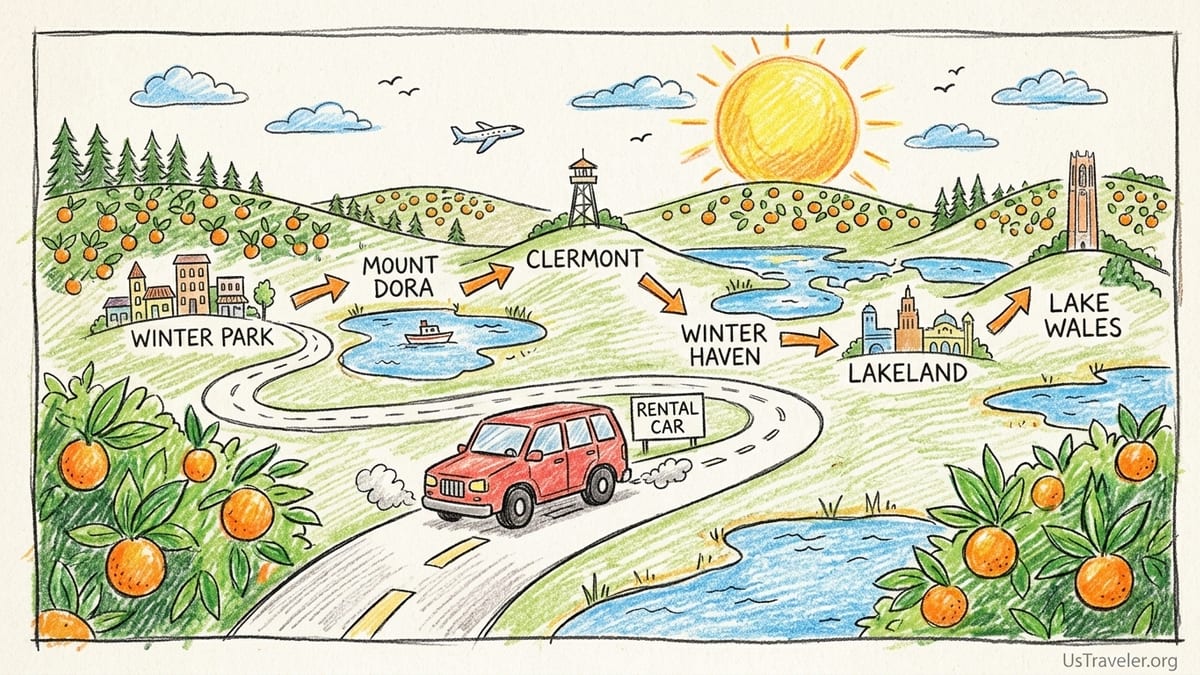
A practical version of this inland itinerary starts in Orlando or nearby Winter Park, swings north to Mount Dora and Clermont, then arcs south through Kissimmee and Davenport into Polk County, ending with a cluster of nights in Winter Haven, Lakeland and Lake Wales. A typical loop for a weeklong trip might look like Orlando or Winter Park for three nights, Winter Haven or Lakeland for three or four nights, plus one flexible night you can place in Mount Dora or back in Orlando depending on your flight times and interests.
Begin in Orlando or Winter Park to get your bearings and, if you are including theme parks, to tackle them while your energy is highest. From there, a half-day drive and visit to Mount Dora gives you a taste of old-Florida charm: a compact downtown of antique shops and cafes, art galleries and boat tours on Lake Dora. You can do this as a day trip from Orlando or as an overnight if you prefer a quieter pace and early nights.
From the Mount Dora area, loop southwest through Clermont, with its rolling hills, lakes and citrus groves. Many visitors stop at a lakefront park or pick up lunch in its revitalized downtown before continuing to Kissimmee or Davenport. Clermont also offers opportunities for active travelers, such as walking or cycling along paved multi-use trails or climbing its historic observation tower for ridge views, which makes for a good contrast with park crowds.
Once you reach Kissimmee and Davenport, you are back in the orbit of Orlando’s big attractions. This is a good moment to decide whether your group wants another theme-park block or to pivot fully into Polk County’s lake country. Driving south on US 27 from Davenport delivers you to Winter Haven and its Chain of Lakes, then onward to Lakeland and finally Lake Wales via either US 27 or more scenic options like State Road 17. Because those three communities sit only 20 to 40 minutes apart, you can comfortably sleep in one and day-trip to the others.
Balancing Theme Park Days With Driving Days
The temptation in Central Florida is to stack multiple major theme parks back-to-back. On a road trip that also includes small towns and outdoor time, that can quickly become exhausting, especially in the summer heat. A more sustainable pattern is to cluster park visits in two- or three-day blocks and separate them with quieter driving and sightseeing days where you change bases or explore nearby towns.
For example, you might start in Orlando with two days at parks such as Walt Disney World or Universal, then dedicate your third day to Winter Park’s museums and lakes while mostly parking the car. After that, shift your base to Polk County and give yourself a break from the most intense crowds. In Winter Haven you could visit the region’s family-oriented theme park on one day and then spend the next morning on a Chain of Lakes boat tour followed by a relaxed afternoon exploring downtown or heading out to a local nature preserve.
In Lakeland, it is easy to plan a no-parks day that still feels full. You might walk around Lake Mirror in the morning, tour a university campus known for its Frank Lloyd Wright architecture and then have dinner downtown at an independent restaurant or in a food hall, returning to your hotel without ever getting onto I-4. Lake Wales, by contrast, lends itself to a scenic outing, pairing its historic downtown with a visit to a hilltop garden and bell tower and a drive along the ridge roads that overlook groves and lakes.
Think of driving days not simply as transfers but as built-in recovery. If you leave Winter Park at 10 am and arrive in Winter Haven around 11:30 am, you still have time to check in, have lunch and enjoy an afternoon by a hotel pool or on a lakefront trail. Alternating like this keeps both adults and children fresher than planning a big park day after a late-night highway drive.
Minimizing Hotel Changes and Where to Base Yourself
The most common mistake on Florida road trips is booking a new hotel nearly every night. On this inland route you can almost always get by with just two or three bases. One logical approach is to spend your first half based in Orlando or Winter Park and your second half based in either Winter Haven or Lakeland, with an optional single night in Mount Dora if you value quiet evenings and walkable streets.
Winter Park works well as a softer landing than International Drive if you are more interested in neighborhoods than neon. Its boutique hotels and small inns put you within walking distance of brick-lined streets, a scenic canal tour and the area’s art museums, yet you are still only a 20 to 30 minute drive from many Orlando attractions outside of rush hour. If you prefer to be directly on the resort corridor, an Orlando hotel near your primary theme park choice might make more sense for those first nights.
For the Polk County half, choose between Winter Haven and Lakeland. Winter Haven puts you closer to the family theme park there and the water-based activities on the Chain of Lakes. Lakeland offers a somewhat larger downtown, more dining and shopping variety and easy access both to I-4 and to the Polk Parkway, which can speed up drives to outlying sights. A traveler focused on architecture, independent restaurants and minor-league sports might favor Lakeland, while a family with younger children may prefer Winter Haven for shorter drives to its attractions.
By committing to these hubs, you cut out the check-in and check-out time that can quietly swallow hours of a trip. Instead of packing and unpacking constantly, you can leave non-essential items in your room, travel with lighter day bags and use your car more like a commuter vehicle. You also have the psychological advantage of getting to know a neighborhood coffee shop or evening walk route, which makes the journey feel less like a frantic checklist and more like slow travel.
Highlights Along the Route: From Winter Park to Lake Wales
While Orlando’s headliners are familiar, it is the smaller stops along this inland loop that surprise many visitors. In Winter Park, a morning stroll along its main shopping street reveals local boutiques, cafes and a Saturday farmers’ market. The city’s scenic boat tour winds through narrow, tree-lined canals linking its lakes, giving you a different perspective on historic homes and moss-draped cypress trees, and its art museums showcase everything from American painting to renowned glasswork in intimate settings.
Mount Dora, about 40 minutes northwest of Orlando in light traffic, feels like a lakeside village. Its downtown streets are lined with antique shops, galleries and cafes, and the town hosts regular festivals that can make it feel particularly lively on select weekends. Boat tours on Lake Dora and the Dora Canal highlight wildlife and the cypress swamp scenery of this part of Central Florida, making it a good counterpoint to the manicured environments of the theme parks.
Clermont and the US 27 corridor begin to introduce the rolling hills and citrus landscapes that distinguish this inland route from the flatter stretches closer to the coasts. Many travelers pause at waterfront parks or tackle segments of nearby multi-use trails popular with walkers and cyclists. Continuing south and east delivers you to Kissimmee and Davenport, where resort communities cluster around golf courses and lakes and where you can stock up on groceries or enjoy a rest day by a vacation rental pool if you have chosen that style of accommodation.
Farther south, Winter Haven spreads around a connected Chain of Lakes, making it a prime spot for boat rentals, waterski shows and guided cruises that weave through canals lined with homes and birdlife. Lakeland adds urban texture, from its historic downtown and classic theater to its lakeside parks and a college campus that draws architecture fans. Lake Wales, at the eastern edge of this loop, rewards the detour with its historic downtown, nearby state forest lands and its celebrated hilltop garden and tower, where you can walk shaded trails and take in broad views of the surrounding ridge and lakes.
Practical Tips for Driving and Daily Logistics
A little logistical planning goes a long way on this route. First, fuel and groceries are easy to find on the main corridors. Large supermarkets cluster along US 27 around Davenport, Haines City, Winter Haven and Lake Wales, and around Lakeland’s major junctions, so it is simple to pick up snacks, picnic supplies and bottled water every few days. Taking a small cooler in your rental car can make lakeside stops and state park visits far more pleasant, especially in hotter months.
Parking is generally straightforward away from the core resort areas. Downtown Winter Park, Mount Dora, Winter Haven and Lakeland all offer public parking lots or street parking, some with time limits. Around theme parks, budget for paid parking and allow extra time to shuttle or walk from lots to park entrances. When searching for accommodation, make sure nightly parking fees are clear; many suburban hotels along US 27 and in Polk County include parking, while some Orlando resort-area properties charge extra.
Weather is another key factor. From late spring through early fall, afternoon thunderstorms are common, and brief but intense downpours can reduce visibility and cause standing water on the roads. Plan outdoor activities and most driving for mornings when possible and treat flexible indoor stops, such as museums or shopping, as your backup for stormy afternoons. In winter, cold fronts can bring cooler mornings that are ideal for walking tours and garden visits, with generally lighter crowd levels outside holiday weeks.
Finally, remain flexible. Because your inland distances are short, you can often swap activities at the last moment if a particular day looks crowded or stormy in one area. If I-4 is severely congested between Orlando and Polk County, consider delaying your transfer by a few hours and exploring a museum or neighborhood near your current base rather than sitting in stop-and-go traffic. One of the strengths of this route is that you are rarely locked into a single option.
The Takeaway
A Central Florida inland road trip built around Orlando, Winter Park, Mount Dora, Clermont, Kissimmee, Davenport, Winter Haven, Lakeland and Lake Wales offers more variety and less stress than many visitors expect. By focusing on a compact region instead of trying to conquer both coasts and the Panhandle in one go, you spend more time on lakes, in gardens and in walkable downtowns and less time staring at taillights.
Thoughtful choices about rental cars, toll-road use, and when to drive I-4 can make daily logistics feel manageable, even in this busy part of the state. Concentrating your overnights in two or three hubs rather than changing hotels every day turns the trip into a series of relaxed excursions instead of a constant packing exercise. Polk County’s location between Orlando and Tampa, stitched together by I-4, US 27, State Road 60 and local scenic routes, makes it a natural anchor for this kind of loop.
Most importantly, this itinerary balances the spectacle of Central Florida’s famous attractions with the smaller-scale pleasures of its inland communities, from Winter Park’s brick streets and Mount Dora’s lakeside sunsets to Winter Haven’s Chain of Lakes cruises and Lake Wales’ ridge-top gardens. Build in breathing room between your biggest days, keep your driving legs short and leave space to linger where the region surprises you. That is where the true character of inland Central Florida tends to reveal itself.
FAQ
Q1. How many days do I need for this Central Florida inland road trip?
Plan on at least seven days to enjoy both Orlando-area attractions and the Polk County towns without rushing. With ten days you can add extra rest days and more small-town stops.
Q2. Do I really need a car for this itinerary?
Yes. While Orlando has some resort-area shuttles and limited rail and bus options, connecting places like Mount Dora, Winter Haven and Lake Wales efficiently requires a rental car.
Q3. When is the best time of year to drive this route?
Late fall, winter and early spring generally offer cooler temperatures and lighter thunderstorms. Summer works, but you should plan around heat, humidity and frequent afternoon downpours.
Q4. How bad is I-4 traffic between Orlando and Polk County?
Traffic can be heavy, especially during rush hours and weekend park surges, but with smart timing and occasional use of toll-road alternatives it is manageable for most drivers.
Q5. Can I avoid toll roads completely on this trip?
You can, by sticking mainly to I-4, US 27, US 192 and local roads, but using toll roads such as State Road 417 or 429 on select segments often saves time and stress.
Q6. Which town is better as a base, Winter Haven or Lakeland?
Winter Haven is ideal if you prioritize lake activities and its local theme park, while Lakeland offers a larger downtown, more dining options and quick access to I-4 and the Polk Parkway.
Q7. Is this route suitable for families with younger children?
Yes. Distances are short, parks and attractions are plentiful and you can balance intense theme-park days with calmer lakefront activities and hotel-pool time.
Q8. Are there scenic alternatives to the main highways?
Yes. Sections of State Road 17 near Lake Wales and certain county roads along the Lake Wales Ridge provide more scenic drives past lakes, citrus groves and rolling hills than US 27.
Q9. How should I split my nights between Orlando and Polk County?
A common pattern is three or four nights in Orlando or Winter Park for theme parks and city attractions, then three or four nights in Winter Haven or Lakeland for small-town and lake time.
Q10. Is this inland road trip still worthwhile if I skip the big theme parks?
Absolutely. You can fill a week with gardens, lake cruises, architecture, local museums, markets and historic downtowns without entering a single major theme park.