


I didn’t fall in love with the Catskills because I ticked off summits or chased the perfect diner pancake. I fell in love because certain towns and valleys in these mountains quietly insist you do less. You drive in on two-lane roads, your phone service stutters, and suddenly the trip stops being about “What’s next?” and becomes about “What’s here?” This is a destination selection guide, not a mega-list. It’s how I’d choose a base for a long weekend or a week now, shaped by firsthand stops I’ve actually done and a handful of researched towns I’d send you to next depending on what you’re chasing: hiking and swimming holes, fly fishing on storied rivers, ski mornings and firepit nights, or music history you can still feel in the grass.
How I Choose A Catskills Base (And Why These Towns Feel So Different)
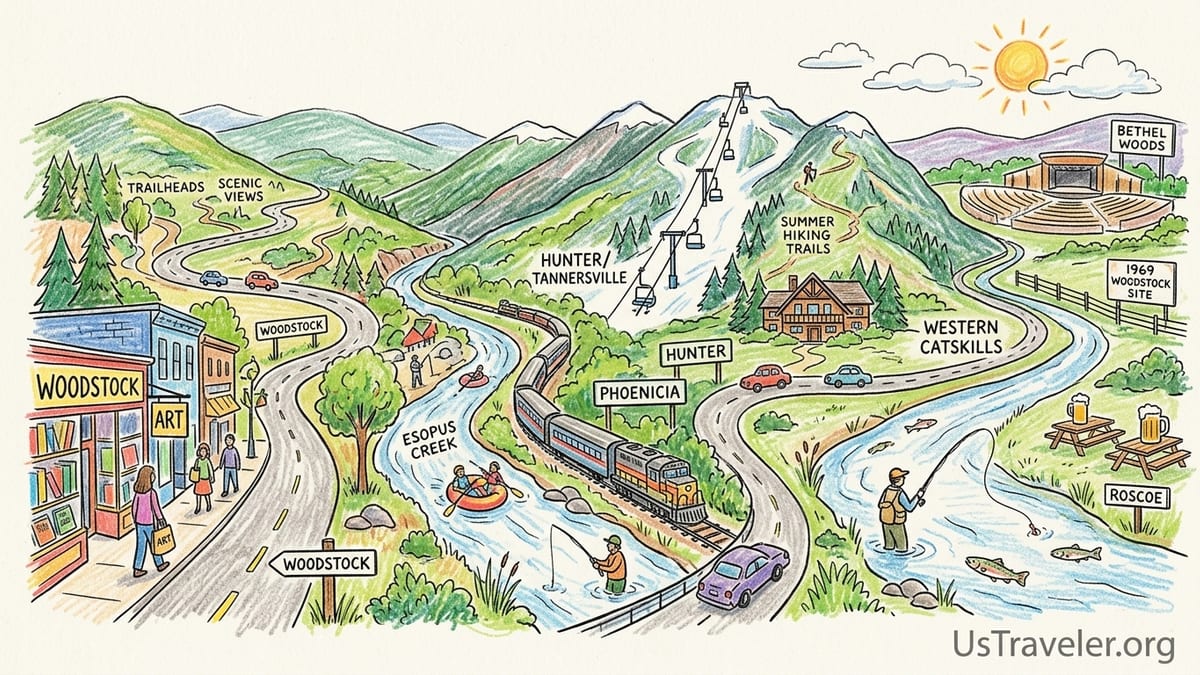
The Catskills are one region on the map, but they don’t behave like one place when you’re planning a trip. The Woodstock area is artsy and walkable in a classic small-town way, with trailheads and scenic roads a short drive out. The Route 28 corridor around Phoenicia is creek-and-mountain country where a “big day” can be tubing the Esopus and then eating well in the same stretch of road. Hunter and Tannersville live in a different gear: ski village energy, higher peaks, and that close-to-the-lifts feeling in winter, with summer hiking that doesn’t require a long approach.
Then the western Catskills shift the mood again. Livingston Manor and Roscoe feel like you’ve slid into trout water and brewery patios: quieter roads, rivers that get name-checked by anglers, and a real sense of being in a valley rather than “up” a mountain. Bethel, meanwhile, is its own lane: less about peak-bagging and more about music history and amphitheater nights at the original 1969 Woodstock festival site, now the home of Bethel Woods Center for the Arts and its museum.
One practical note that shapes everything: you can technically arrive without a car using intercity buses into parts of the Catskills, but once you’re there, you’ll want wheels for trailheads, river access, and even dinner if you’re staying outside a town center. That’s why I plan in bases. Pick one main base for two to four nights, then add a second base only if you’re switching “Catskills modes” completely, like pairing a Hunter hiking weekend with a Bethel concert night.
Woodstock: Where I Arrived For A Weekend And Accidentally Slowed Down
I’ve arrived in Woodstock with the wrong mindset before: thinking I’d “do Woodstock” in an afternoon, grab a coffee, buy a souvenir, and move on. The town corrected me. The pace is gentle but not sleepy, and it’s the kind of place where you intend to pop into one shop and end up walking out with a tote bag, a new paperback, and an extra hour gone in the best way.
On my last stay, I checked into the Woodstock Way Hotel, tucked close enough to town that I could do the evening without worrying about parking twice. Recent publicly posted rates I found during research showed nights around the $400 mark in mid-September for a couple, which matches the reality that Woodstock weekends can be a splurge. What made it memorable was not a single “wow” amenity, but the way it let me live on foot: a slow start, a walk into town, and then back again without a car reappearing until the next morning.
Food in Woodstock is part of the town’s rhythm rather than a separate “dining scene.” I built my days around easy, human-scale meals: coffee first, something unfussy for lunch, then dinner that felt earned after a hike. For a specific arts-and-music anchor that still feels deeply Woodstock, Maverick Concert Hall is a real landmark with a 2026 season running from June 27 through September 13, and it remains one of the most distinctive “only here” venues in the region. If you want your Catskills trip to include a night that feels like culture, not just entertainment, this is where I’d start planning.
How much time I’d allocate now: at least two nights, ideally three, if you want Woodstock to work its magic. Best for: couples who want walkability and browsing; arts and music history; low-stress hiking access; travelers who like a trip where an hour can disappear in a bookstore and nobody panics.
Phoenicia: The Route 28 Creek Town That Feels Built For Simple Days
Phoenicia is the Catskills town I think about when I picture the sound of water being the main soundtrack. The town sits right along the Esopus Creek corridor, and that geography makes everything feel immediate. You’re never far from river access, a short drive to a trailhead, or a casual meal that doesn’t require dressing up after a day outside.
My favorite arrival into Phoenicia is late afternoon: the light drops into the valley, and the mountains start to hold the color. I’ve stayed in the area when I needed something relaxed and unfussy, the kind of place where you can rinse off creek water, sit outside, and feel no pressure to “go out” again. In research, I saw The Graham & Co positioned as a classic Phoenicia stay, and recent rate snapshots posted publicly show it can land in the low-to-mid $200s range for a night in September depending on taxes and booking channel. That’s not a promise, but it’s a useful reality check when you’re comparing Woodstock’s premium to Phoenicia’s often-better value.
What makes Phoenicia memorable for me is how easy it is to stitch together a full day without trying. If you want a concrete, family-friendly or low-effort activity that still feels “Catskills,” the Catskill Mountain Railroad runs seasonal themed rides and foliage trains, and its current calendar materials highlight everything from summer events to fall foliage and holiday trains. Even if you never board, seeing the rail corridor and the town’s connection to that history gives Phoenicia a lived-in feeling that some mountain towns lack.
How much time I’d allocate now: two to three nights if your goal is hiking-by-day and creek-by-evening. Best for: families who want easy outdoor access; groups who want a central hub along Route 28; travelers who want a river town vibe without the higher price tag and weekend bustle of Woodstock.
Hunter And Tannersville: Big-View Days, Ski Energy, And A Mountain Base That Works In Every Season
Hunter and nearby Tannersville are where I base when I want the Catskills to feel like mountains, not just countryside. The roads climb, the air changes, and the landscape feels more vertical. In winter, it’s the obvious ski-and-fireplace choice. In summer and fall, it becomes a hiking base where you can get to real elevation without spending half the morning driving across the range.
For accommodations, I’ve used the area as a “treat yourself” base, and Scribner’s Catskill Lodge is the name that comes up again and again for good reason. One practical detail I appreciate: Scribner’s notes that Trailways bus service drops about a quarter mile from the lodge in Hunter, which matters if you’re trying to do a car-light trip or if one person in your group is arriving separately from New York City. For the on-site feel, it’s the kind of place where you can have dinner and a last drink without negotiating mountain roads late at night.
Food and drink here often tie directly into where you’re staying. Scribner’s Prospect restaurant is a good example of that resort-dining model: you can finish a hike, clean up, and eat well without leaving the property. When I’m choosing Hunter as a base now, I do it for that efficiency: the town is a springboard, but the lodge becomes a landing pad. In the day, the landscape is the point: peaks, overlooks, and trailheads that don’t require a long approach drive.
How much time I’d allocate now: two nights minimum for hiking season, three if you want a true reset or if you’re skiing and need a weather buffer day. Best for: hikers who want high-impact days; skiers and snowboarders; couples who want a mountain-lodge vibe; families who need a base with built-in dining so every meal doesn’t become a car negotiation.
Windham: A Polished Ski Town Option (Researched) With A Different Winter Personality
I’m flagging Windham clearly as researched rather than a firsthand stay in this piece. It’s close to Hunter on the map, but it has a different personality in practice, and it’s worth understanding before you book. In recent seasons, the area’s resort identity has evolved under the Windham Mountain Club brand, and the public-facing lift ticket and pass information emphasizes guest services, rescheduling, and policies that can affect day-of flexibility. The practical takeaway: if you’re planning a winter trip here, you’ll want to lock in plans earlier than you might at a smaller hill, and you should read current ticket and change policies before you commit.
Where Windham shines as a choice is when you want a ski-forward trip with a tidier, more resort-centered feeling. If you’re traveling with a mixed group where not everyone is doing first-chair laps, a town with a clearer “base area” identity can keep the trip cohesive. Windham can also be a good fit for families who want a winter trip that feels structured rather than improvised.
How much time I’d allocate now: a long weekend for ski season, or a two-night summer stay if you’re using it as a quieter base for day trips. Best for: skiing and winter weekends; families who like a more organized resort rhythm; groups who want a single, simple focal point for the trip rather than bouncing between towns.
Livingston Manor And Roscoe: Where The River Country Changed My Idea Of The Catskills
The first time I drove into Livingston Manor, I felt the trip change from “mountain weekend” to “valley weekend.” The roads feel quieter, the spaces between towns stretch out, and you start planning your day around water and weather. This is where I go when I want the Catskills to be less performative: fewer crowds, more time outside, and meals that feel like punctuation rather than the main event.
Livingston Manor is now one of my favorite places to base if you care about food but don’t want the trip to become a dining itinerary. A concrete example: Upward Brewing Company has become a recognizable anchor, with a main-street location and a full kitchen. It’s the kind of spot where you can order a beer and dinner, then stay an extra hour because the lawn and picnic-table atmosphere makes lingering feel normal. If you’d rather do a second stop, Catskill Brewery is another real-world option for a casual afternoon, and its published hours and taproom setup make it easy to plan around.
For a more destination-style meal and stay, The DeBruce sits in the valley of the Willowemoc and is one of the clearest “plan-a-night-around-this” experiences in the western Catskills. I won’t pretend it’s budget-friendly, and their public materials focus more on reservations than fixed pricing, so I’m not going to invent menu numbers. What I can say confidently is this: if you’re celebrating something, this is the sort of place you’d build a two-night Livingston Manor trip around, pairing one ambitious dinner with a long hike, a river walk, or a slow morning the next day.
Roscoe, just down the road, is where the Catskills’ fly-fishing reputation becomes tangible. The town openly leans into its Trout Town identity, and you can feel it in the way travelers talk about rivers by name. For real-world gear-and-guidance anchors, Beaverkill Angler is a known full-service fly shop in town, and Trout Town Flies is another Roscoe-based shop that speaks directly to visitors looking to fish the Beaverkill, Willowemoc, and branches of the Delaware. Even if you’re a beginner, walking into a shop like that turns an abstract idea, “I want to try fly fishing,” into a practical conversation about where to wade today, what the water’s doing, and what to buy that you’ll actually use.
How much time I’d allocate now: three nights if fly fishing is a priority, two nights if you’re pairing hiking with breweries and a single special meal. Best for: fly fishing; quiet couples trips; small groups that prefer a backyard fire to a late-night bar; travelers who like the idea of rivers as the main attraction, not just the scenic backdrop.
Bethel: Concert Nights, Museum Days, And A Different Kind Of Catskills Pilgrimage
Bethel is where I send people who think they’ve “done” the Catskills because they’ve visited Woodstock. Bethel isn’t trying to be that. It’s in the Sullivan Catskills, and its anchor is the original site of the 1969 Woodstock Music and Art Fair, now home to Bethel Woods Center for the Arts. If your trip needs a single, big, emotionally resonant plan, this is one of the strongest you can make: a concert night where the lawn and hills are part of the experience, plus a museum visit that connects the mythology to a real place you can stand in.
One current planning detail that matters: Bethel Woods has stated that parts of its museum and grounds experiences are set to reopen on May 1, 2026, including a special exhibit and an augmented reality tour. That kind of operational detail is exactly why Bethel is best as a “planned” day, not a casual stop you assume will be open. It’s also why I like it as a base when the concert calendar aligns: your day has a built-in arc.
If you want to stay close enough to keep the night easy, you can base nearby in the western Catskills rather than scrambling after a show. For a high-end splurge in the broader region, The Chatwal Lodge is the kind of property travelers consider for an occasion trip, and publicly posted booking snapshots show it can run in the several-hundred-dollars-per-night range before taxes and fees depending on room type and date. For a more classic Catskills-resort vibe within reach of Bethel, Callicoon Hills in Callicoon Center is another option travelers use to anchor this side of the region, with publicly posted rates that can land in the high $200s and above depending on the night and booking conditions.
How much time I’d allocate now: one full day and a night if you’re going for the museum and grounds; two nights if you’re pairing it with a concert. Best for: music history; concerts and summer nights; couples who want a trip that feels like a pilgrimage; families with teens who can appreciate the story and the scale of the venue.
Delaware County Detours: Roxbury And Andes (Researched) For When You Want Quiet With Personality
When I’m building a longer Catskills week, I like adding one “quiet with character” town where the main goal is simply being there. Delaware County is full of that feeling: fewer crowds, a more rural rhythm, and small towns that don’t feel designed for weekenders, which is part of their appeal.
Roxbury is a strong candidate if you want a base that feels tucked away but still gives you access to scenic drives and small-mountain outings. The Roxbury Motel is one of the region’s most recognizable themed stays, and recent publicly visible rate snapshots show nights that can dip under $200 with taxes and fees on certain dates, while other sources and local discussions show the broader range can climb much higher depending on room type and season. The point isn’t the exact number, it’s the choice: Roxbury is where you go when you want your lodging to be part of the story, not just a bed near a trail.
Andes is another Delaware County town that makes sense when your trip is about slowing down, shopping small, and finding one excellent place to spend a long afternoon. Wayside Cider is a concrete reason to go: a tap room in restored barns just off Main Street that’s become a destination in its own right for cider, food, and events. For travelers who want the Catskills to feel like countryside with a social center, this is the kind of place where you can arrive mid-afternoon and still be there when the light changes, without ever feeling like you’re wasting time.
How much time I’d allocate now: one to two nights as a detour base inside a longer trip, or a single overnight if you’re road-tripping across the region. Best for: couples who want quiet with a few great anchors; travelers who prefer scenic drives and small-town browsing; anyone building a multi-base week and looking for a softer, rural chapter.
The Takeaway
If you’re trying to choose the best places to visit in the Catskills, I’d stop thinking in terms of “top attractions” and start thinking in terms of what kind of days you want to have. Woodstock is where I go when I want culture and walkability to shape the pace. Phoenicia is where I go when I want creek access and easy days along Route 28. Hunter and Tannersville are where I base for high-impact hiking and ski season energy. Livingston Manor and Roscoe are where the rivers rearrange your priorities and a brewery patio can become the whole afternoon. Bethel is where the music history is not a metaphor, it’s a site you can stand on, especially if your trip lines up with a show at Bethel Woods.
And if you have the time, the best Catskills trip I know is a two-base trip: start east (Woodstock or Phoenicia for two or three nights), then shift west (Livingston Manor or Bethel for two or three nights). The drive between them becomes a reset button, and by the end, you don’t just feel like you visited the Catskills. You feel like you let the Catskills happen to you.
FAQ
Q1. Which Catskills town is best for a first-time weekend?
For most first-timers, I’d choose Phoenicia or Woodstock. Woodstock is walkable and artsy; Phoenicia is easier for creek-and-hike days along Route 28.
Q2. How many days do you need to feel the Catskills, not rush it?
Three nights is the sweet spot for one base. If you can do five to six nights, a two-base trip (east side then west side) feels transformative.
Q3. What’s the best Catskills base for serious hiking?
Hunter and the nearby high peaks area are a strong choice if you want big-vertical hiking days and easy access to trailheads.
Q4. Where should I stay if I’m coming mainly for fly fishing?
Base in Roscoe or Livingston Manor. You’ll be close to well-known rivers and you can stop into local fly shops like Beaverkill Angler or Trout Town Flies for current conditions and gear.
Q5. Is Bethel the same as Woodstock, New York?
No. Woodstock is a town. Bethel is the site of the 1969 Woodstock festival and is home to Bethel Woods Center for the Arts and its museum.
Q6. Can I visit Bethel Woods even if I don’t have concert tickets?
Yes, but plan ahead around museum and grounds hours and seasonal reopenings. Bethel Woods also operates museum and historic-site experiences beyond concerts.
Q7. What’s a realistic hotel budget in popular Catskills towns?
In high-demand spots like Woodstock, weekend rates can sit around a few hundred dollars a night. In other towns, you can sometimes find lower nightly rates, especially midweek or shoulder season, depending on the property.
Q8. Do I need a car in the Catskills?
It’s strongly recommended. Some towns have bus access, but trailheads, river pull-offs, and many dinners are much easier with a car.
Q9. Which towns are best for families?
Phoenicia is an easy family base for creek access and flexible days. Hunter can also work well for families who want a resort-style hub in ski season.
Q10. What’s one under-the-radar detour that still feels worth it?
Andes is a great Delaware County detour for a slow afternoon, especially if you want a clear anchor like Wayside Cider and a quieter small-town rhythm.