


Florida is one of those places where the hard part is not deciding to go, but deciding where to base yourself. Travelers talk about “doing Florida” as if it is one destination. In reality, you are choosing between very different trips built around Orlando’s theme parks, Miami’s nightlife and culture, the island vibe of the Florida Keys, wild Everglades ecosystems, laid-back Gulf Coast beach towns and the historic streets of St. Augustine. This guide breaks down the state’s headline destinations, explains what each is really like on the ground right now, and helps you decide which are worth a full stay and which make better day trips.
How to Think About Planning a Florida Trip
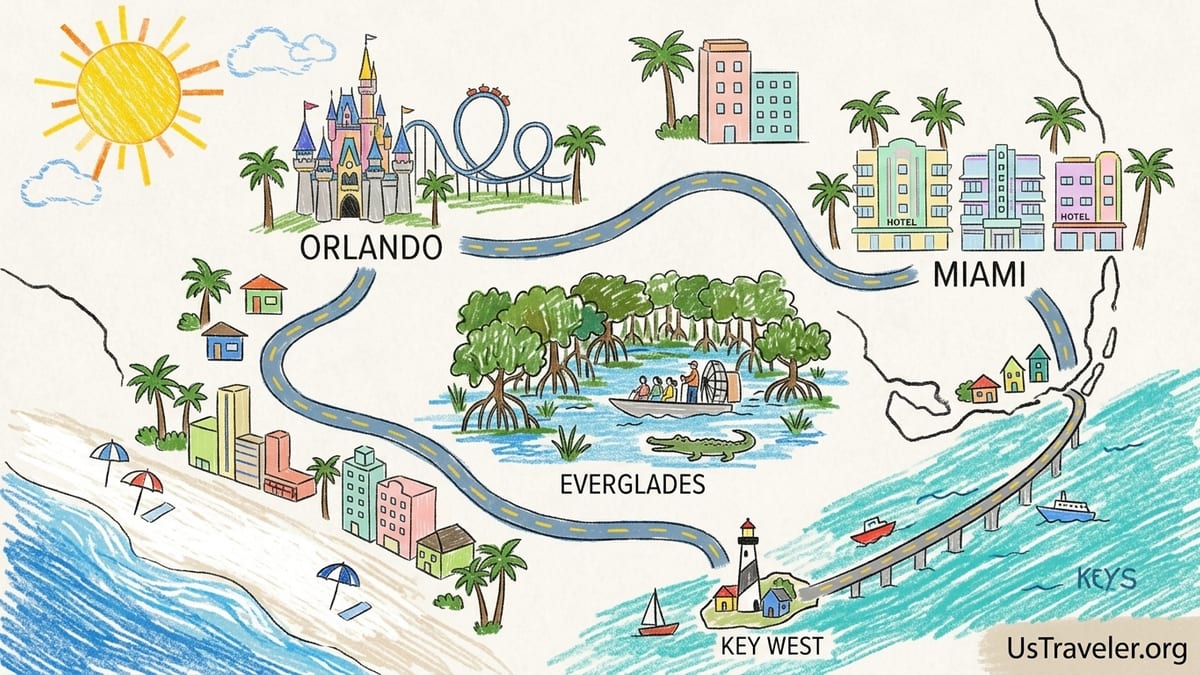
Most visitors build a Florida itinerary around one or two main hubs, then add day trips. In practice, that might mean a week based in Orlando with a one-day dash to the Kennedy Space Center, or four nights in Miami combined with a day in the Everglades and a long day trip or overnight in Key West. Driving distances are longer than they look: Orlando to Miami is roughly four hours by car, Miami to Key West is about three and a half to four hours each way without heavy traffic, and the Panhandle’s Emerald Coast is a different world again, a full day’s drive from South Florida. Choosing the right base is what prevents your vacation from turning into a road trip of parking lots and gas stations.
Think first about your priority: theme parks, beaches, nightlife, wildlife, history or a relaxed beach rental where the car keys stay on the counter. Families with younger children tend to anchor in Orlando, then pair it with a quieter beach stretch like Clearwater or Siesta Key. Couples often combine Miami with either the Keys or Naples for a more upscale, slower-paced finish. Road-trip travelers link several Gulf Coast towns, maybe continuing west into the Florida Panhandle. Understanding what each destination genuinely excels at will help you put your trip money and limited vacation days where they pay off most.
Budget also shapes the decision. Multi-day tickets to major Orlando theme parks routinely cost hundreds of dollars per person, even before food and extras, and nightly rates near the parks or on Miami Beach routinely spike on weekends and in winter. By contrast, renting a condo in Destin or along Scenic Highway 30A outside peak school holidays can feel relatively good value, especially for groups or families sharing a kitchen. The same is true of older motels along the Gulf in places like St. Pete Beach or Madeira Beach, which can feel refreshingly affordable compared with oceanfront South Beach hotels.
Finally, consider seasonality. Winter and early spring bring ideal weather to South Florida and the Keys, but also the highest prices. Summer delivers steamy heat, afternoon thunderstorms and hurricane risk, but can work for budget-conscious families who plan around mid-day breaks and indoor time. Shoulder seasons like late April, early May and October often hit a sweet spot in many parts of the state, with warm water, fewer crowds and more manageable hotel prices.
Orlando: Theme Park Capital and Family Magnet
Orlando remains the undisputed center of gravity for family travel in Florida. The city’s big four theme parks sit within easy driving distance: Magic Kingdom, EPCOT, Disney’s Hollywood Studios and Disney’s Animal Kingdom, plus the two main Universal Orlando parks and water parks. A typical family might buy a three to five day ticket bundle for one of the major resort complexes, with base one-park-per-day tickets often running into the low hundreds per person per day once taxes and peak-date pricing are factored in. That makes Orlando by far the most expensive place in Florida for activities, but also one of the easiest locations for an all-in-one family vacation where every day is planned around rides and shows.
For families, Orlando is a strong place to stay rather than just day-trip. Many off-site hotels along International Drive or near Lake Buena Vista include shuttles to the parks, continental breakfast and pools aimed squarely at kids. Booking a two-bedroom vacation rental with a shared pool in surrounding neighborhoods like Kissimmee or Davenport has also become popular, especially for weeklong stays. Once you are there, you can sprinkle in non-park days at places like ICON Park’s observation wheel, water parks or simple downtime at the hotel pool to balance the intensity of full theme park days.
Orlando is less compelling for visitors who are not interested in parks or outlet shopping. The city has pockets of good dining and nightlife in areas like Winter Park or the Milk District, but you would not choose Orlando primarily as a foodie or nightlife destination in a state where Miami exists. For couples or solo travelers who want a bit more culture, Orlando can still work as a base paired with day trips to places like the Kennedy Space Center or Clearwater Beach, but it rarely makes sense as a quick stop; the cost and time of a theme park visit are hard to justify for just one day unless you are focused on a single must-see park.
If your priority is wildlife, beaches or a classic Florida road trip, Orlando is better regarded as a flying gateway than a place to linger, unless you are all-in on the theme parks. In that case, plan at least three full days for a meaningful experience, and more like five to seven days if you want to see both the Disney and Universal complexes without sprinting through them.
Miami and the Florida Keys: Culture, Nightlife and Island Escapes
Miami is where Florida feels most like a global city. South Beach remains the postcard image: pastel Art Deco hotels facing a wide white-sand beach, with Ocean Drive’s sidewalk cafes, rooftop bars and high-energy clubs only a short stroll away. Recent guides still rank South Beach among the country’s nightlife capitals, with clubs and lounges running well past 2 a.m. and cover charges at bigger venues commonly starting around the price of a modest sit-down dinner. But the city’s scene has spread inland, too, to neighborhoods like Wynwood, known for colorful street art and casual bars, and Brickell, where high-rise rooftops overlook Biscayne Bay.
Miami is strongest for nightlife, dining, culture and short urban beach stays. A three or four night stay on South Beach or in Miami Beach gives you easy daytime access to the sand, then evenings in the Art Deco District or drinks in Wynwood. Many visitors also carve out an afternoon in Little Havana along Calle Ocho, where cigar shops, ventanita coffee windows and salsa music create a very different mood from the polished hotel lobbies along Collins Avenue. Hotel prices on the beach often climb steeply in winter and over weekends, so travelers on tighter budgets increasingly stay in Downtown or Brickell and use rideshares or Miami Beach’s trolley and bus network to reach the sand.
South of Miami, the Florida Keys stretch along U.S. Highway 1 for about 100 miles, linking a chain of islands that includes Key Largo, Islamorada, Marathon and finally Key West. Each area has a distinct feel. Key Largo positions itself as the “Diving Capital of the World,” with reef and shipwreck dive trips and snorkel tours. Islamorada leans into sport fishing and small upscale resorts. Marathon offers family-friendly motels and easy access to attractions like the Turtle Hospital and the old Seven Mile Bridge. Key West at the end of the road is more compact and walkable, with historic wooden houses, sunset celebrations at Mallory Square and Duval Street’s steady stream of bars, live music and frozen drinks.
The Keys work best as an overnight destination rather than a rushed day trip from Miami. While some travelers do drive to Key West and back in a single day, the nearly eight hours of round-trip driving severely cuts into time on the ground. A more relaxed approach is two or three nights split between, for example, Key Largo or Islamorada for snorkeling and water sports, then Key West for nightlife and historic sights like the former home of writer Ernest Hemingway. Families often gravitate to Marathon or Lower Keys rentals with kitchens and easy access to water, while couples tend to favor smaller inns in Old Town Key West.
Everglades: America’s Subtropical Wilderness
The Everglades are where Florida feels wild. This vast subtropical wetland ecosystem, much of it protected within Everglades National Park, is easy to reach on a day trip from Miami, the Keys or even Naples. Visitors typically experience the region through airboat tours that skim over the sawgrass, boardwalk trails through cypress and mangrove habitats and wildlife viewing for alligators, wading birds and, with luck, manatees in nearby waters. A standard group airboat tour from operators near park entrances or along the Tamiami Trail often costs somewhere in the range of a modest restaurant meal per person, with packages that bundle short rides and small wildlife shows.
As a destination, the Everglades are strongest for wildlife and outdoor enthusiasts. Day trippers can enter via the Shark Valley Visitor Center north of Miami, where a tram tour follows a paved loop out into prime wildlife territory, or through the Homestead entrance, which gives access to walking trails and the road to Flamingo on Florida Bay. Photographers and birders often plan their visits during the dry season from roughly late autumn to early spring when wildlife congregates around remaining water. Summer visits are more humid and buggy, but quieter and sometimes cheaper, with afternoon thunderstorms common.
For most travelers, the Everglades make more sense as a day trip than as a overnight base. Accommodation options within park boundaries are limited compared with the beach towns and cities surrounding the region, and many visitors prefer the comfort of staying in Miami, the Keys or the Gulf Coast and driving in for a dedicated day. That said, campers and serious paddlers might choose multi-day canoe trips or backcountry camping permits that let them experience the silence of the backwaters after day visitors depart.
Families considering an Everglades excursion can combine an airboat tour with a short boardwalk trail such as the Anhinga Trail near the Royal Palm area, which often delivers close-up views of birds and alligators from the safety of a raised walkway. Packing sun protection, insect repellent and plenty of water is essential, as shade can be limited and services are sparse once you are inside the park and away from visitor centers.
Gulf Coast Cities: Tampa, St. Petersburg and Clearwater
The central Gulf Coast, anchored by Tampa, St. Petersburg and Clearwater, combines city energy with classic sandy beaches. Tampa itself is a logical base for travelers who want urban amenities along with theme-park style attractions such as Busch Gardens, which pairs roller coasters with zoo exhibits. The revitalized Tampa Riverwalk links museums, restaurants and parks along the Hillsborough River, giving visitors a place to stroll in the evenings without getting back in the car. Sports fans also appreciate Tampa’s big-league teams, particularly if a trip coincides with a home game.
Across the bay, St. Petersburg feels more artsy and laid-back, with a busy downtown waterfront, independent galleries and museums such as the Dalí Museum and the Museum of Fine Arts. North and west of downtown, beach communities like St. Pete Beach and Treasure Island line the barrier islands with low- to midrise hotels, older motels and a growing number of vacation rentals. Clearwater Beach, to the north, remains one of Florida’s best-known family beach destinations, with a broad white-sand beach, a pier with sunset festivities and a strip of hotels and casual restaurants within easy walking distance of the water.
This stretch of the Gulf Coast is particularly strong for families and beach-focused vacations where theme parks are not the main event. Parents can combine a day at Clearwater Marine Aquarium or a dolphin-watching cruise with long, low-key afternoons on the sand. A modest condo a few blocks off the most coveted beachfront, often with a shared pool and kitchen, can offer better value than a small oceanfront hotel room in Miami or the Keys during the same season. The central Gulf Coast also suits couples who want reliable sunshine, good seafood and relaxed bar scenes rather than an all-night club circuit.
From a planning perspective, Tampa and St. Petersburg are worth at least three or four nights as a base, with Clearwater and nearby beaches best experienced as overnight spots rather than rushed day trips from Orlando. That said, Orlando visitors who crave a beach day sometimes drive the roughly two hours each way to Clearwater Beach and back in a single day. It is doable but can feel rushed, especially in peak season traffic. If your trip is heavily weighted toward beaches, consider reversing the equation: base on the Gulf and day trip inland to Busch Gardens or other attractions.
Southwest Gulf Coast: Sarasota, Siesta Key and Naples
Farther south along the Gulf, Sarasota, Siesta Key and Naples form a more upscale, slower-paced counterpart to the central Gulf Coast. Sarasota itself offers a mix of cultural institutions, including the Ringling complex with its art museum and historic mansion, alongside small city dining and a working marina. Just offshore, barrier islands like Lido Key and Longboat Key provide quieter beaches and midrange to high-end resorts. But the area’s celebrity is Siesta Key, where a famously soft, quartz-crystal sand beach has earned repeated “best beach” mentions in travel rankings.
Siesta Key and neighboring islands excel for couples and families who want beautiful beaches with fewer high-rises than Clearwater or Miami Beach. The pace is slower: think lounging under rented umbrellas, beach-walking at sunset and dinners at casual seafood spots in Siesta Key Village. Vacation rentals dominate here, from condo towers facing the Gulf to smaller apartment-style units within walking distance of the shore. For many visitors, a weeklong rental in or near Siesta Key feels like the archetypal Florida beach holiday, especially outside of the most crowded winter and school-break weeks.
Naples, farther south, is noticeably more polished and affluent. Its historic Third Street South and Fifth Avenue South districts are lined with boutiques, galleries and restaurants that skew toward the higher end. Wide residential streets shaded by banyan trees lead to a long pier and soft-sand beaches that remain relatively uncrowded compared with some better-known stretches. Naples appeals strongly to couples and retirees, as well as families who prefer a quieter, more refined beach base. Golf, boat excursions into nearby mangrove estuaries and day trips to spots like Marco Island or the Ten Thousand Islands round out typical itineraries.
Both Sarasota and Naples work well as primary bases for beach and culture trips, ideally for four to seven nights. They also position you within day-trip range of the Everglades, especially if you drive the Tamiami Trail to Shark Valley or the Gulf Coast Visitor Center. Travelers focused mainly on nightlife or theme parks will find the region quiet, but for those seeking a mix of beaches, art, dining and nature, the southwest Gulf Coast is one of Florida’s most rewarding corners.
The Emerald Coast: Destin and Scenic 30A
Up in the Florida Panhandle, the Emerald Coast feels almost like a different state. Here, towns like Destin, Miramar Beach and the communities strung along Scenic Highway 30A sit on a stretch of coastline known for sugar-white sand and strikingly green water. Destin began as a fishing village and still brands itself as “The World’s Luckiest Fishing Village,” with deep-sea fishing charters, dolphin cruises and a harbor district of seafood restaurants and casual bars. The atmosphere is family-friendly and informal, with many visitors arriving by car from neighboring Southern states for weeklong rental stays.
Along 30A, purpose-built communities such as Seaside, Rosemary Beach and WaterColor combine pastel houses, bike paths and pedestrian-friendly town centers. Seaside, in particular, gained wider fame when it was used as the filming location for the movie “The Truman Show,” and its central square still feels like a movie set in the best way, with food trucks, a small bookstore and outdoor concerts in season. Vacation homes and condos dominate the lodging market along 30A, with many properties rented weekly, often from Saturday to Saturday in peak summer and spring break weeks.
The Emerald Coast is strongest for extended family beach holidays and relaxed road trips. It is less suited to quick fly-in weekends unless you live within easy reach of airports in Destin-Fort Walton Beach or Pensacola. Once you arrive, you are buying into a lifestyle of morning beach time, afternoon pool breaks, grilled dinners on the deck and perhaps a sunset walk to the nearest ice cream shop. Nightlife exists in the form of beach bars and live music joints, but you do not come here for megaclubs or late-night rooftop scenes.
For travelers trying to decide between, say, Clearwater and Destin, the main trade-offs are travel time and vibe. Clearwater is easier to combine with Orlando and Tampa and has a more built-up strip of hotels and restaurants right on the beach. Destin and 30A require more effort to reach from most major hubs but reward that with a slightly more residential feel, more vacation-home options and a strong sense of being away from it all, especially outside peak holiday periods.
St. Augustine: History, Charm and a Different Side of Florida
St. Augustine, on Florida’s northeast coast, offers one element many other Sunshine State destinations do not: a walkable historic center with centuries-old architecture. Often billed as the oldest continuously occupied European-established settlement in the continental United States, it pairs cobblestone streets and Spanish colonial buildings with a harbor-front fort and a compact downtown filled with inns, restaurants and small museums. The result feels more like a small European city grafted onto the Florida coast than a typical beach town.
Travelers come to St. Augustine for history, atmosphere and a milder climate than South Florida in summer. Family-friendly attractions include the Castillo de San Marcos, a masonry fort overseen by the National Park Service, and various trolley tours that thread through the old streets. Couples often choose small bed-and-breakfast inns within walking distance of the main plaza, making it easy to enjoy dinners and drinks without driving. The city also hosts a busy calendar of events, from holiday lights displays in winter to occasional music festivals and cultural celebrations, which can push up room rates and fill parking garages.
Beaches are part of the picture but not the whole story. Nearby St. Augustine Beach and Vilano Beach give visitors a chance to dip into Atlantic waves or walk long stretches of sand, but they are a short drive across bridges rather than being directly in front of most historic district hotels. That arrangement makes St. Augustine ideal for travelers who want history and walkability first, then add on beach time where and when it suits them. It is less ideal for visitors who want to roll out of bed and be on the sand within minutes.
St. Augustine works well as a primary base for three or four nights, particularly when combined with other north or central Florida stops such as Daytona Beach or inland springs. It can also act as a fascinating overnight or two-night addition to a longer Florida road trip that starts in Miami or Orlando and heads north, giving a strong sense that you have experienced more than one side of the state.
Which Destinations Suit Your Travel Style
When you match Florida destinations to trip styles, clear patterns emerge. For families, Orlando, Tampa Bay, Clearwater and the Emerald Coast stand out. Orlando offers wall-to-wall theme parks, while Tampa and Clearwater layer in beaches and a smaller number of big attractions like Busch Gardens and aquariums. Destin and 30A, meanwhile, cater to multi-generational trips where cousins run between beach and pool and grandparents enjoy porch swings and seafood dinners. In these places, staying put in a resort or rental makes more sense than hopping around.
For beach purists, the Gulf Coast is generally softer and calmer than the Atlantic. Siesta Key, Clearwater Beach, St. Pete Beach, Naples and the 30A towns all deliver wide, walkable sands and typically clearer water than many Atlantic surf beaches. The Florida Keys are more about being on the water than on sandy beaches; Key West, for example, has a few small beaches but leans heavily on boat trips and sunset sails. Miami Beach and Fort Lauderdale offer Atlantic beaches close to big-city amenities, appealing if you want both surf and nightlife rather than a sleepy shore.
Nightlife seekers should bias toward Miami, particularly South Beach, Brickell and Wynwood, where the bar and club scene runs late and year-round. Orlando and Tampa have nightlife districts, but they are not the destination in themselves in the way Miami’s after-dark scene is. Couples looking for romance without thumping bass will likely prefer Naples, Siesta Key, Sarasota or a quiet 30A community, where evenings revolve around waterfront dinners and walks rather than bottle service.
Wildlife and nature enthusiasts will get the most out of the Everglades, certain parts of the Gulf Coast and the Keys. Pair a day in Everglades National Park with a stay in Miami, Naples or the Keys; look for manatees in winter near warm-water discharges on both coasts; and add state park visits along the Panhandle, where coastal dunes and rare coastal lakes provide a different kind of Florida landscape. History and culture travelers, finally, should make time for St. Augustine and at least a full day exploring Miami’s varied neighborhoods, from Art Deco South Beach to Little Havana.
The Takeaway
No single destination can be “the best place to visit in Florida” because each major region delivers a different version of the state. Orlando is strongest for families and theme park fans who want tightly planned days and immersive attractions. Miami shines for nightlife, food and an urban cultural mix that you will not find on the quieter Gulf shores. The Florida Keys and Key West offer an island-road-trip vibe that feels removed from the mainland, especially if you give yourself time to slow down. The Everglades add a rare and ancient ecosystem that anchors many South Florida itineraries.
On the Gulf Coast, Tampa Bay, Clearwater, Sarasota, Siesta Key and Naples specialize in classic beach holidays, family condo weeks and sunset-focused evenings, while the Emerald Coast around Destin and 30A turns into a seasonal second-home village for beachgoers from across the South. St. Augustine, meanwhile, reminds visitors that Florida has a deep and complex history beyond sun and sand. As you sketch out a route, decide what you want your days to look like, then pick one or two hubs that match that vision and reserve other destinations for strategic day trips.
For many travelers, that means pairing a few intense days in Orlando or Miami with a calmer stretch on the Gulf or in the Keys, or starting with history and charm in St. Augustine before heading to a Panhandle beach town for a week. Whatever combination you choose, Florida rewards travelers who understand that it is a patchwork of very different places and who take the time to match their base to their travel style, budget and season.
FAQ
Q1. How many days should I spend in Orlando if I want to visit the major theme parks?
Most travelers who want to visit a mix of the big Orlando parks plan at least four full days, which allows two or three days at one resort complex and one or two days at another without racing through each park.
Q2. Is Miami or Orlando better for a first-time Florida trip with teenagers?
If your teenagers are obsessed with rides and immersive attractions, Orlando is usually the better base. If they care more about beaches, nightlife, music and street art, Miami and Miami Beach offer more variety and a more urban feel.
Q3. Can I visit Key West as a day trip from Miami?
It is physically possible to drive from Miami to Key West and back in a day, but the round-trip drive is long enough that most travelers feel rushed. Staying at least one night in Key West makes the experience more relaxed and worthwhile.
Q4. Do I need to stay overnight near the Everglades?
Most visitors experience the Everglades as a day trip from Miami, Naples or the Keys, using airboat tours, tram rides or short trails before returning to their base that evening.
Q5. Which Gulf Coast beach town is best for families?
Clearwater Beach, St. Pete Beach, Siesta Key and Destin are all strong family choices, with calm water, plenty of casual dining and a wide range of condos and hotels close to the sand.
Q6. Is the Emerald Coast worth the extra travel time compared with central Florida beaches?
If you want a weeklong rental-based beach holiday and do not mind the additional travel, the Emerald Coast can feel more laid-back and residential than central Florida beaches and is especially popular with extended family groups.
Q7. Do I need a car in Miami and Orlando?
In Orlando, a car or dedicated shuttle service is very useful for reaching parks and restaurants. In Miami Beach and central Miami, you can rely more on rideshares, trolleys and walking, though a car helps for day trips to the Everglades or the Keys.
Q8. When is the best time of year to visit Florida for good weather and fewer crowds?
Late spring and fall often bring warm weather and thinner crowds than peak winter and school-break periods, though conditions vary by region and hurricane season runs roughly from early June through late November.
Q9. Is St. Augustine a good base for a family trip?
Yes, St. Augustine works well for families who enjoy history and walkable streets and are happy to drive a short distance to nearby beaches, rather than staying directly on the sand.
Q10. How should I combine destinations on a one-week Florida trip?
A common approach is to spend three or four nights in a main hub like Orlando or Miami for theme parks or city life, then add three or four nights in a beach area such as Clearwater, Siesta Key, Naples, the Keys or the Emerald Coast.