


I’ve driven into the Adirondacks enough times to know the trick: don’t “do the Adirondacks.” Pick a few bases, let the roads slow you down, and choose stops that reward the effort the moment you step out of the car. The distances look small on a map, but between mountain weather, trailhead logistics, and the way a lakeside town can keep you for a full afternoon, this is a region that punishes overpacking and rewards intentional routing. What follows is how I’d build an Adirondacks driving trip now: the specific arrivals I’d plan for, the bases I’d book, the meals I’d anchor my days around, and the exact moments that made each stop feel like the reason I came.
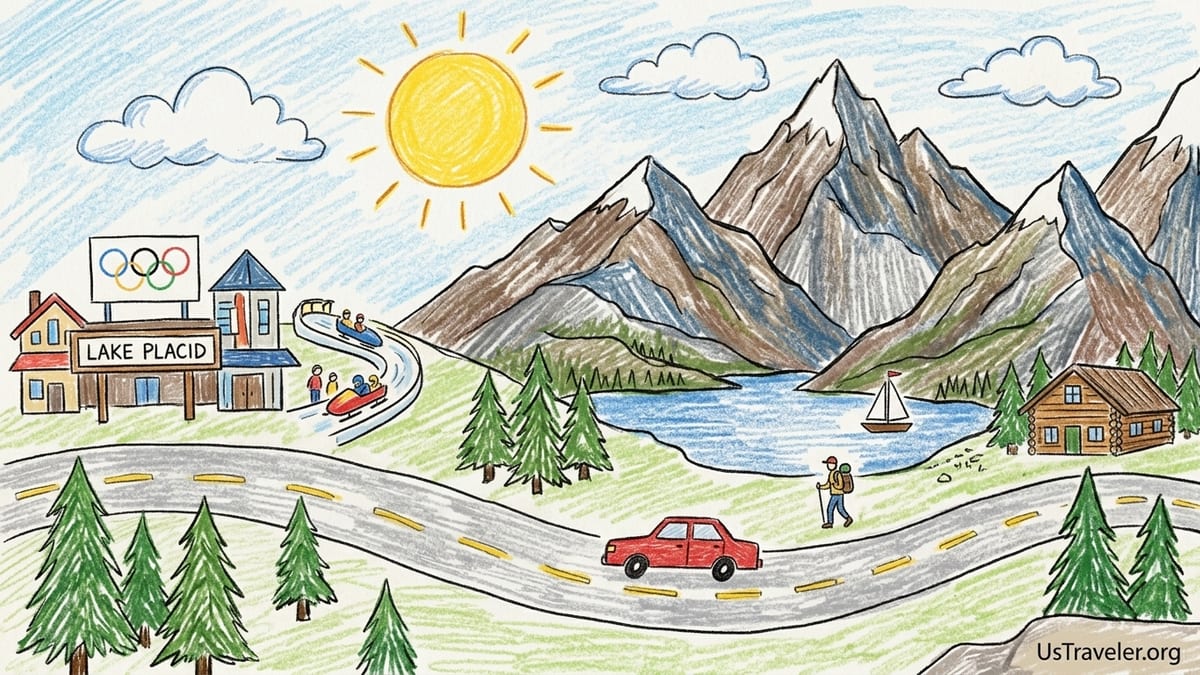
Lake Placid: My Base When I Want Mountains Plus The Olympics
Lake Placid still feels like the Adirondacks’ most convenient “do-it-all” base: you roll into town and you’re immediately surrounded by walkable streets, serious peaks, and the unmistakable sense that winter sports history is not a theme here, it’s local infrastructure. My favorite arrival is late afternoon, when the light softens on Mirror Lake and the sidewalks around Main Street are just busy enough to feel lively. The town is compact, which matters after a long drive because you can park once, check in, and start your trip on foot.
If I’m building an itinerary around Lake Placid, I’d book lodging that lets me avoid constant driving: a spot within walking distance of Main Street so I can walk to coffee, a casual dinner, and the lake without thinking about parking. For a trip with a resort feel, I’d base somewhere with lake views and easy access to the Olympic sites. For a simpler, hiking-forward stay, I’d prioritize quick morning exits toward trailheads over a view. Either way, I’m choosing Lake Placid when I want to mix full-day hikes with shorter, high-reward activities that still feel uniquely Adirondack.
The “this is why I’m here” experience, even for people who think they’re not into sports museums, is the Lake Placid Olympic Museum inside the Olympic Center. It’s an easy, weather-proof stop that pairs well with a rainy afternoon or a rest day between bigger hikes. Practical detail I always appreciate: parking in the lot during the museum’s open hours is priced at $2 per hour, which makes a quick, focused visit feel simple rather than stressful. I also like that you can treat the Olympic Center area as a cluster: it’s not just a single exhibit, it’s a place where the town’s identity is built right into everyday life.
Time I’d allocate now: at least two full days based in Lake Placid, three if you want a mix of High Peaks hiking, Olympic attractions, and a slower evening rhythm. Best for: winter sports (with Whiteface close by), serious hikers who want efficient access to trailheads, couples who like a walkable town with good dining, and families who want a mix of “do” and “see” without long drives each day.
The High Peaks: Where The Drive Turns Into A Commitment
The High Peaks are the Adirondacks at their most demanding and most honest. This is where you stop thinking in terms of “quick scenic things” and start thinking in terms of an early alarm, a real pack, and backup plans for weather. My preferred approach is to treat the High Peaks as a dedicated block of the trip rather than something you wedge between brunch and shopping. The arrival that sticks with me is pulling into the Adirondak Loj area early, with that crisp, quiet energy that only exists before the day’s crowds fully spill onto the trails.
If I’m staying near the High Peaks for hiking, I build my plan around either a Lake Placid base or a more trail-centric stay where I can get on the road before dawn. For a truly hiking-forward experience, the Adirondack Mountain Club’s Johns Brook Lodge is the kind of destination that turns a hike into a mini-expedition. It’s reached by a roughly 3.5-mile hike in, which naturally filters the crowd, and in summer you can add meals to your reservation, including a dinner seating that begins at 6:30 p.m. That dinner time becomes a real anchor: it changes your pace on the trail because you’re hiking toward a table, not just a parking lot.
For a high-reward, not-too-long outing that still delivers classic High Peaks scenery, I like Mount Jo as a “first summit” or rest-day hike. It starts from the Adirondack Mountain Club’s Heart Lake Program Center and gives you that immediate sense of being deep in the mountains without the all-day penalty. The detail that makes it feel like a real Adirondack hike, not a “tourist walk,” is the choice of routes: a steeper short trail with scrambles, and a longer, more gradual way up. When you hit the viewpoint and the High Peaks spread out in front of you, it’s the kind of panorama that recalibrates your expectations for the whole trip.
Time I’d allocate now: minimum one full day for an introductory High Peaks hike, two to three days if you’re aiming for longer routes or multiple summits. Best for: serious hiking (obviously), fall foliage hikers who want big payoff, and travelers who find their favorite meals are the ones they’ve earned. Not best for: anyone trying to keep a strict, minute-by-minute schedule; the High Peaks don’t care about your timeline.
Whiteface And Wilmington: The Stop That Makes Lake Placid Feel Bigger
Whiteface is the kind of mountain that changes your trip even if you never click into skis. From Lake Placid, the drive to Wilmington is short enough that it feels like an “add-on,” but the scenery and vertical relief make it feel like you crossed into a different chapter of the Adirondacks. I like arriving with a plan that fits the season: summer and fall are for the highway and gondola views, and winter is for full days that start early and end with tired legs and an easy dinner.
One of the most tangible, real-world examples of “Adirondacks travel logistics” is the Whiteface Veterans’ Memorial Highway. It’s a paved climb that rises more than 2,300 feet in about five miles from the toll house, which means you can access big views even if your group has mixed mobility or mixed motivation. The Federal Highway Administration lists the toll at $5.00 for cars and $8.05 for buses, a concrete number that helps you decide whether this is your splurge stop or your “nice if we have time” detour. If I’m traveling with family members who want the view without the hike, this is the stop I build around.
In winter, Whiteface becomes the day-trip engine for a Lake Placid stay. Ticketing details shift by date and product, so I plan to buy in advance and treat lift tickets like airfare: the earlier you look, the more options you tend to have. I also pay attention to programs like Whiteface’s Frequent Skier Card window that’s advertised through December 10, 2026, which can matter for anyone building multiple ski days across Whiteface, Gore, and Belleayre rather than committing to a full season pass.
Time I’d allocate now: one full day if you’re skiing, or a half day if you’re doing the scenic drive and pairing it with Wilmington’s quieter pace. Best for: winter sports, photographers chasing big panoramas without a big hike, and families who need an activity that feels dramatic but doesn’t require an all-day trek. Crowds: busiest on peak winter weekends and prime foliage weekends; the earlier you arrive, the calmer it feels.
Saranac Lake: The Quieter Mountain-Town Stay I Keep Recommending
Saranac Lake is where I go when I want Adirondack mood without Lake Placid’s constant buzz. The arrival feels different: you’re still surrounded by water and mountains, but the pace shifts. It’s easier to imagine staying a little longer, sleeping a little later, and letting the town be your itinerary. I like using Saranac as either a dedicated base for a calmer trip or as the “reset” stop between bigger, more crowded anchors.
Accommodations here are about vibe. I look for something walkable to downtown so I can step out for coffee and come back without moving the car. If I’m traveling with friends, I pick a place where we can spread out a bit and end the day with a simple porch or common area routine: a local beer, a deck of cards, tomorrow’s trail decision made without pressure. When I’m writing a driving itinerary, I put Saranac Lake in the plan specifically to counterbalance the more resort-forward feel of Lake George and the higher-intensity logistics of the High Peaks.
One of the most memorable “small” experiences here is how naturally outdoor time blends into town time. The Adirondack Rail Trail runs through vibrant sections of Lake Placid, Saranac Lake, and Tupper Lake and is managed by the New York State Department of Environmental Conservation. In practical terms, it means you can build a morning around a bike ride or run and still be back in town for a real lunch. The trail also creates an easy, car-light way to connect these communities, which is rare in a region where driving is usually the default.
Time I’d allocate now: one to two nights, especially if you want a quieter mountain-town stay or you’re planning to ride part of the rail trail. Best for: travelers who want a lower-key base, couples who like craft beverages and local dining, and families who want outdoor access without committing to all-day hikes. Crowds: generally more manageable than Lake Placid; it feels calmer even in summer.
Lake George: Where I Lean Into Boats, Beaches, And A Resort Rhythm
Lake George is not trying to be the High Peaks and you’ll enjoy it more if you let it be what it is: a lake-first destination with a strong boating and resort market, built around a 32-mile stretch of water that dictates the whole day’s rhythm. My favorite arrival is mid-morning when you can check in, drop bags, and be on the waterfront quickly. It’s a place where the first hour matters because parking and crowds can intensify fast in peak summer.
My accommodation strategy here is simple: either stay walkable to the village so you can move around without constantly driving, or go all-in on a lakeside resort setup where the point is not to leave much at all. If your group includes kids or mixed-interest travelers, Lake George can be the easiest stop on the entire Adirondacks drive because you can satisfy a lot of preferences without anyone having to wake up early for a trailhead.
On the water, I like doing at least one classic cruise with the Lake George Steamboat Company, partly because it makes the scale of the lake feel real. The company posts seasonal schedules, including a Fall 2026 cruise schedule, which is exactly the sort of detail I check before committing to dates. When the schedule lines up, it’s a low-effort, high-reward way to experience the lake without needing to rent a boat or manage gear. The memorable part for me is the way the shoreline changes as you move: resort pockets, quieter stretches, and that constant sense of the Adirondacks rising just behind the waterline.
Time I’d allocate now: two nights if you want a true lake weekend, one night if you’re using it as a scenic break on a longer loop. Best for: families, boating, swimmers, resort travelers, and anyone who wants a “vacation” feeling rather than a “trip” feeling. Fall foliage: great from viewpoints and on the water, but book earlier because weekends fill.
Tupper Lake: The Wild Center, Big Nature Energy, And A Family-Friendly Win
Tupper Lake is the stop I recommend when someone tells me they want the Adirondacks to feel wild, but they also want a structured, family-friendly day that doesn’t depend on perfect weather. Arriving here feels like arriving at the Adirondacks’ quieter core. You’re not chasing a trendy main street, you’re choosing a destination that’s about the landscape itself.
The Wild Center is the reason I route people through Tupper Lake. It’s an experience you can actually plan around, with clear visitor information, seasonal notes, and enough variety to keep different ages engaged. As of current posted pricing, adult tickets are $28, which is a concrete budget line that helps families decide whether this is a quick stop or a cornerstone day. What makes it memorable for me is the way the center invites you outdoors rather than trapping you inside a building: you can do exhibits, then step right back into forest and water with a purpose.
My ideal day here includes time for the Wild Walk and then a slower loop through the property so it doesn’t feel like a rushed attraction. If I’m traveling with kids, I plan for breaks and snacks and treat the visit like a day in the park that happens to come with museum-level interpretation. If I’m traveling without kids, I still come for the same reason: it’s one of the easiest places in the Adirondacks to feel connected to the ecosystem without committing to a big-mileage hike.
Time I’d allocate now: a half day at minimum, a full day if you want it to feel unhurried or you’re pairing it with a rail trail ride. Best for: families, mixed-weather itineraries, travelers who want nature with context, and anyone who wants a memorable stop that doesn’t require elite fitness.
Blue Mountain Lake And The Central Adirondacks: The Most “Adirondack” Feeling Stop
When I want the Adirondacks to feel like a living story rather than a checklist of peaks, I drive into the central Adirondacks and make Blue Mountain Lake my anchor. The arrival is slower and more wooded. It feels less like a destination you stumbled upon and more like one you chose on purpose. This is where the driving is absolutely part of the experience, because the roads themselves are quiet, scenic, and gently immersive.
The Adirondack Experience, The Museum on Blue Mountain Lake, is the stop that consistently justifies that extra driving time. The campus spreads across more than 20 buildings on roughly 120 acres, which changes how you experience a museum: it’s not one building and a gift shop, it’s a place where you wander, step outdoors, and keep discovering. I like visiting when I can give it a full, unhurried afternoon, because the best moments are not always the marquee exhibits but the way the setting and the stories reinforce each other.
Practically, I plan Blue Mountain Lake as either a day trip from another base or a one to two night “quiet core” stay. If I’m traveling with someone who wants fewer crowds and more porch time, this is the Adirondacks stop that feels most restorative. If I’m with history-minded travelers, the museum becomes the trip’s conversation starter, the thing you keep referencing later when you pass a guideboat on a lake or see a great camp tucked into the trees.
Time I’d allocate now: at least a half day for the Adirondack Experience itself, ideally one overnight nearby to make the drive feel worthwhile. Best for: quieter mountain-town stays, rainy-day flexibility, multi-generational groups, and travelers who want to understand the Adirondacks, not just photograph them.
The Takeaway
If I were building a driving trip through the Adirondacks today, I’d stop trying to “cover” the park and instead choose two bases and a couple of signature day trips. I’d use Lake Placid as my high-energy hub for hiking access, Olympic history, and quick drives to Whiteface. I’d add Lake George when I want a lake-first vacation rhythm with boats and resorts. And I’d add one quieter counterweight, either Saranac Lake for a calm, walkable town and rail trail access, or Blue Mountain Lake for the central Adirondacks and the Adirondack Experience.
For serious hiking, the High Peaks deserve their own dedicated block and your best planning energy. For families, Lake George plus The Wild Center in Tupper Lake can deliver a full Adirondacks experience with less stress. For winter sports, Lake Placid plus Whiteface is the obvious pairing. For fall foliage, I’d prioritize early starts, weekday travel when possible, and a mix of drives, short hikes like Mount Jo, and at least one lake day so the trip doesn’t become only about crowded trailheads.
Most of all, I’d plan the trip around the moments that feel unmistakably Adirondack: a big view reached by effort, a lake crossed slowly, and a small town evening where the quiet is the point. Those are the stops that made the driving worth it for me, and they’re the same stops I’d choose again.
FAQ
Q1. How many days do I need for a first Adirondacks driving trip?
I’d plan 4 to 6 days so you can base in Lake Placid plus one other area without rushing trail days or lake time.
Q2. Which Adirondacks stop is best for serious hiking?
The High Peaks region near the Adirondak Loj is the best choice if hiking is your primary goal and you want classic Adirondack summit and valley routes.
Q3. What’s the best base for combining hiking with attractions and dining?
Lake Placid is the most convenient all-around base because it pairs mountain access with Olympic venues, walkability, and a strong restaurant scene.
Q4. Where should families go if not everyone wants long hikes?
Lake George for lake days and Tupper Lake for The Wild Center are my go-to picks because they offer big Adirondack payoff with flexible effort levels.
Q5. Is Whiteface worth visiting if I don’t ski?
Yes. The Whiteface Veterans’ Memorial Highway and summer-and-fall mountain experiences make it a high-reward scenic stop even without skiing.
Q6. What’s a good “big view for the effort” hike near Lake Placid?
Mount Jo is a standout because it’s relatively short but delivers a classic High Peaks panorama from the Heart Lake area.
Q7. Which place is best for a quieter mountain-town stay?
Saranac Lake is my top pick when you want Adirondack character and outdoor access with a calmer pace than Lake Placid.
Q8. What’s the best way to experience Lake George without renting a boat?
Book a scheduled cruise with the Lake George Steamboat Company so you can get on the water with minimal planning and no gear logistics.
Q9. Where do I go in the Adirondacks for museums and local history?
Blue Mountain Lake and the Adirondack Experience are the most rewarding for Adirondack culture, heritage, and a campus that feels like part of the landscape.
Q10. How should I split time between Lake Placid and Lake George?
If you want more hiking and winter-sports access, give Lake Placid more days. If you want boating and resort downtime, shift more nights to Lake George.