


Northwest Florida’s Emerald Coast stretches for more than 100 miles of sugar-white sand, but each beach town along it feels different once you are on the ground. From the historic forts and walkable boardwalk of Pensacola Beach to the pastel town centers of 30A and the high-rise skyline of Panama City Beach, choosing the right base can shape your entire trip. This guide compares the major areas one by one so you can match their hotel options, vacation rentals, access, and overall vibe to your style and budget.
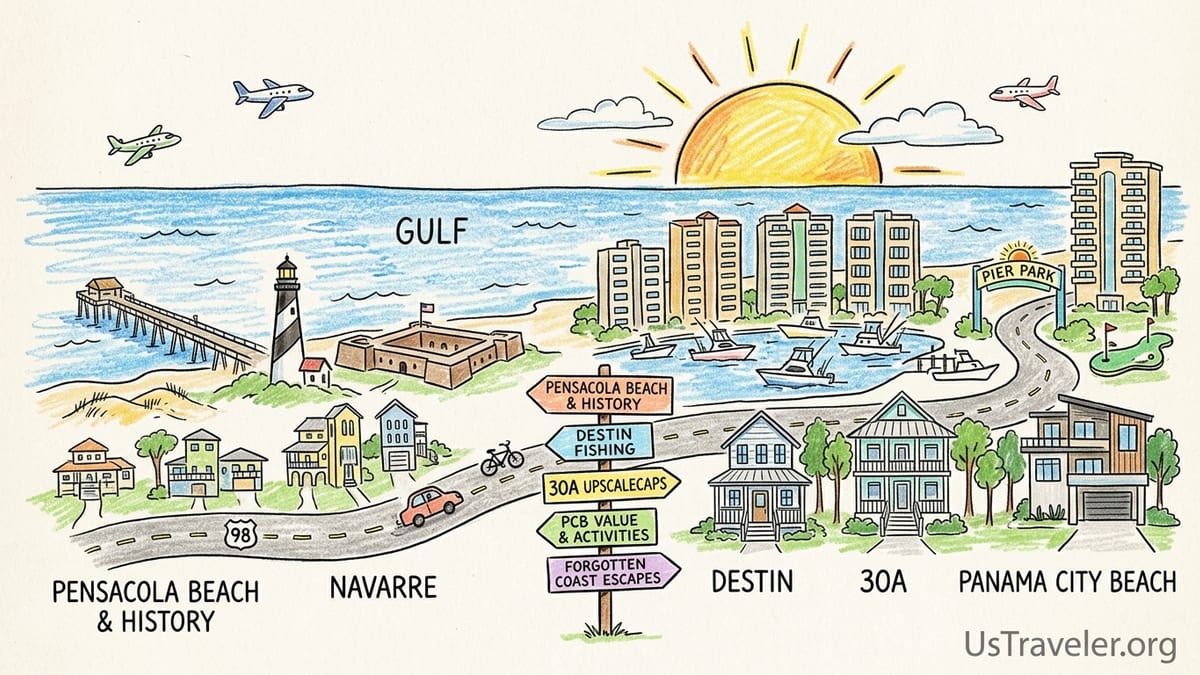
How the Emerald Coast Fits Together
When travelers talk about Northwest Florida, they are usually referring to the Emerald Coast, a roughly 100 mile stretch of Gulf coastline from Pensacola Beach near the Alabama line east through Navarre, Destin, 30A and Panama City Beach, ending in the quieter Forgotten Coast around Mexico Beach, Port St. Joe and Apalachicola. The sand is remarkably consistent along this run: fine, white quartz that feels like powdered sugar and stays relatively cool even in midsummer. What really changes from town to town is what has been built behind the dune line and who it is built for.
On a practical level, three airports serve most visitors: Pensacola International Airport for the western beaches around Pensacola Beach and Navarre, Destin–Fort Walton Beach Airport for Destin, Okaloosa Island and western 30A, and Northwest Florida Beaches International Airport inland of Panama City Beach for eastern 30A, Panama City Beach and the Forgotten Coast. Flight options and prices shift seasonally, but all three typically have service from major hubs like Atlanta, Dallas, Charlotte and Nashville, which keeps the region reasonably accessible without feeling overly urban.
Because the coast runs essentially west to east, many visitors choose to drive along US 98 or Scenic Highway 30A and sample multiple towns before deciding where to base themselves. A practical way to think about your choice is to decide first whether you want a self-contained resort experience, a walkable town with restaurants and boutiques, or a simple place to sleep near a wide-open beach. Once that is clear, the strengths and weaknesses of each stop become easier to compare.
Prices can vary sharply between areas, even for similar views. For example, a two-bedroom Gulf-front condo in peak July might run significantly less in Panama City Beach than in Destin or on 30A, while a simple motel-style room across the street from the water in Navarre may cost less than a similar room in action-heavy Pensacola Beach. Availability also changes quickly for prime weeks, so in popular areas like Destin and 30A you will often need to secure summer vacation rentals four to six months in advance.
Pensacola Beach: History, Boardwalk and Classic Beach Town Energy
Pensacola Beach sits on Santa Rosa Island, linked to the mainland by a bridge from Gulf Breeze. It combines a traditional beach-town strip of hotels, bars and souvenir shops with genuine historic interest just a short drive away in downtown Pensacola, which dates back to the 16th century. Many visitors split their time between the water and sites such as Fort Pickens in Gulf Islands National Seashore, the Pensacola Lighthouse and the brick warehouses of historic Palafox Street.
Hotel supply is relatively strong for a barrier island of this size. You will find multiple mid-range and upper-midscale brands right on the water, including large beachfront towers with pools facing the Gulf and family-oriented properties on the quieter sound side. A typical spring or fall night at a Gulf-front chain hotel might run in the mid-200 dollar range before taxes, while high summer and holiday weekends can climb well higher. Vacation rentals include everything from small one-bedroom condos near the Casino Beach pier to multi-story beach houses with porches facing the National Seashore.
Beach access in the core of Pensacola Beach is straightforward, with public parking, a fishing pier and a wide stretch of sand at Casino Beach. Drive west and the development thins quickly as you enter the protected National Seashore where dunes dominate and crowds thin out. Restaurants cluster around the Pensacola Beach Boardwalk and along Via de Luna Drive, where you can move easily from a casual burger stand to seafood spots that look straight onto the water. Nightlife skews toward laid-back but can feel lively on weekends, with open-air bars offering live music and late kitchen hours, especially in summer.
This area suits travelers who want a blend of beach time, accessible dining and some off-sand exploration. Families like the shallow sound-side water and the easy access to chain restaurants and familiar hotel brands, while couples and history fans appreciate that you can spend a morning at the beach and an afternoon in museums or historic neighborhoods across the bridge. If you want Emerald Coast scenery with a more traditional Florida beach-town feel rather than a master-planned community, Pensacola Beach makes a strong base.
Navarre Beach: Quiet Condos and Low-Key Family Time
About 25 miles east of Pensacola Beach by road, Navarre Beach is dramatically quieter and more residential in feel. The skyline is lower, there are fewer neon signs, and you are more likely to share an elevator with multigenerational families carrying coolers than spring-break groups headed out at midnight. It is a favorite with travelers who want the same white sand as busier towns but fewer people between their chair and the water.
Hotel supply in Navarre itself is limited. Much of the lodging here is in vacation rentals and condo towers that stand directly on the Gulf or overlook Santa Rosa Sound. You will find everything from one-bedroom units perfect for a couple’s long weekend to large, three and four-bedroom condos built with families in mind. Because demand is more modest than Destin, rates for similar Gulf-front space often come in noticeably lower, especially outside of peak holiday weeks, and parking is usually included.
Beach access is one of Navarre’s biggest selling points. The Navarre Beach Fishing Pier area offers public access, concessions and restrooms, but you can also drive east into the stretch of Santa Rosa Island that remains largely undeveloped, giving you long views of empty dune lines and fewer umbrellas even in summer. Restaurants cluster near the base of the bridge and along the main boulevard, and while the selection is not huge, you can expect the basics: seafood grills, pizza, breakfast spots and a handful of waterfront bars. Nightlife is minimal, which many families consider a plus.
Navarre works best for travelers who want a slow pace and do not mind driving 30 to 45 minutes for more varied shopping or attractions in Destin or Pensacola. Parents with younger children often like the smaller crowds and easier parking, while snowbirds and retired couples appreciate the quieter condo complexes, fishing opportunities and the ability to walk long stretches of sand at sunrise with relatively few people around.
Destin & Okaloosa Island: Fishing, Entertainment and Condo Convenience
Destin is the busiest and most developed hub of the central Emerald Coast. Long known as the “World’s Luckiest Fishing Village,” it still revolves partly around the charter fleets that depart daily from Destin Harbor, but much of the shoreline is now lined with high-rise condos, large shopping centers and attractions such as Gulfarium Marine Adventure Park and family entertainment complexes. Okaloosa Island, just across the Destin–Fort Walton Beach Bridge, shares the same bright water and sand but feels a bit more relaxed, with fewer high-rises and a straight line of condos and hotels on the Gulf.
The lodging inventory around Destin is among the largest in Northwest Florida. You will find everything from budget-friendly chain hotels along US 98 to upscale Gulf-front resorts with lazy rivers and multiple pools, plus thousands of individually owned condos available through major rental platforms and local agencies. During July, a basic one-bedroom condo across the street from the beach might start in the high 200 to low 300 dollar per night range, while large three-bedroom units in luxury buildings command much more. On Okaloosa Island, you can often find slightly lower prices for similar space while remaining within a 10 to 15 minute drive of Destin’s attractions.
Beach access varies in Destin and can be more complicated than in some neighboring towns because of a patchwork of private and public stretches. Public access points like Henderson Beach State Park and the beach at the Crab Trap restaurant are popular, but parking can fill early in peak season. Okaloosa Island, by contrast, offers several well-signed public accesses with large parking lots, as well as a fishing pier and boardwalk area with restaurants and bars. Dining options throughout Destin range from harbor-front seafood shacks where you can watch charter boats unload their catch, to national chains in large outdoor shopping centers, to polished restaurants inside resorts.
Nightlife in Destin is the most varied on the Emerald Coast outside of Panama City Beach. The HarborWalk Village area has bars with live music, late-night patios and summer fireworks, while nearby you will find beach bars that stay open late. The trade-off is traffic: in midsummer, driving the few miles between Miramar Beach and Destin Harbor can take longer than you expect, especially around sunset. This area suits travelers who want a packed mix of fishing charters, waterparks, shopping and dining without worrying if things will be too quiet after dark.
Miramar Beach & Sandestin: Resort Comfort and Easy Amenities
Just east of Destin proper, Miramar Beach and the Sandestin resort area offer a more resort-oriented version of the Emerald Coast. Development here is newer and often organized into gated or master-planned communities, with large resorts and timeshare complexes fronting the beach and golf courses and residential neighborhoods tucked behind them along the bay side. The overall atmosphere is polished but not stuffy, with a strong focus on convenience and on-site amenities.
Lodging options range from full-service beachfront resorts with daily housekeeping and on-site dining to condo towers and townhome-style units managed as part of resort villages. In Sandestin, for example, you can rent a condo overlooking the marina, stay in a hotel wing with poolside service, or book a vacation rental home on a golf course and still use tram service to reach the beach. Prices generally run a bit higher than similar square footage in Panama City Beach or Navarre, reflecting the bundled resort facilities and central location between Destin and 30A.
Beach access in this zone depends heavily on where you stay. Guests inside resort complexes typically use private or semi-private accesses with their own parking lots, beach chair services and restrooms. If you are staying off the water along US 98, you will rely on a handful of public access points that can get crowded at prime hours. Restaurant and shopping choices are excellent, with well-known brand-name outlets, large grocery stores and multiple dining centers, including pedestrian villages with live music in high season. Nightlife tends to center on these mixed-use complexes, with outdoor bars and occasional events, but it is generally more subdued than Destin Harbor or Panama City Beach.
Miramar Beach and Sandestin are ideal for travelers who like resort consistency and easy access to both Destin and 30A. Families who value on-site activities, older travelers who prefer everything close at hand, and conference groups often choose this area. If your idea of a perfect day is alternating between the beach, the pool, the spa and a nice dinner without driving far, this part of the coast will feel like a good match.
30A: Upscale Beach Towns and Design-Forward Vacation Homes
Scenic Highway 30A, commonly shortened to simply 30A, is a two-lane coastal road running for about 20 plus miles through a series of planned beach communities between Miramar Beach and Panama City Beach. Places like Seaside, Rosemary Beach, Alys Beach and Grayton Beach each have distinct architectural styles and town centers, but share a walkable, village-like feel and an emphasis on design. This is the most distinctive stretch of the Emerald Coast if you care about the feel of the town as much as the color of the water.
Lodging along 30A is dominated by vacation rental homes, cottages and high-end condos. There are a few boutique hotels and inns, especially in places like Seaside and Rosemary Beach, but the typical visitor rents a house or condo through a local management company or major platform. Many properties are purpose-built for multi-generational groups, with bunk rooms, outdoor kitchens and golf carts or bikes included. Prices reflect both demand and limited hotel supply: a three-bedroom home within a short walk of the beach in peak season can reach into the many hundreds per night, and even off-season rates tend to be higher than in Panama City Beach or Navarre for similar bedroom counts.
Public beach access exists in all 30A communities, but parking is limited and many visitors rely on walking or biking from their rental. Some neighborhoods have private or semi-private accesses for owners and guests, often with chair rental services and boardwalks over the dunes. The upside is that once you park, you can often leave your car for much of the stay: town centers along 30A are designed with pedestrians in mind, with shaded sidewalks, bike paths, small parks, coffee shops, wine bars, upscale boutiques and chef-driven restaurants tucked into compact blocks.
Nightlife on 30A is more about wine bars, craft cocktails and live acoustic music than dance clubs. Families gather at outdoor amphitheaters for evening concerts or movie nights in high season, and adults linger at rooftop bars or courtyard restaurants. This corridor suits travelers who prioritize atmosphere, walkability and design, and who are comfortable paying a premium for vacation homes and boutique experiences. It is especially popular for extended family vacations, milestone celebrations and weddings, as well as for travelers who might otherwise consider upscale Caribbean islands but prefer the convenience of driving or taking a domestic flight.
Panama City Beach: Activities, Nightlife and Strong Value
Continue east and you reach Panama City Beach, a long run of high-rise condos, hotels and attractions set along Front Beach Road. PCB, as it is often called, has a reputation for energy: in peak summer you will see busy beaches, a steady stream of parasail boats and dolphin tours, mini-golf courses and go-kart tracks lit up at night, and a wide selection of casual restaurants. While city leaders have worked to move the destination beyond its old spring-break image, it remains one of the liveliest and most affordable big-beach options on the Emerald Coast.
Lodging inventory in Panama City Beach is huge, with dozens of Gulf-front condo towers and hotels plus many older low-rise properties and inland motels. Because supply is so large, prices for Gulf-front condos are often competitive compared with Destin or 30A, especially for shoulder seasons like late spring and early fall. It is not unusual to find a one-bedroom condo with a direct Gulf view at a mid-range nightly rate outside school holidays, particularly if you are flexible about building age and decor. Larger three-bedroom units suitable for two families traveling together can also be more affordable here than in the master-planned communities of 30A.
Beach access is straightforward: much of Front Beach Road faces the Gulf, and there are multiple public access points and state parks, such as St. Andrews State Park, within a short drive. Restaurants run from national chains in and around Pier Park, a large open-air shopping and dining complex, to independent seafood joints, breakfast cafes and beachfront tiki bars. Nightlife is among the most developed in Northwest Florida, with live music venues, sports bars, beachfront clubs and sunset happy hours drawing both younger travelers and families looking for something to do after dark.
Panama City Beach suits travelers who want a packed slate of activities without paying top-tier prices. Young adults appreciate the nightlife and social atmosphere, families like the combination of condo space and nearby attractions such as waterparks and boat tours, and budget-conscious groups see strong value in the area’s many older but well-located properties. If you care more about having a variety of things to do than about being in a quiet, curated community, PCB can be a smart base.
The Forgotten Coast: Low-Key Escapes East of the Crowds
East of Panama City Beach the high-rises fall away, and the coastline becomes what locals often call the Forgotten Coast. This informal term usually covers Mexico Beach, Port St. Joe, Cape San Blas, Indian Pass, Apalachicola and St. George Island. The pace slows notably here, and the built environment shifts from condo towers and multi-lane roads to small beach houses, pine forests and historic fishing towns.
Hotel supply is modest and leans toward small inns, motels and locally owned properties rather than large brands. St. George Island and Cape San Blas are dominated by standalone vacation homes, many on pilings with decks overlooking the bay or Gulf. You might rent a simple two-bedroom cottage steps from the sand or a larger home with screened porches designed for long evenings outdoors. Because the market is smaller and more seasonal, rates are often lower than on 30A but can still rise considerably for peak holiday weeks and limited waterfront inventory.
Beach access is generally easy, with long, uncrowded stretches of sand that are especially appealing to travelers who like fishing, shelling and quieter walks. Dining and nightlife are limited; you will find seafood restaurants and cafes in places like Apalachicola and Port St. Joe, plus a handful of bars and ice cream shops, but very little in the way of large entertainment complexes or national chains. The trade-off is a feeling of stepping into an older version of coastal Florida, where you drive through pine woods to reach the beach and share the sunset with only a few other visitors.
The Forgotten Coast is best for travelers who do not need constant stimulation or big-box convenience. Anglers, birdwatchers, writers, remote workers and families who want to unplug for a week frequently choose this area. Because grocery options can be more limited and distances between towns are longer, it rewards planners who do a large shop on arrival and are content to cook many meals at their rental.
Comparing Access, Driving and Who Each Area Suits
Thinking strategically about logistics can help you choose between otherwise similar-feeling beaches. If you are flying, Pensacola International Airport is usually the most convenient entry point for Pensacola Beach and Navarre, with a drive to the sand that often takes under an hour depending on traffic. Destin–Fort Walton Beach Airport sits just inland of Destin and Okaloosa Island, making it the natural choice for those areas and western 30A. Northwest Florida Beaches International Airport, north of Panama City Beach, serves Panama City Beach itself, eastern 30A and the western part of the Forgotten Coast. All three airports are relatively small compared with big-city hubs, which many travelers appreciate for shorter security lines.
Driving between towns is straightforward but can be slow in peak periods. US 98 is the main east–west artery and can back up around bridge crossings and through commercial strips in Destin and Panama City Beach. Scenic Highway 30A, while beautiful, is just two lanes and sees heavy bike and golf cart use, which naturally slows traffic. If you plan to stay in one area but frequently dine or play in another, factor in realistic travel times: for example, a drive from Navarre to Destin Harbor might take close to an hour in summer, while getting from a rental in Seagrove Beach on 30A to Pier Park in Panama City Beach can easily stretch beyond 45 minutes with seasonal congestion.
With those realities in mind, a rough guide to “who fits where” looks like this. Choose Pensacola Beach if you want classic beach-town energy with easy access to historic neighborhoods and national seashore dunes. Opt for Navarre if your priority is a quiet condo with family-friendly sand and you do not need nightlife at your doorstep. Pick Destin or Okaloosa Island if you want a dense cluster of fishing charters, entertainment and a wide spread of condo and hotel price points. Look to Miramar Beach and Sandestin when resort amenities and proximity to both Destin and 30A matter most.
If you are drawn to design-forward beach towns and are comfortable planning ahead and paying for upscale vacation homes, 30A is likely your match. Travelers wanting maximum activities and strong value in Gulf-front rentals should weigh Panama City Beach seriously. Those seeking low-key escapes, long drives through pine woods and quiet porches overlooking the bay or Gulf may find their best fit along the Forgotten Coast. In all cases, booking early for school holidays and summer, especially for larger vacation homes, gives you better choices and often better pricing.
FAQ
Q1. Which Northwest Florida beach town is best for a first-time visitor?
Pensacola Beach or Destin are usually the easiest entry points. They combine plentiful hotels, straightforward beach access, lots of dining options and enough attractions to fill a week without needing much advance planning.
Q2. Where can I find the quietest beaches with decent lodging options?
Navarre Beach and the Forgotten Coast around Cape San Blas and St. George Island are top picks for quiet. Both offer vacation rentals and smaller inns with long, less crowded stretches of sand.
Q3. Which area has the best nightlife in Northwest Florida?
Panama City Beach and Destin have the most developed nightlife, with beachfront bars, live music venues and late-night restaurants. 30A and Pensacola Beach offer more low-key wine bars and live acoustic music.
Q4. If I want an upscale vacation home, should I choose 30A or Destin?
For design-forward homes in walkable planned communities, 30A is the clear leader. Destin also has high-end condos and homes, especially in gated neighborhoods, but the overall environment is more mixed and entertainment-focused.
Q5. What is the best base for a family that wants fishing, mini-golf and waterparks?
Destin or Panama City Beach work well. Both have charter fishing fleets, family attractions like waterparks and mini-golf, and a wide range of condos suitable for multi-generational groups.
Q6. Which areas are most budget-friendly for Gulf-front stays?
Panama City Beach often offers some of the best value for Gulf-front condos because of its large supply. Okaloosa Island and older properties in Navarre can also provide lower rates than comparable units in Destin or 30A.
Q7. How far in advance should I book a vacation rental on 30A or in Destin?
For peak summer weeks and school holidays, aim to book four to six months ahead for larger homes and prime Gulf-front condos. Shoulder seasons may offer more flexibility, but earlier is usually better for the best selection.
Q8. Which town is best if I do not plan to rent a car?
Staying in the core of Destin, Panama City Beach near Pier Park, or in compact communities on 30A like Seaside or Rosemary Beach can work without a car, as you can walk or use local shuttles and rideshares. However, overall the region still favors having a vehicle.
Q9. Where should history buffs stay along the Emerald Coast?
Pensacola Beach is the strongest choice for history, since you can pair beach time with visits to Fort Pickens, the Pensacola Lighthouse and the historic downtown district just across the bay.
Q10. Which area is best for a low-key couples’ escape?
Consider a cottage on 30A, a quiet condo in Navarre Beach, or a porch-front home on the Forgotten Coast. All three settings offer peaceful beaches, small local restaurants and relaxed evenings with fewer crowds.