


I went to Saratoga Performing Arts Center expecting the usual upstate summer equation: a gorgeous park, a big crowd, and a show that would feel good no matter where I sat. What I learned instead is that SPAC is a venue where seating is not a footnote, it is the main character. The difference between the lawn and a reserved pavilion seat can change everything: how early you need to arrive, how far you walk, what you can bring in, how much you spend on fees, even how you experience sound and weather. On my most recent summer night at SPAC, the ticket decision I made days earlier shaped the entire evening from the first brake lights on Route 50 to the last slow shuffle back through Saratoga Spa State Park.
The Ticket Choice That Shapes Your Whole Night
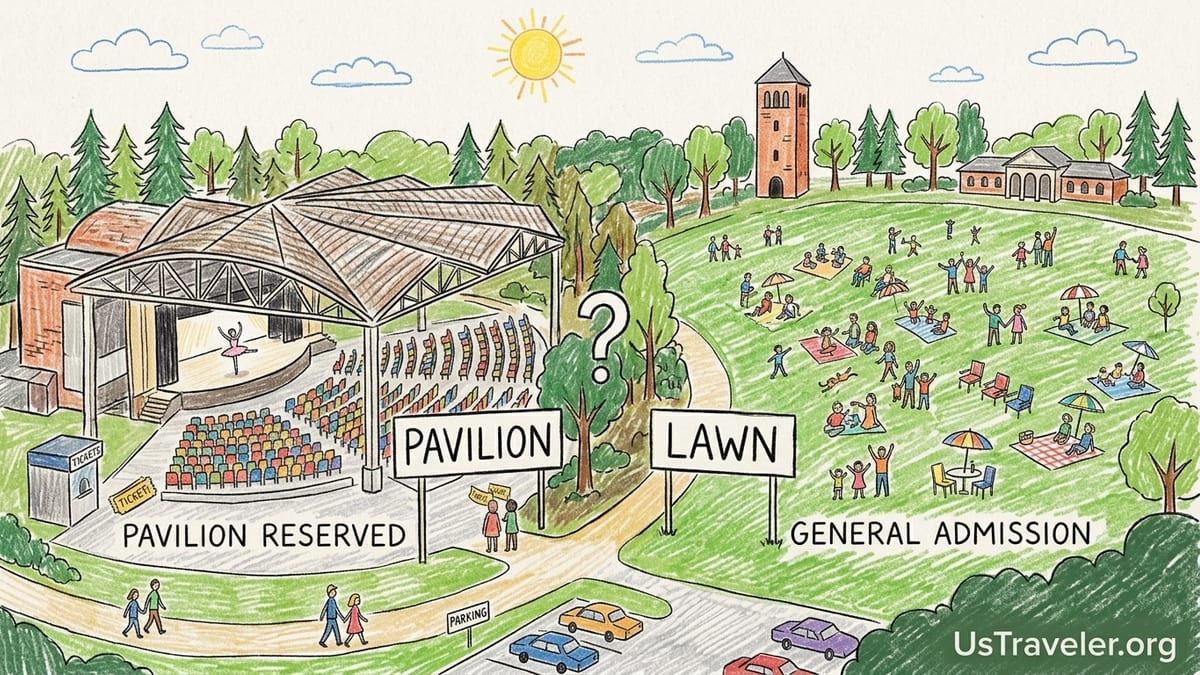
SPAC’s setup makes it easy to buy the cheapest option and assume you will “figure it out” later. But SPAC is really two venues layered together: a reserved-seat amphitheater under the pavilion, and a huge general-admission lawn that stretches back into the dark. Choosing between them is not only about price, it is about what kind of experience you want and what kind of performance you are seeing.
For a performance where detail matters, ballet is the clearest example, the pavilion is not just “closer,” it is the difference between reading the show and simply watching it. With New York City Ballet returning July 8 through July 11, 2026, including “A Midsummer Night’s Dream,” SPAC’s own materials make the anniversary framing explicit, a return to the work that opened the venue in 1966. That kind of night rewards a seat where you can see footwork, spacing, facial intent, and the geometry of an ensemble rather than a distant stage picture.
For a show where the crowd energy is part of the point, a big pop, rock, or country concert can flip the equation. On a warm night, the lawn can feel like a shared outdoor party: people stand, dance, wander, and treat the evening as a social event with music. For some tours, especially if you are going with a group, the lawn is the appeal rather than a compromise.
One more ticketing reality at SPAC matters before you click “buy.” SPAC-produced events and Live Nation concerts are not the same thing here. SPAC states that tickets for SPAC-produced events are authorized through the SPAC Box Office and the official SPAC website, and that Ticketmaster is not an authorized seller for events produced and presented by SPAC. Live Nation events hosted at SPAC, on the other hand, are ticketed through Ticketmaster. That distinction is not bureaucracy, it is practical, because rules, fees, and what you can bring inside can differ depending on who is presenting the event.
Arrival, Parking, and the Saratoga Spa State Park Factor
SPAC sits inside Saratoga Spa State Park, which is part of why the place feels special and part of why it can feel like an expedition. Your night begins in the park before you ever see the venue. The approach is wooded, the air changes, and then traffic compresses as everyone funnels toward the same entrances and lots.
If you are attending a Live Nation concert, SPAC notes that parking in all lots is subject to a $10 fee per car, with Route 50 lot entrances able to take credit or debit. That is useful to know because it changes what “getting there early” means: arriving earlier is not only about beating the line, it is also about avoiding a slow crawl toward a payment bottleneck. For SPAC-produced events, including classical performances, the venue indicates that parking is free and available throughout the day, which can make the whole arrival feel calmer and more park-like.
The park itself can also have its own vehicle entry fee at certain times of year, which is worth keeping in mind if you are coming early to hike, picnic, or visit other areas of the park before the show. In practical terms, the safest approach is to assume you may pay to bring a vehicle into the park depending on timing and event operations, and to keep a card handy even if you usually rely on cash at smaller venues.
Walking is a major part of the SPAC experience. Even if you park in a close lot, you are moving through park roads and paths with crowds. If you park farther back, it becomes a real pre-show stroll. I found that the walk was not unpleasant, it is scenic, and it can be a nice way to decompress after the show, but it does add time. If you are traveling with someone who has mobility concerns, that is another reason the seating decision matters, because it can influence where you aim to park and how much extra effort the night requires.
Entry Lines, Bag Rules, and What I Actually Brought In
The most important thing I did before leaving my hotel was check which rule set applied to my ticket. At SPAC, “what can I bring” is not a generic venue policy. It depends on whether the event is SPAC-produced or a Live Nation concert. That one detail can mean the difference between strolling in with a picnic or being turned back to your car.
For Live Nation shows, SPAC lists a tight bag policy: only small clutches, wristlets, or fanny packs no bigger than 6 inches by 9 inches, or clear plastic bags no bigger than 12 inches by 6 inches by 12 inches. It also lists a short, practical allowed-items approach: small blankets, food in a clear one-gallon zip bag, and water rules that allow either an empty bottle or up to a gallon of factory-sealed water. It is a policy that pushes you toward traveling light and being deliberate about what you carry.
For SPAC-produced events, the tone is more like a traditional outdoor arts venue. The ground rules allow food and beverages and disposable utensils, blankets, and lawn chairs within size limits, plus personal-sized umbrellas on the lawn. That distinction matters for budgeting too. Bringing your own snacks and a comfortable low chair can turn the lawn into a low-cost, high-comfort night for ballet or orchestra, while a Live Nation concert night often requires a different plan.
On my SPAC night, I kept it simple: a small, rule-compliant bag, a thin blanket that could fold into a tight rectangle, and a sealed water bottle. I saw plenty of people juggling more, but it was obvious who had done their homework and who was about to have an annoying conversation with security. Because the walk back to your car is real, being turned around at the gate is not just embarrassing, it can cost you the best lawn real estate and the opening minutes of the show.
Lawn Night: The Setup, the Sightlines, and the Vibe
The lawn at SPAC feels like its own community. People arrive with blankets and low chairs, they negotiate space politely but firmly, and they build small camps that function like outdoor living rooms. The mood is part tailgate, part picnic, part concert, and part summer ritual. Even if you are an experienced amphitheater-goer, SPAC’s lawn has a personality that reveals itself quickly: it is wide, it is deep, and not every patch of grass is equal.
My biggest lawn lesson is a simple one: the best lawn experience comes from committing to it. That means arriving early enough to claim a spot with usable sightlines and acceptable sound. At SPAC, if you drift too far back, the stage can feel remote. When you are closer, the lawn still has the relaxed sprawl, but you also feel connected to what is happening under the pavilion. When you are farther back, the evening can become more about the crowd and the social energy than the performance detail.
Sound on the lawn can be excellent, but it depends on where you land. In the sweet-spot areas, the mix feels balanced enough that you forget you are not under the roof. Farther back or off to the edges, the lawn becomes more of an ambient experience. That can be perfect for a legacy rock show where you want to sing along and roam, and less ideal for anything where nuance is the point.
The other lawn truth is weather exposure. SPAC is an open-air venue, and even on beautiful days, Saratoga nights can cool quickly. On the lawn, you feel the dampness rising, you notice breezes, and you become more aware of how long you will be sitting still. If you are choosing the lawn for ballet or orchestra, bring layers you can actually wear while seated. Comfort is not a luxury at SPAC, it is part of how you stay present for the performance.
Pavilion Reserved Seats: When the Upgrade Is Worth It
The pavilion is the part of SPAC that behaves like a traditional theater, with the added bonus that you are still outdoors. On a reserved-seat night, I felt the difference immediately: less jockeying for space, less need to arrive extremely early, and a clearer sense that I was there primarily to watch, not to hang out.
Sightlines are the main reason to pay more. If you are seeing dance, a reserved pavilion seat is often the difference between following the storytelling and simply knowing that beautiful things are happening somewhere far away. That is why SPAC’s 2026 anniversary programming, including New York City Ballet dates in July and Philadelphia Orchestra performances in August, is exactly the kind of season where travelers should consider upgrading at least once. For a show like “A Midsummer Night’s Dream,” where stage picture, gesture, and timing carry the narrative, being able to see clearly is the whole point.
Sound is also more consistent in the pavilion. You feel less at the mercy of where you happened to find space on the grass, and more like you are in the intended acoustic environment. For orchestral music, that matters. A summer night with The Philadelphia Orchestra can be a bucket-list experience at SPAC, but it is also an experience where you want the blend of strings, woodwinds, and brass to arrive intact rather than as a distant wash.
The pavilion also changes how you handle weather. You are still in an open-air venue, but the roof helps with light rain and dew, and you spend less time worrying about your blanket turning into a sponge. If the forecast looks questionable, a reserved seat is not just a splurge, it can be a comfort and attention-saving decision.
Food, Drinks, and the Real Cost Beyond the Ticket
At SPAC, what you spend is not only the ticket. It is parking, it is concessions, it is what you bring, and it is how you plan around rules. The lawn can be a budget-friendly night, especially for SPAC-produced events where food and beverages are permitted and the vibe welcomes picnicking. That is when Saratoga Spa State Park feels like part of the show: dinner before curtain, a drink in hand, and a blanket under your feet.
On Live Nation nights, the venue’s ground rules note that guests cannot bring alcohol, and the general feeling shifts toward buying inside. Add in paid parking, and the cost can climb quickly even if you bought the cheapest lawn ticket. This is where the seating decision circles back into budgeting. If you are already spending on drinks and food inside, you might decide to spend a little more on a pavilion seat for a show you truly care about, because the overall night is not going to be a bargain anyway.
Fees are also part of the SPAC math. SPAC notes that for events it produces, official ticket fees currently run about $7 to $12 per ticket. That matters if you are buying for a group, because fees compound fast. When I ran the numbers for a pair of tickets, it was manageable. For a family of four, it becomes a line item you should expect rather than a surprise at checkout.
If you want the most SPAC-like meal experience, consider building time into your schedule rather than trying to sprint through dinner right before gates. Saratoga Springs has plenty of restaurants, but the park setting can make you underestimate how long it takes to park, walk, enter, and still feel settled. At SPAC, being seated and calm before the first note is a bigger quality-of-life improvement than most venues, because the entire place is designed around flow through the park.
Weather Policies, Prohibited Items, and Planning Like a Local
The most helpful policy to know at SPAC is also the simplest: SPAC-produced events are rain or shine, and the venue states there are no refunds for bad weather. In other words, you do not treat a forecast like a suggestion. You plan for it. That means packing a light rain layer, choosing shoes that can handle wet paths, and thinking about what your seat choice means if the temperature drops.
Umbrella rules are more specific than many travelers assume. SPAC’s FAQs indicate umbrellas are allowed as long as they do not have pointed ends, and for SPAC-produced events, the ground rules emphasize personal-sized umbrellas on the amphitheater lawn. That is the kind of detail that matters when you are trying to stay dry without ruining the experience for everyone behind you.
Prohibited items are another place where SPAC’s split identity matters. Live Nation shows have a strict no-outside-chair policy at SPAC starting in 2025, with chair rentals offered for many concerts. SPAC-produced events, meanwhile, allow lawn chairs within stated size limits. Before you pack a chair into your trunk, verify which event you are attending and which policy applies. If you get it wrong, you are not just breaking a rule, you are adding a long and frustrating walk back to the parking lot.
Finally, treat SPAC’s official ticket channels as part of your planning. For SPAC-produced events, buying through the venue’s box office or official site is the cleanest way to avoid ticket authenticity issues and to stay aligned with SPAC’s policies. For Live Nation concerts, Ticketmaster is the usual channel. The practical takeaway is that the name on the marquee does not always tell you who is producing the night. The event listing does.
The Takeaway
If you only remember one thing about SPAC, make it this: the lawn is not a lesser version of the pavilion, and the pavilion is not an indulgence for the impatient. They are two different experiences, and each one makes sense for different kinds of shows and different kinds of travelers.
I would pay for a reserved pavilion seat when the performance depends on detail, ballet is the perfect example, and when I want the most consistent sound and the least weather stress. I would choose the lawn when the show is more about communal energy, when I want to picnic, when I am going with a group, or when I want SPAC to feel like the outdoor summer ritual it is famous for.
Either way, plan for the park. Build extra time for walking inside Saratoga Spa State Park, travel light under the bag rules that apply to your event, and treat weather as part of the night rather than a surprise. SPAC’s 60th anniversary season in 2026 is exactly the kind of calendar that rewards a little strategy: pick one night to splurge on a seat where you can see everything, and pick another to lean into the lawn and let the crowd carry you.
FAQ
Q1. What is the official place to buy tickets for SPAC-produced events?
For events produced and presented by SPAC, the authorized outlets are the SPAC Box Office and the official SPAC website.
Q2. Are Live Nation concerts at SPAC ticketed the same way as SPAC-produced shows?
No. Live Nation events hosted at SPAC are typically sold through Ticketmaster, and their policies can differ from SPAC-produced events.
Q3. What ticket fees should I expect for SPAC-produced events?
SPAC’s official ticket fees for SPAC-produced events currently run approximately $7 to $12 per ticket, so budget for that at checkout.
Q4. Is SPAC rain or shine?
For SPAC-produced events, SPAC states shows are rain or shine and there are no refunds for bad weather, so dress and pack accordingly.
Q5. How much is parking at SPAC?
For Live Nation concerts, SPAC notes parking in all lots is subject to a $10 fee per car. For SPAC-produced events, SPAC indicates parking is free and available throughout the day.
Q6. Can I bring my own lawn chair to SPAC?
It depends. SPAC allows lawn chairs for SPAC-produced events within size limits, but starting in 2025, personal lawn chairs are not allowed for Live Nation shows at SPAC.
Q7. What bag size is allowed for Live Nation shows at SPAC?
SPAC lists that Live Nation shows allow only small clutches, wristlets, or fanny packs up to 6 inches by 9 inches, or clear bags up to 12 inches by 6 inches by 12 inches.
Q8. Can I bring food and water inside SPAC?
Policies differ by event. Live Nation rules at SPAC allow food in a clear one-gallon zip bag and water rules that allow an empty bottle or up to a gallon of factory-sealed water. SPAC-produced events generally allow food and beverages, but always confirm the event’s current rules before you go.
Q9. Which is better at SPAC: the lawn or pavilion reserved seats?
Pavilion reserved seats are best when you want close-up sightlines and consistent sound, especially for dance and orchestral programs. The lawn is best when you want a relaxed, picnic-style night and the crowd energy is part of the fun.
Q10. What 2026 anniversary performances should I know about at SPAC?
SPAC’s 60th anniversary season in 2026 includes New York City Ballet performances in July and The Philadelphia Orchestra’s residency in August, along with other major concert programming across the summer calendar.